2012 Seat Ibiza ST tom
[x] Cancel search: tomPage 5 of 282

Table of Contents
Manual structure . . . . . . . . . . . . . . . . . . . . 5
Content . . . . . . . . . . . . . . . . . . . . . . . . . . . . . . . . 6
Safety First . . . . . . . . . . . . . . . . . . . . . . . . . . . . 7
Safe driving . . . . . . . . . . . . . . . . . . . . . . . . . . . . . . . 7
Brief introduction . . . . . . . . . . . . . . . . . . . . . . . . . 7
Proper sitting position for occupants . . . . . . . . . 10
Pedal area . . . . . . . . . . . . . . . . . . . . . . . . . . . . . . . 16
Storing objects . . . . . . . . . . . . . . . . . . . . . . . . . . . 16
Seat belts . . . . . . . . . . . . . . . . . . . . . . . . . . . . . . . . . 19
Brief introduction . . . . . . . . . . . . . . . . . . . . . . . . . 19
Why wear seat belts? . . . . . . . . . . . . . . . . . . . . . . 21
Seat belts . . . . . . . . . . . . . . . . . . . . . . . . . . . . . . . 25
Belt tensioners* . . . . . . . . . . . . . . . . . . . . . . . . . . 28
Airbag system . . . . . . . . . . . . . . . . . . . . . . . . . . . . . 30
Brief introduction . . . . . . . . . . . . . . . . . . . . . . . . . 30
Front airbags . . . . . . . . . . . . . . . . . . . . . . . . . . . . . 34
Side airbags . . . . . . . . . . . . . . . . . . . . . . . . . . . . . 38
Deactivating airbags* . . . . . . . . . . . . . . . . . . . . . . 41
Child safety . . . . . . . . . . . . . . . . . . . . . . . . . . . . . . . 43
Brief introduction . . . . . . . . . . . . . . . . . . . . . . . . . 43
Child seats . . . . . . . . . . . . . . . . . . . . . . . . . . . . . . . 45
Securing child seats . . . . . . . . . . . . . . . . . . . . . . . 48
Operating Instructions . . . . . . . . . . . . . 55
Cockpit . . . . . . . . . . . . . . . . . . . . . . . . . . . . . . . . . . . 55
Overview . . . . . . . . . . . . . . . . . . . . . . . . . . . . . . . . 55
Instruments . . . . . . . . . . . . . . . . . . . . . . . . . . . . . . 57 LPG system* . . . . . . . . . . . . . . . . . . . . . . . . . . . . . 58
Digital instrument panel display . . . . . . . . . . . . . 59
Warning lamps . . . . . . . . . . . . . . . . . . . . . . . . . . . 65
Steering column controls* . . . . . . . . . . . . . . . . . 78
General information . . . . . . . . . . . . . . . . . . . . . . . 78
Audio Control . . . . . . . . . . . . . . . . . . . . . . . . . . . . . 79
Audio + Telephone Control . . . . . . . . . . . . . . . . . . 80
Opening and closing . . . . . . . . . . . . . . . . . . . . . . 82
Central locking . . . . . . . . . . . . . . . . . . . . . . . . . . . 82
Keys . . . . . . . . . . . . . . . . . . . . . . . . . . . . . . . . . . . . 87
Radio frequency remote control* . . . . . . . . . . . . . 88
Anti-theft alarm system* . . . . . . . . . . . . . . . . . . . 90
Rear lid . . . . . . . . . . . . . . . . . . . . . . . . . . . . . . . . . . 93
Windows . . . . . . . . . . . . . . . . . . . . . . . . . . . . . . . . 95
Panoramic tilting sunroof* . . . . . . . . . . . . . . . . . . 98
Lights and visibility . . . . . . . . . . . . . . . . . . . . . . . . 100
Lights . . . . . . . . . . . . . . . . . . . . . . . . . . . . . . . . . . . 100
Interior lights . . . . . . . . . . . . . . . . . . . . . . . . . . . . . 107
Visibility . . . . . . . . . . . . . . . . . . . . . . . . . . . . . . . . . 108
Windscreen wipers . . . . . . . . . . . . . . . . . . . . . . . . 109
Rear view mirrors . . . . . . . . . . . . . . . . . . . . . . . . . . 112
Seats and storage compartments . . . . . . . . . . 115
The importance of correct seat adjustment . . . . . 115
Head restraints . . . . . . . . . . . . . . . . . . . . . . . . . . . 116
Front seats . . . . . . . . . . . . . . . . . . . . . . . . . . . . . . . 118
Rear seats . . . . . . . . . . . . . . . . . . . . . . . . . . . . . . . 120
Storage compartment . . . . . . . . . . . . . . . . . . . . . . 122
Ashtrays, cigarette lighter and power socket . . . 125
First-aid kit, warning triangle, fire extinguisher . 128
Luggage compartment . . . . . . . . . . . . . . . . . . . . . 129
Roof rack* . . . . . . . . . . . . . . . . . . . . . . . . . . . . . . . 132
Air conditioning . . . . . . . . . . . . . . . . . . . . . . . . . . . 134
Heating . . . . . . . . . . . . . . . . . . . . . . . . . . . . . . . . . 134
Air conditioning* . . . . . . . . . . . . . . . . . . . . . . . . . . 137 Climatronic . . . . . . . . . . . . . . . . . . . . . . . . . . . . . . 140
General notes . . . . . . . . . . . . . . . . . . . . . . . . . . . . 142
Driving . . . . . . . . . . . . . . . . . . . . . . . . . . . . . . . . . . . . 144
Steering . . . . . . . . . . . . . . . . . . . . . . . . . . . . . . . . . 144
Safety . . . . . . . . . . . . . . . . . . . . . . . . . . . . . . . . . . . 145
Ignition lock . . . . . . . . . . . . . . . . . . . . . . . . . . . . . . 145
Starting and stopping the engine . . . . . . . . . . . . 147
Start-Stop function* . . . . . . . . . . . . . . . . . . . . . . . 150
Manual gearbox . . . . . . . . . . . . . . . . . . . . . . . . . . 153
Automatic gearbox* . . . . . . . . . . . . . . . . . . . . . . . 154
Handbrake . . . . . . . . . . . . . . . . . . . . . . . . . . . . . . . 161
Acoustic parking aid system* . . . . . . . . . . . . . . . 163
Cruise speed* (Cruise control system) . . . . . . . . 164
Practical Tips . . . . . . . . . . . . . . . . . . . . . . . . . 168
Intelligent technology . . . . . . . . . . . . . . . . . . . . . 168
Brakes . . . . . . . . . . . . . . . . . . . . . . . . . . . . . . . . . . 168
Anti-lock brake system and traction control ABS 169
Electronic Stability Control (ESC)* . . . . . . . . . . . . 170
Driving and the environment . . . . . . . . . . . . . . . 173
Running-in . . . . . . . . . . . . . . . . . . . . . . . . . . . . . . . 173
Exhaust gas purification system . . . . . . . . . . . . . 174
Economical and environmentally friendly driving 176
Driving abroad . . . . . . . . . . . . . . . . . . . . . . . . . . . . 178
Trailer towing . . . . . . . . . . . . . . . . . . . . . . . . . . . . . 178
Vehicle maintenance and cleaning . . . . . . . . . 181
General notes . . . . . . . . . . . . . . . . . . . . . . . . . . . . 181
Care of the vehicle exterior . . . . . . . . . . . . . . . . . . 182
Vehicle interior maintenance . . . . . . . . . . . . . . . . 187
3
Table of Contents
Page 6 of 282

Accessories, replacement of parts and
modifications . . . . . . . . . . . . . . . . . . . . . . . . . . . . . 190
Accessories and spare parts . . . . . . . . . . . . . . . . 190
Technical modifications . . . . . . . . . . . . . . . . . . . . 190
Roof aerial* . . . . . . . . . . . . . . . . . . . . . . . . . . . . . . 191
Mobile telephones and two-way radios . . . . . . . . 191
Fitting a towing bracket* . . . . . . . . . . . . . . . . . . . 192
Checking and refilling levels . . . . . . . . . . . . . . . 194
Refuelling . . . . . . . . . . . . . . . . . . . . . . . . . . . . . . . 194
LPG system* . . . . . . . . . . . . . . . . . . . . . . . . . . . . . 196
Petrol . . . . . . . . . . . . . . . . . . . . . . . . . . . . . . . . . . . 199
Diesel . . . . . . . . . . . . . . . . . . . . . . . . . . . . . . . . . . . 199
Working in the engine compartment . . . . . . . . . . 200
Engine oil . . . . . . . . . . . . . . . . . . . . . . . . . . . . . . . . 203
Coolant . . . . . . . . . . . . . . . . . . . . . . . . . . . . . . . . . 207
Washer fluid and windscreen wiper blades . . . . 209
Brake fluid . . . . . . . . . . . . . . . . . . . . . . . . . . . . . . . 213
Vehicle battery . . . . . . . . . . . . . . . . . . . . . . . . . . . 214
Wheels . . . . . . . . . . . . . . . . . . . . . . . . . . . . . . . . . . 216
If and when . . . . . . . . . . . . . . . . . . . . . . . . . . . . . . . 223
Vehicle tools, spare wheel . . . . . . . . . . . . . . . . . . 223
Wheel change . . . . . . . . . . . . . . . . . . . . . . . . . . . . 224
Tyre repair kit (Tyre-Mobility-System)* . . . . . . . . . 229
Fuses . . . . . . . . . . . . . . . . . . . . . . . . . . . . . . . . . . . 231
Bulb change . . . . . . . . . . . . . . . . . . . . . . . . . . . . . 234
Single headlight bulb change . . . . . . . . . . . . . . . 236
Double headlight bulb change . . . . . . . . . . . . . . . 238
Changing the bulbs of AFS headlights . . . . . . . . 242
Changing the fog light bulbs . . . . . . . . . . . . . . . . 243
Changing the rear lights (on the wing) . . . . . . . . 244
Changing the rear lights (on the rear lid) . . . . . . 245
Side turn signal bulbs . . . . . . . . . . . . . . . . . . . . . . 246
Number plate light . . . . . . . . . . . . . . . . . . . . . . . . 247
Interior light and front reading lights . . . . . . . . . 247
Additional brake lights* . . . . . . . . . . . . . . . . . . . . 248
Luggage compartment light . . . . . . . . . . . . . . . . . 248 Jump-starting . . . . . . . . . . . . . . . . . . . . . . . . . . . . . 248
Towing and tow-starting . . . . . . . . . . . . . . . . . . . . 252
Technical Specifications . . . . . . . . . . . 255
Description of specifications . . . . . . . . . . . . . . . 255
Important information . . . . . . . . . . . . . . . . . . . . . 255
Information on fuel consumption . . . . . . . . . . . . 257
Towing a trailer . . . . . . . . . . . . . . . . . . . . . . . . . . . 257
Wheels . . . . . . . . . . . . . . . . . . . . . . . . . . . . . . . . . . 258
Technical specifications . . . . . . . . . . . . . . . . . . . . 259
Checking fluid levels . . . . . . . . . . . . . . . . . . . . . . . 259
Petrol engine 1.2 51 kW (70 PS) . . . . . . . . . . . . . 260
Petrol engine 1.2 TSI 63 kW (85 PS) . . . . . . . . . . 261
Petrol engine 1.4 63 kW (85 PS) . . . . . . . . . . . . . 262
Petrol engine 1.2 TSI 77 kW (105 PS) . . . . . . . . . 263
Petrol engine 1.2 TSI 77 kW (105 PS) Start-Stop 264
Petrol engine 1.4 TSI 110 kW (150 PS) automatic . .265
Diesel engine 1.2 TDI CR 55 kW (75 PS) DPF
Start-Stop Ecomotive . . . . . . . . . . . . . . . . . . . . . . 266
Diesel engine 1.2 TDI CR 55 kW (75 PS) DPF . . . . 267
Diesel engine 1.6 TDI CR 66 kW (90 PS) DPF . . . . 268
Diesel engine 1.6 TDI CR 77 kW (105 PS) with/
without DPF . . . . . . . . . . . . . . . . . . . . . . . . . . . . . . 269
Dimensions and capacities . . . . . . . . . . . . . . . . . 270
Index . . . . . . . . . . . . . . . . . . . . . . . . . . . . . . . . . . . 271
4Table of Contents
Page 27 of 282

25
Seat belts
Seat belts
Seat belt adjustment
The seat belts for the front and rear occupants are locked in-
to position by a latch.
Fig. 11 Belt buckle and
latch plate of seat belt
The seat belt cannot offer its full protection if the seat belt is not
positioned correctly.
– Adjust the seat and head restraint correctly.
– To fasten the belt, take hold of the latch plate and pull it slowly
across your chest and lap.
– Insert the latch plate into the buckle for the appropriate seat
and push it down until it is securely locked with an audible click
⇒ Fig. 11. –
Pull the belt to ensure that the latch plate is securely engaged
in the buckle.
The seat belts are equipped with an automatic retractor on the shoulder
strap. Full freedom of movement is permitted when the shoulder belt is
pulled slowly. However, during sudden braking, during travel in steep areas
or bends and during acceleration, the automatic retractor on the shoulder
belt is locked.
The automatic belt retractors on the front seats are fitted with seat belt ten-
sioners ⇒ page 28.
WARNING
● An incorrectly worn seat belt can cause severe injuries in the event of
an accident.
● The seat belts offer best protection only when the backrests are in an
upright position and the seat belts have been fastened properly.
● Never put the latch plate in the buckle of another seat. If you do this,
the seat belt will not protect you properly and the risk of injury is in-
creased.
● If a vehicle occupant is incorrectly belted in, the seat belt cannot pro-
tect him or her properly. An incorrectly positioned seat belt can cause ex-
tremely severe injuries.
Safety FirstOperating InstructionsPractical TipsTechnical Specifications
Page 28 of 282
26Seat belts
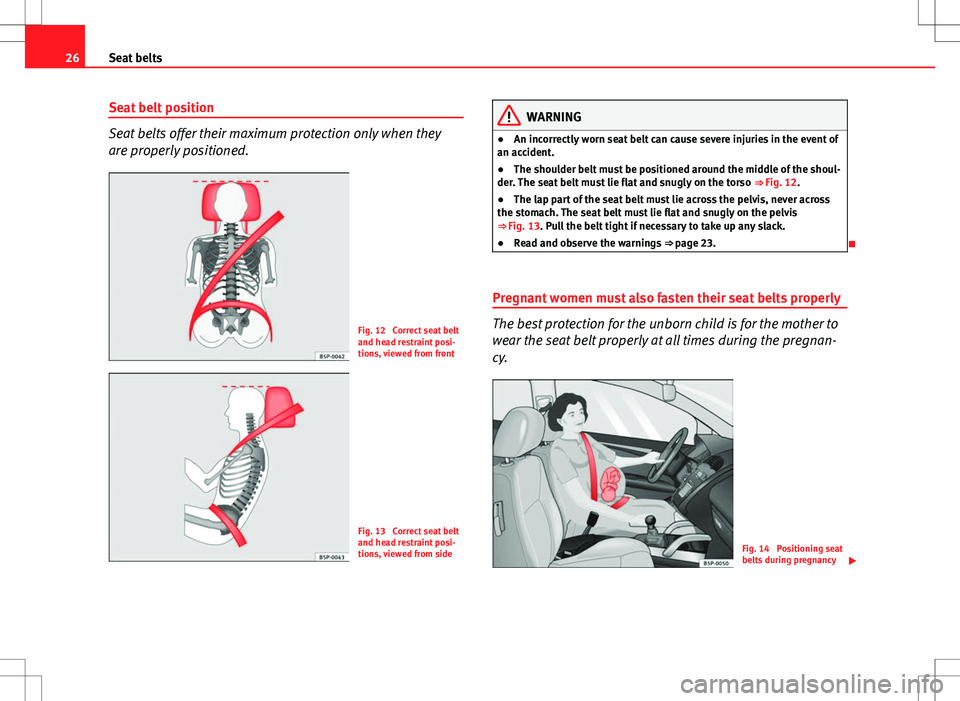
Seat belt position
Seat belts offer their maximum protection only when they
are properly positioned.
Fig. 12 Correct seat belt
and head restraint posi-
tions, viewed from front
Fig. 13 Correct seat belt
and head restraint posi-
tions, viewed from side
WARNING
● An incorrectly worn seat belt can cause severe injuries in the event of
an accident.
● The shoulder belt must be positioned around the middle of the shoul-
der. The seat belt must lie flat and snugly on the torso ⇒ Fig. 12.
● The lap part of the seat belt must lie across the pelvis, never across
the stomach. The seat belt must lie flat and snugly on the pelvis
⇒ Fig. 13. Pull the belt tight if necessary to take up any slack.
● Read and observe the warnings ⇒ page 23.
Pregnant women must also fasten their seat belts properly
The best protection for the unborn child is for the mother to
wear the seat belt properly at all times during the pregnan-
cy.
Fig. 14 Positioning seat
belts during pregnancy
Page 29 of 282

27
Seat belts
The seat belt provides maximum protection only when the seat belt
is properly positioned ⇒ page 26.
– Adjust the front seat and head restraint correctly.
– Holding the latch plate, pull the belt evenly across your chest
and as low as possible over the pelvis ⇒ Fig. 14.
– Insert the latch plate into the buckle for the corresponding seat
and push it down until it is securely locked with an audible click
⇒
.
– Pull the belt to ensure that the latch plate is securely engaged
in the buckle.
WARNING
● An incorrectly worn seat belt can cause severe injuries in the event of
an accident.
● For pregnant women, the lap part of the seat belt must lie as low as
possible over the pelvis, never across the stomach, and always lie flat so
that no pressure is exerted on the abdomen.
● Read and observe the warnings ⇒ page 23.
Seat belt release
The seat belt must not be unfastened until the vehicle has
come to a standstill.
Fig. 15 Remove latch
plate from buckle
– Press the red button on the belt buckle ⇒ Fig. 15. The latch
plate is released and springs out ⇒
.
– Guide the belt back by hand so that it rolls up easily and the
trim is not damaged.
WARNING
Never unbuckle a seat belt while the vehicle is in motion. If you do, you
increase the risk of sustaining severe or fatal injuries.
Safety FirstOperating InstructionsPractical TipsTechnical Specifications
Page 30 of 282

28Seat belts
Incorrectly fastened seat belts
Incorrectly worn seat belts can cause severe or even mortal
injuries.
Seat belts can provide optimal protection only if the belt web is
properly worn. The seat belts must be fastened exactly in the order
described in this chapter. An incorrect sitting position impairs sub-
stantially the protection a seat belt offers and can lead to severe or
fatal injuries. The risk of severe or fatal injuries is especially in-
creased when a deploying airbag strikes a vehicle occupant who
has assumed an incorrect sitting position. As the driver, you are re-
sponsible for yourself and all passengers, especially children.
Therefore:
– Never allow anyone to wear the seat belt incorrectly while the
vehicle is moving ⇒
.
WARNING
● An incorrectly worn seat belt increases the risk of severe injuries.
● Before every trip, instruct your passengers to adjust their seat belts
properly and to wear them for the whole journey.
● Read and always observe information and warnings concerning the
use of seat belts ⇒ page 23.
Belt tensioners*
Function of the seat belt tensioner
During a frontal collision, the seat belts on the front seats
are retracted automatically.
The seat belts for the occupants in the front seats are equipped with belt
tensioners. Sensors will trigger the belt tensioners during severe head-on,
lateral and rear collisions only if the seat belt is being worn. This retracts
and tightens the seat belts, reducing the forward motion of the occupants.
The seat belt tensioner can be triggered only once.
The belt tensioners will not be triggered in the event of light frontal and side
collisions, if the vehicle overturns, or in situations where no large forces act
on the front, side or rear of the vehicle.
Note
● If the seat belt tensioners are triggered, a fine dust is produced. This is
normal and it is not an indication of fire in the vehicle.
● The relevant safety requirements must be observed when the vehicle or
components of the system are scrapped. Specialised workshops are famili-
ar with these regulations, which are also available to you.
Service and disposal of belt tensioners
The belt tensioners are components of the seat belts that are installed in
the seats of your vehicle. If you work on the belt tensioners or remove and
install parts of the system when performing other repair work, the seat belt
may be damaged. The consequence may be that, in the event of an acci-
dent, the belt tensioners function incorrectly or not at all.
Page 31 of 282

29
Seat belts
So that the effectiveness of the seat belt tensioner is not reduced and that
removed parts do not cause any injuries or environmental pollution, regula-
tions, which are known to the specialised workshops, must be observed.
WARNING
● Improper use or repairs not carried out by qualified mechanics in-
crease the risk of severe or fatal injuries. The belt tensioners may fail to
trigger or may trigger in the wrong circumstances.
● Never attempt to repair, adjust, remove or install parts of the belt ten-
sioners or seat belts.
● The seat belt tensioner, seat belt and automatic retractor cannot be
repaired.
● Any work on the belt tensioners and seat belts, including the removal
and refitting of system parts in conjunction with other repair work, must
be performed by a specialised workshop only.
● The belt tensioners will only provide protection for one accident and
must be changed if they have been activated.
Safety FirstOperating InstructionsPractical TipsTechnical Specifications
Page 49 of 282

47
Child safety
WARNING
● The shoulder part of the seat belt must lie approximately on the cen-
tre of the shoulder, never across the neck or the arm. The seat belt must
lie close to the upper part of the body. The lap belt part must lie across
the pelvis, not across the stomach, and always fit closely. Pull the belt
tight if necessary to take up any slack ⇒ page 25, Seat belts.
● Read and always observe information and warnings concerning the
use of child seats ⇒
in Safety notes on using child seats on page 44.
Safety FirstOperating InstructionsPractical TipsTechnical Specifications