Page 323 of 437

Fuse/Relay
LocationFuse Amp
RatingProtected Circuits
6 30A* 110V AC inverter
7 30A* Rear climate control seat module
8 30A* Front climate control seat module
9 40A* Anti-lock brake system (ABS)
pump
10 30A* Starter
11 30A* Powertrain control module (PCM)
vehicle power
12 20A* ABS valve
13 20A** Right high intensity discharge
(HID) headlamp
14 10A** Brake on/off (BOO) switch,
Adaptive cruise relay
15 15A** Automatic high beams, Adaptive
cruise control
16 20A** Left HID headlamp
17 10A** Alternator sensor
18 30A* 3rd row power seats
19 20A* Front console power point
20 40A* Rear defroster, Heated mirrors
21 20A* Rear console power point
22 40A* Trailer tow battery charge, Trailer
tow stop/turn lamps fuse 45
power
23 10A** PCM keep alive power, Canister
vent, Relay coil
24 10A** A/C clutch
25 20A** Rear power point
26 15A** Backup lamps
27 15A** Fuel relay (Fuel pump driver
module, Fuel pump)
28 80A* Cooling fan
Roadside Emergencies
323
2012 MKT(mkt)
Owners Guide, 1st Printing
USA(fus)
Page 330 of 437
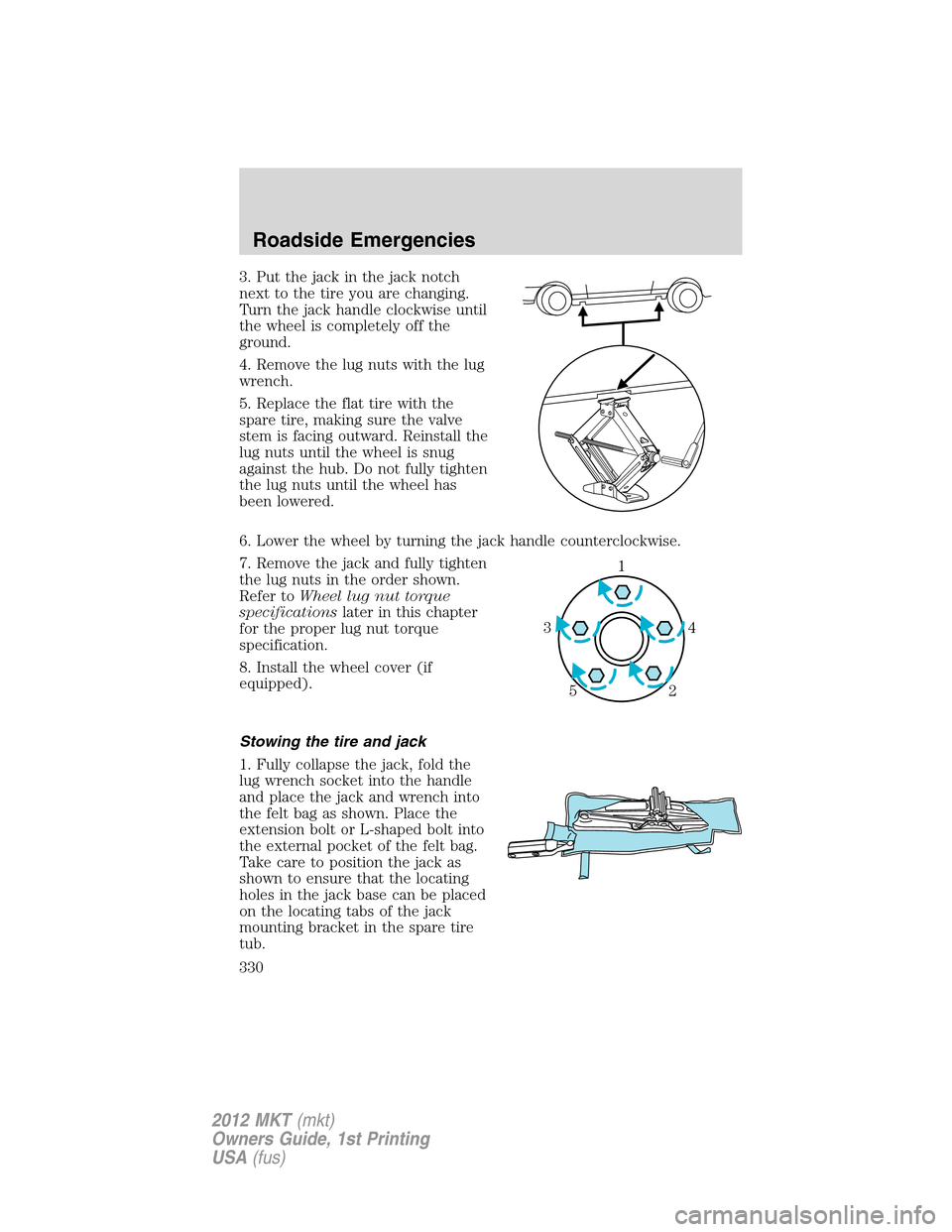
3. Put the jack in the jack notch
next to the tire you are changing.
Turn the jack handle clockwise until
the wheel is completely off the
ground.
4. Remove the lug nuts with the lug
wrench.
5. Replace the flat tire with the
spare tire, making sure the valve
stem is facing outward. Reinstall the
lug nuts until the wheel is snug
against the hub. Do not fully tighten
the lug nuts until the wheel has
been lowered.
6. Lower the wheel by turning the jack handle counterclockwise.
7. Remove the jack and fully tighten
the lug nuts in the order shown.
Refer toWheel lug nut torque
specificationslater in this chapter
for the proper lug nut torque
specification.
8. Install the wheel cover (if
equipped).
Stowing the tire and jack
1. Fully collapse the jack, fold the
lug wrench socket into the handle
and place the jack and wrench into
the felt bag as shown. Place the
extension bolt or L-shaped bolt into
the external pocket of the felt bag.
Take care to position the jack as
shown to ensure that the locating
holes in the jack base can be placed
on the locating tabs of the jack
mounting bracket in the spare tire
tub.
1
4 3
2 5
Roadside Emergencies
330
2012 MKT(mkt)
Owners Guide, 1st Printing
USA(fus)
Page 331 of 437
2. Securely close the wrench compartment and the jack bag using the
Velcro�strips.
3. Place the jack kit on the angled bracket in the spare tire tub, using
the locating tabs to position the jack correctly.
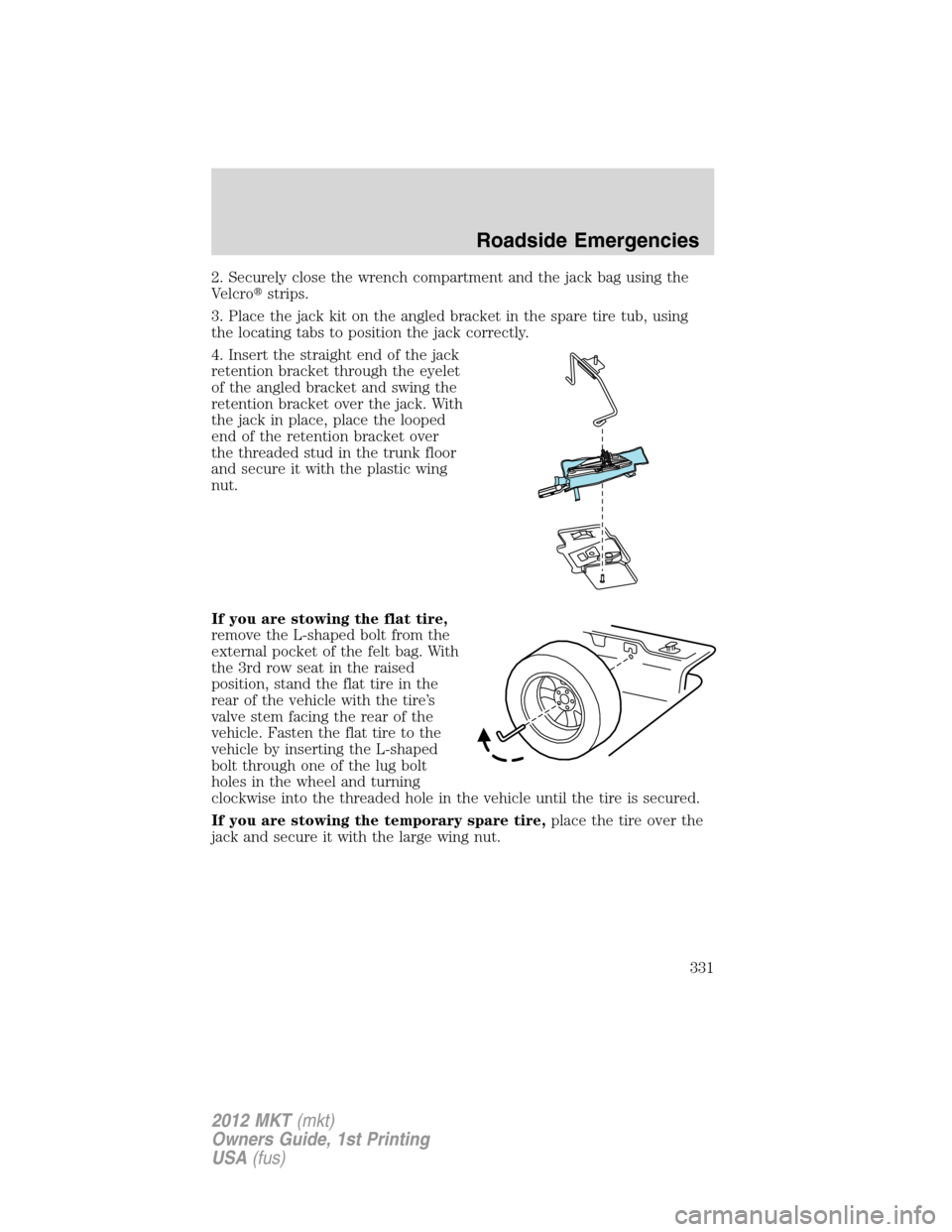
4. Insert the straight end of the jack
retention bracket through the eyelet
of the angled bracket and swing the
retention bracket over the jack. With
the jack in place, place the looped
end of the retention bracket over
the threaded stud in the trunk floor
and secure it with the plastic wing
nut.
If you are stowing the flat tire,
remove the L-shaped bolt from the
external pocket of the felt bag. With
the 3rd row seat in the raised
position, stand the flat tire in the
rear of the vehicle with the tire’s
valve stem facing the rear of the
vehicle. Fasten the flat tire to the
vehicle by inserting the L-shaped
bolt through one of the lug bolt
holes in the wheel and turning
clockwise into the threaded hole in the vehicle until the tire is secured.
If you are stowing the temporary spare tire,place the tire over the
jack and secure it with the large wing nut.
Roadside Emergencies
331
2012 MKT(mkt)
Owners Guide, 1st Printing
USA(fus)
Page 361 of 437
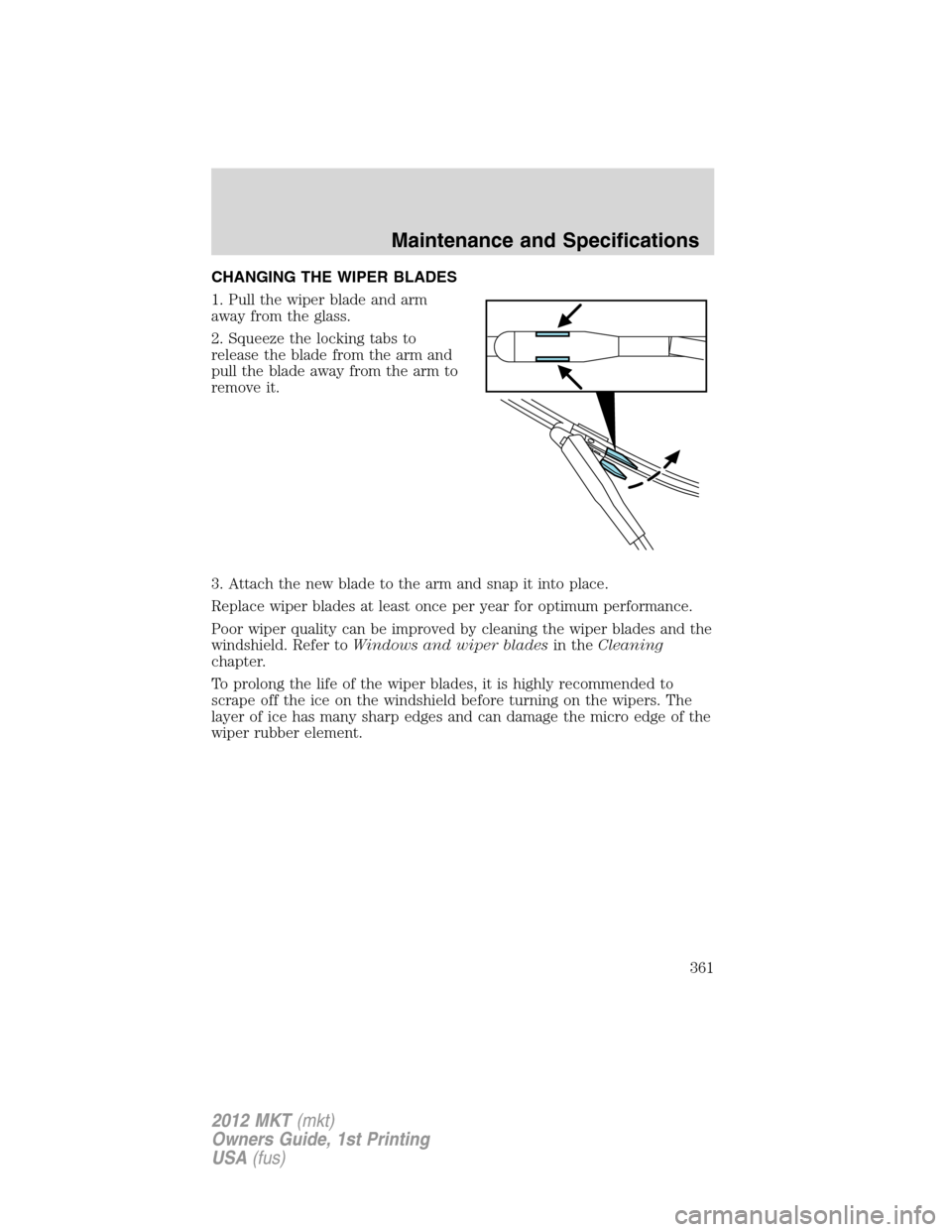
CHANGING THE WIPER BLADES
1. Pull the wiper blade and arm
away from the glass.
2. Squeeze the locking tabs to
release the blade from the arm and
pull the blade away from the arm to
remove it.
3. Attach the new blade to the arm and snap it into place.
Replace wiper blades at least once per year for optimum performance.
Poor wiper quality can be improved by cleaning the wiper blades and the
windshield. Refer toWindows and wiper bladesin theCleaning
chapter.
To prolong the life of the wiper blades, it is highly recommended to
scrape off the ice on the windshield before turning on the wipers. The
layer of ice has many sharp edges and can damage the micro edge of the
wiper rubber element.
Maintenance and Specifications
361
2012 MKT(mkt)
Owners Guide, 1st Printing
USA(fus)
Page 376 of 437
Observe the following guidelines when handling automotive fuel:
•Extinguish all smoking materials
and any open flames before
refueling your vehicle.
•Always turn off the vehicle before
refueling.
•Automotive fuels can be harmful
or fatal if swallowed. Fuel such as gasoline is highly toxic and if
swallowed can cause death or permanent injury. If fuel is swallowed,
call a physician immediately, even if no symptoms are immediately
apparent. The toxic effects of fuel may not be visible for hours.
•Avoid inhaling fuel vapors. Inhaling too much fuel vapor of any kind
can lead to eye and respiratory tract irritation. In severe cases,
excessive or prolonged breathing of fuel vapor can cause serious
illness and permanent injury.
•Avoid getting fuel liquid in your eyes. If fuel is splashed in the eyes,
remove contact lenses (if worn), flush with water for 15 minutes and
seek medical attention. Failure to seek proper medical attention could
lead to permanent injury.
•Fuels can also be harmful if absorbed through the skin. If fuel is
splashed on the skin and/or clothing, promptly remove contaminated
clothing and wash skin thoroughly with soap and water. Repeated or
prolonged skin contact with fuel liquid or vapor causes skin irritation.
•Be particularly careful if you are taking “Antabuse” or other forms of
disulfiram for the treatment of alcoholism. Breathing gasoline vapors,
or skin contact could cause an adverse reaction. In sensitive
individuals, serious personal injury or sickness may result. If fuel is
splashed on the skin, promptly wash skin thoroughly with soap and
water. Consult a physician immediately if you experience an adverse
reaction.
WARNING:When refueling always shut the engine off and
never allow sparks or open flames near the filler neck. Never
smoke while refueling. Fuel vapor is extremely hazardous under certain
conditions. Care should be taken to avoid inhaling excess fumes.
WARNING:The flow of fuel through a fuel pump nozzle can
produce static electricity, which can cause a fire if fuel is
pumped into an ungrounded fuel container.
Maintenance and Specifications
376
2012 MKT(mkt)
Owners Guide, 1st Printing
USA(fus)
Page 394 of 437
4. Wipe the air filter housing and cover clean to remove any dirt or
debris and to ensure good sealing.
5. Install a new air filter element. Be careful not to crimp the filter
element edges between the air filter housing and cover. This could cause
filter damage and allow unfiltered air to enter the engine if not properly
seated.
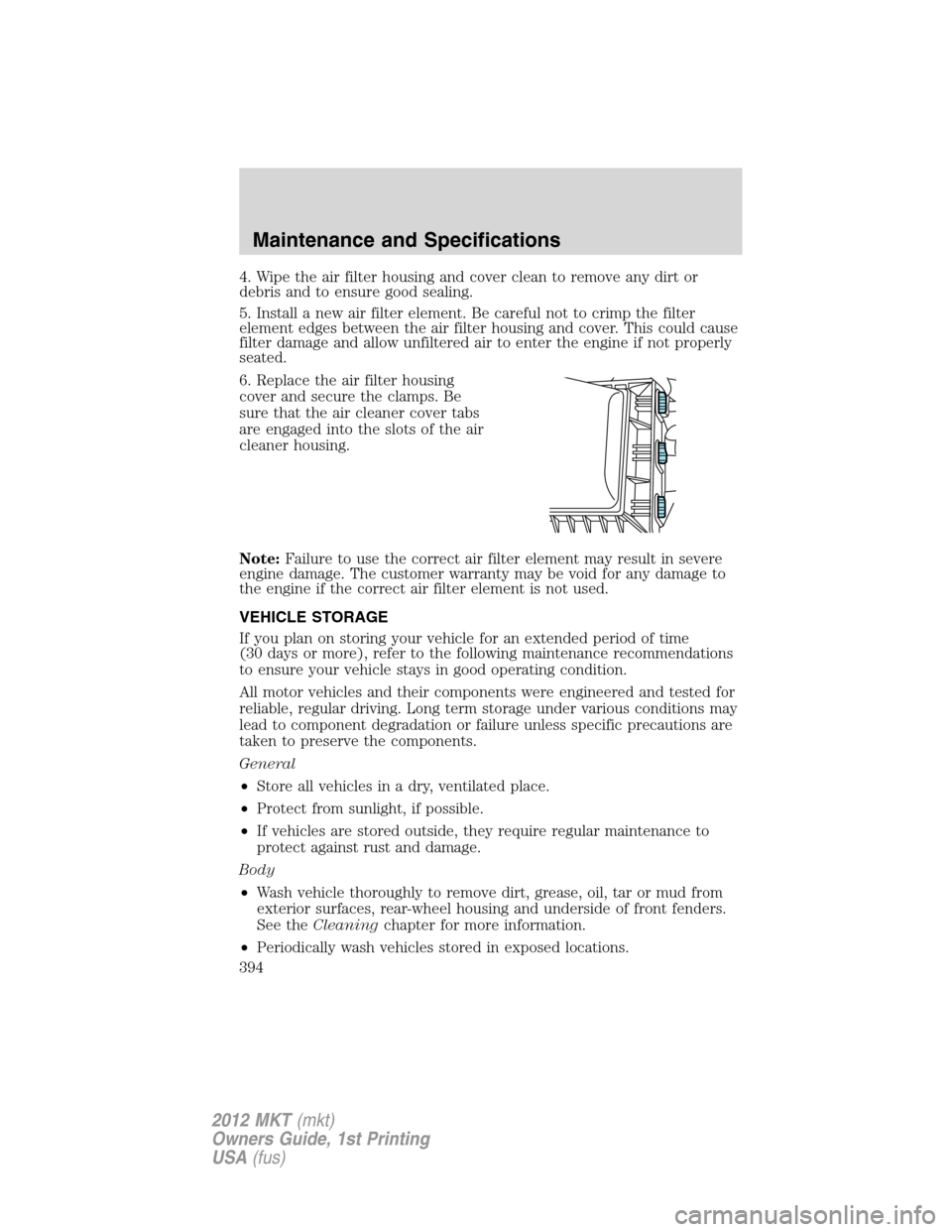
6. Replace the air filter housing
cover and secure the clamps. Be
sure that the air cleaner cover tabs
are engaged into the slots of the air
cleaner housing.
Note:Failure to use the correct air filter element may result in severe
engine damage. The customer warranty may be void for any damage to
the engine if the correct air filter element is not used.
VEHICLE STORAGE
If you plan on storing your vehicle for an extended period of time
(30 days or more), refer to the following maintenance recommendations
to ensure your vehicle stays in good operating condition.
All motor vehicles and their components were engineered and tested for
reliable, regular driving. Long term storage under various conditions may
lead to component degradation or failure unless specific precautions are
taken to preserve the components.
General
•Store all vehicles in a dry, ventilated place.
•Protect from sunlight, if possible.
•If vehicles are stored outside, they require regular maintenance to
protect against rust and damage.
Body
•Wash vehicle thoroughly to remove dirt, grease, oil, tar or mud from
exterior surfaces, rear-wheel housing and underside of front fenders.
See theCleaningchapter for more information.
•Periodically wash vehicles stored in exposed locations.
Maintenance and Specifications
394
2012 MKT(mkt)
Owners Guide, 1st Printing
USA(fus)
Page 409 of 437
Ford ESP Can Quickly Pay for Itself
One service bill – the cost of parts and labor – can easily exceed the
price of your Ford ESP Service Contract. With Ford ESP, you minimize
your risk for unexpected repair bills and rising repair costs.
Avoid the rising cost of properly maintaining your vehicle!
Ford ESP also offers a Premium Maintenance Plan that covers items that
routinely wear out.
The coverage is prepaid, so you never have to worry about affording
your vehicle maintenance. It covers regular checkups, routine
inspections, preventive care and replacement of items that require
periodic attention fornormal “wear”:
•Wiper blades•Brake pads and linings
•Spark plugs (except
California)•Shock absorbers
•Clutch disc•Belts and hoses
Contact your selling Ford or Lincoln dealership today so they can
customize a Ford Extended Service Plan that fits your driving lifestyle
and budget.
Interest free finance options available
Take advantage of our installment payment plan, just a 10% down
payment will provide you with an affordable no interest, no-fee payment
opportunity.
Ford Extended Service Plan
409
2012 MKT(mkt)
Owners Guide, 1st Printing
USA(fus)
Page 415 of 437

Owner checks and services
Certain basic maintenance checks and inspections should be performed
by the owner or a service technician at the intervals indicated. Service
information and supporting specifications are provided in this owner’s
guide.
Any adverse condition should be brought to the attention of your dealer
or qualified service technician as soon as possible for the proper service
advice. The owner maintenance service checks are generally not covered
by warranties so you may be charged for labor, parts or fluids used.
Engine oil/coolant change intervals
Engine oilAs indicated by the message center: do not
exceed one year or 10,000 miles (16,000 km)
Engine coolant,
initial change6 years or 100,000 miles (160,000 km)
(whichever comes first)
Engine coolant, after
initial changeEvery 3 years or 50,000 miles (80,000 km)
Check every month
Engine oil level
Function of all interior and exterior lights
Tires for wear and proper pressure, including spare
Windshield washer fluid level
Check every six months
Battery connections; clean if necessary
Body and door drain holes for obstructions; clean if necessary
Cooling system fluid level and coolant strength
Door weatherstrips for wear; lubricate if necessary
Hinges/latches/outside locks for proper operation; lubricate if necessary
Parking brake for proper operation
Safety belts and seat latches for wear and function
Safety warning lamps (brake, ABS, airbag, safety belt) for operation
Washer spray/wiper operation; clean or replace blades as necessary
Scheduled Maintenance
415
2012 MKT(mkt)
Owners Guide, 1st Printing
USA(fus)