2012 KIA PICANTO weight
[x] Cancel search: weightPage 376 of 840

Maintenance
44
7
Disc brake pads should be inspected
for wear whenever tires are rotated.
✽✽ NOTICE
Rotate radial tires that have an
asymmetric tread pattern only from
front to rear and not from right to
left.
Wheel alignment and tire balance
The wheels on your vehicle were aligned and balanced carefully at the
factory to give you the longest tire life
and best overall performance.
In most cases, you will not need to
have your wheels aligned again.
However, if you notice unusual tire
wear or your vehicle pulling one way
or the other, the alignment may needto be reset.
If you notice your vehicle vibrating
when driving on a smooth road, your
wheels may need to be rebalanced.
S2BLA790
S2BLA790A
CBGQ0707A
Without a spare tire
With a full-size spare tire (if equipped) Directional tires (if equipped)WARNING
Do not use the compact spare tire for tire rotation.
Do not mix bias ply and radial ply tires under any circum-
stances. This may cause
unusual handling characteris-tics that could result in death,
severe injury, or property
damage.
CAUTION
Improper wheel weights can
damage your vehicle's alu-minum wheels. Use onlyapproved wheel weights.
Page 411 of 840
8
Engine / 8-2
Dimensions / 8-2
Bulb wattage / 8-2
Tires and wheels / 8-3
Weight/Volume / 8-3
Recommended lubricants and capacities / 8-4
Vehicle identification number (VIN) / 8-6
Vehicle certification label / 8-6
Tire specification and pressure label / 8-7
Engine number / 8-7
Specifications & Consumer information
Page 413 of 840
83
Specifications & Consumer information
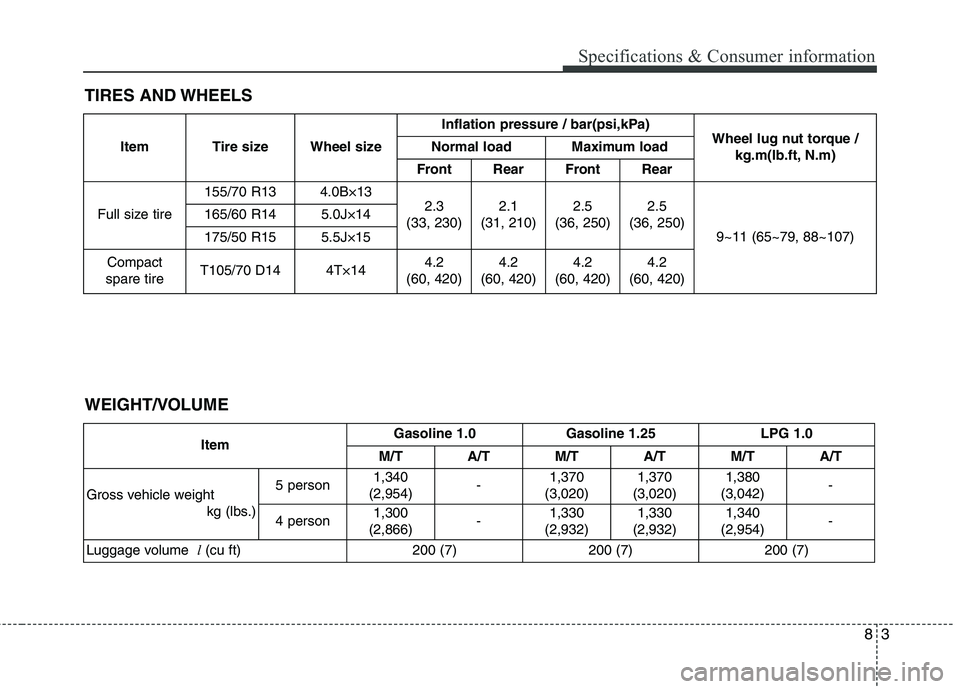
TIRES AND WHEELSItem Tire size Wheel size Inflation pressure / bar(psi,kPa)
Wheel lug nut torque /
kg.m(lb.ft, N.m)
Normal load Maximum load
Front Rear Front Rear
Full size tire
155/70 R13 4.0B×13 2.3
(33, 230) 2.1
(31, 210) 2.5
(36, 250) 2.5
(36, 250) 9~11 (65~79, 88~107)
165/60 R14 5.0J×14
175/50 R15 5.5J×15
Compact
spare tire
T105/70 D14 4T×14 4.2
(60, 420) 4.2
(60, 420) 4.2
(60, 420) 4.2
(60, 420)
Item Gasoline 1.0 Gasoline 1.25 LPG 1.0
M/T A/T M/T A/T M/T A/T
Gross vehicle weight kg (lbs.)
5 person1,340
(2,954) -
1,370
(3,020) 1,370
(3,020) 1,380
(3,042) -
4 person1,300
(2,866) -1,330
(2,932) 1,330
(2,932) 1,340
(2,954) -
Luggage volume l(cu ft)
200 (7) 200 (7) 200 (7)
WEIGHT/VOLUME
Page 419 of 840

Index
2
I
Air bags..........................................................................3-39
Air bag warning label ..............................................3-61
Air bag warning light ..............................................3-42
Curtain air bag..........................................................3-52
Driver's and passenger's front air bag ......................3-46
Side air bag ..............................................................3-51
Air cleaner ....................................................................7-31
Antenna ........................................................................4-110
Anti-lock brake system (ABS) ......................................5-36
Appearance care ............................................................7-70 Exterior care ............................................................7-70
Interior care ..............................................................7-75
Ashtray ........................................................................4-104
Audio system ..............................................................4-110 Antenna ..................................................................4-110
Aux, USB and iPod................................................4-112
Steering wheel audio control ................................4-111
Automatic climate control system ................................4-93 Air conditioning ......................................................4-99
Automatic heating and air conditioning ..................4-94
Manual heating and air conditioning ......................4-95
Automatic transaxle ......................................................5-27 Shift lock system ......................................................5-30 Base curb weight ..........................................................5-63
Battery............................................................................7-38
Battery saver function ....................................................4-70
Before driving ..................................................................5-3
Bi-fuel system ................................................................5-17
Bottle holders, see cup holders ....................................4-105
Brake system..................................................................5-33
Anti-lock brake system (ABS) ................................5-36
Electronic stability program (ESP) ..........................5-38
Hill-start assist control (HAC) ................................5-42
Emergency Stop Signal (ESS) ................................5-43
Parking brake ..........................................................5-34
Power brakes ............................................................5-33
Vehicle stability management (VSM) ......................5-42
Brake fluid ....................................................................7-27
Bulb replacement ..........................................................7-62
Bulb wattage ....................................................................8-2
Button start/stop, see engine start/stop button ................5-6
Capacities (Lubricants) ....................................................8-4 Care Exterior care ..............................................................7-70
Interior care ..............................................................7-75
Tire care ....................................................................7-41
AB
C
Page 420 of 840

I3
Index
Cargo weight ..................................................................5-63
Central door lock switch ................................................4-17
Changing tires ..................................................................6-9Chains
Tire chains ................................................................5-52
Checking tire inflation pressure ......................................7-42
Child restraint system ....................................................3-28 Lap belt......................................................................3-31
Lap/shoulder belt ......................................................3-30
Child-protector rear door lock ........................................4-18
Climate control system (Automatic) ..............................4-93 Air conditioning ........................................................4-98
Automatic heating and air conditioning....................4-94
Manual heating and air conditioning ........................4-95
Climate control system (Manual) ..................................4-84 Air conditioning ........................................................4-89
Climate control air filter............................................4-91
Heating and air conditioning ....................................4-85
Cigarette lighter ............................................................4-104
Climate control air filter ........................................4-91, 7-33
Clock (Digital) ..............................................................4-107
Clothes hanger ..............................................................4-108
Combined instrument, see instrument cluster ................4-42
Coolant ............................................................................7-24
Cooling fluid, see engine coolant ..................................7-24
Crankcase emission control system ................................7-76
Cup holder ....................................................................4-105
Curtain air bag ................................................................3-52 Dashboard, see instrument cluster ..................................4-42
Daytime running light ....................................................4-70
Defogging (Windshield) ..............................................4-100
Defogging logic (Windshield) ......................................4-102
Defroster (Rear window) ................................................4-83
Defrosting (Windshield) ..............................................4-100
Digital clock..................................................................4-107
Dimensions ......................................................................8-2
Displays, see instrument cluster ....................................4-42
Door locks ......................................................................4-15
Central door lock switch ..........................................4-17
Child-protector rear door lock ..................................4-18
Drink holders, see cup holders ......................................4-99
Driver's air bag ................................................................3-46
Driving at night ..............................................................5-48
Driving in flooded areas ................................................5-50
Driving in the rain ..........................................................5-49D
Page 426 of 840

I9
Index
Vanity mirror lamp........................................................4-106
Vehicle break-in process ..................................................1-4
Vehicle certification label ................................................8-6
Vehicle identification number (VIN) ................................8-6
Vehicle stability management (VSM) ............................5-42
Vehicle weight ................................................................5-63
Base curb weight ......................................................5-63
Cargo weight ............................................................5-63
GAW (Gross axle weight) ........................................5-63
GAWR (Gross axle weight rating) ............................5-63
GVW (Gross vehicle weight)....................................5-63
GVWR (Gross vehicle weight rating) ......................5-63
Washer fluid ....................................................................7-30
Waste tray, see ashtray ..................................................4-104
Warnings and indicators..................................................4-56
Weight ............................................................................5-63 Base curb weight ......................................................5-63
Cargo weight ............................................................5-63
GAW (Gross axle weight) ........................................5-63
GAWR (Gross axle weight rating) ............................5-63
GVW (Gross vehicle weight)....................................5-63
GVWR (Gross vehicle weight rating) ......................5-63 Wheel alignment and tire balance ..................................7-44
Wheel replacement ........................................................7-46
Windows ........................................................................4-21
Auto down window ..................................................4-22
Auto up/down window ..............................................4-23
Power window lock button........................................4-24
Windshield defrosting and defogging ..........................4-100 Defogging logic ......................................................4-102
Winter driving ................................................................5-51 Snow tires ..................................................................5-51
Tire chains ................................................................5-52
Wiper blades ..................................................................7-35
Wipers and washers ........................................................4-77
V
W
Page 433 of 840

Introduction
4
1
Use of MTBE
KIA recommends avoiding fuels contain-
ing MTBE (Methyl Tertiary Butyl Ether)
over 15.0% vol. (Oxygen Content 2.7%
weight) in your vehicle.
Fuel containing MTBE over 15.0% vol.
(Oxygen Content 2.7% weight) may
reduce vehicle performance and produce
vapour lock or hard starting.
Do not use methanol
Fuels containing methanol (wood alco-
hol) should not be used in your vehicle.
This type of fuel can reduce vehicle per-
formance and damage components ofthe fuel system.
Fuel Additives
KIA recommends that you use good quality petrols meet Europe Fuel stan-
dards (EN228) or equivalents.
For customers who do not use good
quality petrols including fuel additives
regularly, and have problems starting or
the engine does not run smoothly, one
bottle of additives added to the fuel tank
at every 15,000km (For Europe and NewZealand)/ 5,000km (Except Europe and
New Zealand). Additives are available
from your authorised KIA dealer along
with information on how to use them. Do
not mix other additives.
Operation in foreign countries
If you are going to drive your vehicle in
another country, be sure to:
Observe all regulations regarding reg-
istration and insurance.
Determine that acceptable fuel is avail- able. No special break-in period is needed. By
following a few simple precautions for the
first 1,000 km (600 miles) you may add to
the performance, economy and life of
your vehicle.
Do not race the engine.
Whilst driving, keep your engine speed
(rpm, or revolutions per minute)
between 2,000 rpm and 4,000 rpm.
Do not maintain a single speed for long
periods of time, either fast or slow.
Varying engine speed is needed to
properly break-in the engine.
Avoid hard stops, except in emergen- cies, to allow the brakes to seat prop-
erly.
Don't let the engine idle longer than 3
minutes at one time.
Don't tow a trailer during the first 2,000 km (1,200 miles) of operation.
VEHICLE BREAK-IN PROCESS
CAUTION
Your New Vehicle Limited Warranty
may not cover damage to the fuelsystem and any performance prob-lems that are caused by the use offuels containing methanol or fuels
containing MTBE (Methyl TertiaryButyl Ether) over 15.0% vol. (Oxygen Content 2.7% weight.)
Page 463 of 840

325
Safety features of your vehicle
Infant or small child
You should be aware of the specific
requirements in your country. Child
and/or infant seats must be properly
placed and installed in the rear seat. For
more information about the use of these
restraints, refer to “Child restraint sys-
tem” in this section.✽✽NOTICE
Small children are best protected from
injury in an accident when properly
restrained in the rear seat by a child
restraint system that meets the require-
ments of the Safety Standards of your
country. Before buying any child
restraint system, make sure that it has a
label certifying that it meets Safety
Standards of your country. The restraint
must be appropriate for your child's
height and weight. Check the label on
the child restraint for this information.
Refer to “Child restraint system” in this
section.Larger children
Children who are too large for child
restraint systems should always occupy
the rear seat and use the available
lap/shoulder belts. The lap portion should
be fastened and snugged on the hips
and as low as possible. Check if belt fits
periodically. A child's squirming could put
the belt out of position. Children are
given the most safety in the event of an
accident when they are restrained by a
proper restraint system in the rear seat. If
a larger child (over age 12) must be seat-ed in the front seat, the child should be
securely restrained by the availablelap/shoulder belt and the seat should be
placed in the rearmost position. Children
age 12 and under should be restrained
securely in the rear seat. NEVER place achild age 12 and under in the front seat.
NEVER place a rear facing child seat in
the front seat of a vehicle.
WARNING
Every person in your vehicle needs
to be properly restrained at all
times, including infants and chil-
dren. Never hold a child in yourarms or lap when riding in a vehi-
cle. The violent forces created dur-
ing a crash will tear the child from
your arms and throw the child
against the interior. Always use a
child restraint appropriate for your
child's height and weight.