2012 Hyundai Sonata Hybrid heating
[x] Cancel search: heatingPage 252 of 403
Driving your vehicle
30
5
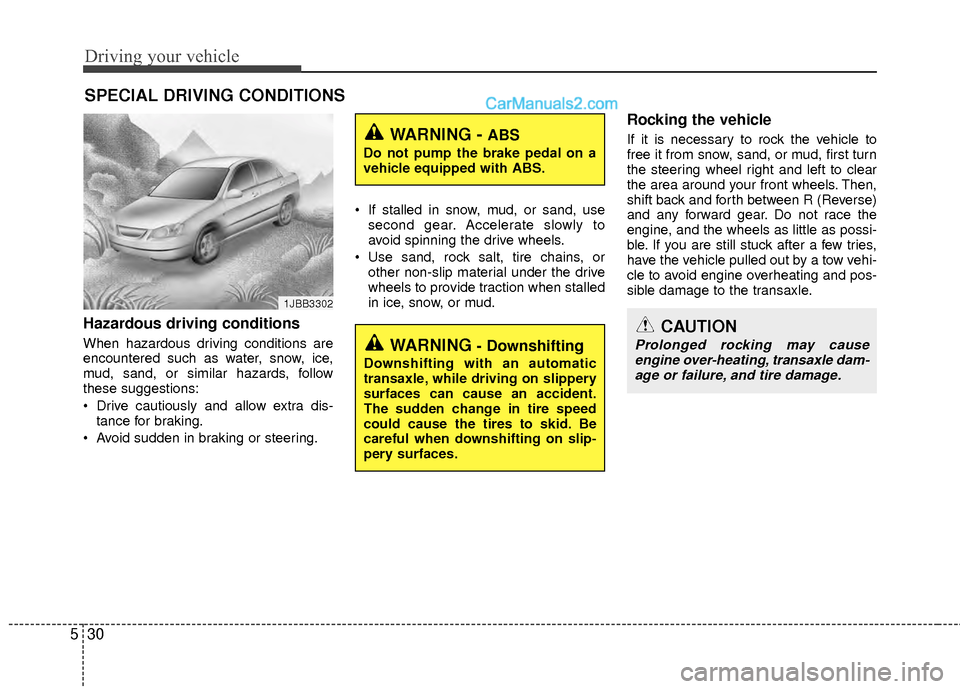
Hazardous driving conditions
When hazardous driving conditions are
encountered such as water, snow, ice,
mud, sand, or similar hazards, follow
these suggestions:
Drive cautiously and allow extra dis-
tance for braking.
Avoid sudden in braking or steering. If stalled in snow, mud, or sand, use
second gear. Accelerate slowly to
avoid spinning the drive wheels.
Use sand, rock salt, tire chains, or other non-slip material under the drive
wheels to provide traction when stalled
in ice, snow, or mud.
Rocking the vehicle
If it is necessary to rock the vehicle to
free it from snow, sand, or mud, first turn
the steering wheel right and left to clear
the area around your front wheels. Then,
shift back and forth between R (Reverse)
and any forward gear. Do not race the
engine, and the wheels as little as possi-
ble. If you are still stuck after a few tries,
have the vehicle pulled out by a tow vehi-
cle to avoid engine overheating and pos-
sible damage to the transaxle.
SPECIAL DRIVING CONDITIONS
1JBB3302
WARNING - ABS
Do not pump the brake pedal on a
vehicle equipped with ABS.
WARNING - Downshifting
Downshifting with an automatic
transaxle, while driving on slippery
surfaces can cause an accident.
The sudden change in tire speed
could cause the tires to skid. Be
careful when downshifting on slip-
pery surfaces.
CAUTION
Prolonged rocking may causeengine over-heating, transaxle dam- age or failure, and tire damage.
Page 255 of 403
533
Driving your vehicle
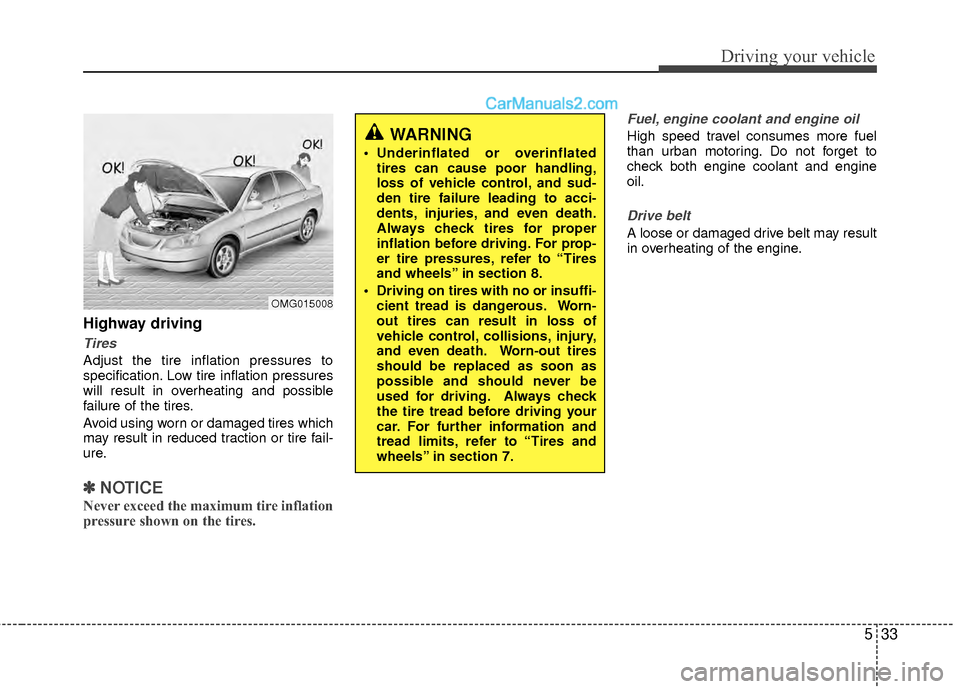
Highway driving
Tires
Adjust the tire inflation pressures to
specification. Low tire inflation pressures
will result in overheating and possible
failure of the tires.
Avoid using worn or damaged tires which
may result in reduced traction or tire fail-
ure.
✽ ✽NOTICE
Never exceed the maximum tire inflation
pressure shown on the tires.
Fuel, engine coolant and engine oil
High speed travel consumes more fuel
than urban motoring. Do not forget to
check both engine coolant and engine
oil.
Drive belt
A loose or damaged drive belt may result
in overheating of the engine.
WARNING
Underinflated or overinflated
tires can cause poor handling,
loss of vehicle control, and sud-
den tire failure leading to acci-
dents, injuries, and even death.
Always check tires for proper
inflation before driving. For prop-
er tire pressures, refer to “Tires
and wheels” in section 8.
Driving on tires with no or insuffi- cient tread is dangerous. Worn-
out tires can result in loss of
vehicle control, collisions, injury,
and even death. Worn-out tires
should be replaced as soon as
possible and should never be
used for driving. Always check
the tire tread before driving your
car. For further information and
tread limits, refer to “Tires and
wheels” in section 7.
OMG015008
Page 273 of 403
67
What to do in an emergency
IF THE ENGINE OVERHEATS
If your temperature gauge indicates over-
heating, you experience a loss of power,
or hear loud pinging or knocking, the
engine is probably too hot. If this hap-
pens, you should:
1. Pull off the road and stop as soon as itis safe to do so.
2. Place the shift lever in P (automatic transaxle) and set the parking brake. If
the air conditioning is on, turn it off.
3. If engine coolant is running out under the car or steam is coming out from
the hood, stop the engine. Do not open
the hood until the coolant has stopped
running or the steaming has stopped.
If there is no visible loss of engine
coolant and no steam, leave the
engine running and check to be sure
the engine cooling fan is operating. If
the fan is not running, turn the engine
off. 4. Check to see if the water pump drive
belt is missing. If it is not missing,
check to see that it is tight. If the drive
belt seems to be satisfactory, check for
coolant leaking from the radiator,
hoses or under the car. (If the air con-
ditioning had been in use, it is normal
for cold water to be draining from it
when you stop.)
5. If the water pump drive belt is broken or engine coolant is leaking out, stop
the engine immediately and call the
nearest authorized HYUNDAI dealer
for assistance. 6. If you cannot find the cause of the
overheating, wait until the engine tem-
perature has returned to normal. Then,
if coolant has been lost, carefully add
coolant to the reservoir to bring the
fluid level in the reservoir up to the
halfway mark.
7. Proceed with caution, keeping alert for further signs of overheating. If over-
heating happens again, call an author-
ized HYUNDAI dealer for assistance.
WARNING
While the engine is running, keep
hair, hands and clothing away from
moving parts such as the fan and
drive belts to prevent injury.
CAUTION
Serious loss of coolant indicates
there is a leak in the cooling systemand this should be checked as soonas possible by an authorizedHYUNDAI dealer.
WARNING
Do not remove the radiator cap
when the engine is hot. This may
result in coolant being blown out of
the opening and cause serious
burns.
Page 396 of 403

Index
2I
Air bags··················\
··················\
··················\
··················\
··3-35Air bag warning label··················\
··················\
············3-62
Air bag warning light ··················\
··················\
············3-38
Curtain air bag··················\
··················\
··················\
·····3-53
Driver's and passenger's front air bag ··················\
·····3-48
Occupant classification system ··················\
···············3-42
Side impact air bag··················\
··················\
················3-52
SRS components and functions ··················\
··············3-39
Air cleaner ··················\
··················\
··················\
···············7-30
Antenna (glass) ··················\
··················\
··················\
······4-111
Anti-lock brake system (ABS) ··················\
··················\
··5-18
Appearance care··················\
··················\
··················\
·······7-69 Exterior care ··················\
··················\
··················\
········7-69
Interior care ··················\
··················\
··················\
·········7-73
Armrest ··················\
··················\
··················\
··················\
··3-13
Audio system ··················\
··················\
··················\
·········4-111 Glass antenna ··················\
··················\
··················\
·····4-111
Steering wheel audio control ··················\
·················4-111
Automatic climate control system (Type A)··················\
4-80 Air conditioning ··················\
··················\
··················\
··4-88
Climate control air filter··················\
··················\
········4-90
Economy air conditioning ··················\
··················\
·····4-87
Heating and air conditioning··················\
··················\
·4-81
Automatic climate control system (Type B)··················\
4-91 Air conditioning ··················\
··················\
··················\
··4-99
Automatic heating and air conditioning··················\
··4-92
Economy air conditioning ··················\
··················\
·····4-98 Manual heating and air conditioning ··················\
······4-93
Automatic transaxle ··················\
··················\
··················\
···5-9 Shift lock system ··················\
··················\
··················\
·5-12
Aux, USB and iPod port ··················\
··················\
··········4-110
Battery ··················\
··················\
··················\
··············7-34, 8-2
Battery saver function··················\
··················\
················4-69
Before driving ··················\
··················\
··················\
············5-3
Bottle holders, see cup holders ··················\
··················\
4-106
Brake system··················\
··················\
··················\
············5-14 Anti-lock brake system (ABS) ··················\
················5-18
Electronic stability control (ESC) ··················\
···········5-19
Hill-start assist control (HAC) ··················\
················5-22
Parking brake ··················\
··················\
··················\
······5-16
Power brakes ··················\
··················\
··················\
·······5-14
Brakes fluid··················\
··················\
··················\
··············7-27
Bulb replacement ··················\
··················\
··················\
·····7-60
Bulb wattage ··················\
··················\
··················\
·············8-3
Button start/stop, see engine start/stop button·················5-5
California perchlorate notice ··················\
··················\
·····7-78
Camera (Rear view) ··················\
··················\
··················\
·4-68
Capacities (Lubricants) ··················\
··················\
···············8-5
Capacity/Weight ·················\
··················\
··················\
·········8-2
A
B
C