Page 134 of 406

WINDSHIELD WIPERS
Move the lever down for a single
wipe.
Move the control up one
position for intermittent operation.
Adjust the rotary control to the
desired speed.
Move the control up two positions
for normal operation or three positions for high-speed wiping.
Rain-sensing wipers (if equipped)
The rain-sensing wipers will automatically activate when moisture is
present on the windshield and control is intermittent operation position.
Adjust the rotary control to the desired moisture sensitivity settings. The
speed of the rain-sensitive wipers will vary based on the amount of
moisture detected on the windshield and the sensitivity setting. There
are no interval (intermittent wipe) settings on vehicles with rain-sensing
wipers. The wipers will continue to wipe as long as the presence of
moisture is detected on the windshield. More or less wiping may occur
depending on humidity, mist or light rain, or road spray.
Keep the outside of the windshield clean, especially the area around the
rear view mirror where the sensor is located or rain sensor performance
may be affected.
Note:During winter driving conditions with ice, snow or a salty road
mist, inconsistent or unexpected wiping or smearing may occur. In these
conditions, you can lower the sensitivity to reduce the amount of
smearing or override the feature by selecting low- or high-speed wiping
or turning the wiper system off.
Note:The wipers must be turned off before entering a car wash.
Windshield washer
Pull the control toward you to activate the windshield washer.
Release the control to stop washer fluid spray. The wipers will operate
for a short time after the washer is turned off.
Courtesy wipe feature
One extra wipe will happen a few seconds after washing the front
window to clear any water that is dripping down from the top of the
windshield caused by the washing.
Note:Do not operate the washer when the washer reservoir is empty.
This may cause the washer pump to overheat. Check the washer fluid
Driver Controls
134
2012 Focus(foc)
Owners Guide, 1st Printing
USA(fus)
Page 266 of 406
Make sure system is unplugged and properly stowed before driving the
vehicle. While not in use, make sure the protective cover seals the
prongs of the engine block heater cord plug.
BRAKES
Occasional brake noise is normal. If a metal-to-metal, continuous grinding
or continuous squeal sound is present, the brake linings may be worn-out
and should be inspected by an authorized dealer. If the vehicle has
continuous vibration or shudder in the steering wheel while braking, the
vehicle should be inspected by an authorized dealer.
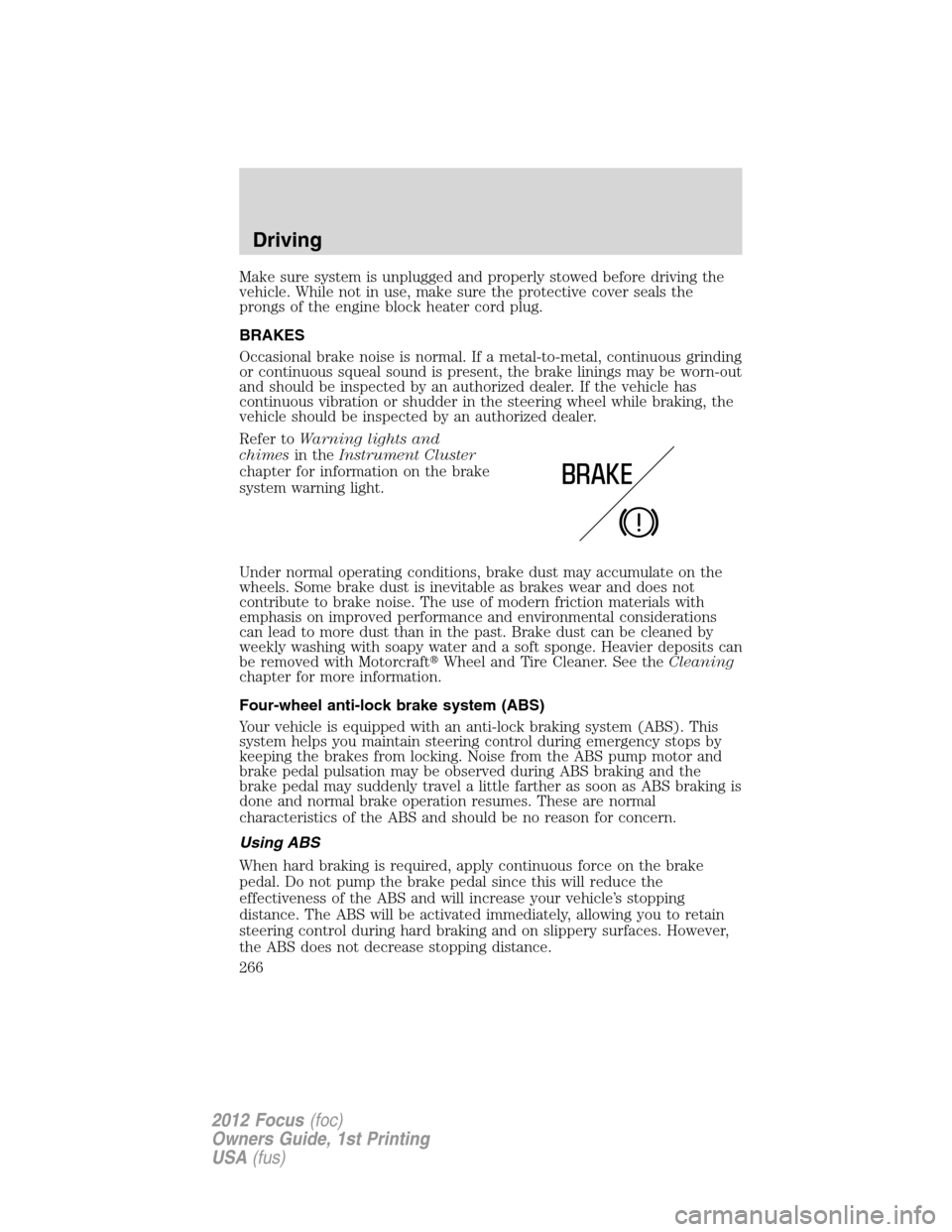
Refer toWarning lights and
chimesin theInstrument Cluster
chapter for information on the brake
system warning light.
Under normal operating conditions, brake dust may accumulate on the
wheels. Some brake dust is inevitable as brakes wear and does not
contribute to brake noise. The use of modern friction materials with
emphasis on improved performance and environmental considerations
can lead to more dust than in the past. Brake dust can be cleaned by
weekly washing with soapy water and a soft sponge. Heavier deposits can
be removed with Motorcraft�Wheel and Tire Cleaner. See theCleaning
chapter for more information.
Four-wheel anti-lock brake system (ABS)
Your vehicle is equipped with an anti-lock braking system (ABS). This
system helps you maintain steering control during emergency stops by
keeping the brakes from locking. Noise from the ABS pump motor and
brake pedal pulsation may be observed during ABS braking and the
brake pedal may suddenly travel a little farther as soon as ABS braking is
done and normal brake operation resumes. These are normal
characteristics of the ABS and should be no reason for concern.
Using ABS
When hard braking is required, apply continuous force on the brake
pedal. Do not pump the brake pedal since this will reduce the
effectiveness of the ABS and will increase your vehicle’s stopping
distance. The ABS will be activated immediately, allowing you to retain
steering control during hard braking and on slippery surfaces. However,
the ABS does not decrease stopping distance.
Driving
266
2012 Focus(foc)
Owners Guide, 1st Printing
USA(fus)
Page 353 of 406
Refueling
WARNING:Fuel vapor burns violently and a fuel fire can cause
severe injuries. To help avoid injuries to you and others:
•Read and follow all the instructions on the pump island;
•Turn off your engine when you are refueling;
•Do not smoke if you are near fuel or refueling your vehicle;
•Keep sparks, flames and smoking materials away from fuel;
•Stay outside your vehicle and do not leave the fuel pump unattended
when refueling your vehicle — this is against the law in some places;
•Keep children away from the fuel pump; never let children pump
fuel.
•Do not use personal electronic devices while refueling.
Use the following guidelines to avoid electrostatic charge build-up when
filling an ungrounded fuel container:
•Place approved fuel container on the ground.
•DO NOT fill a fuel container while it is in the vehicle (including the
cargo area).
•Keep the fuel pump nozzle in contact with the fuel container while
filling.
•DO NOT use a device that would hold the fuel pump handle in the fill
position.
Easy Fuel�“no cap” fuel system
Your fuel tank is equipped with an Easy Fuel�“no cap” fuel filler system.
This allows you to simply open the fuel filler door and insert the fuel
filler nozzle into the fuel system. The Easy Fuel�system is self-sealing
and protected against dust, dirt, water and snow/ice.
When fueling your vehicle:
1. Turn the engine off.
2. Open the fuel filler door. (On some vehicles, open the fuel filler door
by pressing the center of the door about one inch from the door’s rear
edge.)
3. Slowly insert the fuel filler nozzle fully into the fuel system, and leave
the nozzle fully inserted until you are done pumping. Pump fuel as
normal.
Maintenance and Specifications
353
2012 Focus(foc)
Owners Guide, 1st Printing
USA(fus)