2010 VOLKSWAGEN TIGUAN electrical
[x] Cancel search: electricalPage 174 of 435
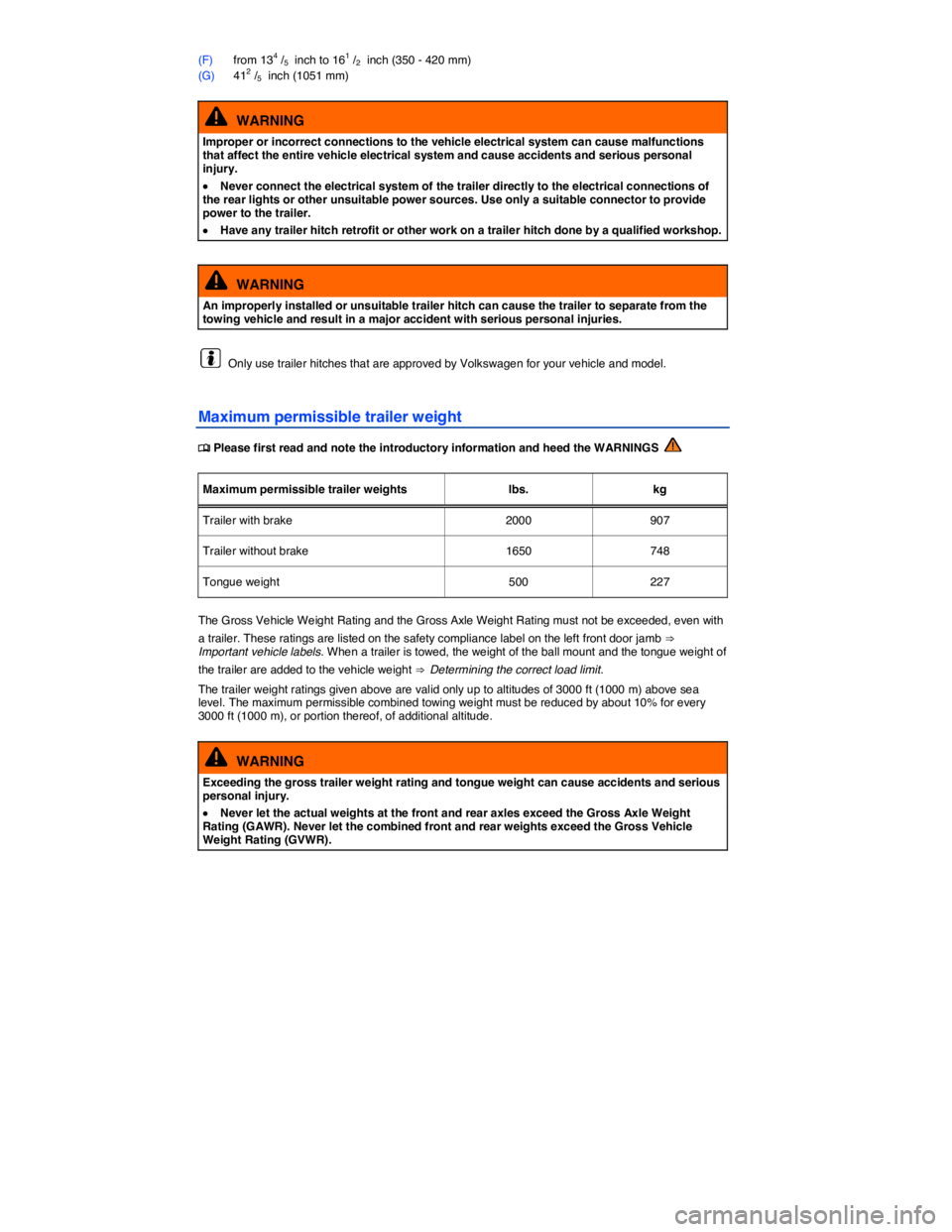
(F) from 134 /5 inch to 161 /2 inch (350 - 420 mm)
(G) 412 /5 inch (1051 mm)
WARNING
Improper or incorrect connections to the vehicle electrical system can cause malfunctions that affect the entire vehicle electrical system and cause accidents and serious personal injury.
x Never connect the electrical system of the trailer directly to the electrical connections of the rear lights or other unsuitable power sources. Use only a suitable connector to provide power to the trailer.
x Have any trailer hitch retrofit or other work on a trailer hitch done by a qualified workshop.
WARNING
An improperly installed or unsuitable trailer hitch can cause the trailer to separate from the towing vehicle and result in a major accident with serious personal injuries.
Only use trailer hitches that are approved by Volkswagen for your vehicle and model.
Maximum permissible trailer weight
Page 224 of 435

To help prevent damage from voltage fluctuations, switch off all electrical devices connected to a 12 Volt socket before switching the ignition on or off or starting the engine.
The vehicle may have 12 Volt sockets at the following places:
x In the storage compartment in the lower front center console.
x In the storage compartment in the front center armrest.
x In the luggage compartment ⇒ fig. 133.
x In the rear center console ⇒ fig. 134.
NOTICE
x Follow the manufacturer's instructions for connected devices!
x Never exceed the maximum power consumption, or the entire vehicle electrical system may be damaged.
x Only use equipment that has been tested for electromagnetic compatibility and complies with applicable guidelines.
x Never feed current into the socket, with a solar panel, for example.
Unshielded devices may interfere with radio reception or the vehicle's electrical system.
Page 232 of 435

Please perform these steps only in the order listed.
Vehicles without Keyless Access Vehicles with Keyless Access
5. Turn the vehicle key to position ⇒ fig. 135 (0) in the ignition switch. Briefly press the starter button ⇒ fig. 136. If the engine will not switch off, carry out the emergency shutoff procedure
6. With a manual transmission, shift into 1st gear (vehicle on flat surface or pointing uphill) or Reverse (R) (vehicle pointing downhill).
7. Removing the vehicle key from the ignition switches off electrical equipment and activates the steering column lock.
Opening the doors switches off electrical equipment and activates the steering column lock.
WARNING
Never stop the engine before the vehicle has come to a complete stop. You can lose control of the vehicle, crash, and be seriously injured.
x The airbags and safety belt pretensioners will not work when the ignition is switched off.
x The brake booster does not work when the engine is not running. More brake pedal pressure will be needed to stop the vehicle.
x The power steering system does not work when the engine is not running, and you will need more force to steer the vehicle.
x When the key is removed from the ignition switch, the steering will lock and you will not be able to steer the vehicle.
NOTICE
If the vehicle has been driven hard for a long time, the engine could overheat when it is stopped. To reduce the risk of engine damage, let the engine idle in Neutral for about 2 minutes before you switch off the ignition.
If the ignition is switched on or the engine is running and the driver door is opened, a chime sounds. The chime is also a reminder to switch off the engine and turn off the ignition before leaving and locking the vehicle from the outside.
On vehicles with automatic transmissions, the vehicle key can only be removed from the ignition when the transmission is in Park (P).
After the engine has been switched off, the radiator fan in the engine compartment may keep running for several minutes, or may start running after the vehicle has been parked for a while, even if the ignition is switched off and the vehicle key has been removed. The radiator fan shuts off automatically when the engine has cooled down enough.
off the engine and turn off the ignition before leaving and locking the vehicle from the outside
Page 263 of 435
Calm and smooth driving
Consistency is more important than speed. The more smoothly you drive, the less fuel the vehicle consumes.
When driving on the highway or freeway, a constant, moderate speed is more efficient and economical than constantly accelerating and braking. Usually you can reach your destination just as quickly by driving at a moderate, but steady speed.
The cruise control system can assist in maintaining a uniform driving style.
Moderate use of extra electrical loads
Comfort inside the vehicle is nice and important, but it is important to use them in an environmentally conscious manner.
Some devices can increase fuel consumption when activated (examples):
x Climate control system (air conditioner): If the air conditioner has to produce starkly contrasting temperatures, it requires a large amount of energy, which is generated by the engine. The temperature in the vehicle should therefore not be extremely different from that of the outside temperature. It may be helpful to ventilate the vehicle before driving and then to drive a short distance with the windows open. After that, switch on the air conditioner with the windows closed. Keep the windows closed when driving at high speeds. Open windows increase fuel consumption.
x Switch off seat heating once it has served its purpose.
x Switch off the rear window defroster as soon as the windows are free of fog and ice.
Additional factors that increase fuel consumption (examples):
x Malfunctioning engine control.
x Driving in the mountains.
x Towing a trailer.
NOTICE
Never let the vehicle coast or roll down a hill in Neutral (N), especially when the engine is not running. The transmission will not be lubricated and will be damaged.
Fuel-efficient driving
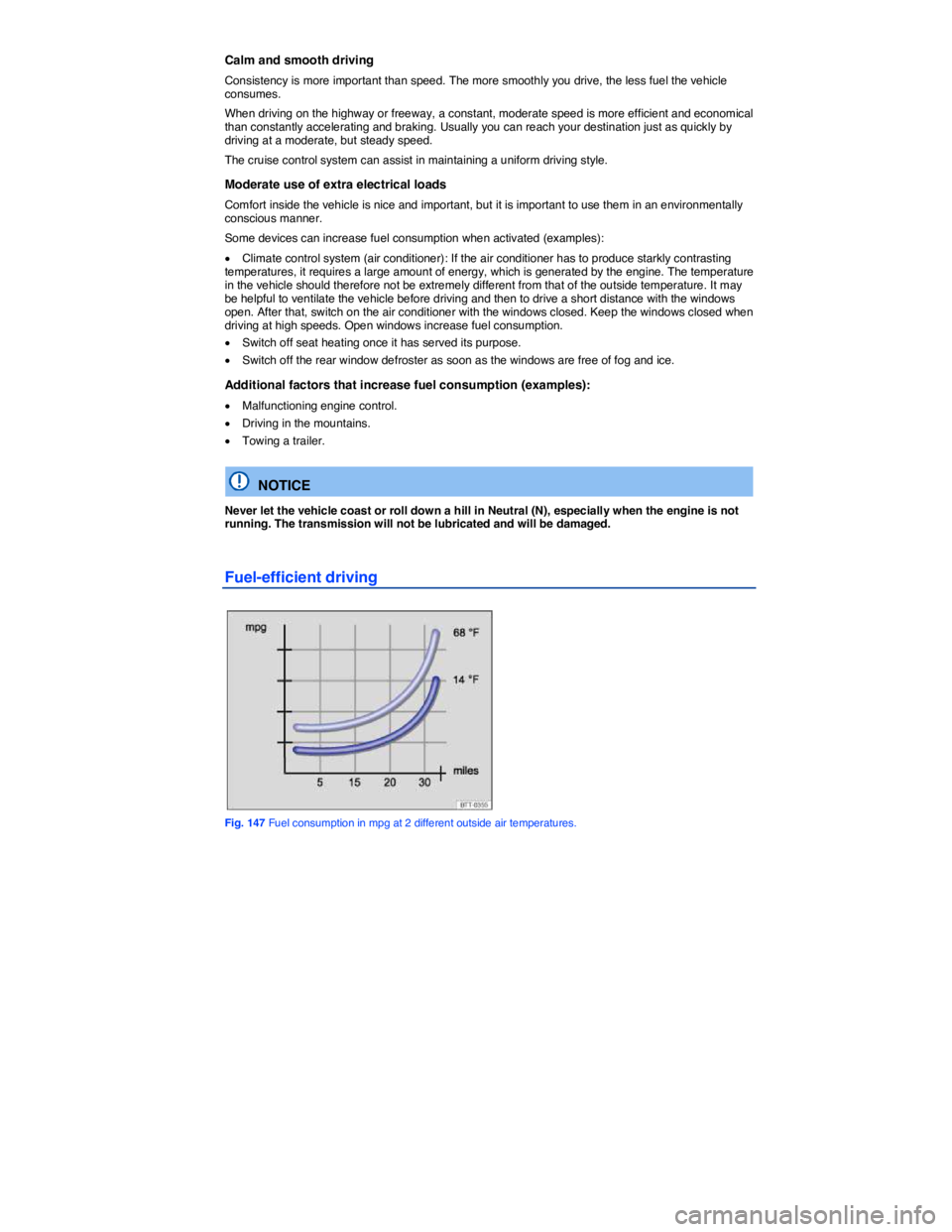
Fig. 147 Fuel consumption in mpg at 2 different outside air temperatures.
Page 277 of 435
x Wet the camera lens with a commercially available alcohol-based glass cleaner and clean with a
dry cloth ⇒ .
x Remove snow with a brush.
x Remove ice with deicer spray ⇒ .
NOTICE
x Never use abrasive cleaning agents to clean the camera lens.
x Never remove snow or ice on the camera lens with warm or hot water. This can damage the camera lens.
Volkswagen recommends practicing parking with the Rear View Camera system in a safe place with little or no traffic or in a parking lot under good visibility and weather conditions in order to familiarize yourself with the system, the orientation lines and the way they work.
Rear View Camera system cannot be activated when the factory-installed trailer hitch is electrically connected to the trailer or the rear hatch is open.
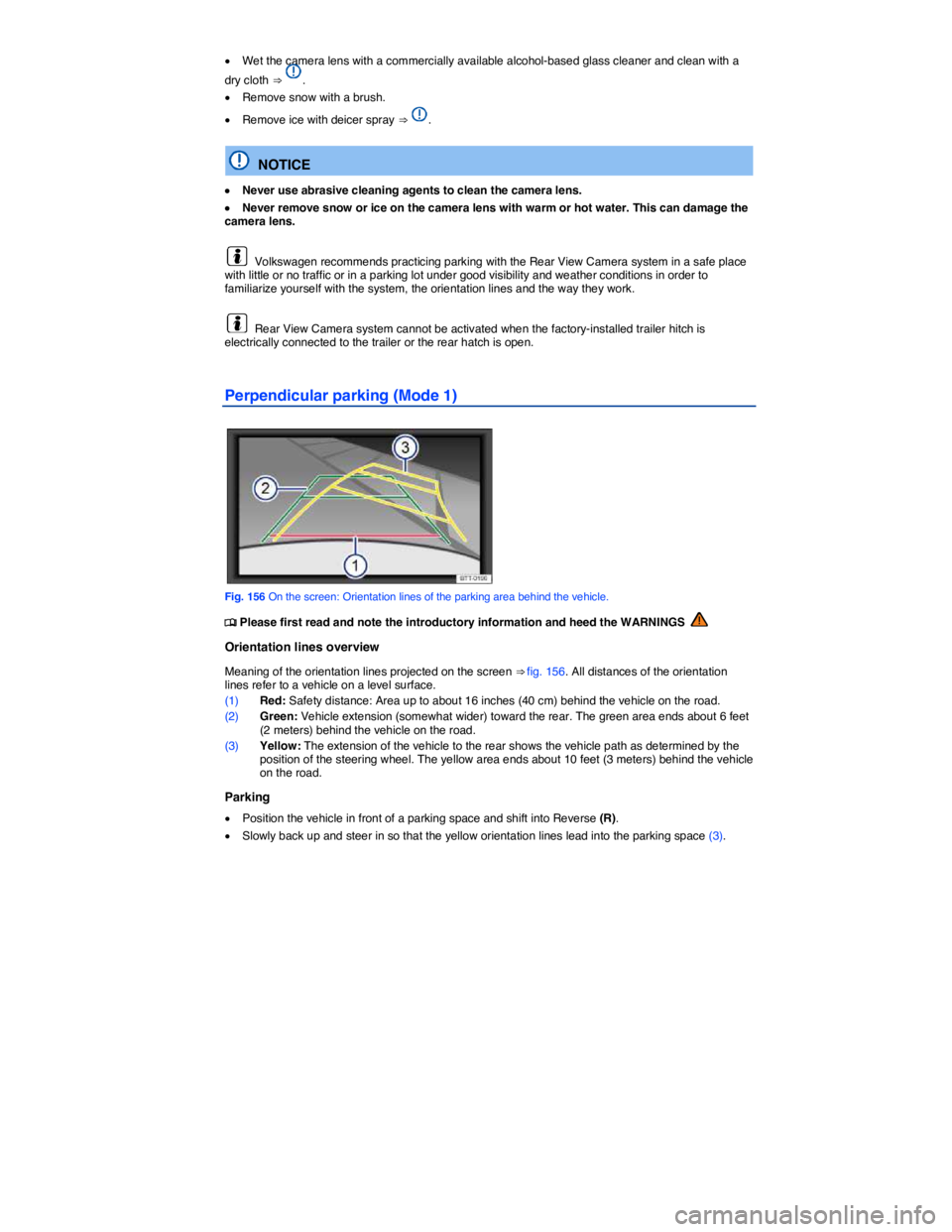
Perpendicular parking (Mode 1)
Fig. 156 On the screen: Orientation lines of the parking area behind the vehicle.
Page 310 of 435
x After driving through water, have the vehicle drive train and electrical system thoroughly inspected for damage by an authorized Volkswagen dealer or an authorized Volkswagen Service Facility.
WARNING
Flowing water is very powerful and can sweep your vehicle away. This can lead create an extremely dangerous situation and cause an accident with serious personal injuries.
x Never take routes or risks that could put you or your passengers in danger. If you cannot go on or have doubts about the safety of your route, turn back and take a new route.
x Never stop in the water.
x If water gets into the engine, your vehicle can break down. You will lose control of a broken down vehicle, and it can be swept away.
x Soft surfaces, mud, underwater obstacles, and holes can cause accidents and can cause the vehicle to break down in the water. This can lead pose extreme danger.
x Rapidly flowing water can develop strong forces that can pull the vehicle downstream. This can cause accidents and fatal injuries.
x Drive through water only where the banks and bottom are firm enough and the water is shallower at all points than the maximum permissible fording depth for your vehicle.
NOTICE
x Vehicle components such as the engine, drive train, suspension or electrical system may be severely damaged by driving through water.
x Avoid stopping in deep water. This can let water get inside the vehicle.
x On soft ground, the tires dig into the surface. This reduces fording depth. Make sure that the ground is sufficiently firm.
x Avoid creating a bow wave in front of the vehicle while driving through water. A bow wave could force its way into the engine air intake duct and seriously damage the engine.
x If you even briefly exceed the maximum fording depth when driving through water, severe engine damage will result. This engine damage will lead to a vehicle breakdown. This can disable the vehicle in the water.
x Never drive over salt flats or through salt or salty water. Salt causes vehicle corrosion. Rinse all parts of the vehicle that were exposed to salt or salt water right away with fresh water.
Driving over snow-covered terrain
Page 320 of 435

WARNING
High voltage systems in the engine compartment can cause electrical shocks or even electrocution, severe burns, other serious injuries, and even death!
x Never short-circuit the electrical system. Be especially careful when using jumper cables. The vehicle's battery could explode!
x To reduce the risk of electrical shock and personal injury while the engine is running or being started:
– Never touch ignition cables. Never touch other components of the high voltage electronic ignition system.
– Never touch the wiring of the HID - High Intensity Discharge (Xenon) headlights.
x Read and heed the important information and warnings on cleaning the engine compartment
WARNING
Moving parts in the engine compartment can cause serious personal injury on contact.
x Never reach into the area around or touch the radiator fan. Contact with the blades can cause serious personal injury. Always remember that the radiator fan is temperature-controlled and can come on suddenly even when the engine has been switched off for a while and the key has been removed from the ignition.
x If you have to perform a check or repair when the engine is running, there are more risks from the rotating parts, such as the drive belts, alternator, radiator fan, etc., and from the high-voltage ignition system. Always use extreme care.
– Always make sure that jewelry, loose clothing and long hair do not get caught in rotating engine parts. Before starting any work remove your jewelry, take off your necktie, tie back and cover your hair, and do not wear clothing that can hang down and get caught in moving engine parts.
– Always use extreme caution if the accelerator pedal has to be depressed to perform a check. The vehicle will start to move even if the electronic parking brake is on.
x Never leave any objects in the engine compartment, for example cleaning rags and tools. Objects left behind can cause malfunctions, engine damage, and even fires.
WARNING
Additional materials in the engine compartment such as blankets can interfere with the operation of the engine and can cause fires which can lead to serious injuries.
x Never cover the engine with blankets or other materials.
Page 321 of 435

WARNING
Operating fluids and some materials in the engine compartment can catch fire easily, causing burns and other serious personal injuries!
x Do not smoke.
x Never work next to open flames or sparks.
x Never pour or spill operating fluids or other flammable liquids on the engine. These fluids can ignite on hot engine parts and cause injuries.
x If work on the fuel system or the electrical system is necessary:
– Always disconnect the 12 Volt vehicle battery. Make sure the vehicle is unlocked when you disconnect the battery, or the alarm will go off. Never touch the electrical wiring of the ignition system.
– Never work near heaters, water heaters, or other open flames.
x Always have a functional, approved fire extinguisher nearby.
NOTICE
When changing or topping off fluids, make sure that you pour the fluids into the correct reservoirs. Adding the wrong type of operating fluids will cause serious malfunctions and engine damage.
Fluid leaks are harmful to the environment. Regularly check the ground underneath your vehicle for this reason. If you find spots of oil or other fluids, have your vehicle checked by your authorized Volkswagen dealer or authorized Volkswagen Service Facility. Dispose of leaked operating fluids properly.
Warning light