Page 9 of 438
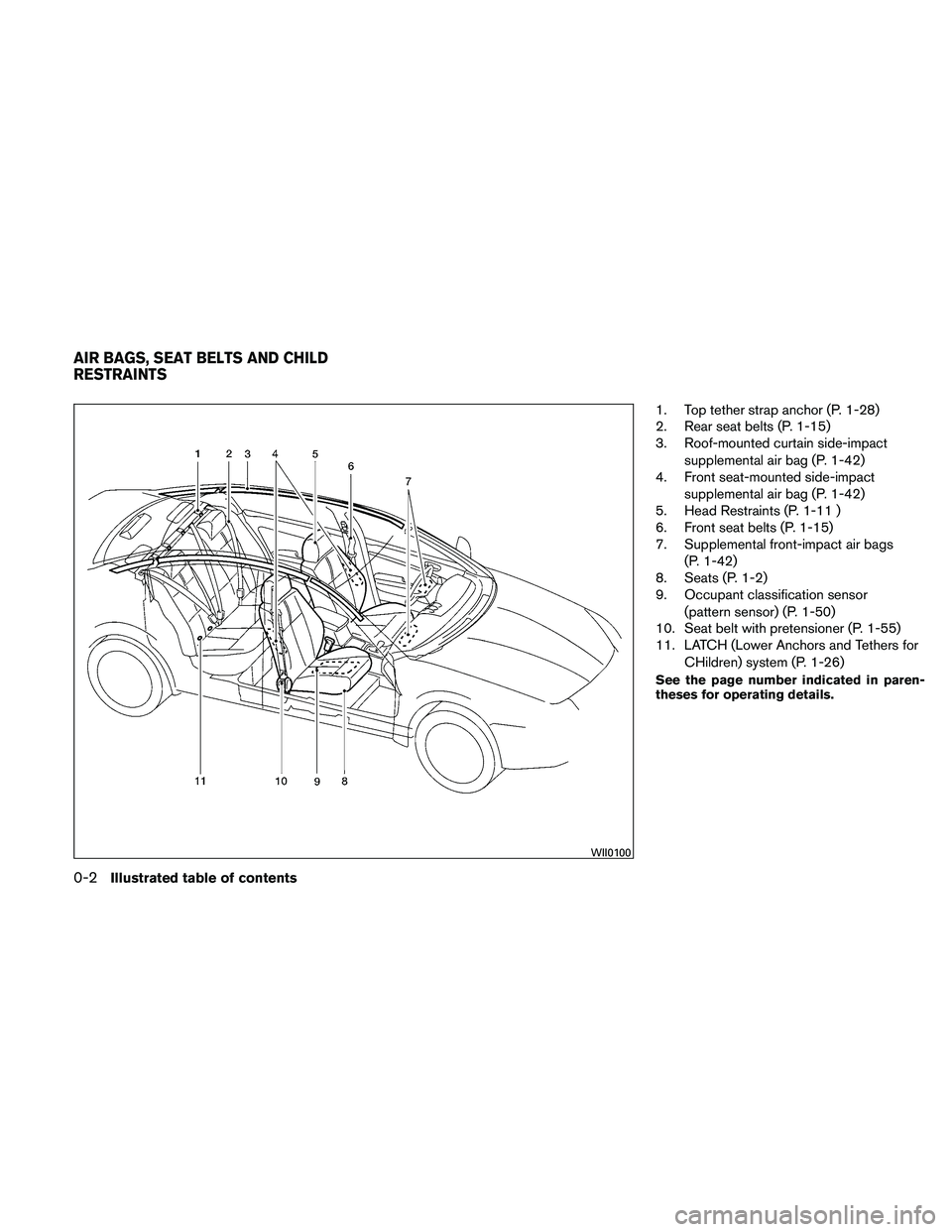
1. Top tether strap anchor (P. 1-28)
2. Rear seat belts (P. 1-15)
3. Roof-mounted curtain side-impactsupplemental air bag (P. 1-42)
4. Front seat-mounted side-impact
supplemental air bag (P. 1-42)
5. Head Restraints (P. 1-11 )
6. Front seat belts (P. 1-15)
7. Supplemental front-impact air bags
(P. 1-42)
8. Seats (P. 1-2)
9. Occupant classification sensor
(pattern sensor) (P. 1-50)
10. Seat belt with pretensioner (P. 1-55)
11. LATCH (Lower Anchors and Tethers for
CHildren) system (P. 1-26)
See the page number indicated in paren-
theses for operating details.
Page 14 of 438
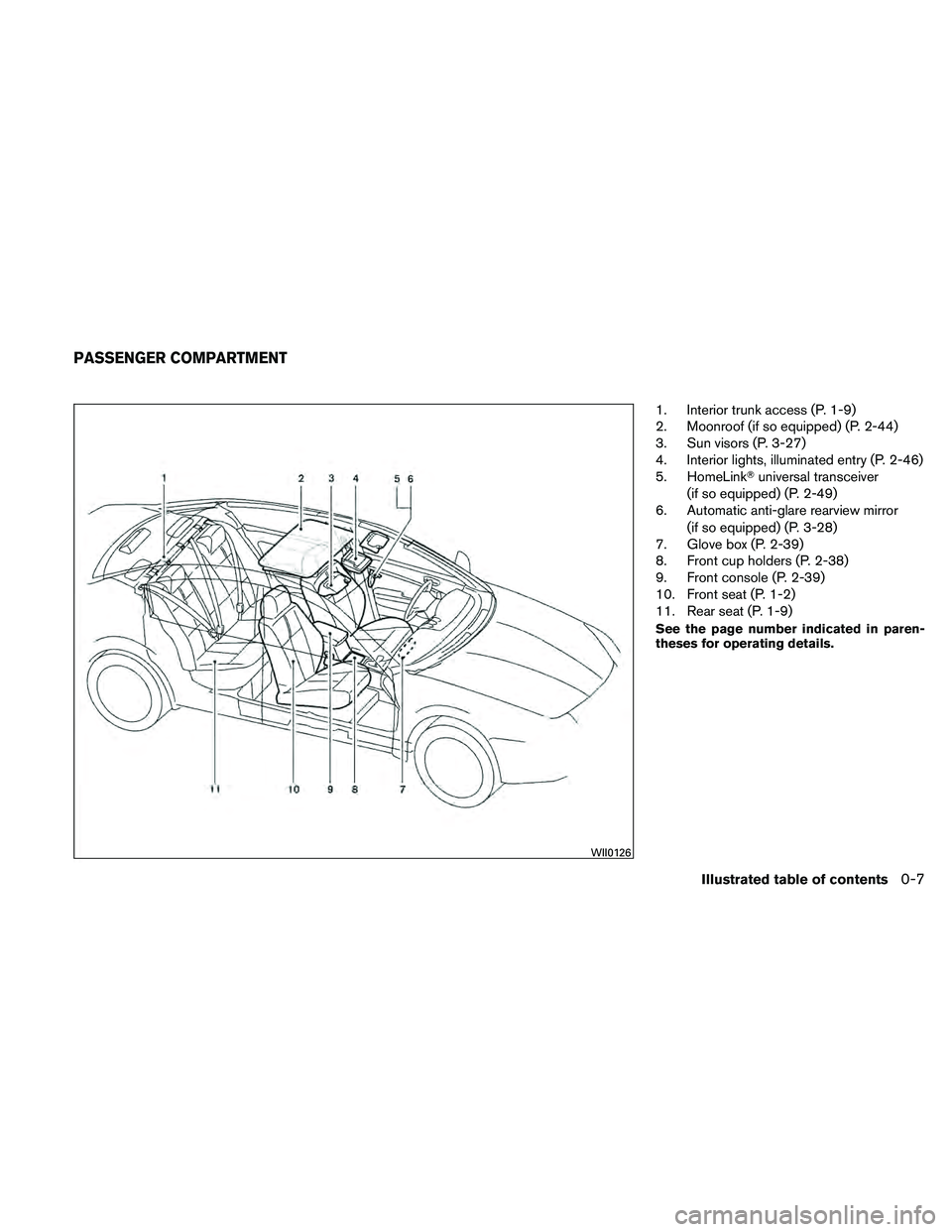
1. Interior trunk access (P. 1-9)
2. Moonroof (if so equipped) (P. 2-44)
3. Sun visors (P. 3-27)
4. Interior lights, illuminated entry (P. 2-46)
5. HomeLink�universal transceiver
(if so equipped) (P. 2-49)
6. Automatic anti-glare rearview mirror
(if so equipped) (P. 3-28)
7. Glove box (P. 2-39)
8. Front cup holders (P. 2-38)
9. Front console (P. 2-39)
10. Front seat (P. 1-2)
11. Rear seat (P. 1-9)
See the page number indicated in paren-
theses for operating details.
Page 61 of 438
PRECAUTIONS ON
SUPPLEMENTAL RESTRAINT
SYSTEM
This Supplemental Restraint System (SRS) sec-
tion contains important information concerning
the following systems:● Driver and passenger supplemental front-
impact air bag (NISSAN Advanced Air Bag
System)
● Front seat-mounted side-impact supple-
mental air bag
● Roof-mounted curtain side-impact supple-
mental air bag
● Seat belt with pretensioner
Supplemental front-impact air bag system:
The NISSAN Advanced Air Bag System can help
cushion the impact force to the head and chest of
the driver and front passenger in certain frontal
collisions.
Front seat-mounted side-impact supple-
mental air bag system: This system can help
cushion the impact force to the chest and pelvic
area of the driver and front passenger in certain
side-impact collisions. The side air bags are de-
signed to inflate on the side where the vehicle is
impacted. Roof-mounted curtain side-impact supple-
mental air bag system:
This system can help
cushion the impact force to the head of occu-
pants in front and rear outboard seating positions
in certain side-impact collisions. The curtain air
bags are designed to inflate on the side where
the vehicle is impacted.
These supplemental restraint systems are de-
signed to supplement the crash protection pro-
vided by the driver and front passenger seat belts
and are not a substitute for them. Seat belts
should always be correctly worn and the occu-
pant seated a suitable distance away from the
steering wheel, instrument panel and door finish-
ers. (See “Seat belts” earlier in this section for
instructions and precautions on seat belt usage.)
The supplemental air bags operate only
when the ignition switch is placed in the
ON position.
After placing the ignition switch in the ON
position, the supplemental air bag warning
light illuminates. The supplemental air bag
warning light will turn off after about 7
seconds if the system is operational.
SUPPLEMENTAL RESTRAINT
SYSTEM
1-42Safety—Seats, seat belts and supplemental restraint system
Page 66 of 438
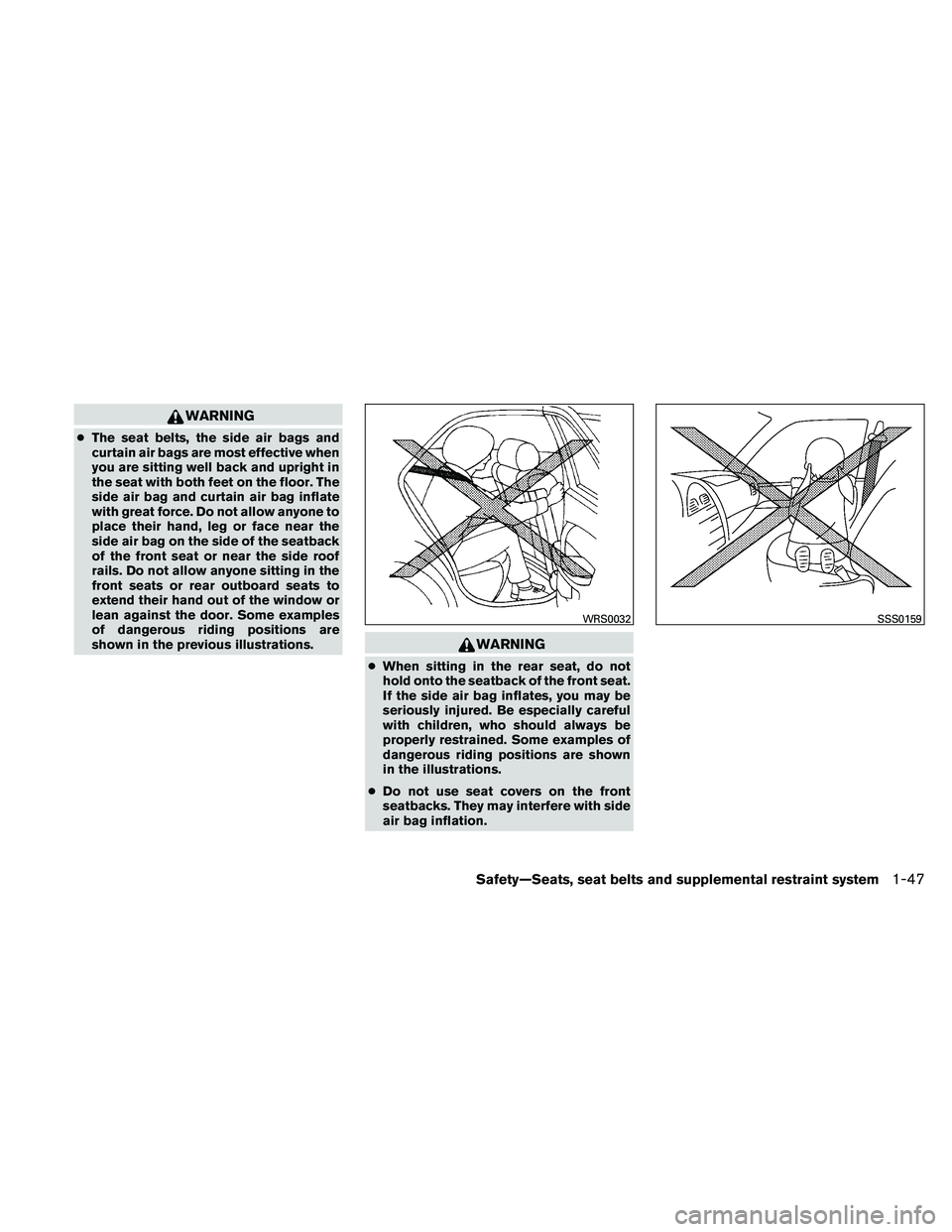
WARNING
●The seat belts, the side air bags and
curtain air bags are most effective when
you are sitting well back and upright in
the seat with both feet on the floor. The
side air bag and curtain air bag inflate
with great force. Do not allow anyone to
place their hand, leg or face near the
side air bag on the side of the seatback
of the front seat or near the side roof
rails. Do not allow anyone sitting in the
front seats or rear outboard seats to
extend their hand out of the window or
lean against the door. Some examples
of dangerous riding positions are
shown in the previous illustrations.
Page 68 of 438
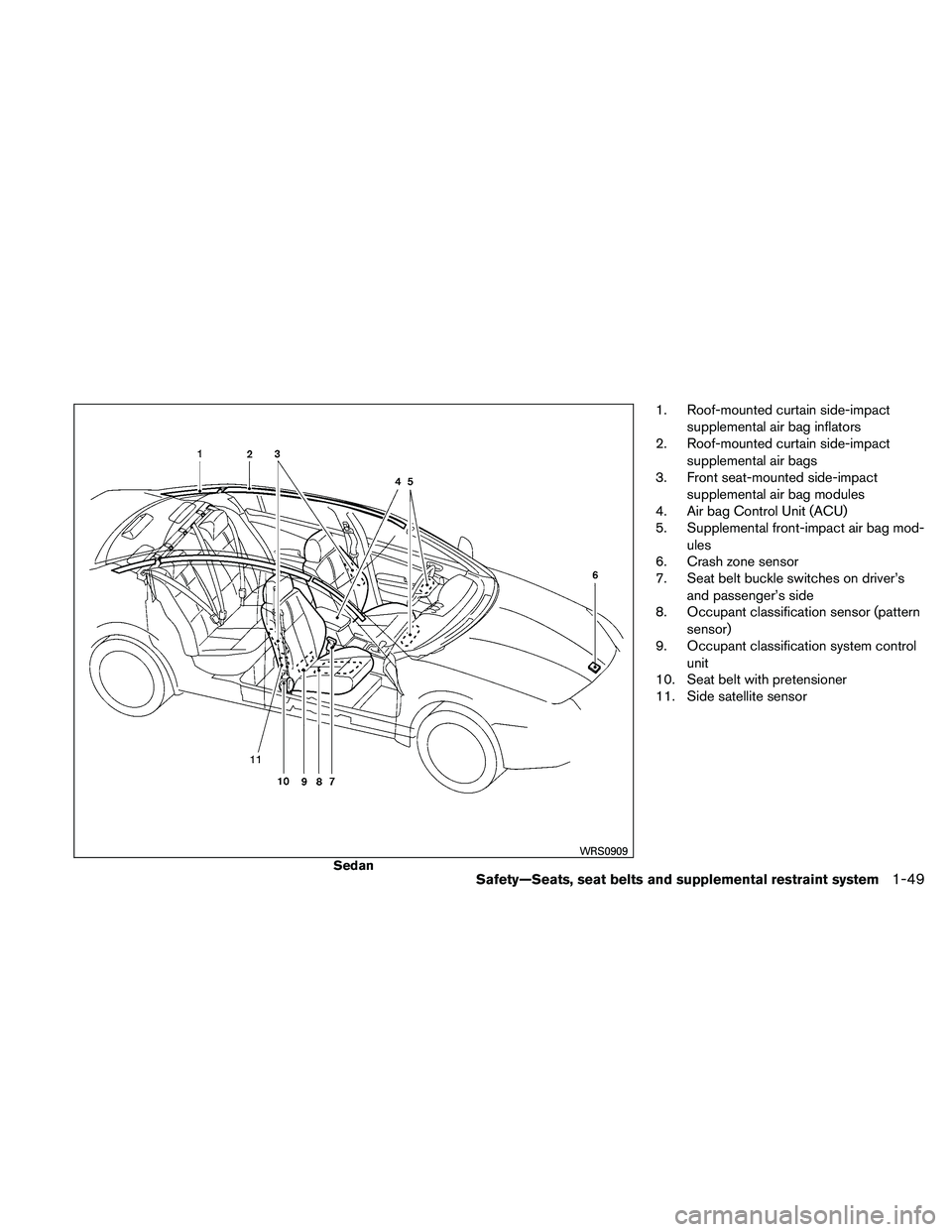
1. Roof-mounted curtain side-impactsupplemental air bag inflators
2. Roof-mounted curtain side-impact
supplemental air bags
3. Front seat-mounted side-impact
supplemental air bag modules
4. Air bag Control Unit (ACU)
5. Supplemental front-impact air bag mod-
ules
6. Crash zone sensor
7. Seat belt buckle switches on driver’s
and passenger’s side
8. Occupant classification sensor (pattern
sensor)
9. Occupant classification system control
unit
10. Seat belt with pretensioner
11. Side satellite sensor
Page 73 of 438
Front seat-mounted side-impact
supplemental air bag and roof-
mounted curtain side-impact
supplemental air bag systems
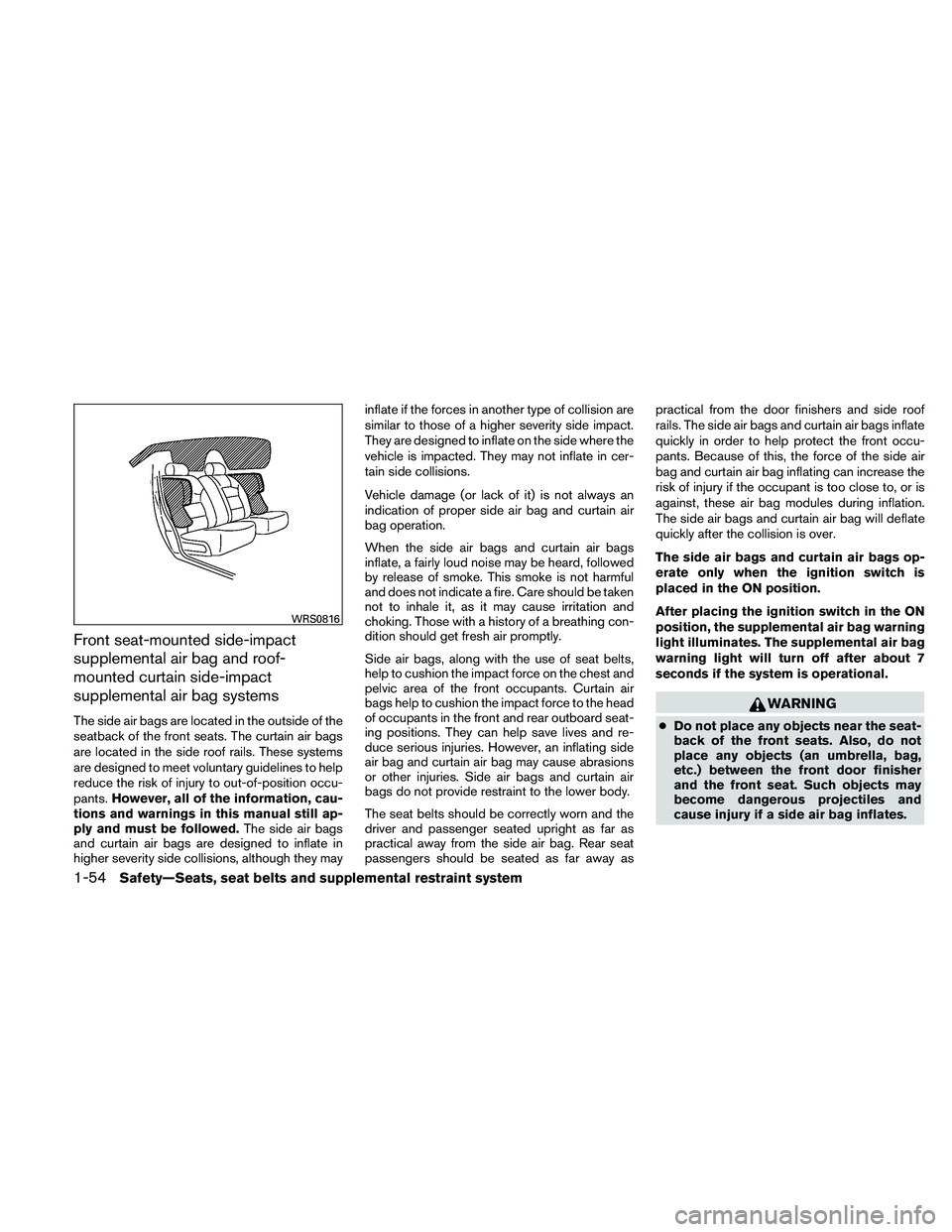
The side air bags are located in the outside of the
seatback of the front seats. The curtain air bags
are located in the side roof rails. These systems
are designed to meet voluntary guidelines to help
reduce the risk of injury to out-of-position occu-
pants.However, all of the information, cau-
tions and warnings in this manual still ap-
ply and must be followed. The side air bags
and curtain air bags are designed to inflate in
higher severity side collisions, although they may inflate if the forces in another type of collision are
similar to those of a higher severity side impact.
They are designed to inflate on the side where the
vehicle is impacted. They may not inflate in cer-
tain side collisions.
Vehicle damage (or lack of it) is not always an
indication of proper side air bag and curtain air
bag operation.
When the side air bags and curtain air bags
inflate, a fairly loud noise may be heard, followed
by release of smoke. This smoke is not harmful
and does not indicate a fire. Care should be taken
not to inhale it, as it may cause irritation and
choking. Those with a history of a breathing con-
dition should get fresh air promptly.
Side air bags, along with the use of seat belts,
help to cushion the impact force on the chest and
pelvic area of the front occupants. Curtain air
bags help to cushion the impact force to the head
of occupants in the front and rear outboard seat-
ing positions. They can help save lives and re-
duce serious injuries. However, an inflating side
air bag and curtain air bag may cause abrasions
or other injuries. Side air bags and curtain air
bags do not provide restraint to the lower body.
The seat belts should be correctly worn and the
driver and passenger seated upright as far as
practical away from the side air bag. Rear seat
passengers should be seated as far away as
practical from the door finishers and side roof
rails. The side air bags and curtain air bags inflate
quickly in order to help protect the front occu-
pants. Because of this, the force of the side air
bag and curtain air bag inflating can increase the
risk of injury if the occupant is too close to, or is
against, these air bag modules during inflation.
The side air bags and curtain air bag will deflate
quickly after the collision is over.
The side air bags and curtain air bags op-
erate only when the ignition switch is
placed in the ON position.
After placing the ignition switch in the ON
position, the supplemental air bag warning
light illuminates. The supplemental air bag
warning light will turn off after about 7
seconds if the system is operational.
Page 122 of 438
To fully close the moonroof, push the switch
toward
Page 123 of 438
Depending on the environment or driving
conditions, the auto-reverse function may
be activated if an impact or load similar to
something being caught in the moonroof
occurs.