Page 262 of 314
719
Maintenance
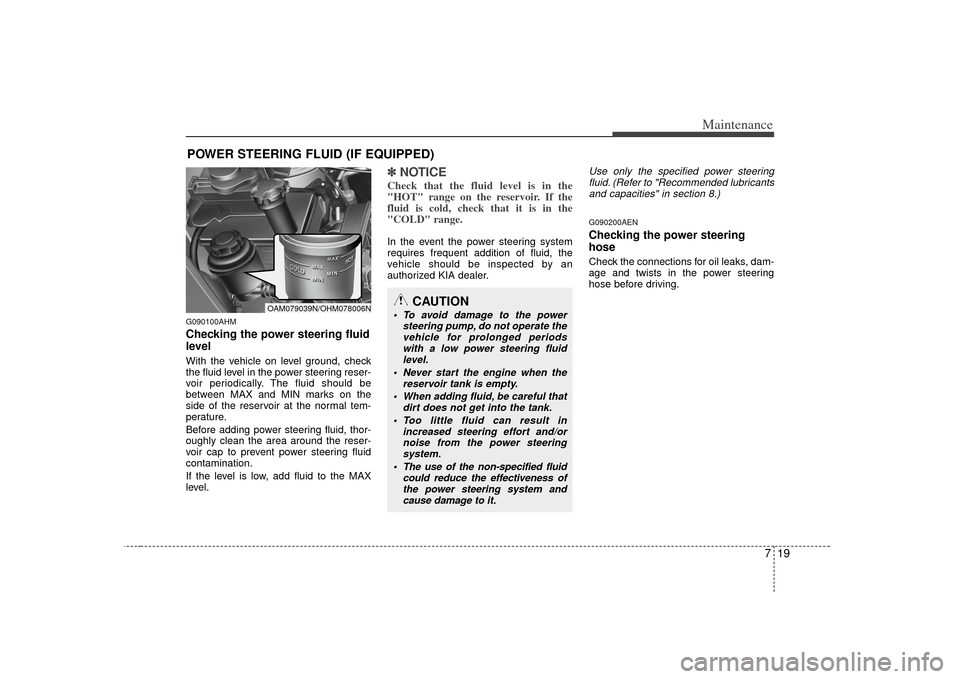
POWER STEERING FLUID (IF EQUIPPED)G090100AHMChecking the power steering fluid
level With the vehicle on level ground, check
the fluid level in the power steering reser-
voir periodically. The fluid should be
between MAX and MIN marks on the
side of the reservoir at the normal tem-
perature.
Before adding power steering fluid, thor-
oughly clean the area around the reser-
voir cap to prevent power steering fluid
contamination.
If the level is low, add fluid to the MAX
level.
✽ ✽NOTICECheck that the fluid level is in the
"HOT" range on the reservoir. If the
fluid is cold, check that it is in the
"COLD" range.In the event the power steering system
requires frequent addition of fluid, the
vehicle should be inspected by an
authorized KIA dealer.
Use only the specified power steering
fluid. (Refer to "Recommended lubricants and capacities" in section 8.)G090200AENChecking the power steering
hoseCheck the connections for oil leaks, dam-
age and twists in the power steering
hose before driving.
CAUTION
To avoid damage to the power steering pump, do not operate thevehicle for prolonged periods with a low power steering fluidlevel.
Never start the engine when the reservoir tank is empty.
When adding fluid, be careful that dirt does not get into the tank.
Too little fluid can result in increased steering effort and/ornoise from the power steeringsystem.
The use of the non-specified fluid could reduce the effectiveness ofthe power steering system andcause damage to it.
OAM079039N/OHM078006N
Page 307 of 314
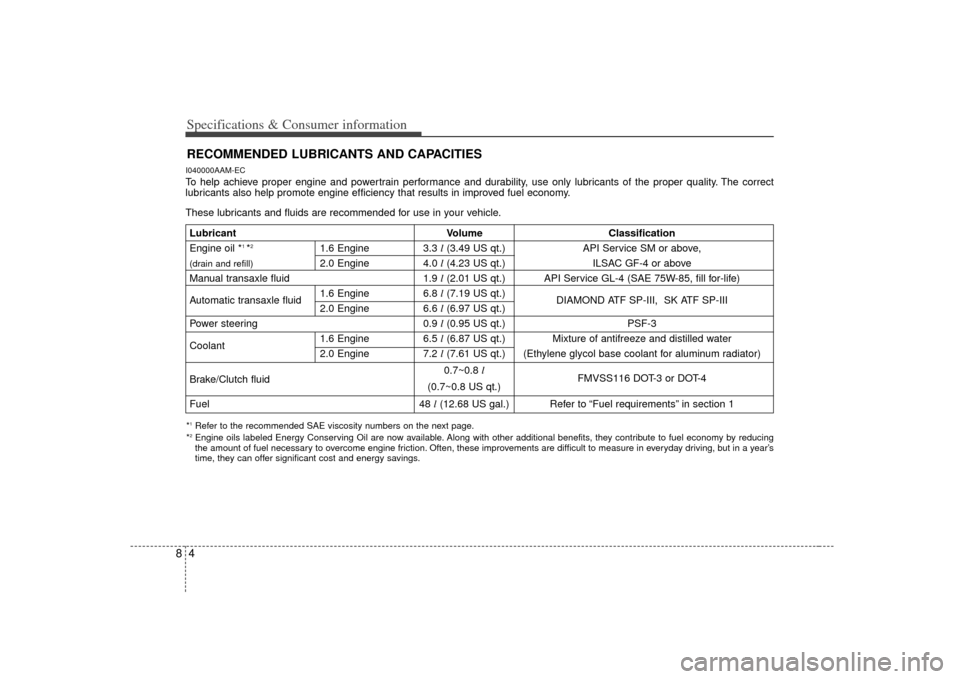
Specifications & Consumer information48RECOMMENDED LUBRICANTS AND CAPACITIESI040000AAM-ECTo help achieve proper engine and powertrain performance and durability, use only lubricants of the proper quality. The correct
lubricants also help promote engine efficiency that results in improved fuel economy.
These lubricants and fluids are recommended for use in your vehicle.*1Refer to the recommended SAE viscosity numbers on the next page.
*2Engine oils labeled Energy Conserving Oil are now available. Along with other additional benefits, they contribute to fuel econo my by reducing
the amount of fuel necessary to overcome engine friction. Often, these improvements are difficult to measure in everyday driving, but in a year’s
time, they can offer significant cost and energy savings.Lubricant Volume Classification
Engine oil *
1 *2
1.6 Engine 3.3 l (3.49 US qt.) API Service SM or above,
(drain and refill)
2.0 Engine4.0 l(4.23 US qt.) ILSAC GF-4 or above
Manual transaxle fluid 1.9 l(2.01 US qt.) API Service GL-4 (SAE 75W-85, fill for-life)
Automatic transaxle fluid 1.6 Engine 6.8 l
(7.19 US qt.)
DIAMOND ATF SP-III, SK ATF SP-III
2.0 Engine 6.6 l(6.97 US qt.)
Power steering 0.9 l(0.95 US qt.) PSF-3
1.6 Engine 6.5 l (6.87 US qt.) Mixture of antifreeze and distilled water
Coolant
2.0 Engine7.2 l(7.61 US qt.) (Ethylene glycol base coolant for aluminum radiator)
Brake/Clutch fluid 0.7~0.8
l
FMVSS116 DOT-3 or DOT-4
(0.7~0.8 US qt.)
Fuel 48 l(12.68 US gal.) Refer to “Fuel requirements” in section 1
Page 313 of 314

I3
Index
If the engine will not start ··················\
··················\
···········6-3
If you have a flat tire ··················\
··················\
·················6-12\
In case of an emergency while driving··················\
··········6-2
Indicator symbols on the instrument cluster ··················\
·1-6
Instrument cluster ··················\
··················\
··················\
····4-32
Instrument panel overview ··················\
··················\
··········2-3
Interior features··················\
··················\
··················\
········4-70
Interior light ··················\
··················\
··················\
·············4-54
Interior overview ··················\
··················\
··················\
·······2-2
Key positions ··················\
··················\
··················\
·············5-4
Keys ··················\
··················\
··················\
··················\
·········4-2
Lighting··················\
··················\
··················\
··················\
··4-47
Maintenance schedule··················\
··················\
··················\
7-7
Maintenance services ··················\
··················\
··················\
·7-4
Manual climate control system··················\
··················\
··4-57
Manual Transaxle··················\
··················\
··················\
·······5-7
Mirrors ··················\
··················\
··················\
··················\
···4-28Owner maintenance ··················\
··················\
··················\
···7-5
Parking brake ··················\
··················\
··················\
···········7-22
Power steering fluid ··················\
··················\
··················\
·7-19
Rearview camera ··················\
··················\
··················\
·····4-46
Recommended lubricants and capacities ··················\
·······8-4
Remote keyless entry ··················\
··················\
··················\
·4-6
Road warning ··················\
··················\
··················\
·············6-2
Seat belts ··················\
··················\
··················\
··················\
3-13
Seats ··················\
··················\
··················\
··················\
·········3-2
Special driving conditions ··················\
··················\
·········5-32
Starting the engine ··················\
··················\
··················\
·····5-6
Steering wheel···············\
··················\
··················\
·············4-26
Storage compartment ··················\
··················\
·················4-68\
Sunroof··················\
··················\
··················\
··················\
···4-22KLM
OPRS