2009 VOLKSWAGEN GOLF height
[x] Cancel search: heightPage 213 of 516
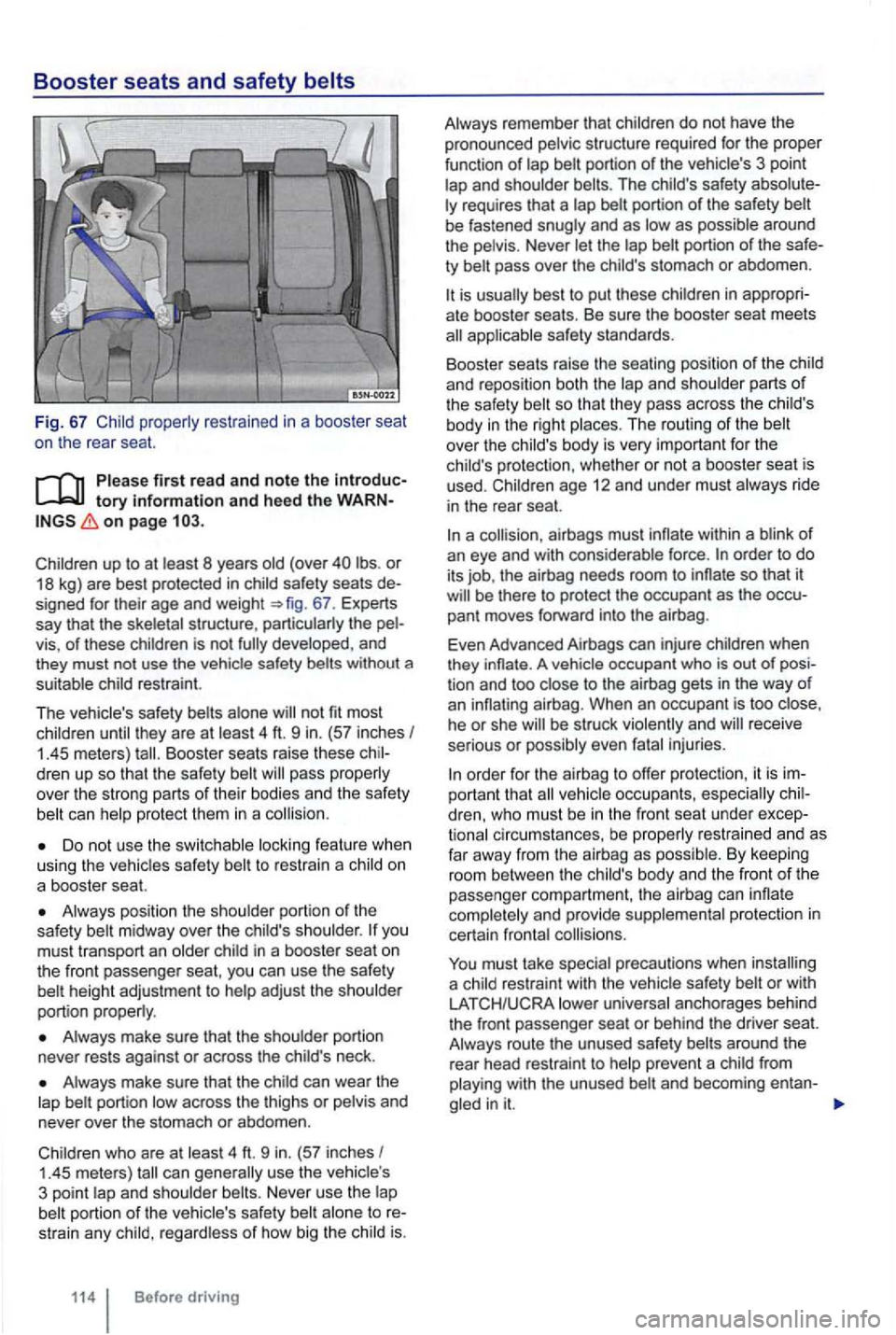
Booster seats and safety
first read and note the introduc
on page
or 18 kg) are best protected in
the vis, of these and
they must not use the restraint.
T
he not fit most
Booster seats raise these dren up so that the safe ty
can protect them in a
Do not use the fea ture when
u sin g the
midway over th e you must transport an
height adjustment to
make sure that the neck.
make sure that the across the thighs or
who are at 4 ft. 9 i n. (57 inches I 1.45 meters) can u se the 3 point and Never use the portio n of the to re
s train any of how big the is.
Before driving
remember that do not have the
pronounced
portion of the and The requires that a as Never the pass over the
is best to put these
and parts of
the safety body in the right The routing of the over the body is very important for the protection , whe ther or not a booster seat is
used . age 12 and under must ride
in the rear seat.
airbags must force. order to do its job, the airbag needs room to inflate so that it
he or she be struck receive
serious or
orde r for the airbag to offer protectio n, it is im
portant that
dren, who must be in the front seat unde r excepcircumstances, be restrai ned and as
far away from th e airbag as By kee ping
r oom between the
precautions when
route the unused safety arou nd the rear head restraint to prevent a from
in it.
Page 215 of 516
Whenever a the safety must
be webbing cannot you restraint can be
goes around a corner.
restraint on a seat, prefe rably
o n a rear sea t
the restraint on a rear seat
restraint in your
Route the safety
as specified by the res tra int manufacturer.
insert the
Make sure that the red
Remove from the it
Push the
installed with the safety
Activate the feature 117 , Activating the switchable locking fea
ture .
on the safety is properly fastened and tight.
Check the restraint at the place where the restraint.
The
r estraints i f th e restraint must be installe d on the front seat
restraint manufac
turer's instructions when installing a restraint in your
the restraint on a seat, prefe rably
o n a re ar seat in exceptio n al circums ta nces you must install the
Make sure the front seat backrest is in the right position .
Move the front passenger seat to the rearmost
position in the seat's fore and aft adjustment range,
as far away from the airbag as
height juster so that safety install the restraint.
Route the safety
as specified by the
the tongue into the for that
seating position.
Make sure that the red button faces
away from the
Remove from the and straint.
Push the weight to make sure that the restraint be installed with the safety
Make sure the safety is not so tight that it
causes the weight-sensing mat to measure more
weight than is actually
on the seat.
Activate the belt's switchable feature
Check the restraint at the where the restraint.
T he seat
After checking to make sure that the
restraint is correctly recognized by the weight
sensing mat inside the front passenger seat, so that the front passenger airbag status is
GER BAG be sure to read
the additional important information and heed the
about the Advanced Airbag
BAG
especially those 12 years and younger ,
must restrain -
ed for their age and size.
Page 238 of 516
stow in the compartment. Loose objects can compartment and injure others on the road behind you.
ers
compartment for others to see. requirements.
Never use the rear hatch to or objects that stick out of the compartment.
rack or othe r
rack mounted on rear hatch
Driving with an open rear hatch can cause poisonous carbon monoxide in the engine exhaust to get into the passenger ment.
Driving a
first read and note the tory information and heed the on page 137.
For good
observe the
stow 138 .
Driv e gently.
Avoid sudden braking and driving maneuvers.
Brake if you were not
driving a
observe information abo ut driving with a 149.
1 46 .
attentiveness, poisoning, and of sciousness. can vere
driving to keep poisonous exhaust fumes from being drawn into the
to fit into the area,
you must drive with an open rear hatch, do the to reduce the risk of carbon monoxide poisoning:
-
the fresh air fan to the highest
speed.
The
open rear hatch changes the and height.
Heavy can change the way your and increase stopping distances. Heavy stowed or secured can shift suddenly, causing of and se riou s injury.
to keep it from shifting.
remember when transporting heavy objects that they change the vehicle's center of gravity and the way it
-as
heavy objects as far forward in the
tie down heavy items
Tran sporting 139
Page 242 of 516
Each backrest must be the upright position so that the safety
a seat is used with an unsecured backrest, the passenger
A red mark on the button indicates that the backres t is not check to make sure that the red marking
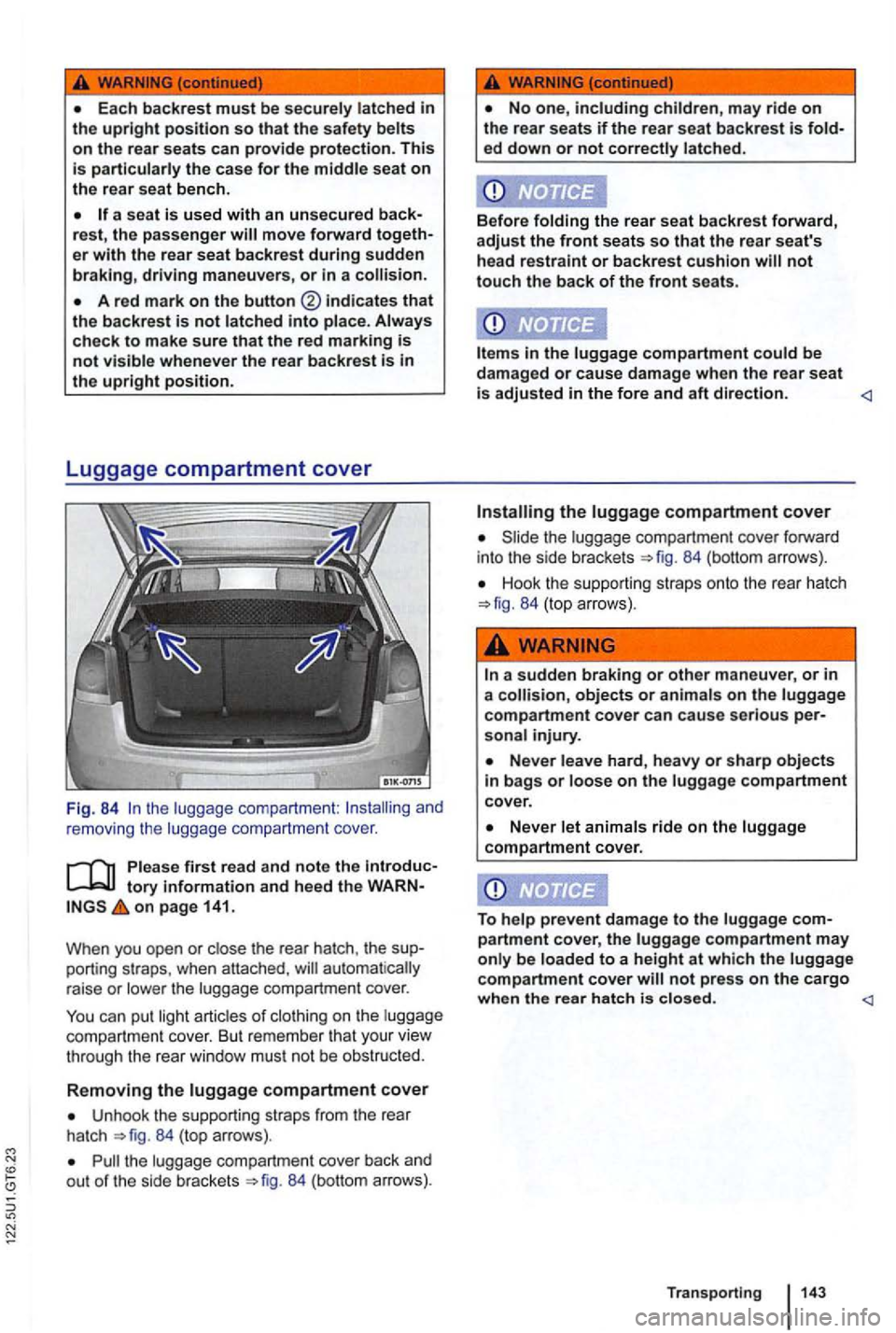
compartment : compartment cove r.
first read and note the introductory on page 141.
When you open
or the rear hatch . the sup
porting str aps , when attached .
can put of
compartment cover
Unhook the supporting str aps from the rear
ha tch 84 (top arrows) .
84 (bottom arrows).
No one, may ride on the rea r seats if the rear seat backrest is ed down or not
Before the rear seat backrest forward, adjust the front seats so that the rear seat's head restraint or backrest cushion not touch the back of the front seats.
compartment
adjuste d in the fore and aft d irection.
84 (bo ttom arrows).
Hook the supporting straps onto the rear hatch 84 (top arrows).
objects or animals on the compartment cover can cause seriou s injury.
Never hard, heavy or s harp objects
ride on the luggage compartment cover.
To prevent damage to the
to a height at which the
Transporting
Page 245 of 516
Roof rack
Introduction
this sectio n find informa tion about:
Mo unt in g the roof rack base carrier and roof
rack
................................... 147
Securing a load on the roof rack . . . . . . . . . . . 148
The ro of o f your vehicle has been designed to
approv ed base carrie r mounts and roof racks can
be used .
When should the roof rack be removed?
When it is no longer needed .
Before driving through an automatic car was h.
When the vehic le wou ld otherwise be too high
t o ach ieve min imum clearanc e to enter, for
ple, a garage .
More information:
Lights
Transporting 137
Saving fuel and helping the envi ronment
Tires and wheels 258
283
Transporting heavy or bulky loads on the roof rack will change the way the vehicle handles by shifting the vehicle's center of gravity and
increasing the wind drag area.
146 Before driving
able and undam ag ed straps so that the load
have a negative effect on the vehicle's
aerodynamics , center of gravity and ove rall
Your vehicle is higher when the roof rack is installed , especially when it is loaded. Compare
the vehicl e he ight with existing clear ance
heights , such as underpasses and garage doors.
creases due to increased air resis ta nce.
Page 253 of 516
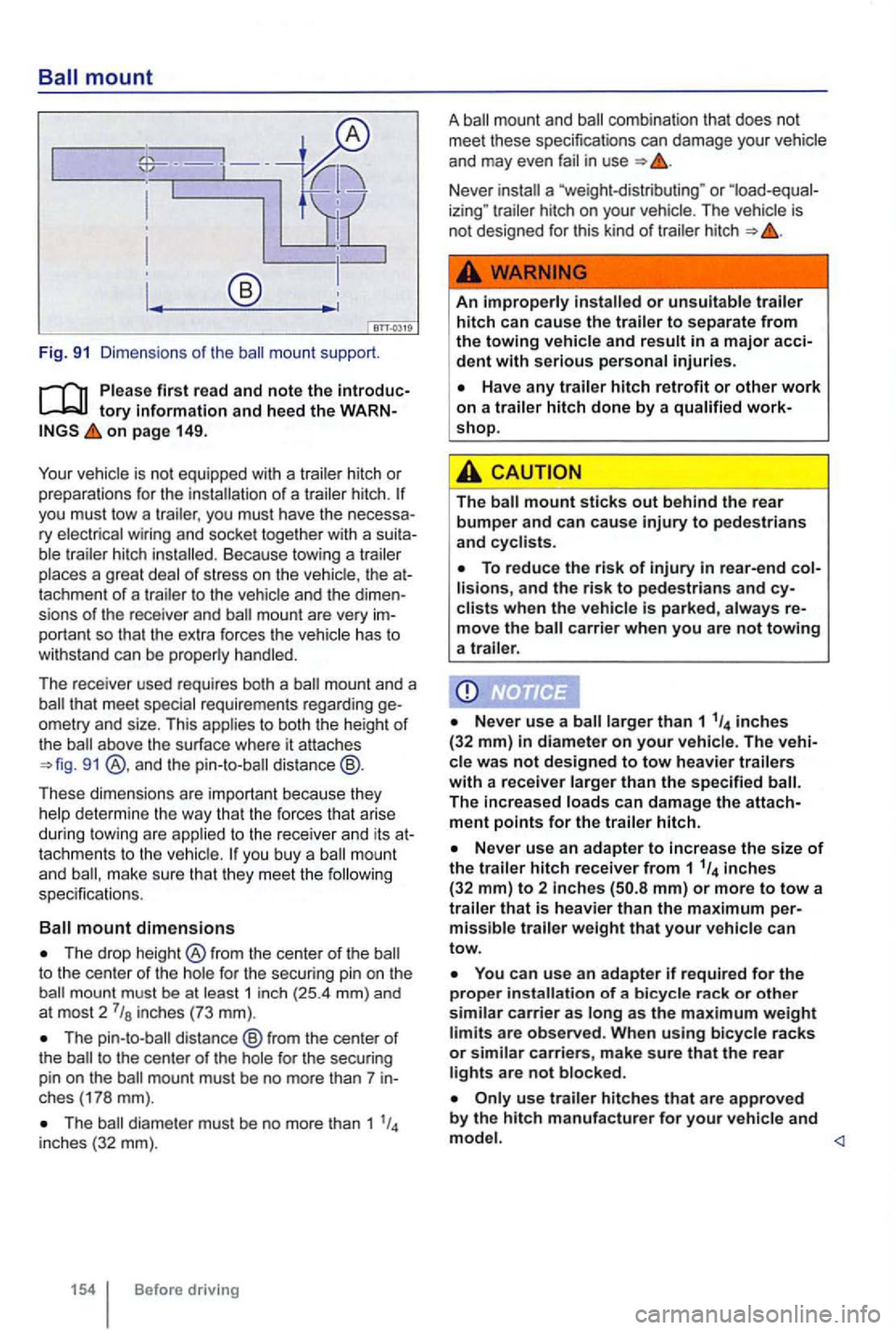
mount support .
tory Information and heed the on page 149.
Your vehicle
is not equipped with a trai ler hitch or p reparations for the in stalla tion of a trailer hitch. tf
you must tow a trailer , you must have the
ry electrical wiring and socket together with a Because towing a traile r
pl aces a great dea l of stress on the vehicle, the
sions of the receive r and
ometry and size . T his app lies to both the height of th e above the surface where it attaches
m ount
and m ake sure that th ey meet th e
The drop height ® from the center of the
The distance @from the center of
the
T he
Never izing " trailer hitch on your vehicle . T he vehicle is
not designed for this kind of trailer hitch .
An improperly or unsuitable trailer hitch can cau se the trailer to s eparate from the towing vehicle and result in a major acci-dent with serious personal injuries.
carrier when you are not towing a trailer.
cle was not designed to tow heavier trailers with a receiver larger than the specified ball.
The increased loads can damage the
ment points for the trailer hitch.
Never use an adapter to the size of the trailer hitch receiver from 1 1
/4 inches (32 mm) to 2
weight that your vehicle can tow.
You can use an adapter if require d for the proper ins ta llation of a bicycle rack or o th er similar carrier as long as the maximum weight limits are observed . When using bicyc le rack s or simil a r carri ers, mak e sure th at the rear lights are not blo cked .
use trail er hitches that are approved by the hitch manufacturer for your vehicle and
model.
Page 254 of 516
Retrofitting a
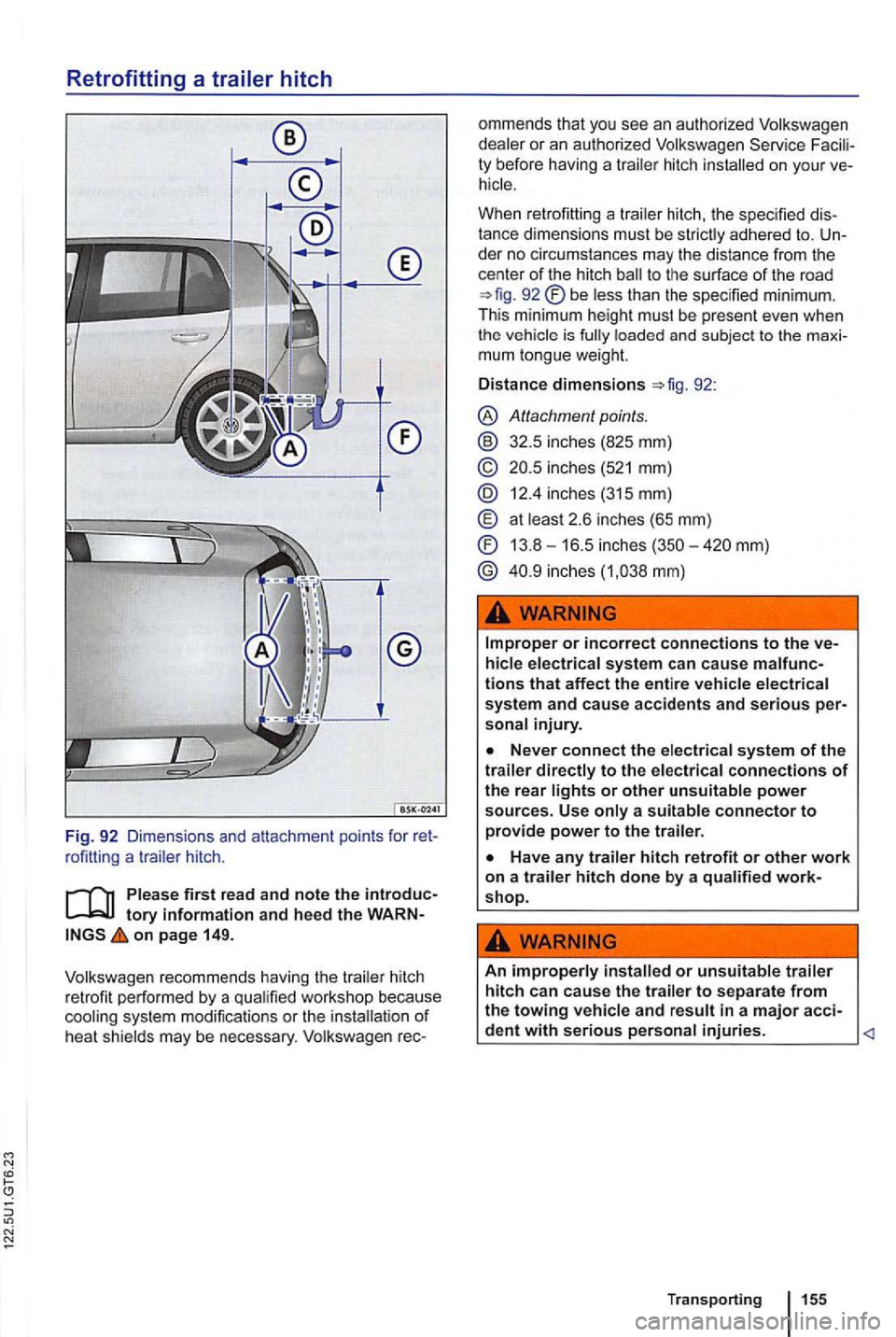
Fig. 92 Dimensions and attachme nt poin ts for ret
r ofitti ng a trai le r hitc h.
tory information and heed the WARN on page 149.
Vo lkswage n recommends havi
ng the trailer hitch
r et rofit performed by a qua lified workshop because
coo ling syste m modifications
or the installation of heat shields may be necessary. Volkswagen rec- ommends
that you see an authorized Volkswagen
dealer or an auth orized Volkswagen Serv
ice Facili
ty before having a traile r hitch
92 ® be less than the spec ified minimum .
Thi s minimum height must be present even when
the is loaded and subjec t to the maxi
mum tongue weight.
Di stan ce
dimensions =>fig. 92 :
Attachment points.
32.5 inches ( 825 mm)
© 20.5 inches ( 521 mm )
@ 12.4 inches (315 mm )
at leas t 2.6 inches (65 mm)
®
13 .8 - 16.5 inches (350 -mm)
@ 40.9 inches ( 1,0 38 mm)
or incorrect connections to the ve-hicle electr ica l system can cause malfunc-tions that affect the entire vehicle electrical system and cause accidents and serious per-sonal injury.
An improperly
and result in a major acci-dent with se rio us personal injuries.
T ransporti ng
155
Page 343 of 516
Washing the vehicle
tory information and heed the on page 243 .
T he longer insect splatter , bird droppings, tree sap,
r oad dirt , indust rial deposits , tar , soot , road
and othe r aggressive materials stay on your cle, the more damage they do to the paint finish.
H igh temperatures (includi ng strong sunlight)
oughly.
Car wash
Pay close attention to the information provided
by the car wash operator . B efo re goi ng throu gh a
ca r was h, b e s ure to take th e usual precautio ns t o
avoid damag e , such as closi ng the windows ,
The paint finish is toug h enough th at the vehicle can
the wheels and under the door
After the vehi cle ha s been washed , the wet brakes or, in winter, brake discs or pads ed with ice, react slower and need longer stopping distances .
WARNING
Always dry the brakes and clean off any ice coatings with a few careful applications of the brake . Make sure not to endanger other motorists or cyclists or disobey legal require-
ments .
edges under the vehicl e can cut ex-
posed skin.
Always protect your hands and arms from cuts on sharp metal edges when cleaning the under-body , the inside of the wheel housings,
etc.
The water temperature must not be more
than
Ne ver clean headlights with a dry cloth or sponge . Always use a w et cloth o r s ponge . For best result s use soapy water.
When washing or rinsing the vehicle in cold weather , do not
cult to open the vehicle!
To help prevent vehicle damage
in a car wash:
in the car wash to help prevent damage to wheel rims and tires!
Make sure there is enough clearance for the
height and width of the vehic le .
To help prevent paint damage to the engine
hood, place wiper blades against the shield after they have dried. Do not let them
snap back into place .
Lock the rear hatch to prevent unintentional
opening in the car wa sh .