2009 CHEVROLET SILVERADO child seat
[x] Cancel search: child seatPage 365 of 600
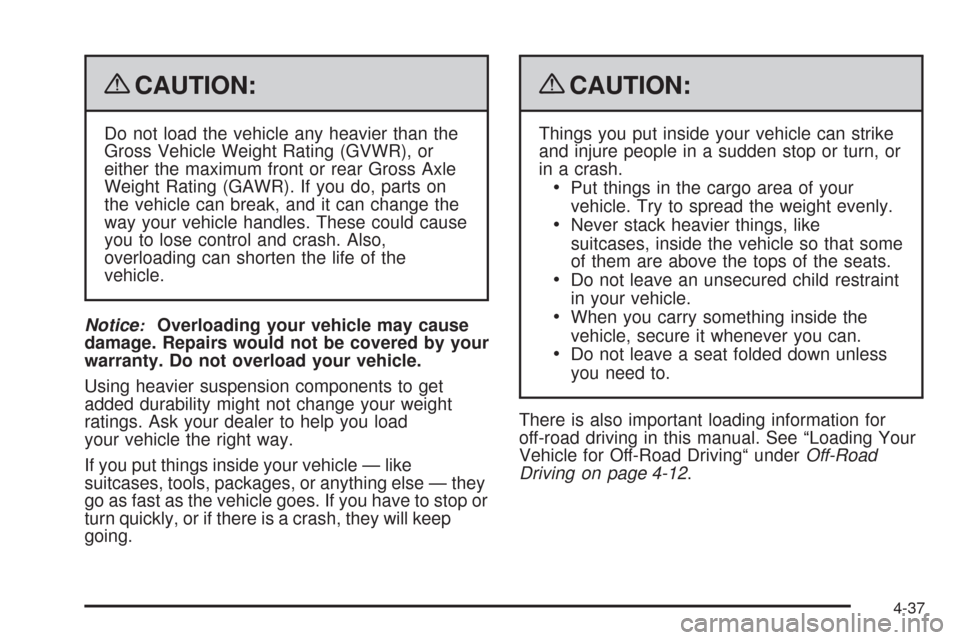
{CAUTION:
Do not load the vehicle any heavier than the
Gross Vehicle Weight Rating (GVWR), or
either the maximum front or rear Gross Axle
Weight Rating (GAWR). If you do, parts on
the vehicle can break, and it can change the
way your vehicle handles. These could cause
you to lose control and crash. Also,
overloading can shorten the life of the
vehicle.
Notice
:Overloading your vehicle may cause
damage. Repairs would not be covered by your
warranty. Do not overload your vehicle.
Using heavier suspension components to get
added durability might not change your weight
ratings. Ask your dealer to help you load
your vehicle the right way.
If you put things inside your vehicle — like
suitcases, tools, packages, or anything else — they
go as fast as the vehicle goes. If you have to stop or
turn quickly, or if there is a crash, they will keep
going.
{CAUTION:
Things you put inside your vehicle can strike
and injure people in a sudden stop or turn, or
in a crash.
Put things in the cargo area of your
vehicle. Try to spread the weight evenly.
Never stack heavier things, like
suitcases, inside the vehicle so that some
of them are above the tops of the seats.
Do not leave an unsecured child restraint
in your vehicle.
When you carry something inside the
vehicle, secure it whenever you can.
Do not leave a seat folded down unless
you need to.
There is also important loading information for
off-road driving in this manual. See “Loading Your
Vehicle for Off-Road Driving“ underOff-Road
Driving on page 4-12.
4-37
Page 587 of 600
Capacities and Specications..........................5-130
Carbon Monoxide...........................2-12, 2-55, 4-28
Care of
Safety Belts..............................................5-117
Cargo Lamp...................................................3-21
Cargo Management System.............................2-83
CD, MP3 ............................................3-108, 3-113
Center Console Storage Area...........................2-82
Center High-Mounted Stoplamp (CHMSL) and
Cargo Lamp...............................................5-59
Center Seat...................................................1-14
Chains, Tire...................................................5-90
Charging System Light....................................3-41
Check
Engine Lamp..............................................3-45
Checking Things Under the Hood......................5-12
Chemical Paint Spotting.................................5-121
Child Restraints
Child Restraint Systems...............................1-45
Infants and Young Children...........................1-41
Lower Anchors and Tethers for Children..........1-49
Older Children.............................................1-38
Securing a Child Restraint in a Rear Seat
Position..................................................1-58Child Restraints (cont.)
Securing a Child Restraint in the Center
Front Seat Position...................................1-61
Securing a Child Restraint in the Right
Front Seat Position..................1-61, 1-66, 1-71
Where to Put the Restraint...........................1-47
Cigarette Lighter.............................................3-23
Cleaning
Aluminum or Chrome-Plated Wheels.............5-120
Exterior Lamps/Lenses................................5-118
Fabric/Carpet............................................5-116
Finish Care...............................................5-119
Instrument Panel, Vinyl, and Other Plastic
Surfaces...............................................5-117
Interior.....................................................5-114
Leather....................................................5-116
Tires........................................................
5-121
Underbody Maintenance.............................5-121
Washing Your Vehicle.................................5-118
Weatherstrips............................................5-117
Windshield and Wiper Blades......................5-119
Climate Control System...........................3-24, 3-26
Dual Automatic............................................3-28
Outlet Adjustment........................................3-33
3
Page 591 of 600
Gasoline
Octane........................................................ 5-6
Specications............................................... 5-7
Glove Box.....................................................2-81
GM Mobility Reimbursement Program.................. 7-7
H
Hazard Warning Flashers................................... 3-8
Head Restraints............................................... 1-3
Headlamp
Aiming .......................................................5-55
Headlamps....................................................5-58
Bulb Replacement.......................................5-58
Daytime Running Lamp................................3-17
Exterior Lamps............................................3-16
Flash-to-Pass..............................................3-10
Halogen Bulbs............................................5-58
High/Low Beam Changer..............................3-10
On Reminder..............................................3-17
Pickup Box Identication and Fender Marker
Lamps ....................................................5-60
Heated Seats................................................... 1-8Heater...................................................3-24, 3-26
Engine Coolant...........................................2-26
Heater...........................................................3-28
Highbeam On Light.........................................3-50
High-Speed Operation, Tires.............................5-74
Highway Hypnosis...........................................4-26
Hill and Mountain Roads..................................4-27
Hood
Checking Things Under................................5-12
Release.....................................................5-13
Horn ............................................................... 3-8
How to Wear Safety Belts Properly...................1-21
I
Ignition Positions.............................................2-21
Infants and Young Children, Restraints...............1-41
Ination - Tire Pressure...................................5-73
Instrument Panel
Brightness..................................................3-20
Cluster.......................................................3-34
Overview...............................................3-4, 3-6
Storage Area..............................................2-81
7
Page 592 of 600
J
Jump Starting.................................................5-44
K
Keyless Entry System....................................... 2-4
Keys............................................................... 2-3
L
Labeling, Tire Sidewall.....................................5-66
Lamp
Malfunction Indicator....................................3-45
Lamps
Auxiliary Roof Mounted Lamp........................3-19
Cargo........................................................3-21
Dome ........................................................3-20
Dome Lamp Override...................................3-20
Puddle.......................................................3-19
Reading.....................................................3-21
Lap Belt ........................................................1-36
Lap-Shoulder Belt...........................................1-30
LATCH System for Child Restraints...................1-49
Latches, Seatback..........................................1-13
License Plate Lamps.......................................5-63Light
Airbag Off..................................................3-38
Airbag Readiness........................................3-37
Antilock Brake System (ABS) Warning............3-43
Brake System Warning.................................3-42
Charging System.........................................3-41
Cruise Control.............................................3-50
Fog Lamp ..................................................3-50
Four-Wheel-Drive.........................................3-51
Highbeam On.............................................3-50
Low Fuel Warning.......................................3-52
Oil Pressure...............................................3-49
Passenger Airbag Status Indicator..................3-40
Safety Belt Reminders..................................3-36
Security.....................................................3-50
StabiliTrak
®Indicator....................................3-44
Tire Pressure..............................................3-45
Tow/Haul Mode ...........................................3-51
Lighting
Entry.........................................................3-20
Exit...........................................................3-20
Lights
Exterior Lamps............................................3-16
Flash-to-Pass..............................................3-10
High/Low Beam Changer..............................3-10
On Reminder..............................................3-17
Loading Your Vehicle.......................................4-32
8
Page 593 of 600
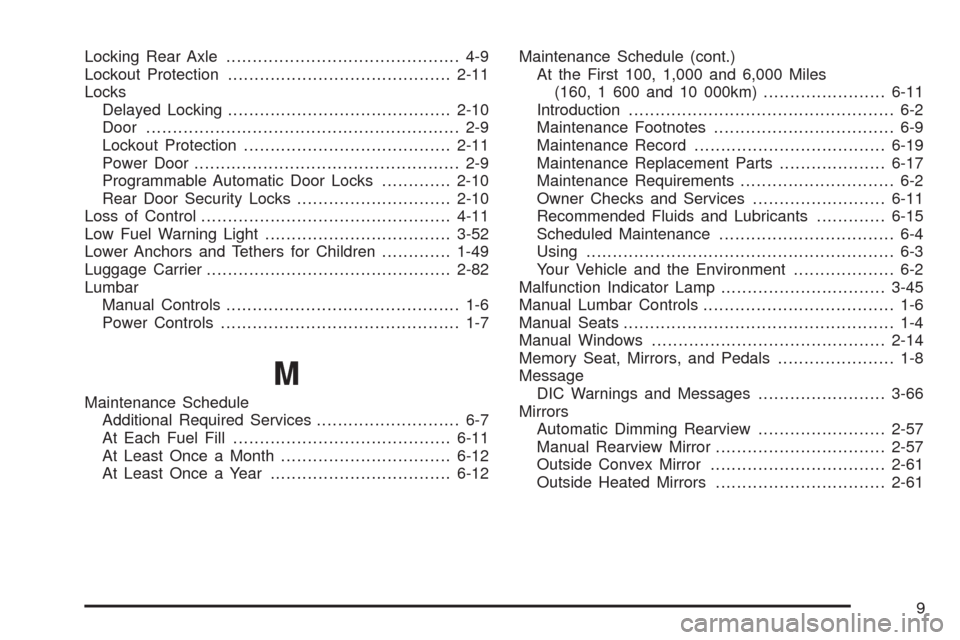
Locking Rear Axle............................................ 4-9
Lockout Protection..........................................2-11
Locks
Delayed Locking..........................................2-10
Door ........................................................... 2-9
Lockout Protection.......................................2-11
Power Door .................................................. 2-9
Programmable Automatic Door Locks.............2-10
Rear Door Security Locks.............................2-10
Loss of Control...............................................4-11
Low Fuel Warning Light...................................3-52
Lower Anchors and Tethers for Children.............1-49
Luggage Carrier..............................................2-82
Lumbar
Manual Controls............................................ 1-6
Power Controls............................................. 1-7
M
Maintenance Schedule
Additional Required Services........................... 6-7
At Each Fuel Fill.........................................6-11
At Least Once a Month................................6-12
At Least Once a Year..................................6-12Maintenance Schedule (cont.)
At the First 100, 1,000 and 6,000 Miles
(160, 1 600 and 10 000km).......................6-11
Introduction.................................................. 6-2
Maintenance Footnotes.................................. 6-9
Maintenance Record....................................6-19
Maintenance Replacement Parts....................6-17
Maintenance Requirements............................. 6-2
Owner Checks and Services.........................6-11
Recommended Fluids and Lubricants.............6-15
Scheduled Maintenance................................. 6-4
Using.......................................................... 6-3
Your Vehicle and the Environment................... 6-2
Malfunction Indicator Lamp...............................3-45
Manual Lumbar Controls.................................... 1-6
Manual Seats................................................... 1-4
Manual Windows............................................2-14
Memory Seat, Mirrors, and Pedals...................... 1-8
Message
DIC Warnings and Messages........................3-66
Mirrors
Automatic Dimming Rearview........................2-57
Manual Rearview Mirror................................2-57
Outside Convex Mirror.................................2-61
Outside Heated Mirrors................................2-61
9
Page 597 of 600
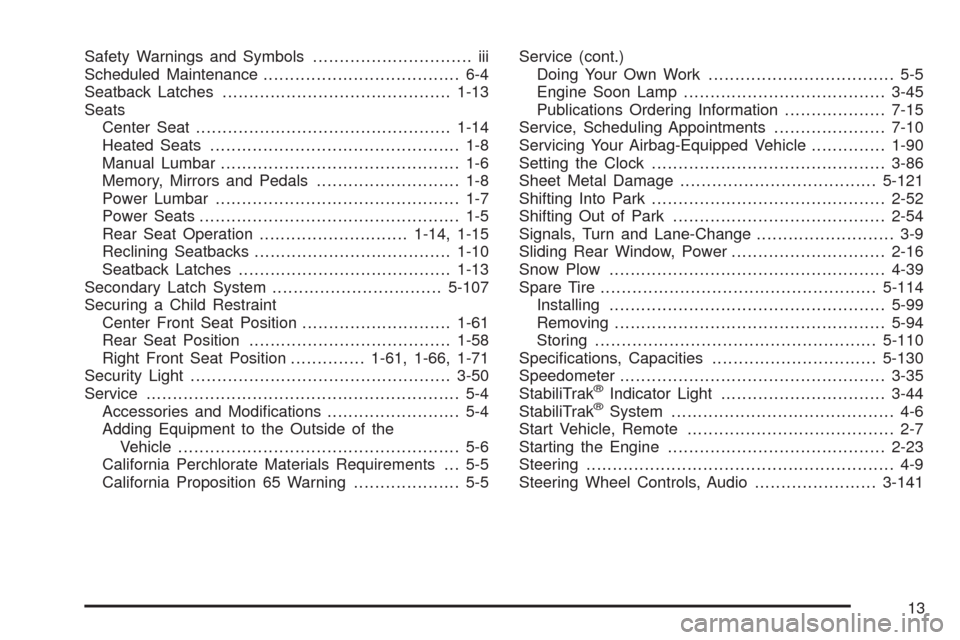
Safety Warnings and Symbols.............................. iii
Scheduled Maintenance..................................... 6-4
Seatback Latches...........................................1-13
Seats
Center Seat................................................1-14
Heated Seats............................................... 1-8
Manual Lumbar............................................. 1-6
Memory, Mirrors and Pedals........................... 1-8
Power Lumbar .............................................. 1-7
Power Seats................................................. 1-5
Rear Seat Operation............................1-14, 1-15
Reclining Seatbacks.....................................1-10
Seatback Latches........................................1-13
Secondary Latch System................................5-107
Securing a Child Restraint
Center Front Seat Position............................1-61
Rear Seat Position......................................1-58
Right Front Seat Position..............1-61, 1-66, 1-71
Security Light.................................................3-50
Service........................................................... 5-4
Accessories and Modications......................... 5-4
Adding Equipment to the Outside of the
Vehicle..................................................... 5-6
California Perchlorate Materials Requirements . . . 5-5
California Proposition 65 Warning.................... 5-5Service (cont.)
Doing Your Own Work................................... 5-5
Engine Soon Lamp......................................3-45
Publications Ordering Information...................7-15
Service, Scheduling Appointments.....................7-10
Servicing Your Airbag-Equipped Vehicle..............1-90
Setting the Clock............................................3-86
Sheet Metal Damage.....................................5-121
Shifting Into Park............................................2-52
Shifting Out of Park........................................2-54
Signals, Turn and Lane-Change.......................... 3-9
Sliding Rear Window, Power.............................2-16
Snow Plow....................................................4-39
Spare Tire....................................................5-114
Installing....................................................5-99
Removing...................................................5-94
Storing.....................................................5-110
Specications, Capacities
...............................5-130
Speedometer..................................................3-35
StabiliTrak
®Indicator Light...............................3-44
StabiliTrak®System.......................................... 4-6
Start Vehicle, Remote....................................... 2-7
Starting the Engine.........................................2-23
Steering.......................................................... 4-9
Steering Wheel Controls, Audio.......................3-141
13