2009 CADILLAC ESCALADE light
[x] Cancel search: lightPage 528 of 586

The vehicle may not use all of the fuses shown.
Fuses Usage
1 Rear Seats
2 Rear Accessory Power Outlet
3 Steering Wheel Controls Backlight
4 Driver Door Module
5Dome Lamps, Driver Side Turn
Signal
Fuses Usage
6 Driver Side Turn Signal, Stoplamp
7 Instrument Panel Back Lighting
8Passenger Side Turn Signal,
Stoplamp
9Passenger Door Module, Driver
Unlock
10 Power Door Lock 2 (Unlock Feature)
11 Power Door Lock 2 (Lock Feature)
12Stoplamps, Center-High Mounted
Stoplamp
13 Rear Climate Controls
14 Power Mirror
15 Body Control Module (BCM)
16 Accessory Power Outlets
17 Interior Lamps
18 Power Door Lock 1 (Unlock Feature)
19 Rear Seat Entertainment
20Ultrasonic Rear Parking Assist,
Power Liftgate
21 Power Door Lock 1 (Lock Feature)
22 Driver Information Center (DIC)
23 Rear Wiper
6-104
Page 532 of 586

Fuses Usage
25 Trailer Park Lamps
26 Driver Side Park Lamps
27 Passenger Side Park Lamps
28 Fog Lamps
29 Horn
30Passenger Side High-Beam
Headlamp
31 Daytime Running Lamps
32 Driver Side High-Beam Headlamp
33 Daytime Running Lights 2
34 Sunroof
35Key Ignition System, Theft Deterrent
System
36 Windshield Wiper
37 SEO B2 Uptter Usage (Battery)
38 Electric Adjustable Pedals
39 Climate Controls (Battery)
40 Airbag System (Ignition)
41 Amplier
42 Audio SystemFuses Usage
43Miscellaneous (Ignition), Cruise
Control
44 Liftgate Release
45 Airbag System (Battery)
46 Instrument Panel Cluster
47 Not Used
48 Auxiliary Climate Control (Ignition)
49Center High-Mounted Stoplamp
(CHMSL)
50 Rear Defogger
51 Heated Mirror
52 SEO B1 Uptter Usage (Battery)
53Cigarette Lighter, Auxiliary Power
Outlet
54Automatic Level Control Compressor
Relay, SEO Uptter Usage
55 Climate Controls (Ignition)
56Engine Control Module, Secondary
Fuel Pump (Ignition)
6-108
Page 542 of 586

(b)Visually inspect front and rear suspension and
steering system for damaged, loose, or missing parts,
signs of wear or lack of lubrication. Inspect power
steering lines and hoses for proper hook-up, binding,
leaks, cracks, chafing, etc. Visually check constant
velocity joints, rubber boots, and axle seals for leaks.
(c)Visually inspect hoses and have them replaced
if they are cracked, swollen, or deteriorated. Inspect
all pipes, fittings, and clamps; replace with genuine
parts as needed. To help ensure proper operation,
a pressure test of the cooling system and pressure
cap and cleaning the outside of the radiator and
air conditioning condenser is recommended at
least once a year.
(d)Inspect wiper blades for wear, cracking, or
contamination. Clean the windshield and wiper blades,
if contaminated. Replace wiper blades that are worn
or damaged. See Windshield Wiper Blade Replacement
on page 6-54 and Windshield, Backglass, and Wiper
Blades on page 6-99 for more information.
(e)Make sure the safety belt reminder light and safety
belt assemblies are working properly. Look for any
other loose or damaged safety belt system parts. If you
see anything that might keep a safety belt system
from doing its job, have it repaired. Have any torn or
frayed safety belts replaced. Also see Checking
the Restraint Systems on page 1-93.(f)Lubricate all key lock cylinders, hood latch assembly,
secondary latch, pivots, spring anchor, release pawl, rear
compartment hinges, outer tailgate handle pivot points,
latch bolt, fuel door hinge, and folding seat hardware.
More frequent lubrication may be required when exposed
to a corrosive environment. Applying silicone grease on
weatherstrips with a clean cloth will make them last
longer, seal better, and not stick or squeak.
(g)Inspect system. Check all fuel and vapor lines and
hoses for proper hook-up, routing, and condition.
Check that the purge valve works properly, if equipped.
Replace as needed.
(h)Change automatic transmission fluid and filter if the
vehicle is mainly driven under one or more of these
conditions:
In heavy city traffic where the outside temperature
regularly reaches 90°F (32°C) or higher.
In hilly or mountainous terrain.
When doing frequent trailer towing.
Uses such as found in taxi, police, or delivery
service.
(i)Drain, flush, and refill cooling system. This service
can be complex; you should have your dealer/retailer
perform this service. See Engine Coolant on page 6-26
for what to use. Inspect hoses. Clean radiator,
condenser, pressure cap, and filler neck. Pressure
test the cooling system and pressure cap.
7-8
Page 573 of 586

A
Accessories and Modications............................ 6-3
Accessory Power Outlets.................................3-23
Adding Equipment to Your Airbag-Equipped
Vehicle.......................................................1-91
Additives, Fuel................................................. 6-6
Add-On Electrical Equipment...........................6-102
Adjustable Throttle and Brake Pedal..................2-27
Air Cleaner/Filter, Engine.................................6-19
Air Conditioning..............................................3-24
Airbag
Passenger Status Indicator...........................3-35
Readiness Light..........................................3-34
Airbag System................................................1-76
Adding Equipment to Your Airbag-Equipped
Vehicle...................................................1-91
How Does an Airbag Restrain?......................1-83
Passenger Sensing System...........................1-85
Servicing Your Airbag-Equipped Vehicle..........1-91
What Makes an Airbag Inate?......................1-83
What Will You See After an Airbag Inates?....1-84
When Should an Airbag Inate?....................1-81
Where Are the Airbags?...............................1-79
All-Wheel Drive...............................................6-45
All-Wheel-Drive (AWD) System........................... 5-9
Analog Clock..................................................3-24Antenna, Rear Side Window...........................3-115
Antenna, XM™ Satellite Radio Antenna System . . . 3-115
Antilock Brake System (ABS)............................. 5-5
Antilock Brake, System Warning Light................3-38
Appearance Care
Aluminum or Chrome-Plated Wheels.............6-100
Care of Safety Belts....................................6-97
Chemical Paint Spotting..............................6-101
Cleaning Exterior Lamps/Lenses....................6-98
Fabric/Carpet..............................................6-95
Finish Care.................................................6-98
Finish Damage..........................................6-101
Instrument Panel, Vinyl, and Other
Plastic Surfaces.......................................6-96
Interior Cleaning
..........................................6-94
Leather......................................................6-96
Sheet Metal Damage..................................6-101
Speaker Covers..........................................6-97
Tires........................................................6-101
Underbody Maintenance.............................6-101
Washing Your Vehicle...................................6-98
Weatherstrips..............................................6-97
Windshield, Backglass, and Wiper Blades.......6-99
Wood Panels..............................................6-97
Appointments, Scheduling Service....................... 8-9
Ashtray.........................................................3-24
Assist Handles...............................................2-63
1
Page 574 of 586

Audio System.........................................3-72, 4-59
Audio Steering Wheel Controls....................3-113
Radio Reception........................................3-114
Rear Seat Audio (RSA)...............................3-111
Theft-Deterrent Feature...............................3-113
XM™ Satellite Radio Antenna System...........3-115
Audio System(s)
Rear Side Window Antenna.........................3-115
Automatic Headlamp System............................3-19
Automatic Transmission
Fluid..........................................................6-21
Operation...................................................2-29
Autoride
®.......................................................5-42
B
Battery..........................................................6-39
Electric Power Management..........................3-22
Run-Down Protection...................................3-23
Bench Seat, Split (60/40).................................1-10
Bluetooth
®.....................................................3-73
Brake
Emergencies................................................ 5-6
Brake Fluid....................................................6-36
Brakes..........................................................6-36
System Warning Light..................................3-37
Braking........................................................... 5-4
Braking in Emergencies..................................... 5-6
Break-In, New Vehicle.....................................2-24Bucket Seats, Rear.........................................1-16
Bulb Replacement...........................................6-50
Back-Up Lamps...........................................6-51
Headlamp Aiming........................................6-48
High Intensity Discharge (HID) Lighting...........6-51
License Plate Lamps....................................6-53
Replacement Bulbs......................................6-53
Buying New Tires...........................................6-70
C
Calibration.....................................................3-51
California Fuel.................................................. 6-6
California Perchlorate Materials Requirements....... 6-4
California Proposition 65 Warning....................... 6-4
Canadian Owners................................................ ii
Capacities and Specications..........................6-110
Carbon Monoxide...................2-12, 2-14, 2-38, 5-28
Care of
Safety Belts................................................6-97
Center Console Storage Area...........................2-63
Center Seat...................................................1-10
Chains, Tire...................................................6-75
Charging System Light....................................3-36
Check
Engine Lamp..............................................3-40
Checking Things Under the Hood......................6-12
Chemical Paint Spotting.................................6-101
2
Page 575 of 586
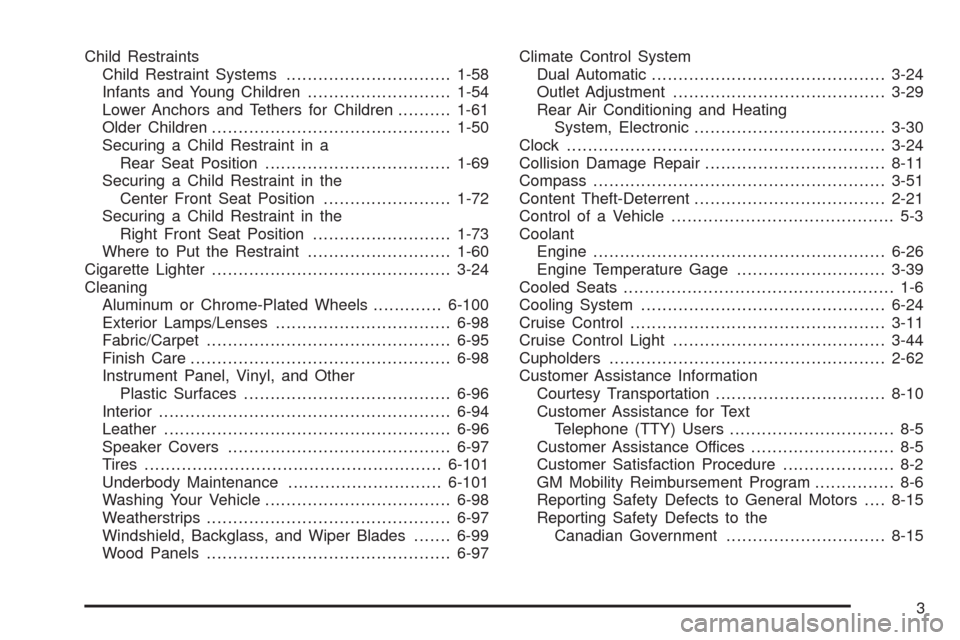
Child Restraints
Child Restraint Systems...............................1-58
Infants and Young Children...........................1-54
Lower Anchors and Tethers for Children..........1-61
Older Children.............................................1-50
Securing a Child Restraint in a
Rear Seat Position...................................1-69
Securing a Child Restraint in the
Center Front Seat Position........................1-72
Securing a Child Restraint in the
Right Front Seat Position..........................1-73
Where to Put the Restraint...........................1-60
Cigarette Lighter.............................................3-24
Cleaning
Aluminum or Chrome-Plated Wheels.............6-100
Exterior Lamps/Lenses.................................6-98
Fabric/Carpet..............................................6-95
Finish Care.................................................6-98
Instrument Panel, Vinyl, and Other
Plastic Surfaces.......................................6-96
Interior.......................................................6-94
Leather......................................................6-96
Speaker Covers..........................................6-97
Tires........................................................6-101
Underbody Maintenance.............................6-101
Washing Your Vehicle...................................6-98
Weatherstrips..............................................6-97
Windshield, Backglass, and Wiper Blades.......6-99
Wood Panels..............................................6-97Climate Control System
Dual Automatic............................................3-24
Outlet Adjustment........................................3-29
Rear Air Conditioning and Heating
System, Electronic....................................3-30
Clock............................................................3-24
Collision Damage Repair..................................8-11
Compass.......................................................3-51
Content Theft-Deterrent....................................2-21
Control of a Vehicle.......................................... 5-3
Coolant
Engine.......................................................6-26
Engine Temperature Gage............................3-39
Cooled Seats................................................... 1-6
Cooling System..............................................6-24
Cruise Control................................................3-11
Cruise Control Light........................................3-44
Cupholders....................................................2-62
Customer Assistance Information
Courtesy Transportation................................8-10
Customer Assistance for Text
Telephone (TTY) Users............................... 8-5
Customer Assistance Offices........................... 8-5
Customer Satisfaction Procedure..................... 8-2
GM Mobility Reimbursement Program............... 8-6
Reporting Safety Defects to General Motors....8-15
Reporting Safety Defects to the
Canadian Government..............................8-15
3
Page 577 of 586

Electronic Immobilizer
PASS-Key®III+...........................................2-22
Electronic Immobilizer Operation
PASS-Key
®III+...........................................2-23
Engine
Air Cleaner/Filter.........................................6-19
Check and Service Engine Soon Lamp...........3-40
Coolant......................................................6-26
Coolant Heater............................................2-28
Coolant Temperature Gage...........................3-39
Drive Belt Routing.......................................7-16
Engine Compartment Overview......................6-14
Exhaust.....................................................2-38
Fan Noise..................................................6-33
Oil .............................................................6-16
Oil Life System...........................................6-18
Overheated Protection Operating Mode...........6-33
Overheating................................................6-30
Starting......................................................2-26
Entry Lighting.................................................3-21
Event Data Recorders.....................................8-17
Exit Lighting...................................................3-21
Extender, Safety Belt.......................................1-50
Exterior Lamps...............................................3-15
F
Features
Memory ....................................................... 1-7
Filter
Engine Air Cleaner......................................6-19
Finish Damage.............................................6-101
Flashers, Hazard Warning.................................. 3-5
Flash-to-Pass................................................... 3-8
Flat Tire........................................................6-76
Flat Tire, Changing.........................................6-76
Flat Tire, Storing.............................................6-89
Fluid
Automatic Transmission................................6-21
Power Steering...........................................6-34
Windshield Washer......................................6-35
Fog Lamp
Fog ...........................................................3-20
Fog Lamp Light..............................................3-44
Front Axle......................................................6-47
Fuel............................................................... 6-5
Additives...................................................... 6-6
California Fuel.............................................. 6-6
Driving for Better Economy............................. 5-2
E85 (85% Ethanol)........................................ 6-7
Filling a Portable Fuel Container....................6-11
Filling the Tank............................................. 6-9
5
Page 578 of 586

Fuel (cont.)
Fuels in Foreign Countries.............................. 6-8
Gage .........................................................3-45
Gasoline Octane........................................... 6-5
Gasoline Specications.................................. 6-6
Fuses
Center Instrument Panel Fuse Block.............6-105
Fuses and Circuit Breakers.........................6-103
Instrument Panel Fuse Block.......................6-103
Underhood Fuse Block...............................6-106
Windshield Wiper.......................................6-103
G
Gage
Engine Coolant Temperature.........................3-39
Fuel..........................................................3-45
Speedometer..............................................3-33
Tachometer.................................................3-33
Garage Door Opener.......................................2-55
Garment Hooks..............................................2-63
Gasoline
Octane........................................................ 6-5
Specications............................................... 6-6
Getting Started
Getting Started, Navigation............................. 4-4
Global Positioning System (GPS)......................4-56
Glove Box.....................................................2-62
GM Mobility Reimbursement Program.................. 8-6
H
Hazard Warning Flashers................................... 3-5
Head Restraints............................................... 1-2
Headlamp
Aiming .......................................................6-48
Headlamps
Bulb Replacement.......................................6-50
Daytime Running Lamp................................3-19
Exterior Lamps............................................3-15
Flash-to-Pass............................................... 3-8
High Intensity Discharge (HID) Lighting...........6-51
High/Low Beam Changer................................ 3-8
On Reminder..............................................3-18
Heated Seats............................................1-5, 1-6
Heated Steering Wheel..................................... 3-6
Heater
Engine Coolant...........................................2-28
Heater...........................................................3-24
Highbeam On Light.........................................3-45
High-Speed Operation, Tires.............................6-63
Highway Hypnosis...........................................5-26
Hill and Mountain Roads..................................5-27
Hood
Checking Things Under................................6-12
Release.....................................................6-12
Horn ............................................................... 3-5
How to Wear Safety Belts Properly...................1-33
6