Page 344 of 435

Vehicles with Keyless Access
If the ignition will not start after reconnecting the vehicle battery, lock the vehicle from the outside and
unlock it again ⇒ Unlocking or locking the vehicle with Keyless Access. Then try to start the ignition again. If the ignition cannot be switched on, contact an authorized Volkswagen dealer, an authorized Volkswagen Service Facility, or another qualified workshop for assistance.
Automatic electrical load deactivation
If the vehicle battery drain is high, the intelligent onboard electrical system management automatically takes steps to help prevent battery drain.
x The idle speed is increased so that the alternator provides more power.
x The power to devices that consume a lot of electricity is cut back or switched off completely.
x When the engine is started, the power supply to the 12 Volt sockets is temporarily interrupted.
The onboard electrical system management cannot always keep the battery from being drained. For example, the battery will drain if the engine is not running, but the ignition is switched on or the parking lights are left on for a long time when parked.
Battery disconnection in an accident with airbag deployment
In vehicles with a battery in the luggage compartment, the electrical connection to the battery is disconnected automatically in a collision with airbag deployment. This helps to prevent a short-circuit.
What drains the battery?
x Long periods when the engine is not running, especially when the ignition is on.
x Using electrical systems or devices when the engine is switched off.
x Leaving the vehicle unlocked for several days when not in use.
x The selector lever is left for a long period of time in any position other than (P) when the ignition is
switched off ⇒ Automatic transmission: Selector lever.
WARNING
Failure to use the proper battery with proper mounting and connections may cause short circuits, fires, and serious personal injuries.
x Always use only maintenance-free or cycle-free, leakproof batteries with the same specifications and dimensions as the original equipment battery. Specifications are listed on the battery housing.
WARNING
When the vehicle battery is charged, it produces highly explosive hydrogen gas.
x Charge vehicle batteries only in well-ventilated areas.
x Never charge a frozen or thawed battery. A dead battery can freeze at temperatures around +32 °F (0 °C).
x You must replace the vehicle battery if it was frozen.
x Incorrectly connected cables can cause a short-circuit. First connect the positive cable (+) and then the negative cable (-).
Page 349 of 435
Never use a power washer to clean the engine compartment ⇒ page 355, Cleaning the engine compartment.
WARNING
Improper use of power washers can cause serious invisible permanent damage leading to tire failure and loss of vehicle control. This can cause accidents and severe personal injury.
x Keep sufficient distance between water jet and tires. Never wash tires with a nozzle that sprays the water out in a direct stream regardless of the distance to the tire and even for a very short time.
x Never use “dirt blasters” to clean tires. Even spraying from a relatively long distance for a very short time can do visible or invisible damage to tires.
WARNING
After the vehicle has been washed, the wet brakes or, in winter, brake discs or pads coated with ice, react slower and need longer stopping distances.
x Always dry the brakes and clean off any ice coatings with a few careful applications of the brake. Make sure not to endanger other motorists or cyclists or disobey legal requirements.
NOTICE
x Water temperature should not be more than +140 °F (+60 °C).
x To help prevent damage to the paint, do not wash the vehicle in direct sunlight.
x When using a power washer or steam cleaner, only spray the Rear View Camera system sensors directly for a short period of time and always keep the nozzle at least 4 inches (10 cm) from the sensor.
x Do not clean icy or snow-covered windows with a power washer.
x When washing or rinsing the vehicle in cold weather, do not let water get into the lock cylinders or point the hose at gaps around the doors, hood, or rear hatch. The water could freeze on the locks and seals and make it difficult to open the vehicle!
Cleaning windows and outside mirrors
Page 356 of 435
protection and damage electrical components, among other things. In addition, water could enter
directly into the vehicle interior through the plenum chamber ⇒ .
Never use a power washer to clean the engine compartment ⇒ .
If the engine compartment is extremely dirty, have it cleaned professionally by your authorized Volkswagen dealer or authorized Volkswagen Service Facility.
Plenum chamber
The plenum chamber is located in the engine compartment between windshield and engine, under a perforated cover. Outside air is taken into the vehicle interior from the plenum chamber via the climate control system.
Regularly remove leaves and other loose objects from the plenum chamber cover by hand or with a vacuum cleaner.
WARNING
Injuries, scalding, electric shock, accidents and fire hazards can occur while working on the engine or in the engine compartment!
x Before working in the engine compartment, be sure to familiarize yourself with the
necessary procedures and generally accepted safety precautions ⇒Working in the engine compartment.
x Volkswagen recommends having the work performed by an authorized Volkswagen dealer or authorized Volkswagen Service Facility.
NOTICE
Spraying or pouring water (e.g. with power washer) into the plenum chamber can cause severe damage to the vehicle.
Wash the engine compartment only in special wash bays so that the oily dirt and fuel residue that are washed off the vehicle will not enter the sewage system. In some areas it illegal to wash the engine compartment anywhere other than at such specified locations.
Page 408 of 435
Fuses in the vehicle
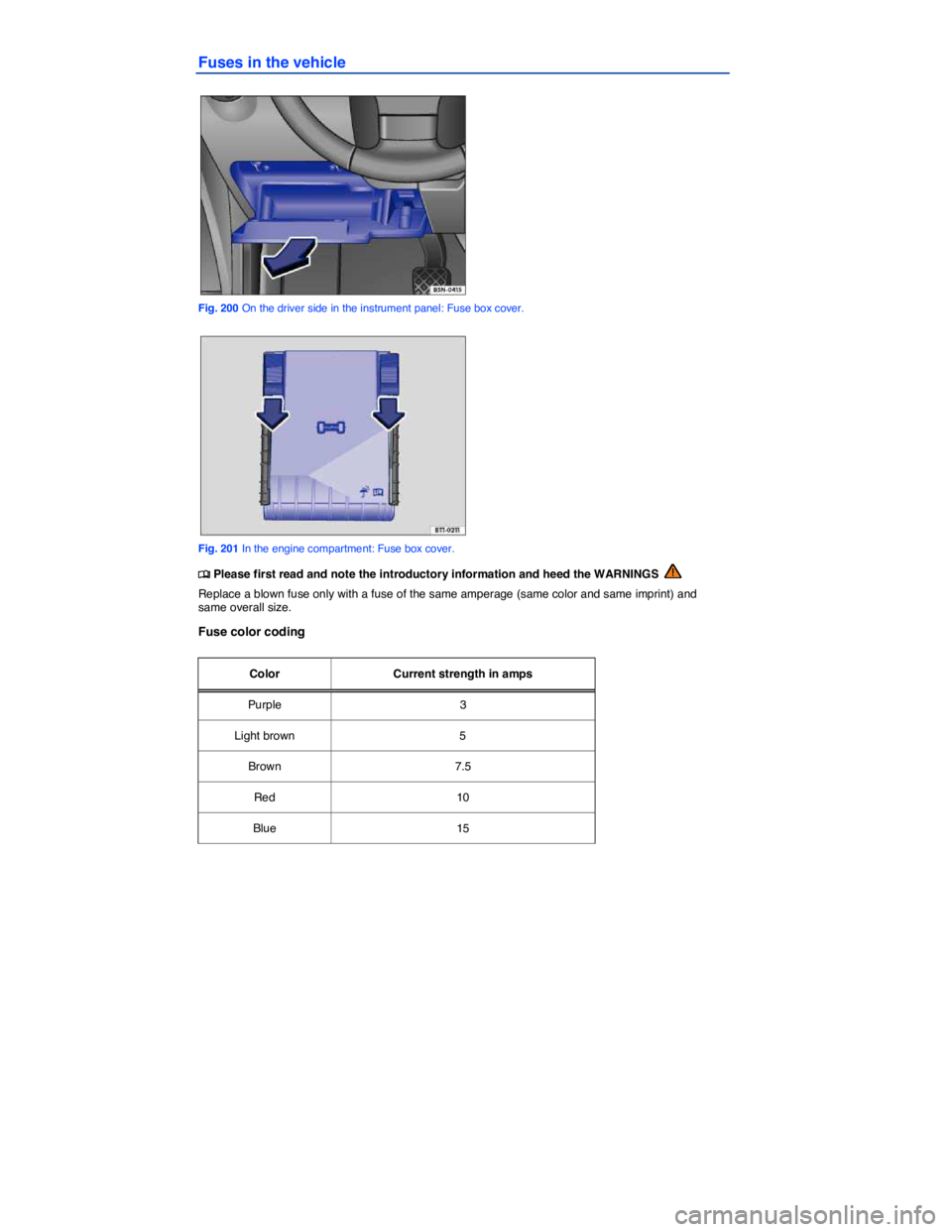
Fig. 200 On the driver side in the instrument panel: Fuse box cover.
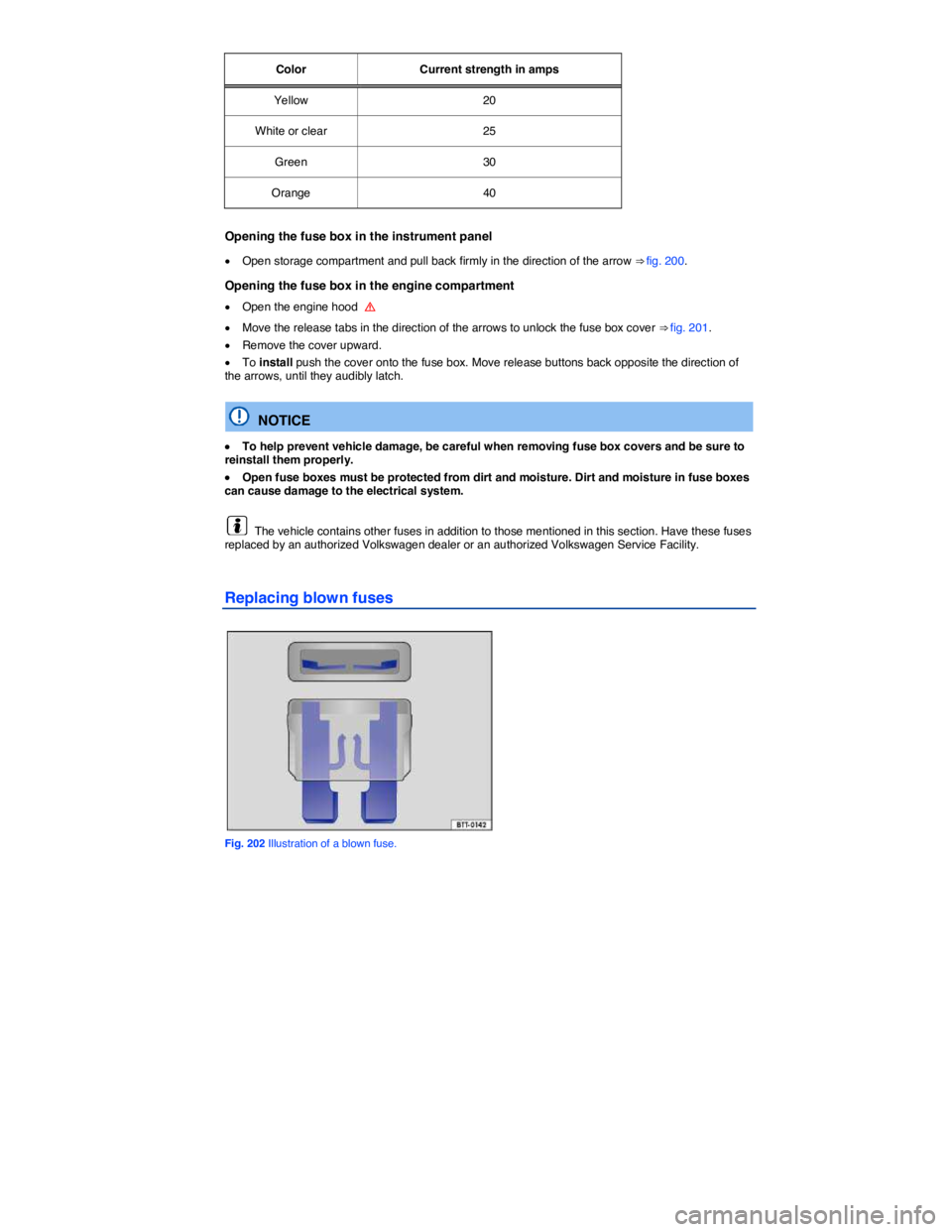
Fig. 201 In the engine compartment: Fuse box cover.
Page 409 of 435
Color Current strength in amps
Yellow 20
White or clear 25
Green 30
Orange 40
Opening the fuse box in the instrument panel
x Open storage compartment and pull back firmly in the direction of the arrow ⇒ fig. 200.
Opening the fuse box in the engine compartment
x Open the engine hood
Page 412 of 435

WARNING
Improper replacement of burned out headlights and other light bulbs can cause serious personal injury.
x Stop! Always read and heed the WARNINGS before doing any work in the engine
compartment ⇒ Working in the engine compartment. The engine compartment of any motor vehicle is a potentially dangerous area, and work in this area can lead to serious personal injury.
x HID – High Intensity Discharge (Xenon) get power from a high voltage source that can cause severe personal injury and even death if handled improperly.
x H7/H15 bulbs and HID – High Intensity Discharge (Xenon) are under high pressure and can explode if handled improperly.
x Always let a burned out light bulb cool down before replacing it.
x Never replace a light bulb unless you are familiar with all of the necessary procedures. In particular, never remove a headlight unless you know exactly how to carry out the job and have the correct tools and light bulbs.
x If you are uncertain about what to do, have the work performed by an authorized Volkswagen dealer, an authorized Volkswagen Service Facility, or another qualified workshop. Serious personal injury may result from improperly performed work.
x We strongly recommend that you always have HID – High Intensity Discharge (Xenon) lamps and H7/H15 bulbs replaced by a qualified technician.
x Do not touch the glass of light bulbs with your bare hands. Fingerprints left on the bulb evaporate due to the heat when the bulb is switched on and cause the reflector to “cloud”.
x There are sharp edges on and around the headlight housing in the engine compartment and the rear light housing. Wear hand protection if you replace bulbs.
NOTICE
After replacing a headlight bulb or other light bulb, always make sure that the rubber covers or plastic caps have been properly and securely reinstalled to help prevent water from getting into the electrical connections and headlight housing and damaging the electrical system.
Indicator light
Page 414 of 435
WARNING
Disregarding the safety-related checklist may lead to accidents and serious personal injuries.
x Always review and follow the checklist. Follow accepted safety practices and use common sense.
NOTICE
Always insert and remove lamps carefully to avoid damage to the vehicle paint or to other parts of the vehicle.
Replacing light bulbs in the Halogen headlight
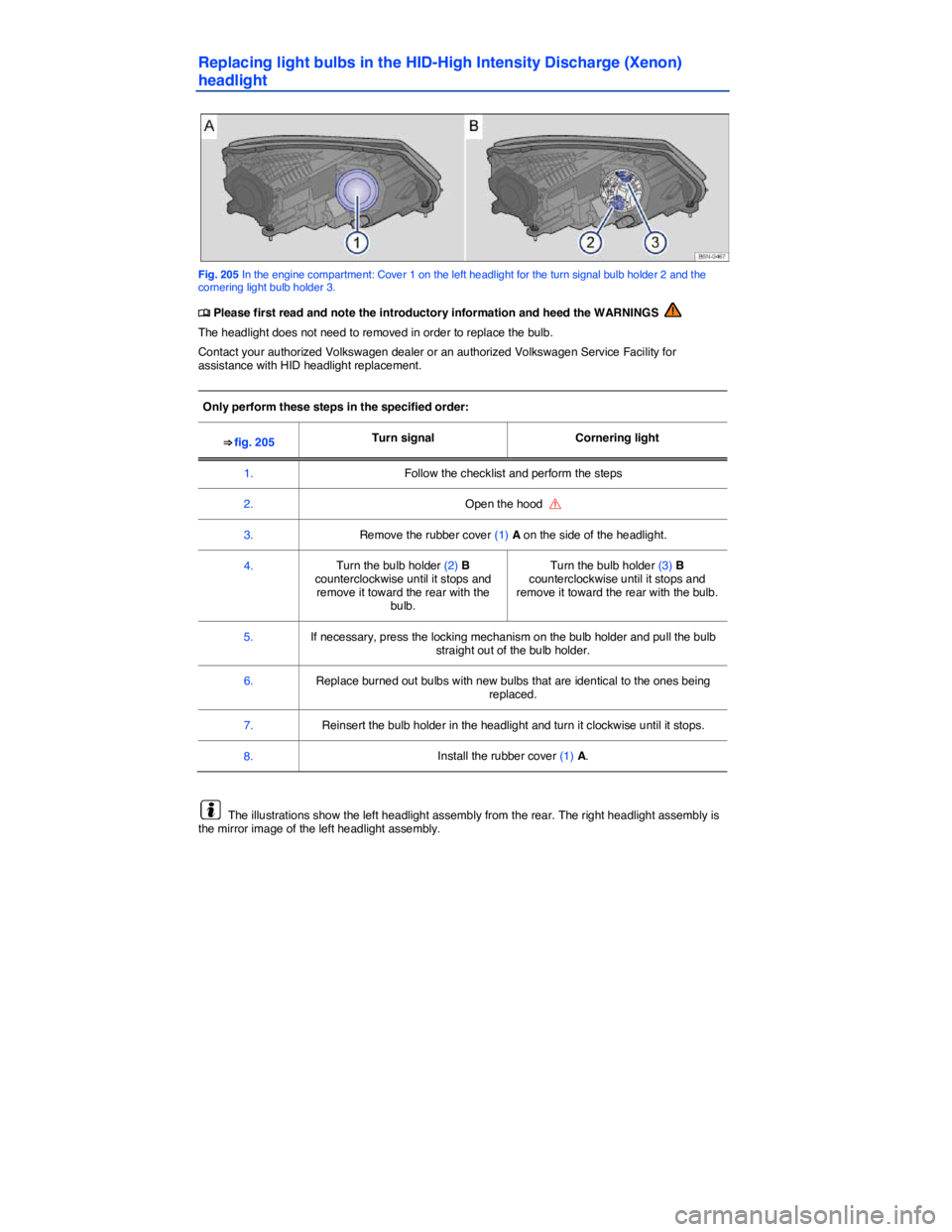
Fig. 204 In the engine compartment: Cover 1 on the left headlight for the low beam bulb holder 3 and cover 2 for the parking light bulb holder 4, turn signal bulb holder 5 and high beam or daytime running light bulb 6.
Page 416 of 435
Replacing light bulbs in the HID-High Intensity Discharge (Xenon)
headlight
Fig. 205 In the engine compartment: Cover 1 on the left headlight for the turn signal bulb holder 2 and the cornering light bulb holder 3.