2008 PONTIAC G5 mirror
[x] Cancel search: mirrorPage 211 of 388

Driving at Night
Night driving is more dangerous than day driving because
some drivers are likely to be impaired — by alcohol or
drugs, with night vision problems, or by fatigue.
Night driving tips include:
Drive defensively.
Do not drink and drive.
Reduce headlamp glare by adjusting the inside
rearview mirror.
Slow down and keep more space between you and
other vehicles because your headlamps can only
light up so much road ahead.
Watch for animals.
When tired, pull off the road.
Do not wear sunglasses.
Avoid staring directly into approaching headlamps.
Keep the windshield and all glass on your vehicle
clean — inside and out.
Keep your eyes moving, especially during turns or
curves.
No one can see as well at night as in the daytime.
But, as we get older, these differences increase.
A 50-year-old driver might need at least twice as much
light to see the same thing at night as a 20-year-old.
Driving in Rain and on Wet Roads
Rain and wet roads can reduce vehicle traction
and affect your ability to stop and accelerate. Always
drive slower in these types of driving conditions
and avoid driving through large puddles and
deep-standing or owing water.
{CAUTION:
Wet brakes can cause crashes. They might not
work as well in a quick stop and could cause
pulling to one side. You could lose control of
the vehicle.
After driving through a large puddle of water
or a car/vehicle wash, lightly apply the brake
pedal until the brakes work normally.
Flowing or rushing water creates strong
forces. Driving through owing water could
cause your vehicle to be carried away. If this
happens, you and other vehicle occupants
could drown. Do not ignore police warnings
and be very cautious about trying to drive
through owing water.
4-17
Page 212 of 388
Hydroplaning
Hydroplaning is dangerous. Water can build up under
your vehicle’s tires so they actually ride on the water.
This can happen if the road is wet enough and you are
going fast enough. When your vehicle is hydroplaning, it
has little or no contact with the road.
There is no hard and fast rule about hydroplaning.
The best advice is to slow down when the road is wet.
Other Rainy Weather Tips
Besides slowing down, other wet weather driving tips
include:
Allow extra following distance.
Pass with caution.
Keep windshield wiping equipment in good shape.
Keep the windshield washer uid reservoir lled.
Have good tires with proper tread depth. SeeTires
on page 5-48.
Before Leaving on a Long Trip
To prepare your vehicle for a long trip, consider having
it serviced by your dealer/retailer before departing.
Things to check on your own include:
Windshield Washer Fluid:Reservoir full? Windows
clean — inside and outside?
Wiper Blades:In good shape?
Fuel, Engine Oil, Other Fluids:All levels checked?
Lamps:Do they all work and are lenses clean?
Tires:Are treads good? Are tires inated to
recommended pressure?
Weather and Maps:Safe to travel? Have
up-to-date maps?
Highway Hypnosis
Always be alert and pay attention to your surroundings
while driving. If you become tired or sleepy, nd a safe
place to park your vehicle and rest.
Other driving tips include:
Keep the vehicle well ventilated.
Keep interior temperature cool.
Keep your eyes moving — scan the road ahead
and to the sides.
Check the rearview mirror and vehicle instruments
often.
4-18
Page 230 of 388

Driving with a Trailer
Towing a trailer requires a certain amount of experience.
Before setting out for the open road, you will want to
get to know your rig. Acquaint yourself with the feel of
handling and braking with the added weight of the trailer.
And always keep in mind that the vehicle you are
driving is now a good deal longer and not nearly as
responsive as your vehicle is by itself.
Before you start, check all trailer hitch parts and
attachments, safety chains, electrical connector, lamps,
tires and mirror adjustment. If the trailer has electric
brakes, start your vehicle and trailer moving and then
apply the trailer brake controller by hand to be sure
the brakes are working. This lets you check your
electrical connection at the same time.
During your trip, check occasionally to be sure that the
load is secure, and that the lamps and any trailer
brakes are still working.
Following Distance
Stay at least twice as far behind the vehicle ahead as
you would when driving your vehicle without a trailer.
This can help you avoid situations that require
heavy braking and sudden turns.
Passing
You will need more passing distance up ahead when
you are towing a trailer. And, because the vehicle
is a good deal longer, you will need to go much farther
beyond the passed vehicle before you can return to
your lane.
Backing Up
Hold the bottom of the steering wheel with one hand.
Then, to move the trailer to the left, just move that hand
to the left. To move the trailer to the right, move your
hand to the right. Always back up slowly and, if possible,
have someone guide you.
4-36
Page 335 of 388
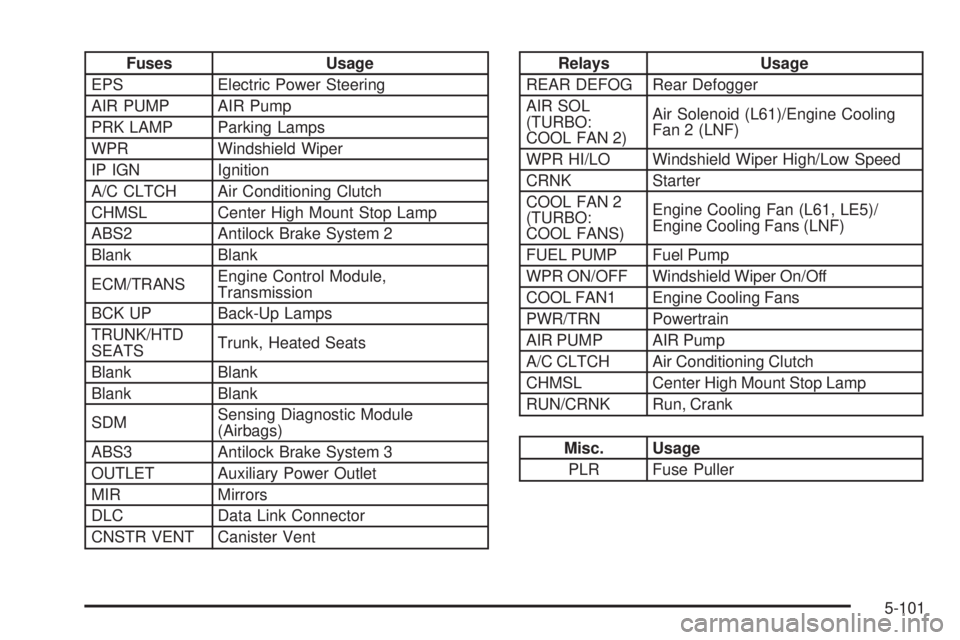
Fuses Usage
EPS Electric Power Steering
AIR PUMP AIR Pump
PRK LAMP Parking Lamps
WPR Windshield Wiper
IP IGN Ignition
A/C CLTCH Air Conditioning Clutch
CHMSL Center High Mount Stop Lamp
ABS2 Antilock Brake System 2
Blank Blank
ECM/TRANSEngine Control Module,
Transmission
BCK UP Back-Up Lamps
TRUNK/HTD
SEATSTrunk, Heated Seats
Blank Blank
Blank Blank
SDMSensing Diagnostic Module
(Airbags)
ABS3 Antilock Brake System 3
OUTLET Auxiliary Power Outlet
MIR Mirrors
DLC Data Link Connector
CNSTR VENT Canister VentRelays Usage
REAR DEFOG Rear Defogger
AIR SOL
(TURBO:
COOL FAN 2)Air Solenoid (L61)/Engine Cooling
Fan 2 (LNF)
WPR HI/LO Windshield Wiper High/Low Speed
CRNK Starter
COOL FAN 2
(TURBO:
COOL FANS)Engine Cooling Fan (L61, LE5)/
Engine Cooling Fans (LNF)
FUEL PUMP Fuel Pump
WPR ON/OFF Windshield Wiper On/Off
COOL FAN1 Engine Cooling Fans
PWR/TRN Powertrain
AIR PUMP AIR Pump
A/C CLTCH Air Conditioning Clutch
CHMSL Center High Mount Stop Lamp
RUN/CRNK Run, Crank
Misc. Usage
PLR Fuse Puller
5-101
Page 381 of 388

I
Ignition Positions.............................................2-21
Infants and Young Children, Restraints...............1-32
Ination - Tire Pressure...................................5-55
Instrument Panel
Overview..................................................... 3-4
Instrument Panel (I/P)
Brightness..................................................3-16
Cluster.......................................................3-26
J
Jump Starting.................................................5-34
K
Keyless Entry System....................................... 2-3
Keys............................................................... 2-2
L
Labeling, Tire Sidewall.....................................5-49
Lamps
Dome........................................................3-16
Mirror Reading............................................3-17Lap-Shoulder Belt...........................................1-23
LATCH System
Child Restraints...........................................1-39
License Plate Lamps.......................................5-46
Light
Airbag Readiness........................................3-29
Anti-lock Brake System (ABS) Warning...........3-34
Brake System Warning.................................3-33
Charging System.........................................3-32
Engine Coolant Temperature Warning.............3-36
Enhanced Traction System (ETS) Warning
Light......................................................3-34
Fog Lamp..................................................3-40
Highbeam On.............................................3-41
Malfunction Indicator....................................3-37
Oil Pressure...............................................3-40
Passenger Airbag Status Indicator..................3-30
Safety Belt Reminders..................................3-28
Security.....................................................3-40
Tire Pressure..............................................3-36
Up-Shift.....................................................3-32
Lighting
Entry/Exit...................................................3-17
Lights............................................................3-14
Flash-to-Pass............................................... 3-8
High/Low Beam Changer................................ 3-8
On Reminder..............................................3-15
7
Page 382 of 388
Loading Your Vehicle.......................................4-25
Lockout Protection..........................................2-12
Locks
Automatic Door Lock....................................2-11
Delayed Locking..........................................2-10
Door........................................................... 2-9
Lockout Protection.......................................2-12
Power Door................................................2-10
Programmable Automatic Door Unlock............2-11
Rear Door Security Locks.............................2-11
Loss of Control...............................................4-15
Lumbar
Manual Controls............................................ 1-3
M
Maintenance Schedule
Additional Required Services........................... 6-6
At Each Fuel Fill........................................... 6-8
At Least Once a Month.................................. 6-9
At Least Once a Year.................................... 6-9
Introduction.................................................. 6-2
Maintenance Footnotes.................................. 6-7
Maintenance Record....................................6-16
Maintenance Replacement Parts....................6-14Maintenance Schedule (cont.)
Maintenance Requirements............................. 6-2
Owner Checks and Services........................... 6-8
Recommended Fluids and Lubricants.............6-12
Scheduled Maintenance................................. 6-4
Using.......................................................... 6-3
Your Vehicle and the Environment................... 6-2
Malfunction Indicator Light................................3-37
Manual Lumbar Controls.................................... 1-3
Manual Seats................................................... 1-2
Manual Transmission
Fluid..........................................................5-19
Operation...................................................2-30
Manual, Using.................................................... iii
Manual Windows............................................2-14
Message
DIC Warnings and Messages........................3-44
Mirror Reading Lamps.....................................3-17
Mirrors
Manual Rearview Mirror................................2-38
Manual Rearview Mirror with OnStar
®.............2-38
Outside Convex Mirror.................................2-39
Outside Power Mirrors..................................2-39
Outside Remote Control Mirror......................2-38
MP3 .............................................................3-69
MyGMLink.com................................................ 7-4
8
Page 383 of 388

N
Navigation System, Privacy..............................7-18
New Vehicle Break-In......................................2-20
O
Odometer......................................................3-27
Off-Road Recovery..........................................4-15
Oil
Engine.......................................................5-13
Pressure Light.............................................3-40
Oil, Engine Oil Life System..............................5-16
Older Children, Restraints................................1-30
Online Owner Center........................................ 7-4
OnStar, Privacy..............................................7-18
OnStar
®System, see OnStar®Manual...............2-40
Other Warning Devices...................................... 3-6
Outlet Adjustment............................................3-22
Outlets
Accessory Power.........................................3-18
Outside
Convex Mirror.............................................2-39
Power Mirrors.............................................2-39
Remote Control Mirror..................................2-38
Owner Checks and Services.............................. 6-8
Owners, Canadian............................................... ii
P
Paint, Damage...............................................5-93
Park Brake....................................................2-32
Park (P)
Shifting Into................................................2-33
Shifting Out of............................................2-35
Parking
Over Things That Burn.................................2-36
Parking Your Vehicle.......................................2-35
Passenger Airbag Status Indicator.....................3-30
Passenger Compartment Air Filter.....................3-23
Passenger Sensing System..............................1-60
Passing.........................................................4-15
PASS-Key
®III+..............................................2-18
PASS-Key®III+ Operation................................2-19
Perchlorate Materials Requirements, California...... 5-4
Power
Door Locks.................................................2-10
Electrical System.........................................5-96
Retained Accessory (RAP)............................2-24
Windows....................................................2-15
Privacy..........................................................7-17
Event Data Recorders..................................7-17
Navigation System.......................................7-18
OnStar.......................................................7-18
Radio Frequency Identication.......................7-18
Programmable Automatic Door Unlock...............2-11
9
Page 384 of 388

R
Radio Frequency Identication (RFID), Privacy......7-18
Radio(s)........................................................3-59
Radios
Reception...................................................3-76
Setting the Clock.........................................3-56
Theft-Deterrent............................................3-75
Rear Door Security Locks................................2-11
Rearview Mirror with OnStar
®...........................2-38
Rearview Mirrors.............................................2-38
Reclining Seatbacks.......................................... 1-4
Recommended Fluids and Lubricants.................6-12
Recreational Vehicle Towing.............................4-30
Remote Keyless Entry (RKE) System.................. 2-3
Remote Keyless Entry (RKE) System, Operation..... 2-4
Remote Vehicle Start........................................ 2-6
Removing the Flat Tire and Installing the
Spare Tire..................................................5-78
Removing the Spare Tire and Tools...................5-73
Replacement Bulbs.........................................5-47
Replacement Parts, Maintenance......................6-14
Reporting Safety Defects
Canadian Government..................................7-15
General Motors...........................................7-15
United States Government............................7-15Restraint System Check
Checking the Restraint Systems....................1-66
Replacing Restraint System Parts
After a Crash..........................................1-67
Retained Accessory Power (RAP)......................2-24
Roadside
Assistance Program....................................... 7-7
Rocking Your Vehicle to Get it Out....................4-24
Routing, Engine Drive Belt...............................6-15
Running Out of Fuel........................................2-37
S
Safety Belt
Reminder Light............................................3-28
Safety Belts
Care of......................................................5-89
How to Wear Safety Belts Properly................1-15
Lap-Shoulder Belt........................................1-23
Safety Belt Extender....................................1-29
Safety Belt Use During Pregnancy.................1-29
Safety Belts Are for Everyone.......................1-10
Safety Warnings and Symbols.............................. iii
Scheduled Maintenance..................................... 6-4
10