Page 147 of 228
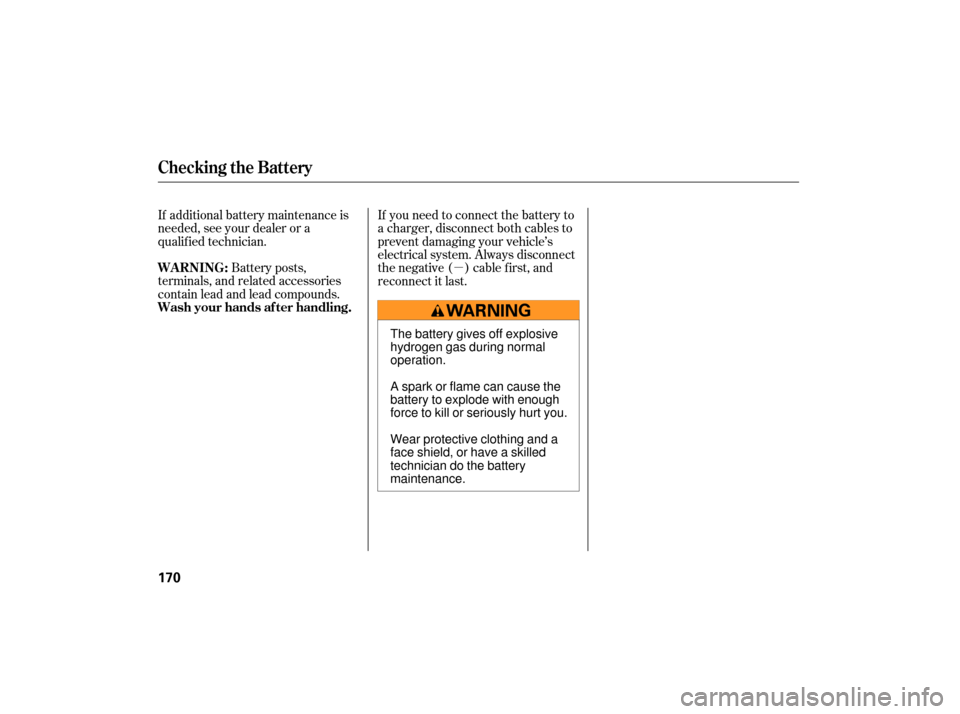
Maintenance Record
144
mi
mi
mi
mi
mi
mi
mimi
mi
mi
mi
mi
mi
mi
Signature
Date
Mileage
km
km
km
km
km
km
km Mileage
km
km
km
km
km
km
km Signature
Date
Maintenance
Performed
AB123456
AB123456
AB123456
AB123456
AB123456
AB123456
AB123456 Maintenance
Performed
AB123456
AB123456
AB123456
AB123456
AB123456
AB123456
AB123456
Page 150 of 228

�µ
The oil’s viscosity or weight is
provided on the container’s label.
Select the oil f or your vehicle
according to this chart.
An oil with a viscosity of 10W-30 is
pref erred f or optimum f uel economy
and year-round protection in your
vehicle. You may use 5W-40 oil if the
temperature in your area goes below
0°F ( 20°C).
Your vehicle does not require any oil
additives. Additives may adversely
af f ect the engine or transmission
perf ormance and durability. You may use a synthetic motor oil if
it meets the same requirements
given f or a conventional motor oil: it
displays the API Certif ication Seal,
and it is the proper weight. You must
f ollow the oil and f ilter change
intervals shown on the information
display.
Always change the oil and f ilter
according to the maintenance
messages shown on the inf ormation
display. The oil and f ilter collect
contaminants that can damage your
engine if they are not removed
regularly.
Run the engine until it reaches
normal operating temperature,
then shut it off.
Changing the oil and f ilter requires
special tools and access f rom
underneath the vehicle. The vehicle
should be raised on a service station-
type hydraulic lif t f or this service.
Unless you have the knowledge and
proper equipment, you should have
this maintenance done by a skilled
mechanic.
1.
CONT INUED
Synthetic Oil
Engine Oil A dditives
Changing the Oil and Filter
A dding Engine Oil, Changing the Oil and Filter
Maint enance
147
Ambient Temperature
Page 157 of 228
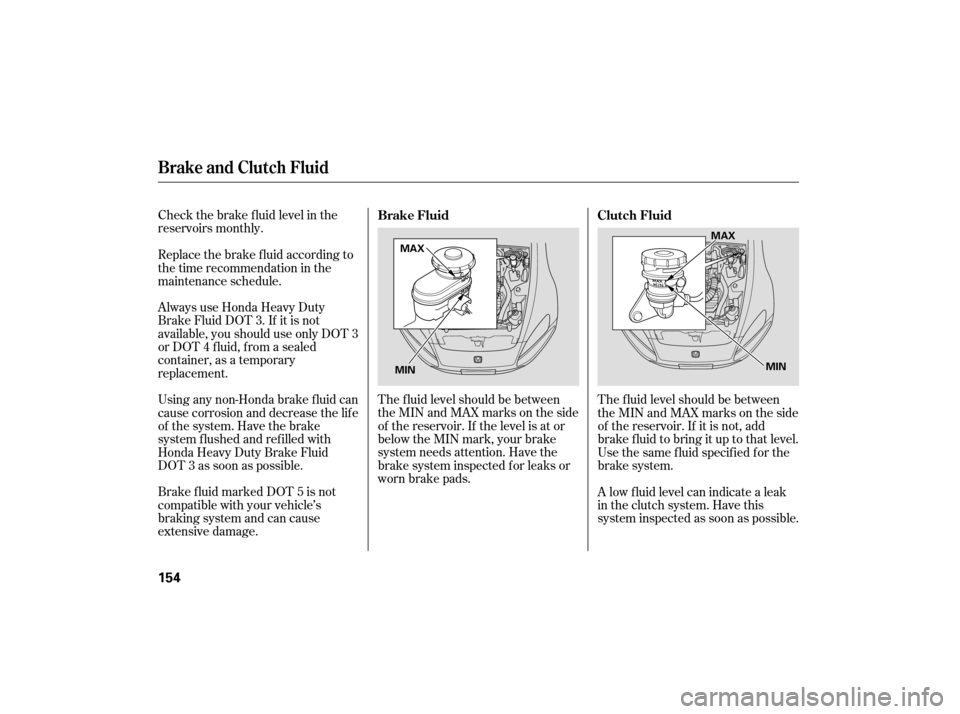
Check the brake f luid level in the
reservoirs monthly.
Always use Honda Heavy Duty
Brake Fluid DOT 3. If it is not
available, you should use only DOT 3
or DOT 4 f luid, f rom a sealed
container, as a temporary
replacement.The f luid level should be between
theMINandMAXmarksontheside
of the reservoir. If the level is at or
below the MIN mark, your brake
system needs attention. Have the
brake system inspected f or leaks or
worn brake pads.The f luid level should be between
theMINandMAXmarksontheside
of the reservoir. If it is not, add
brake f luid to bring it up to that level.
Use the same fluid specified for the
brake system.
Replace the brake f luid according to
the time recommendation in the
maintenance schedule.
Brake f luid marked DOT 5 is not
compatible with your vehicle’s
braking system and can cause
extensive damage. Using any non-Honda brake f luid can
cause corrosion and decrease the lif e
of the system. Have the brake
system f lushed and ref illed with
Honda Heavy Duty Brake Fluid
DOT 3 as soon as possible.
A low f luid level can indicate a leak
in the clutch system. Have this
system inspected as soon as possible.
Brake Fluid
Clutch Fluid
Brake and Clutch Fluid
154
MAX
MIN MAX
MIN
Page 164 of 228

The floor mats that came with your
vehicle hook over the f loor mat
anchors. This keeps them f rom
sliding f orward and possibly
interf ering with vehicle operation.
If you remove a f loor mat, make sure
tore-anchoritwhenyouputitback
in your vehicle.If you use a non-Honda f loor mat,
make sure it f its properly and that it
canbeusedwiththefloormat
anchor. Do not put additional f loor
mats on top of the anchored mat.
This f ilter removes the dust and
pollenthatisbroughtinfromthe
outside through the heating and
cooling system.
Have your dealer replace the filter
when this service is indicated by a
maintenance message on the
inf ormation display. It should be
replaced every 15,000 miles (24,000
km) if you drive primarily in urban
areas that have high concentrations
of soot in the air, or if the f low f rom
the heating and cooling system
becomeslessthanusual.
Floor Mats
Dust and Pollen FilterA udio A ntenna
Floor Mats, Dust and Pollen Filter, A udio A ntenna
Maint enance
161
Your vehicle is equipped with an
antenna at the right rear f ender.
Bef ore using a ‘‘drive-through’’ car
wash, remove the antenna by
unscrewing it by hand. This prevents
the antenna f rom being damaged by the
car wash brushes.
Page 166 of 228
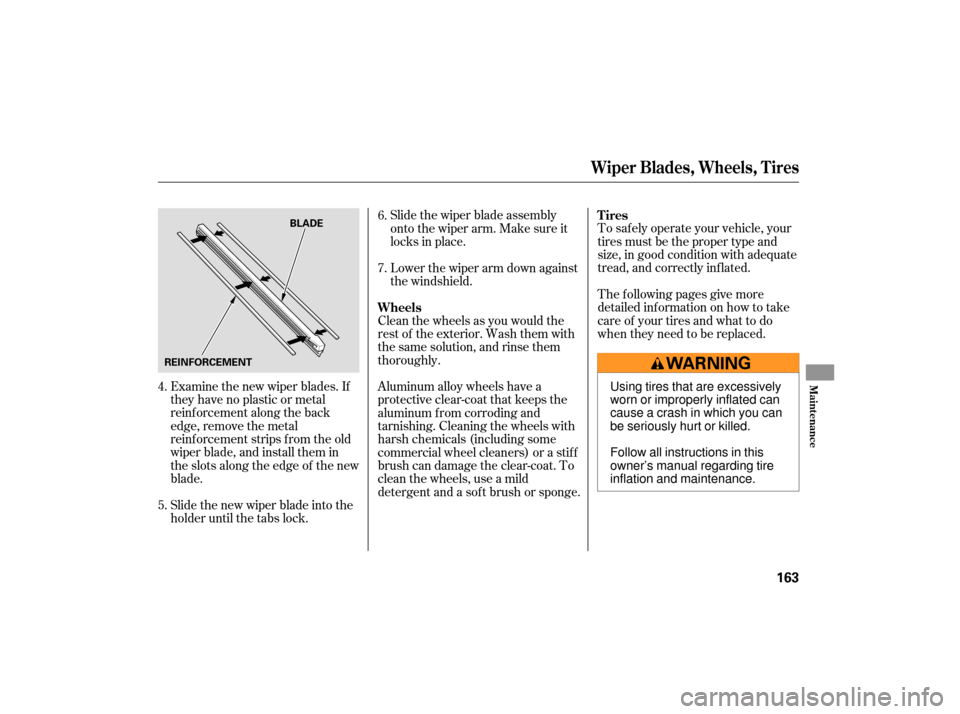
Examine the new wiper blades. If
they have no plastic or metal
reinf orcement along the back
edge, remove the metal
reinf orcement strips f rom the old
wiper blade, and install them in
the slots along the edge of the new
blade.To saf ely operate your vehicle, your
tires must be the proper type and
size, in good condition with adequate
tread, and correctly inf lated.
The f ollowing pages give more
detailed inf ormation on how to take
care of your tires and what to do
when they need to be replaced.
Slide the new wiper blade into the
holder until the tabs lock. Slide the wiper blade assembly
onto the wiper arm. Make sure it
locks in place.
Lower the wiper arm down against
the windshield.
Clean the wheels as you would the
rest of the exterior. Wash them with
thesamesolution,andrinsethem
thoroughly.
Aluminum alloy wheels have a
protective clear-coat that keeps the
aluminum f rom corroding and
tarnishing. Cleaning the wheels with
harsh chemicals (including some
commercial wheel cleaners) or a stif f
brush can damage the clear-coat. To
clean the wheels, use a mild
detergent and a sof t brush or sponge.
4.
5. 6.
7.
Tires
Wheels
Wiper Blades, Wheels, Tires
Maint enance
163
REINFORCEMENT BLADE
Using tires that are excessively
worn or improperly inflated can
cause a crash in which you can
be seriously hurt or killed.
Follow all instructions in this
owner’s manual regarding tire
inflation and maintenance.
Page 169 of 228

In addition to proper inflation,
correct wheel alignment helps to
decrease tire wear. If you find a tire
is wo rn unevenly, have your dealer
check the wheel alignment.
Have your dealer check the tires if
you feel a consistent vibration while
driving. A tire should always be
rebalanced if it is removed from the
wheel. When you have new tires
installed, make sure they are
balanced. This increases riding
comfort and tire life. For best results,
have the insta ller perform a dynamic
balance. You
should not rotate your vehicle’s
tires. The front and rear tires are
different sizes, so they cannot be
rotated front-to-rear. The original-
equipment tires on your vehicle have
a unidirectional tread pattern, so
th ey cannot be rotated side-to-side.
The tires that came on your vehicle
were designed and constructed to
provide superior grip during
acceleration, braking, and cornering.
As a trade-off, they will wear more
rapidly than tires used on ordinary
passenger vehicles. Because of the
vehicl e’s weight distribution, and the
fact that the rear wheels are the
driving wheels, you can expect them
to wear more rapidly than the front
tires. The
mileage you can expect from
yourvehicletiresisthesameas
comparable mid-and rear-engine
sports cars, and it will vary greatly
wi th your driving habits.
If you drive moderately, the rear
tires could last more than 10,000
miles (16,000 km). However, the
mileage will be substantially less if
you tend to drive your vehicle at the
upper limits of its capabilities.
You should caref ully inspect your
vehicle’s tires f or wear, damage, and
proper inf lation every 7,500 miles
(12,000 km) or when tire inspection
is indicated on the inf ormation
display (see page ). 142
T ire Maintenance
T ire Rotation
Tire Wear
Tires
166
Improper wheel weights can damage
your vehicle’s aluminum wheels. Use
only Honda wheel weights f or
balancing.
Page 173 of 228
�µ
If additional battery maintenance is
needed, see your dealer or a
qualif ied technician.
Battery posts,
terminals, and related accessories
contain lead and lead compounds. If you need to connect the battery to
a charger, disconnect both cables to
prevent damaging your vehicle’s
electrical system. Always disconnect
the negative ( ) cable first, and
reconnect it last.
Checking the Battery
WARNING:
Wash your hands af ter handling.
170
The battery gives off explosive
hydrogen gas during normal
operation.
A spark or flame can cause the
battery to explode with enough
force to kill or seriously hurt you.
Wear protective clothing and a
face shield, or have a skilled
technician do the battery
maintenance.
Page 219 of 228

�µ�µ
�µ
�(
��
��
�%
�)
�$
�%
��
�.
�"
��
�#
�) This manual covers maintenance and recommended
procedures f or repair to engine and chassis components.
It is written f or the journeyman mechanic, but is simple
enough f or most mechanically-inclined owners to under-
stand.
This manual complements the service manual by
providing in-depth troubleshooting inf ormation f or each
electrical circuit in your vehicle.
This manual describes the procedures involved in the
replacement of damaged body parts.
Authorized Manuals
Service Manual:
Electrical T roubleshooting Manual:
Body Repair Manual:
216
NOTE: Dealers and Companies please provide dealer or company name,
and also the name of the person to whose attention the shipment should
be sent. For purchases outside U.S.A. please write to the address shown
below for a quotation.
P.O. BOX 07280·DETROIT, MICHIGAN 48207·1-800-782-4356
Customer Name Attention
Apartment Number
State & Zip Code
City
Daytime Telephone Number
Check or money order enclosed payable to Helm Inc U.S. funds only.
Do not send cash
Master
Card VISA
Check here if your billing address is different
from the shipping address shown above.
Account Number Expiration: Mo. Yr.
CUSTOMER SIGNATURE DATE
Street Address No P.O. Box Number
()
These Publications cannot be returned for credit without receiving advance authorization within 14
days of delivery. On returns, a restocking fee may be applied against the original order.