Page 356 of 448
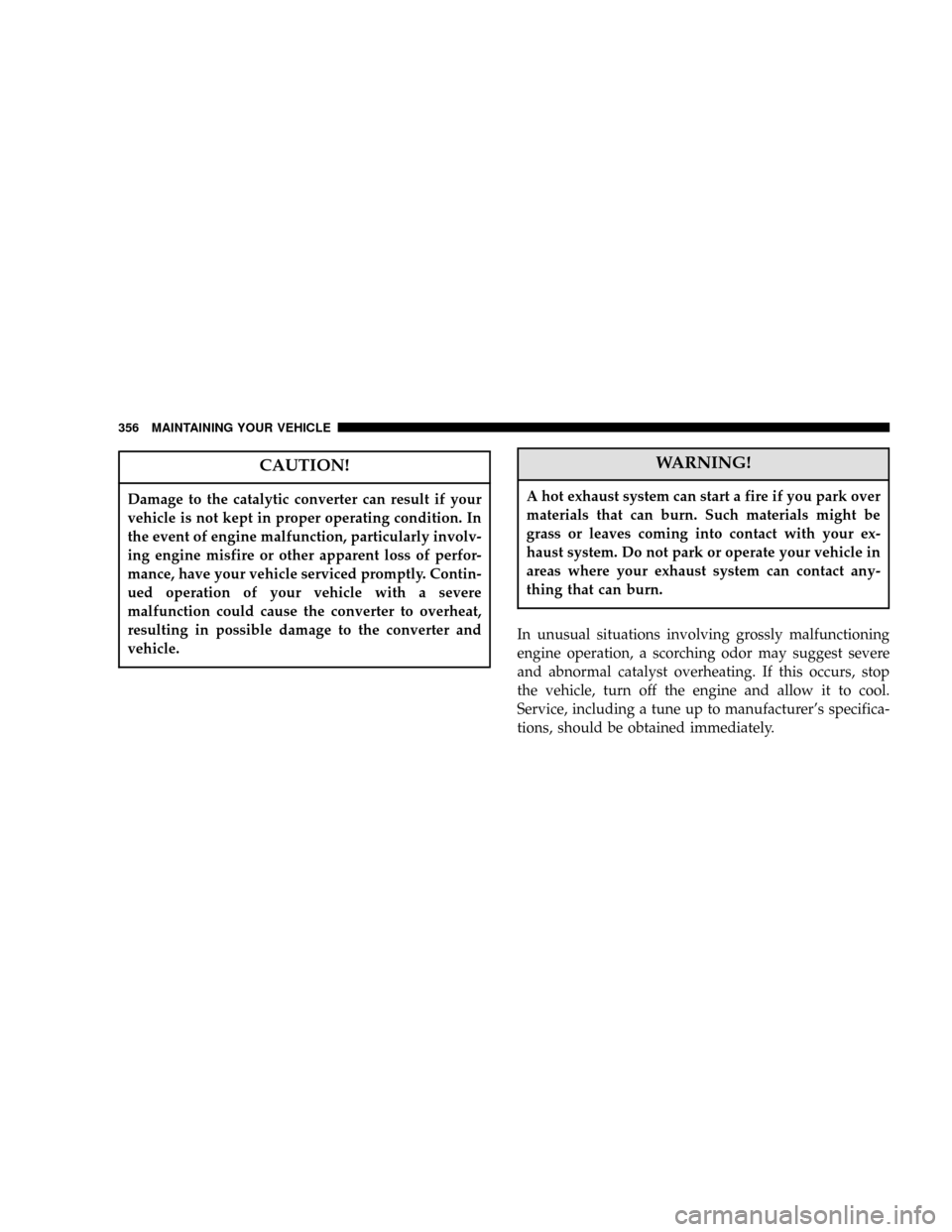
CAUTION!
Damage to the catalytic converter can result if your
vehicle is not kept in proper operating condition. In
the event of engine malfunction, particularly involv-
ing engine misfire or other apparent loss of perfor-
mance, have your vehicle serviced promptly. Contin-
ued operation of your vehicle with a severe
malfunction could cause the converter to overheat,
resulting in possible damage to the converter and
vehicle.
WARNING!
A hot exhaust system can start a fire if you park over
materials that can burn. Such materials might be
grass or leaves coming into contact with your ex-
haust system. Do not park or operate your vehicle in
areas where your exhaust system can contact any-
thing that can burn.
In unusual situations involving grossly malfunctioning
engine operation, a scorching odor may suggest severe
and abnormal catalyst overheating. If this occurs, stop
the vehicle, turn off the engine and allow it to cool.
Service, including a tune up to manufacturer’s specifica-
tions, should be obtained immediately.
356 MAINTAINING YOUR VEHICLE
Page 367 of 448

The cap should be inspected and cleaned if there is any
accumulation of foreign material on the sealing surfaces.
WARNING!
The warning words DO NOT OPEN HOT on the
cooling system pressure cap are a safety precaution.
Never add antifreeze/coolant when the engine is
overheated. Do not loosen or remove the cap to cool
an overheated engine. Heat causes pressure to build
up in the cooling system. To prevent scalding or
injury, do not remove the pressure cap while the
system is hot or under pressure.
Disposal of Used Engine Coolant
Used ethylene glycol-based antifreeze/coolant is a regu-
lated substance requiring proper disposal. Check with
your local authorities to determine the disposal rules for
your community. To prevent ingestion by animals andchildren, do not store ethylene glycol-based antifreeze/
coolant in open containers or allow it to remain in
puddles on the ground. If ingested by a child, contact a
physician immediately. Clean up any ground spills im-
mediately.
Engine Coolant Level
The coolant bottle provides a quick visual method for
determining that the antifreeze/coolant level is adequate.
With the engine idling, and warm to normal operating
temperature, the level of the antifreeze/coolant in the
bottle should be between the ranges indicated on the
bottle.
The radiator normally remains completely full, so there is
not need to remove the radiator cap unless checking for
antifreeze/coolant freeze point or replacing antifreeze/
coolant. Advise your service attendant of this. As long as
the engine operating temperature is satisfactory, the
coolant bottle need only be checked once a month.
MAINTAINING YOUR VEHICLE 367
7
Page 428 of 448
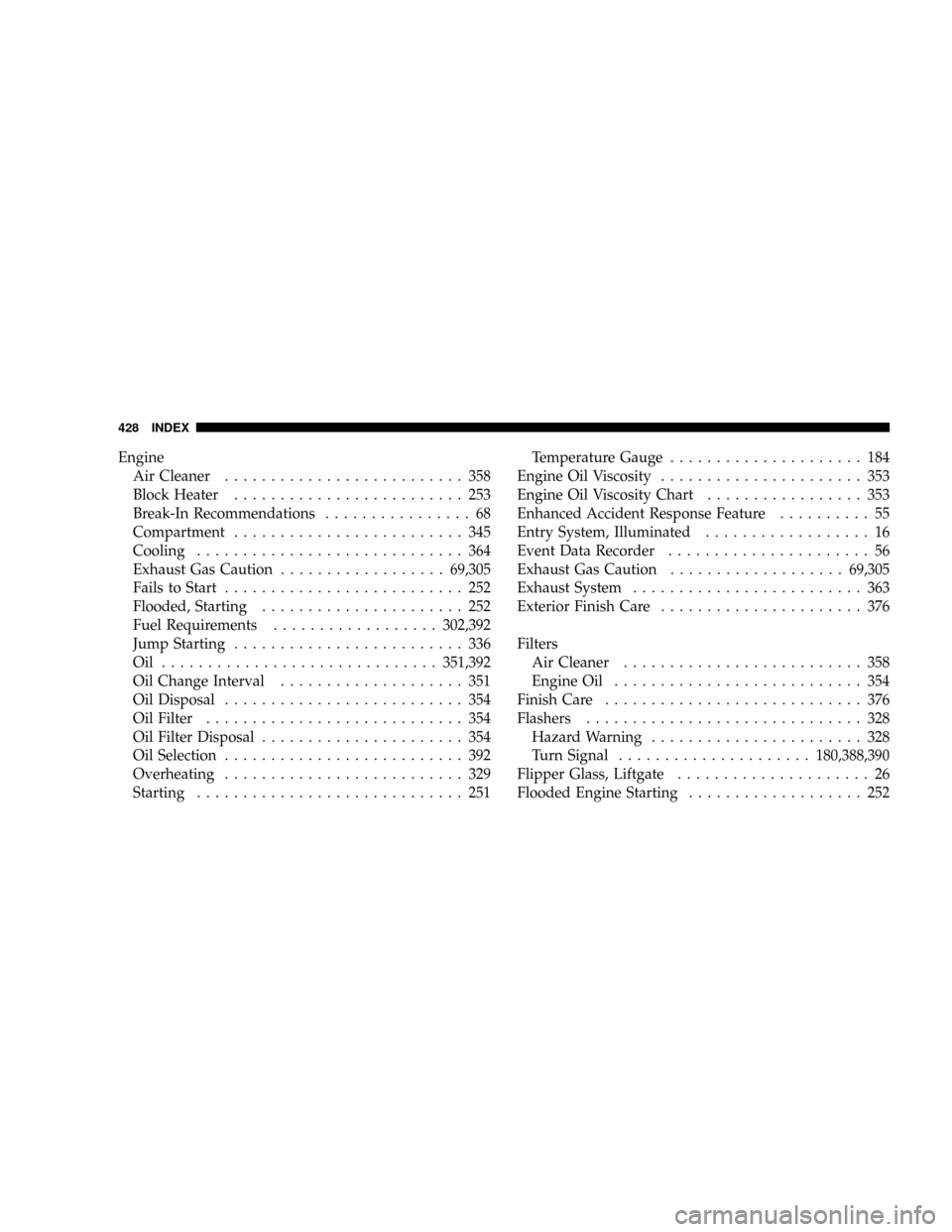
Engine
Air Cleaner.......................... 358
Block Heater......................... 253
Break-In Recommendations................ 68
Compartment......................... 345
Cooling............................. 364
Exhaust Gas Caution..................69,305
Fails to Start.......................... 252
Flooded, Starting...................... 252
Fuel Requirements..................302,392
Jump Starting......................... 336
Oil ..............................351,392
Oil Change Interval.................... 351
Oil Disposal.......................... 354
Oil Filter............................ 354
Oil Filter Disposal...................... 354
Oil Selection.......................... 392
Overheating.......................... 329
Starting............................. 251Temperature Gauge..................... 184
Engine Oil Viscosity...................... 353
Engine Oil Viscosity Chart................. 353
Enhanced Accident Response Feature.......... 55
Entry System, Illuminated.................. 16
Event Data Recorder...................... 56
Exhaust Gas Caution...................69,305
Exhaust System......................... 363
Exterior Finish Care...................... 376
Filters
Air Cleaner.......................... 358
Engine Oil........................... 354
Finish Care............................ 376
Flashers.............................. 328
Hazard Warning....................... 328
Turn Signal.....................180,388,390
Flipper Glass, Liftgate..................... 26
Flooded Engine Starting................... 252
428 INDEX
Page 434 of 448
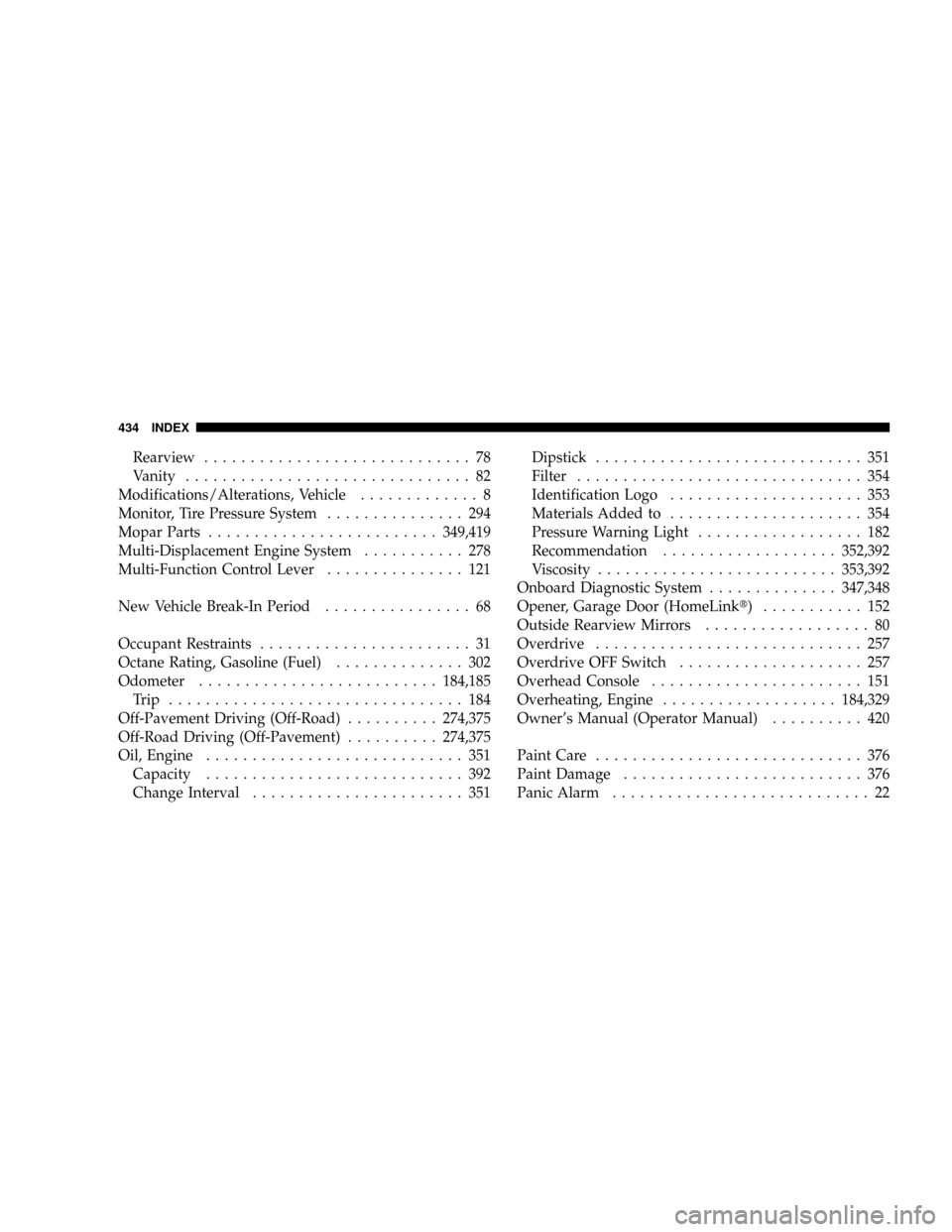
Rearview............................. 78
Vanity............................... 82
Modifications/Alterations, Vehicle............. 8
Monitor, Tire Pressure System............... 294
Mopar Parts.........................349,419
Multi-Displacement Engine System........... 278
Multi-Function Control Lever............... 121
New Vehicle Break-In Period................ 68
Occupant Restraints....................... 31
Octane Rating, Gasoline (Fuel).............. 302
Odometer..........................184,185
Trip ................................ 184
Off-Pavement Driving (Off-Road)..........274,375
Off-Road Driving (Off-Pavement)..........274,375
Oil, Engine............................ 351
Capacity............................ 392
Change Interval....................... 351Dipstick............................. 351
Filter............................... 354
Identification Logo..................... 353
Materials Added to..................... 354
Pressure Warning Light.................. 182
Recommendation...................352,392
Viscosity..........................353,392
Onboard Diagnostic System..............347,348
Opener, Garage Door (HomeLink�) ........... 152
Outside Rearview Mirrors.................. 80
Overdrive............................. 257
Overdrive OFF Switch.................... 257
Overhead Console....................... 151
Overheating, Engine...................184,329
Owner’s Manual (Operator Manual).......... 420
Paint Care............................. 376
Paint Damage.......................... 376
Panic Alarm............................ 22
434 INDEX