2006 CHEVROLET AVALANCHE warning light
[x] Cancel search: warning lightPage 435 of 532

6. Proceed to the passenger’s side front tire, and
repeat the procedure in Step 5.
7. Proceed to the passenger’s side rear tire, and
repeat the procedure in Step 5.
8. Proceed to the driver’s side rear tire, and repeat the
procedure in Step 5.
9. After hearing the conrming horn chirp for the left
rear tire, check to see if the TPMS warning light is
still ashing. If it is, turn the ignition switch to
LOCK to exit the sensor matching process.
If the TPMS warning light is not ashing, the
ve minute time limit has passed and you will need
to start the process over beginning with Step 1.
10. Set all four tires to the recommended air pressure
level as indicated on the Tire and Loading
Information label.
11. Put the valve caps back on the valve stems
The spare tire does not have a TPMS sensor. If you
replace one of the road tires with the spare, the CHECK
TIRE PRESSURE message will be displayed on the
DIC screen. This message should go off once you
re-install the road tire containing the TPMS sensor. The
SERVICE TIRE MONITOR message is displayed
when the TPMS is malfunctioning. One or more missing
or inoperable TPMS sensors will cause the service
tire monitor message to be displayed. See your dealer
for service.Federal Communications Commission
(FCC) and Industry and Science
Canada
The Tire Pressure Monitor System (TPMS) operates on
a radio frequency and complies with Part 15 of the
FCC Rules. Operation is subject to the following
two conditions:
1. This device may not cause harmful interference.
2. This device must accept any interference received,
including interference that may cause undesired
operation.
The Tire Pressure Monitor System (TPMS) operates
on a radio frequency and complies with RSS-210
of Industry and Science Canada. Operation is subject to
the following two conditions:
1. This device may not cause interference.
2. This device must accept any interference received,
including interference that may cause undesired
operation of the device.
Changes or modications to this system by other than
an authorized service facility could void authorization to
use this equipment.
5-75
Page 440 of 532
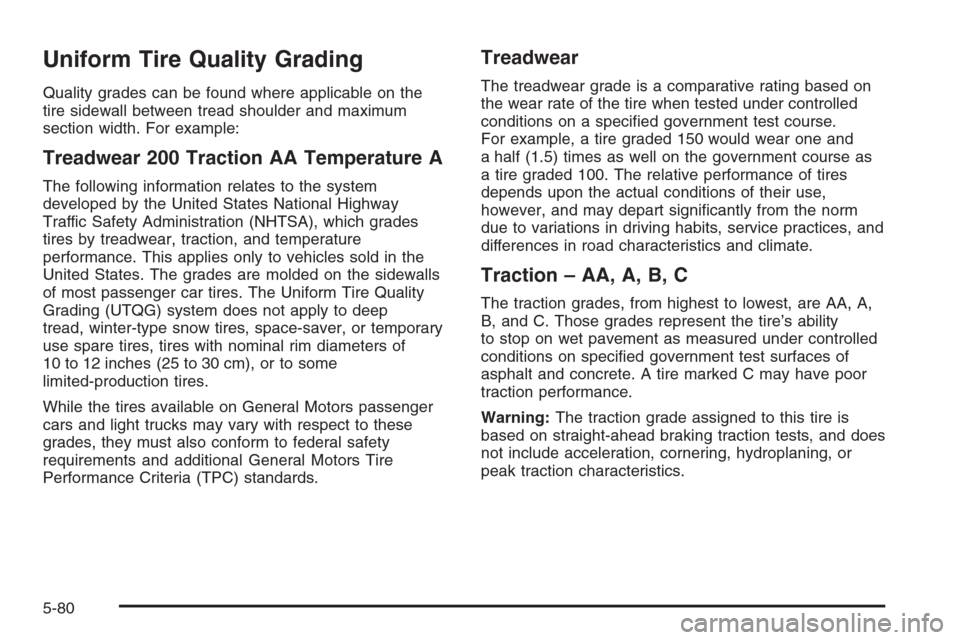
Uniform Tire Quality Grading
Quality grades can be found where applicable on the
tire sidewall between tread shoulder and maximum
section width. For example:
Treadwear 200 Traction AA Temperature A
The following information relates to the system
developed by the United States National Highway
Traffic Safety Administration (NHTSA), which grades
tires by treadwear, traction, and temperature
performance. This applies only to vehicles sold in the
United States. The grades are molded on the sidewalls
of most passenger car tires. The Uniform Tire Quality
Grading (UTQG) system does not apply to deep
tread, winter-type snow tires, space-saver, or temporary
use spare tires, tires with nominal rim diameters of
10 to 12 inches (25 to 30 cm), or to some
limited-production tires.
While the tires available on General Motors passenger
cars and light trucks may vary with respect to these
grades, they must also conform to federal safety
requirements and additional General Motors Tire
Performance Criteria (TPC) standards.
Treadwear
The treadwear grade is a comparative rating based on
the wear rate of the tire when tested under controlled
conditions on a specied government test course.
For example, a tire graded 150 would wear one and
a half (1.5) times as well on the government course as
a tire graded 100. The relative performance of tires
depends upon the actual conditions of their use,
however, and may depart signicantly from the norm
due to variations in driving habits, service practices, and
differences in road characteristics and climate.
Traction – AA, A, B, C
The traction grades, from highest to lowest, are AA, A,
B, and C. Those grades represent the tire’s ability
to stop on wet pavement as measured under controlled
conditions on specied government test surfaces of
asphalt and concrete. A tire marked C may have poor
traction performance.
Warning:The traction grade assigned to this tire is
based on straight-ahead braking traction tests, and does
not include acceleration, cornering, hydroplaning, or
peak traction characteristics.
5-80
Page 519 of 532

A
Accessories and Modications............................ 5-3
Accessory Power Outlet(s)...............................3-21
Adding a Snow Plow or Similar Equipment.........4-52
Adding Equipment to Your Airbag-Equipped
Vehicle.......................................................1-68
Additives, Fuel................................................. 5-6
Adjustable Throttle and Brake Pedal..................2-30
Air Cleaner/Filter, Engine.................................5-23
Air Conditioning......................................3-22, 3-24
Airbag
Passenger Status Indicator...........................3-35
Readiness Light..........................................3-34
Airbag Sensing and Diagnostic Module (SDM)...... 7-9
Airbag System................................................1-54
Adding Equipment to Your Airbag-Equipped
Vehicle...................................................1-68
How Does an Airbag Restrain?......................1-61
Passenger Sensing System...........................1-63
Servicing Your Airbag-Equipped Vehicle..........1-68
What Makes an Airbag Inate?......................1-61
What Will You See After an Airbag Inates?....1-62
When Should an Airbag Inate?....................1-59
Where Are the Airbags?...............................1-56
Antenna, Fixed Mast......................................3-114
Antenna, XM™ Satellite Radio Antenna
System.....................................................3-115
Anti-Lock Brake System (ABS)........................... 4-7
Anti-Lock Brake, System Warning Light..............3-39Appearance Care
Aluminum or Chrome-Plated Wheels.............5-109
Care of Safety Belts...................................5-106
Chemical Paint Spotting..............................5-110
Cleaning Exterior Lamps/Lenses..................5-107
Cleaning the Inside of Your Vehicle..............5-103
Fabric/Carpet............................................5-105
Finish Care...............................................5-107
Finish Damage..........................................5-110
Instrument Panel, Vinyl, and Other Plastic
Surfaces...............................................5-106
Leather....................................................5-105
Sheet Metal Damage..................................5-110
Tires........................................................5-109
Underbody Maintenance.............................5-110
Vehicle Care/Appearance Materials...............5-111
Washing Your Vehicle.................................5-107
Weatherstrips............................................5-106
Windshield and Wiper Blades......................5-108
Ashtray(s)......................................................3-21
Audio System(s).............................................3-70
Audio Steering Wheel Controls....................3-112
Care of Your CD and DVD Player................3-114
Care of Your CDs and DVDs .......................3-114
Chime Level Adjustment.............................3-115
Fixed Mast Antenna...................................3-114
Navigation/Radio System, see Navigation
Manual...................................................3-98
Radio with CD............................................3-72
Radio with Six-Disc CD................................3-83
1
Page 520 of 532

Audio System(s) (cont.)
Rear Seat Audio (RSA)...............................3-110
Setting the Time..........................................3-71
Theft-Deterrent Feature...............................3-112
Understanding Radio Reception...................3-113
XM™ Satellite Radio Antenna System...........3-115
Automatic Headlamp System............................3-16
Automatic Transmission
Fluid..........................................................5-25
Operation...................................................2-32
Auxiliary Roof Mounted Lamp Switch.................3-18
B
Battery..........................................................5-44
Run-Down Protection...................................3-20
Before Leaving on a Long Trip.........................4-37
Brake
Anti-Lock Brake System (ABS)........................ 4-7
Emergencies................................................ 4-8
Parking......................................................2-40
System Warning Light..................................3-38
Brake Pedal, Throttle.......................................2-30
Brakes..........................................................5-41
Braking........................................................... 4-6
Braking in Emergencies..................................... 4-8
Break-In, New Vehicle.....................................2-27Bulb Replacement...........................................5-54
Daytime Running Lamps...............................5-61
Front Turn Signal, Sidemarker and Daytime
Running Lamps........................................5-59
Front Turn Signal, Sidemarker and Parking
Lamps ....................................................5-57
Halogen Bulbs............................................5-54
Headlamps.................................................5-55
License Plate Lamps....................................5-62
Replacement Bulbs......................................5-63
Taillamps, Turn Signal, Stoplamps and
Back-up Lamps........................................5-61
Buying New Tires...........................................5-78C
Calibration.............................2-45, 2-47, 2-50, 2-52
California Fuel.................................................. 5-6
California Proposition 65 Warning....................... 5-4
Canadian Owners................................................ ii
Capacities and Specications..........................5-122
Carbon Monoxide...........2-11, 2-20, 2-44, 4-40, 4-62
Care of
Safety Belts..............................................5-106
Your CD and DVD Player...........................3-114
Your CDs and DVDs ..................................3-114
Cargo Area, All-Weather..................................2-78
2
Page 523 of 532

E
Electrical System...........................................5-113
Center Instrument Panel Fuse Block.............5-116
Fuses and Circuit Breakers.........................5-113
Instrument Panel Fuse Block.......................5-114
Power Windows and Other Power Options....5-113
Underhood Fuse Block...............................5-117
Windshield Wiper Fuses.............................5-113
Engine
Air Cleaner/Filter.........................................5-23
Battery.......................................................5-44
Check and Service Engine Soon Light............3-43
Coolant......................................................5-28
Coolant Heater............................................2-31
Coolant Temperature Gage...........................3-41
Drive Belt Routing.......................................6-15
Engine Compartment Overview......................5-14
Exhaust.....................................................2-44
Fan Noise..................................................5-38
Oil .............................................................5-18
Oil Life System...........................................5-21
Overheated Protection Operating Mode...........5-32
Overheating................................................5-30
Starting......................................................2-29
Entry/Exit Lighting...........................................3-20
Event Data Recorders (EDR)............................. 7-9
Extender, Safety Belt.......................................1-28Exterior Cargo Lamps......................................3-19
Exterior Lamps...............................................3-14
F
Filter
Engine Air Cleaner......................................5-23
Finish Damage.............................................5-110
Fixed Mast Antenna.......................................3-114
Flashers, Hazard Warning.................................. 3-6
Flash-to-Pass................................................... 3-9
Flat Tire........................................................5-84
Flat Tire, Changing.........................................5-84
Flat Tire, Storing...........................................5-100
Fluid
Automatic Transmission................................5-25
Power Steering...........................................5-39
Windshield Washer......................................5-40
Fog Lamps ....................................................3-17
Four-Wheel Drive....................................2-35, 5-52
Front Armrest Storage Area..............................2-64
Front Axle......................................................5-53
Fuel............................................................... 5-5
Additives...................................................... 5-6
California Fuel.............................................. 5-6
E85 (85% Ethanol)........................................ 5-7
Filling a Portable Fuel Container....................5-11
Filling Your Tank........................................... 5-9
Fuels in Foreign Countries.............................. 5-8
5
Page 524 of 532

Fuel (cont.)
Gage .........................................................3-48
Gasoline Octane........................................... 5-5
Gasoline Specications.................................. 5-6
Low Warning Light.......................................3-48
Fuses
Center Instrument Panel Fuse Block.............5-116
Fuses and Circuit Breakers.........................5-113
Instrument Panel Fuse Block.......................5-114
Underhood Fuse Block...............................5-117
Windshield Wiper.......................................5-113
G
Gage
Engine Coolant Temperature.........................3-41
Fuel..........................................................3-48
Oil Pressure...............................................3-45
Speedometer..............................................3-33
Tachometer.................................................3-33
Transmission Temperature.............................3-41
Voltmeter Gage...........................................3-37
Garage Door Opener.......................................2-59
Gasoline
Octane........................................................ 5-5
Specications............................................... 5-6
Glove Box.....................................................2-63
GM Mobility Reimbursement Program.................. 7-5
H
Hazard Warning Flashers................................... 3-6
Head Restraints............................................... 1-7
Headlamps....................................................5-55
Automatic Headlamp System.........................3-16
Bulb Replacement.......................................5-54
Daytime Running Lamps.......................3-16, 5-61
Flash-to-Pass............................................... 3-9
Front Turn Signal, Sidemarker and Daytime
Running Lamps........................................5-59
Front Turn Signal, Sidemarker and Parking
Lamps ....................................................5-57
Halogen Bulbs............................................5-54
High/Low Beam Changer................................ 3-9
On Reminder..............................................3-15
Heated Seats................................................... 1-4
Heater...........................................................3-22
Heater...........................................................3-24
Highbeam On Light.........................................3-47
Highway Hypnosis...........................................4-38
Hill and Mountain Roads..................................4-38
Hood
Checking Things Under................................5-11
Release.....................................................5-12
Horn ............................................................... 3-6
How to Use This Manual...................................... ii
How to Wear Safety Belts Properly...................1-15
6
Page 525 of 532
I
Ignition Positions.............................................2-28
Infants and Young Children, Restraints...............1-31
Ination - Tire Pressure...................................5-71
Instrument Panel
Overview..................................................... 3-4
Instrument Panel (I/P)
Brightness..................................................3-19
Cluster.......................................................3-32
J
Jump Starting.................................................5-45
K
Keyless Entry System....................................... 2-4
Keys............................................................... 2-3
L
Labeling, Tire Sidewall.....................................5-65
Lamps
Auxiliary Roof Mounted Lamp........................3-18
Battery Run-Down Protection.........................3-20
Dome ........................................................3-19
Dome Lamp Override...................................3-20
Exterior......................................................3-14Lamps (cont.)
Exterior Cargo.............................................3-19
Fog ...........................................................3-17
Reading.....................................................3-20
LATCH System
Child Restraints...........................................1-41
Level Control..................................................4-61
License Plate Lamps.......................................5-62
Light
Airbag Readiness........................................3-34
Anti-Lock Brake System Warning...................3-39
Brake System Warning.................................3-38
Cargo Lamp...............................................3-47
Charging System.........................................3-37
Cruise Control.............................................3-47
Highbeam On.............................................3-47
Low Fuel Warning.......................................3-48
Low Tire Pressure Warning Light...................3-40
Malfunction Indicator....................................3-43
Passenger Airbag Status Indicator..................3-35
Safety Belt Reminder...................................3-33
Security.....................................................3-46
Tow/Haul Mode...........................................3-47
Traction Off................................................3-40
Lighting
Entry/Exit...................................................3-20
Loading Your Vehicle.......................................4-46
Locking Rear Axle............................................ 4-8
Lockout Protection..........................................2-11
7
Page 526 of 532

Locks
Delayed Locking........................................... 2-9
Door ........................................................... 2-8
Lockout Protection.......................................2-11
Power Door .................................................. 2-9
Programmable Automatic Door Locks.............2-10
Rear Door Security Locks.............................2-10
Loss of Control...............................................4-16
Low Fuel Warning Light...................................3-48
Luggage Carrier..............................................2-64
Lumbar
Power Controls............................................. 1-3
M
Maintenance Schedule
Additional Required Services........................... 6-6
At Each Fuel Fill........................................... 6-9
At Least Once a Month.................................. 6-9
At Least Once a Year..................................6-10
Introduction.................................................. 6-2
Maintenance Footnotes.................................. 6-7
Maintenance Record....................................6-16
Maintenance Requirements............................. 6-2
Normal Maintenance Replacement Parts.........6-14
Owner Checks and Services........................... 6-9Maintenance Schedule (cont.)
Recommended Fluids and Lubricants.............6-12
Scheduled Maintenance................................. 6-4
Using.......................................................... 6-2
Your Vehicle and the Environment................... 6-2
Malfunction Indicator Light................................3-43
Manual Passenger Seat.................................... 1-2
Memory Seat.................................................2-90
Message
DIC Warnings and Messages........................3-53
Midgate.........................................................2-11
Mirrors
Automatic Dimming Rearview with Compass....2-50
Automatic Dimming Rearview with Compass
and Temperature Display...........................2-52
Automatic Dimming Rearview with OnStar®
and Compass..........................................2-45
Automatic Dimming Rearview with OnStar®,
Compass and Temperature Display.............2-47
Outside Automatic Dimming Mirror with Curb
View Assist.............................................2-57
Outside Camper-Type Mirrors........................2-54
Outside Convex Mirror.................................2-56
Outside Heated Mirrors................................2-56
Outside Power Mirrors..................................2-55
MyGMLink.com................................................ 7-3
8