Page 106 of 336
Sunglasses Storage Compartment
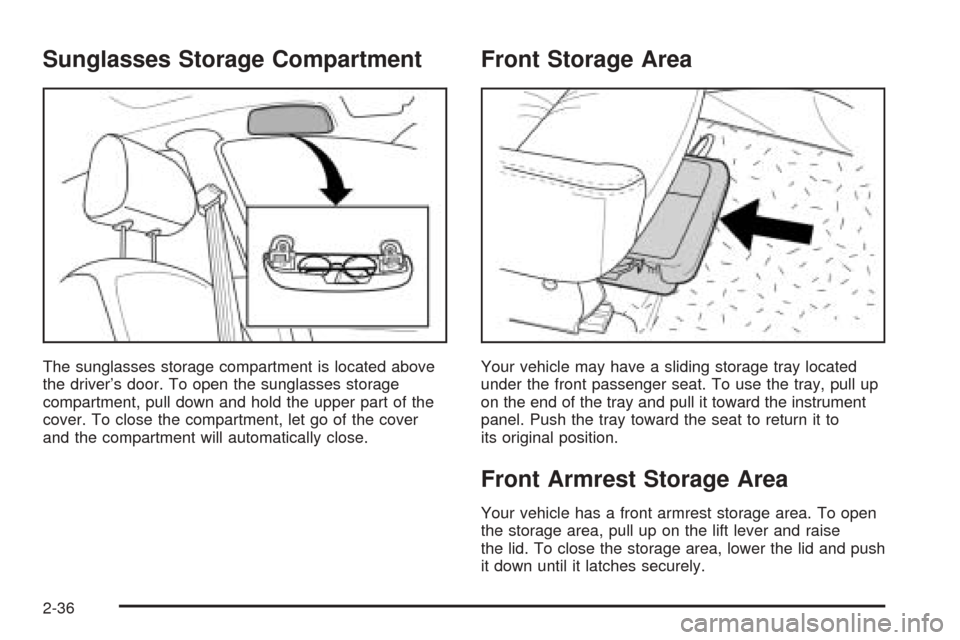
The sunglasses storage compartment is located above
the driver’s door. To open the sunglasses storage
compartment, pull down and hold the upper part of the
cover. To close the compartment, let go of the cover
and the compartment will automatically close.
Front Storage Area
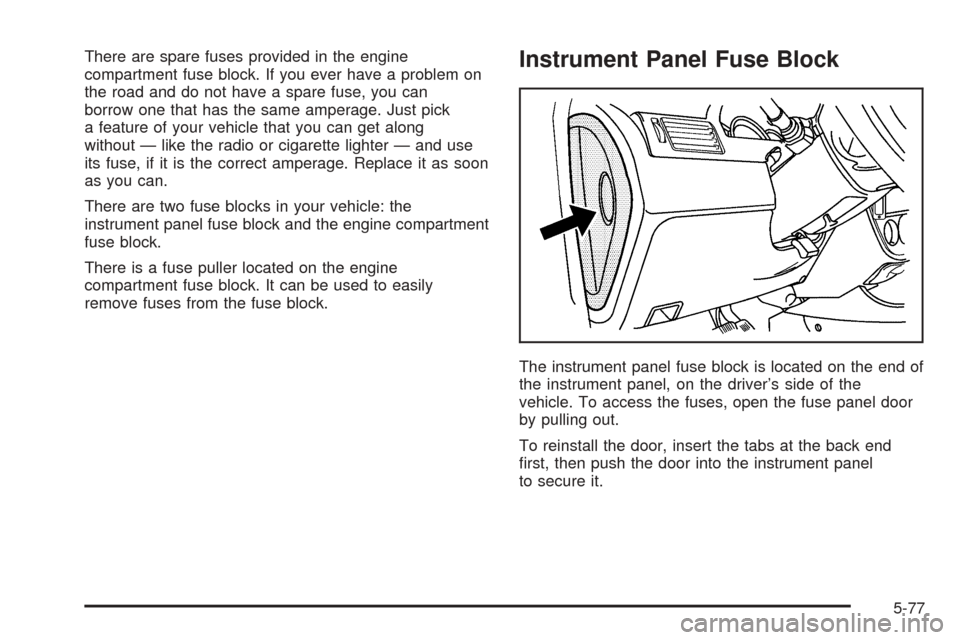
Your vehicle may have a sliding storage tray located
under the front passenger seat. To use the tray, pull up
on the end of the tray and pull it toward the instrument
panel. Push the tray toward the seat to return it to
its original position.
Front Armrest Storage Area
Your vehicle has a front armrest storage area. To open
the storage area, pull up on the lift lever and raise
the lid. To close the storage area, lower the lid and push
it down until it latches securely.
2-36
Page 107 of 336
Roof Rack (Wagon Only)
{CAUTION:
If you try to carry something on top of your
vehicle that is longer or wider than the roof
rack— like paneling, plywood, a mattress and
so forth — the wind can catch it as you drive
along. This can cause you to lose control.
What you are carrying could be violently torn
off, and this could cause you or other drivers
to have a collision, and of course damage your
vehicle. You may be able to carry something
like this inside. But, never carry something
longer or wider than the roof rack on top of
your vehicle.
A roof rack allows you to load things on top of your
vehicle. The roof rack has side rails attached to the roof.
These let you load some things on top of your vehicle,
as long as they are not wider or longer than the
roof rack.Notice:Loading cargo on the roof rack that weighs
more than 220 lbs (100 kg) or hangs over the rear
or sides of the vehicle may damage your vehicle.
Load cargo so that it rests on the slats as far
forward as possible and against the side rails,
making sure to fasten it securely.
Don’t exceed the maximum vehicle capacity when
loading your vehicle. For more information on vehicle
capacity and loading, seeLoading Your Vehicle on
page 4-28.
To prevent damage or loss of cargo as you’re
driving, check now and then to make sure cargo is still
securely fastened.
Rear Seat Armrest
Your vehicle may have a rear seat armrest that contains
two cupholders. To access the cupholders, pull the
armrest down from the rear seatback.
Convenience Net
The convenience net can help keep small loads from
moving during sharp turns or quick starts and stops.
Hang the four net hooks in the metal rings on each
corner of the floor.
2-37
Page 185 of 336
Winter Driving
Here are some tips for winter driving:
•Have your vehicle in good shape for winter.
•You may want to put winter emergency supplies in
your trunk.
Also seeTires on page 5-45.Include an ice scraper, a small brush or broom, a
supply of windshield washer fluid, a rag, some winter
outer clothing, a small shovel, a flashlight, a red
cloth, and a couple of reflective warning triangles. And,
if you will be driving under severe conditions, include
a small bag of sand, a piece of old carpet, or a couple of
burlap bags to help provide traction. Be sure you
properly secure these items in your vehicle.
4-23
Page 195 of 336
{CAUTION:
Things you put inside your vehicle can strike
and injure people in a sudden stop or turn, or
in a crash.
Put things in the trunk of your vehicle. In a
trunk, put them as far forward as you can.
Try to spread the weight evenly.
Never stack heavier things, like suitcases,
inside the vehicle so that some of them
are above the tops of the seats.
Do not leave an unsecured child restraint
in your vehicle.
When you carry something inside the
vehicle, secure it whenever you can.
Do not leave a seat folded down unless
you need to.
Towing
Towing Your Vehicle
Consult your dealer or a professional towing service if
you need to have your disabled vehicle towed. See
Roadside Assistance Program on page 7-6.
If you want to tow your vehicle behind another vehicle
for recreational purposes (such as behind a motorhome),
see “Recreational Vehicle Towing” following.
Recreational Vehicle Towing
Recreational vehicle towing means towing your vehicle
behind another vehicle, such as behind a motorhome.
The two most common types of recreational vehicle
towing are known as “dinghy towing” (towing your
vehicle with all four wheels on the ground) and “dolly
towing” (towing your vehicle with two wheels on
the ground and two wheels up on a device known
as a “dolly”).
With the proper preparation and equipment, many
vehicles can be towed in these ways. See “Dinghy
Towing” and “Dolly Towing,” following.
4-33
Page 221 of 336

{CAUTION:
You can be burned if you spill coolant on hot
engine parts. Coolant contains ethylene glycol,
and it will burn if the engine parts are hot
enough. Do not spill coolant on a hot engine.
When replacing the pressure cap, make sure it is
hand-tight.
Coolant Surge Tank Pressure Cap
Notice:If the pressure cap is not tightly installed,
coolant loss and possible engine damage may
occur. Be sure the cap is properly and tightly
secured.
Engine Overheating
You will find a coolant temperature gage on your
vehicle’s instrument panel cluster. SeeEngine Coolant
Temperature Gage on page 3-35.
If Steam Is Coming From Your Engine
{CAUTION:
Steam from an overheated engine can burn
you badly, even if you just open the hood. Stay
away from the engine if you see or hear steam
coming from it. Just turn it off and get
everyone away from the vehicle until it cools
down. Wait until there is no sign of steam or
coolant before you open the hood.
If you keep driving when your engine is
overheated, the liquids in it can catch re. You
or others could be badly burned. Stop your
engine if it overheats, and get out of the
vehicle until the engine is cool.
Notice:If your engine catches re because you
keep driving with no coolant, your vehicle can
be badly damaged. The costly repairs would not be
covered by your warranty.
5-23
Page 255 of 336

If you need to replace any of your wheels, wheel bolts
or wheel nuts, replace them only with new GM
original equipment parts. This way, you will be sure to
have the right wheel, wheel bolts and wheel nuts
for your vehicle.
{CAUTION:
Using the wrong replacement wheels, wheel
bolts or wheel nuts on your vehicle can be
dangerous. It could affect the braking and
handling of your vehicle, make your tires lose
air and make you lose control. You could have
a collision in which you or others could be
injured. Always use the correct wheel, wheel
bolts and wheel nuts for replacement.
Notice:The wrong wheel can also cause problems
with bearing life, brake cooling, speedometer or
odometer calibration, headlamp aim, bumper height,
vehicle ground clearance and tire or tire chain
clearance to the body and chassis.
SeeChanging a Flat Tire on page 5-59for
more information.
Used Replacement Wheels
{CAUTION:
Putting a used wheel on your vehicle is
dangerous. You can’t know how it’s been used
or how far it’s been driven. It could fail
suddenly and cause a crash. If you have to
replace a wheel, use a new GM original
equipment wheel.
Tire Chains
Notice:Use tire chains only where legal and only
when you must. Use only SAE Class “S” type chains
that are the proper size for your tires. Install them
on the front tires and tighten them as tightly as
possible with the ends securely fastened. Drive
slowly and follow the chain manufacturer’s
instructions. If you can hear the chains contacting
your vehicle, stop and retighten them. If the contact
continues, slow down until it stops. Driving too
fast or spinning the wheels with chains on will
damage your vehicle.
5-57
Page 263 of 336

13. Tighten the wheel nuts
firmly in a crisscross
sequence, as shown.
Notice:Wheel covers will not t on your compact
spare. If you try to put a wheel cover on the compact
spare, you could damage the cover or the spare.
Do not try to put a wheel cover on your compact spare
tire. It will not fit. Store the wheel cover in the cargo
area until you have the flat tire repaired or replaced.Storing a Flat or Spare Tire
and Tools
{CAUTION:
Storing a jack, a tire, or other equipment in the
passenger compartment of the vehicle could
cause injury. In a sudden stop or collision,
loose equipment could strike someone. Store
all these in the proper place.
To store a flat or spare tire, do the following:
1. Put the flat or spare tire in the compact spare tire
compartment, then secure the retainer.
2. Store the jack in its housing in the cargo area.
Secure the jack by turning the retainer clockwise.
3. Store the tools securely in the foam tray and place
the tray on top of the tire.
4. Replace the trim cover.
The compact spare tire is for temporary use only.
Replace the compact spare tire with a full-size tire as
soon as you can. SeeCompact Spare Tire on
page 5-66.
5-65
Page 275 of 336
There are spare fuses provided in the engine
compartment fuse block. If you ever have a problem on
the road and do not have a spare fuse, you can
borrow one that has the same amperage. Just pick
a feature of your vehicle that you can get along
without — like the radio or cigarette lighter — and use
its fuse, if it is the correct amperage. Replace it as soon
as you can.
There are two fuse blocks in your vehicle: the
instrument panel fuse block and the engine compartment
fuse block.
There is a fuse puller located on the engine
compartment fuse block. It can be used to easily
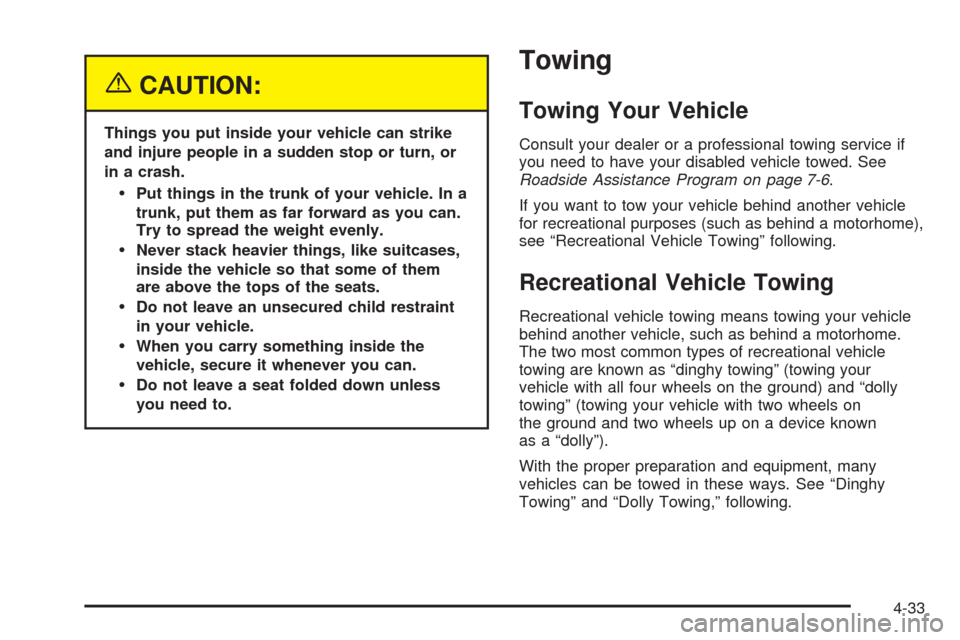
remove fuses from the fuse block.Instrument Panel Fuse Block
The instrument panel fuse block is located on the end of
the instrument panel, on the driver’s side of the
vehicle. To access the fuses, open the fuse panel door
by pulling out.
To reinstall the door, insert the tabs at the back end
first, then push the door into the instrument panel
to secure it.
5-77