2005 CHEVROLET ASTRO CARGO VAN check engine light
[x] Cancel search: check engine lightPage 148 of 370
The SERVICE AWD light comes on to indicate that
there may be a problem with the drive system and
service is required. Malfunctions can be indicated by the
system before any problem is apparent, which may
prevent serious damage to the vehicle. This system is
also designed to assist your service technician in
correctly diagnosing a malfunction.
Tow/Haul Mode Light
This light should come on
when the tow/haul mode
has been selected.
For more information, see “Tow/Haul Mode” inTowing a
Trailer on page 4-34.
Check Gages Warning Light
The CHECK GAGES light
will come on briey when
you are starting the engine.
If the light comes on and stays on while you are driving,
check your coolant temperature and engine oil
pressure gages to see if they are in the warning zones.
3-36
Page 170 of 370
Avoid needless heavy braking. Some people drive in
spurts — heavy acceleration followed by heavy
braking — rather than keeping pace with traffic. This is
a mistake. Your brakes may not have time to cool
between hard stops. Your brakes will wear out much
faster if you do a lot of heavy braking. If you keep pace
with the traffic and allow realistic following distances,
you will eliminate a lot of unnecessary braking.
That means better braking and longer brake life.
If your engine ever stops while you are driving, brake
normally but do not pump your brakes. If you do,
the pedal may get harder to push down. If your engine
stops, you will still have some power brake assist.
But you will use it when you brake. Once the power
assist is used up, it may take longer to stop and
the brake pedal will be harder to push.Anti-Lock Brake System (ABS)
Your vehicle has anti-lock brakes. ABS is an advanced
electronic braking system that will help prevent a
braking skid.
When you start your engine and begin to drive away,
your anti-lock brake system will check itself. You
may hear a momentary motor or clicking noise while
this test is going on. This is normal.
If there is a problem with
the anti-lock brake system,
this warning light will
stay on. SeeAnti-Lock
Brake System Warning
Light on page 3-30.
4-6
Page 208 of 370
Maintenance When Trailer Towing
Your vehicle will need service more often when you’re
pulling a trailer. See the Maintenance Schedule for more
on this. Things that are especially important in trailer
operation are automatic transmission uid (don’t overll),
engine oil, axle lubricant, belt, cooling system and brake
system. Each of these is covered in this manual, and the
Index will help you nd them quickly. If you’re trailering,
it’s a good idea to review these sections before you start
your trip.
Check periodically to see that all hitch nuts and bolts
are tight.
Trailer Wiring Harness
If you have the optional trailering package, your vehicle
will have an eight-wire harness, including the center
high-mounted stoplamp battery feed wire. The harness is
stored on the passenger’s side of the vehicle near the
rear wheel well. This harness has a 30 amp battery feed
wire and no connector, and should be wired by a qualied
electrical technician. After choosing an aftermarket trailer
mating connector pair, have the technician attach one
connector to the eight-wire trailer harness and the other
connector to the wiring harness on the trailer.
Be sure the wiring harness on the trailer is taped or
strapped to the trailer’s frame rail and leave it loose
enough so the wiring doesn’t bend or break, but not so
loose that it drags on the ground. The eight-wire harnessmust be routed out of your vehicle between the rear door
and the oor, with enough of the harness left on both
sides so that the trailer or the body won’t pull it.
If you do not have the optional trailering package, your
vehicle will still have a trailering harness. The harness
is located near the passenger’s side rear wheel
well. It consists of six wires that may be used by
after-market trailer hitch installers.
The technician can use the following color code chart
when connecting the wiring harness to your trailer.
Brown: Rear lamps
Yellow: Left stoplamp and turn signal
Dark Green: Right stoplamp and turn signal
White (Heavy Gage): Ground
Light Green: Back-up lamps
White (Light Gage): Center High-Mounted Stoplamp
Blue: Auxiliary circuit (eight-wire harness only)
Orange: Fused auxiliary (eight-wire harness only)
Store the harness in its original place. Wrap the
harness together and tie it neatly so it won’t
be damaged.
4-44
Page 234 of 370
A 50/50 mixture of clean, drinkable water and
DEX-COOL®coolant will:
Give freezing protection down to−34°F (−37°C).
Give boiling protection up to 265°F (129°C).
Protect against rust and corrosion.
Help keep the proper engine temperature.
Let the warning lights and gages work as they
should.
Notice:Using coolant other than DEX-COOL
®may
cause premature engine, heater core or radiator
corrosion. In addition, the engine coolant may
require changing sooner, at 30,000 miles (50 000 km)
or 24 months, whichever occurs rst. Any repairs
would not be covered by your warranty. Always use
DEX-COOL
®(silicate-free) coolant in your vehicle.
What to Use
Use a mixture of one-halfclean, drinkable waterand
one-half DEX-COOL®coolant which will not damage
aluminum parts. If you use this coolant mixture, you do
not need to add anything else.
{CAUTION:
Adding only plain water to your cooling
system can be dangerous. Plain water, or
some other liquid such as alcohol, can boil
before the proper coolant mixture will. Your
vehicle’s coolant warning system is set for the
proper coolant mixture. With plain water or the
wrong mixture, your engine could get too hot
but you would not get the overheat warning.
Your engine could catch re and you or others
could be burned. Use a 50/50 mixture of clean,
drinkable water and the proper coolant.
Notice:If you use an improper coolant mixture,
your engine could overheat and be badly damaged.
The repair cost would not be covered by your
warranty. Too much water in the mixture can freeze
and crack the engine, radiator, heater core and
other parts.
If you have to add coolant more than four times a year,
have your dealer check your cooling system.
Notice:If you use the proper coolant, you do not
have to add extra inhibitors or additives which claim
to improve the system. These can be harmful.
5-26
Page 334 of 370
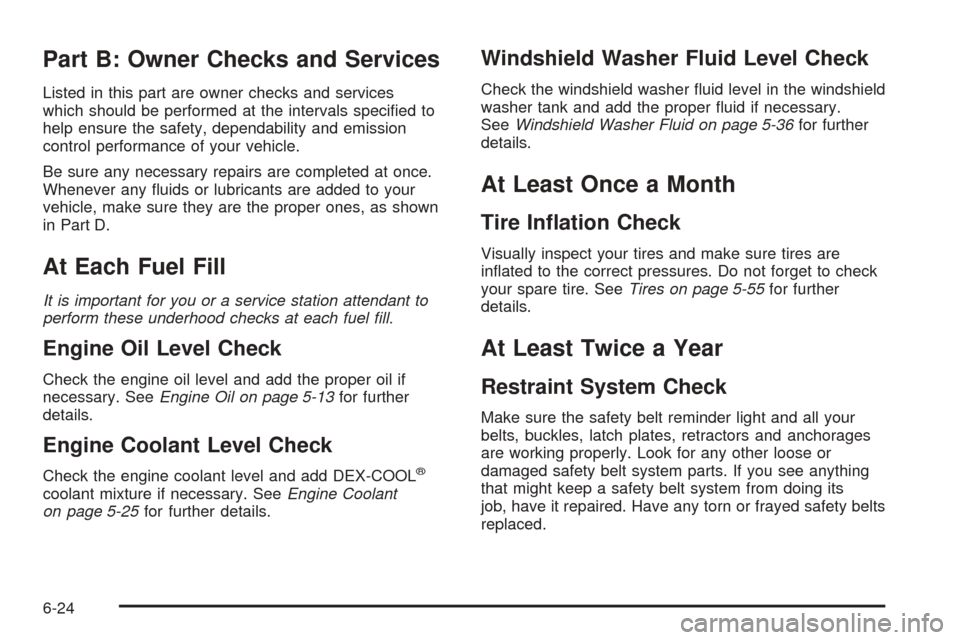
Part B: Owner Checks and Services
Listed in this part are owner checks and services
which should be performed at the intervals specied to
help ensure the safety, dependability and emission
control performance of your vehicle.
Be sure any necessary repairs are completed at once.
Whenever any uids or lubricants are added to your
vehicle, make sure they are the proper ones, as shown
in Part D.
At Each Fuel Fill
It is important for you or a service station attendant to
perform these underhood checks at each fuel ll.
Engine Oil Level Check
Check the engine oil level and add the proper oil if
necessary. SeeEngine Oil on page 5-13for further
details.
Engine Coolant Level Check
Check the engine coolant level and add DEX-COOL®
coolant mixture if necessary. SeeEngine Coolant
on page 5-25for further details.
Windshield Washer Fluid Level Check
Check the windshield washer uid level in the windshield
washer tank and add the proper uid if necessary.
SeeWindshield Washer Fluid on page 5-36for further
details.
At Least Once a Month
Tire Ination Check
Visually inspect your tires and make sure tires are
inated to the correct pressures. Do not forget to check
your spare tire. SeeTires on page 5-55for further
details.
At Least Twice a Year
Restraint System Check
Make sure the safety belt reminder light and all your
belts, buckles, latch plates, retractors and anchorages
are working properly. Look for any other loose or
damaged safety belt system parts. If you see anything
that might keep a safety belt system from doing its
job, have it repaired. Have any torn or frayed safety belts
replaced.
6-24
Page 359 of 370
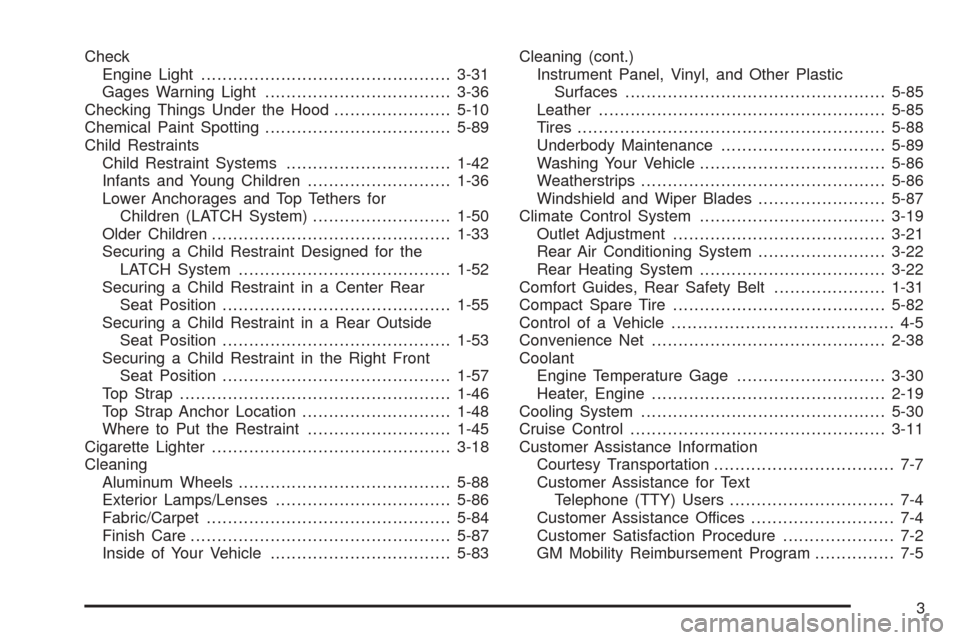
Check
Engine Light...............................................3-31
Gages Warning Light...................................3-36
Checking Things Under the Hood......................5-10
Chemical Paint Spotting...................................5-89
Child Restraints
Child Restraint Systems...............................1-42
Infants and Young Children...........................1-36
Lower Anchorages and Top Tethers for
Children (LATCH System)..........................1-50
Older Children.............................................1-33
Securing a Child Restraint Designed for the
LATCH System........................................1-52
Securing a Child Restraint in a Center Rear
Seat Position...........................................1-55
Securing a Child Restraint in a Rear Outside
Seat Position...........................................1-53
Securing a Child Restraint in the Right Front
Seat Position...........................................1-57
Top Strap...................................................1-46
Top Strap Anchor Location............................1-48
Where to Put the Restraint...........................1-45
Cigarette Lighter.............................................3-18
Cleaning
Aluminum Wheels........................................5-88
Exterior Lamps/Lenses.................................5-86
Fabric/Carpet..............................................5-84
Finish Care.................................................5-87
Inside of Your Vehicle..................................5-83Cleaning (cont.)
Instrument Panel, Vinyl, and Other Plastic
Surfaces.................................................5-85
Leather......................................................5-85
Tires..........................................................5-88
Underbody Maintenance...............................5-89
Washing Your Vehicle...................................5-86
Weatherstrips..............................................5-86
Windshield and Wiper Blades........................5-87
Climate Control System...................................3-19
Outlet Adjustment........................................3-21
Rear Air Conditioning System........................3-22
Rear Heating System...................................3-22
Comfort Guides, Rear Safety Belt.....................1-31
Compact Spare Tire........................................5-82
Control of a Vehicle.......................................... 4-5
Convenience Net............................................2-38
Coolant
Engine Temperature Gage............................3-30
Heater, Engine............................................2-19
Cooling System..............................................5-30
Cruise Control................................................3-11
Customer Assistance Information
Courtesy Transportation.................................. 7-7
Customer Assistance for Text
Telephone (TTY) Users............................... 7-4
Customer Assistance Offices........................... 7-4
Customer Satisfaction Procedure..................... 7-2
GM Mobility Reimbursement Program............... 7-5
3
Page 360 of 370
Customer Assistance Information (cont.)
Reporting Safety Defects to General Motors....7-11
Reporting Safety Defects to the
Canadian Government..............................7-10
Reporting Safety Defects to the
United States Government.........................7-10
Roadside Assistance Program......................... 7-5
Service Publications Ordering Information........7-11
D
Daytime Running Lamps..................................3-15
Defensive Driving............................................. 4-2
Doing Your Own Service Work........................... 5-4
Dome Lamps.................................................3-17
Door
Locks.......................................................... 2-6
Power Door Locks......................................... 2-7
Programmable Automatic Door Locks............... 2-7
Rear Doors.................................................2-11
Sliding Side Door.......................................... 2-8
Driver
Position, Safety Belt.....................................1-19
Driver Information Center (DIC).........................3-38
Driving
At Night.....................................................4-13
City...........................................................4-18
Defensive..................................................... 4-2
Drunken....................................................... 4-2Driving (cont.)
Freeway.....................................................4-19
Hill and Mountain Roads..............................4-21
In Rain and on Wet Roads...........................4-15
Rocking Your Vehicle to Get it Out.................4-28
Winter........................................................4-23
E
Electrical System
Add-On Equipment......................................5-92
Fuses and Circuit Breakers...........................5-93
Headlamp Wiring.........................................5-92
Instrument Panel Fuse Block.........................5-93
Power Windows and Other Power Options......5-92
Underhood Fuse Block.................................5-96
Windshield Wiper Fuses...............................5-92
Engine
Air Cleaner/Filter.........................................5-21
Battery.......................................................5-40
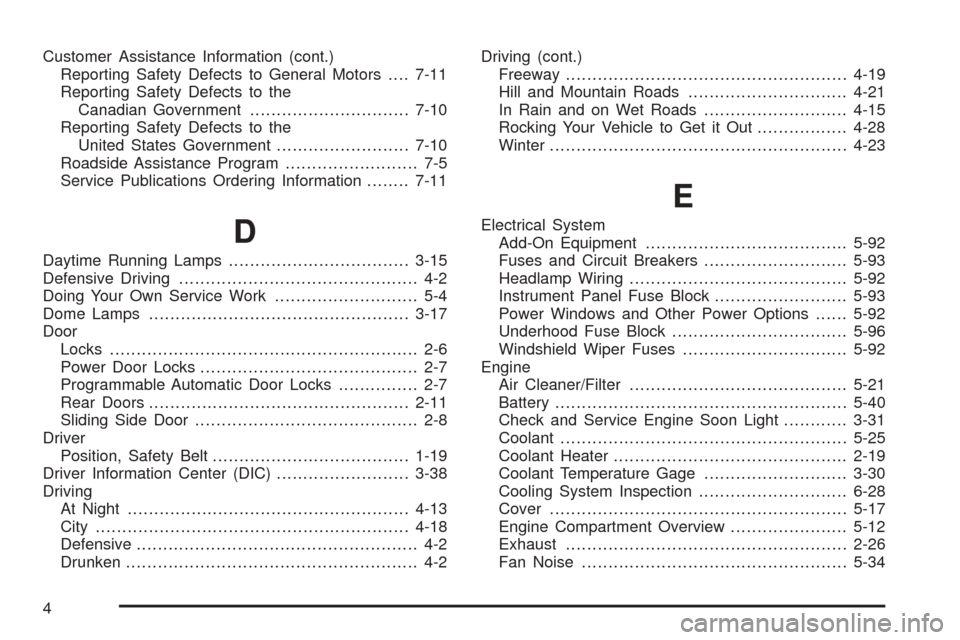
Check and Service Engine Soon Light............3-31
Coolant......................................................5-25
Coolant Heater............................................2-19
Coolant Temperature Gage...........................3-30
Cooling System Inspection............................6-28
Cover........................................................5-17
Engine Compartment Overview......................5-12
Exhaust.....................................................2-26
Fan Noise..................................................5-34
4
Page 362 of 370
G
Gage
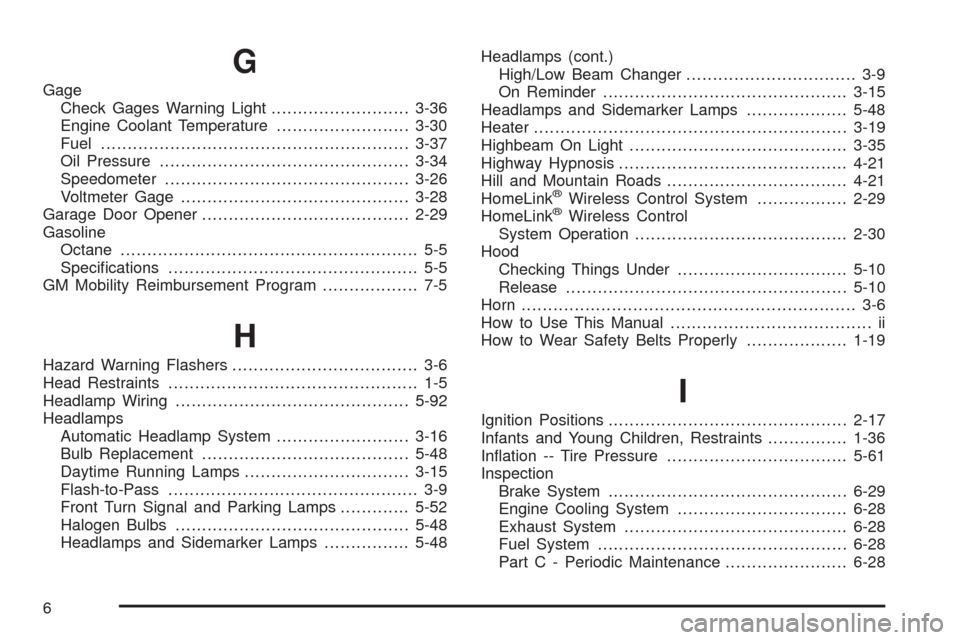
Check Gages Warning Light..........................3-36
Engine Coolant Temperature.........................3-30
Fuel..........................................................3-37
Oil Pressure...............................................3-34
Speedometer..............................................3-26
Voltmeter Gage...........................................3-28
Garage Door Opener.......................................2-29
Gasoline
Octane........................................................ 5-5
Specications............................................... 5-5
GM Mobility Reimbursement Program.................. 7-5
H
Hazard Warning Flashers................................... 3-6
Head Restraints............................................... 1-5
Headlamp Wiring............................................5-92
Headlamps
Automatic Headlamp System.........................3-16
Bulb Replacement.......................................5-48
Daytime Running Lamps...............................3-15
Flash-to-Pass............................................... 3-9
Front Turn Signal and Parking Lamps.............5-52
Halogen Bulbs............................................5-48
Headlamps and Sidemarker Lamps................5-48Headlamps (cont.)
High/Low Beam Changer................................ 3-9
On Reminder..............................................3-15
Headlamps and Sidemarker Lamps...................5-48
Heater...........................................................3-19
Highbeam On Light.........................................3-35
Highway Hypnosis...........................................4-21
Hill and Mountain Roads..................................4-21
HomeLink
®Wireless Control System.................2-29
HomeLink®Wireless Control
System Operation........................................2-30
Hood
Checking Things Under................................5-10
Release.....................................................5-10
Horn............................................................... 3-6
How to Use This Manual...................................... ii
How to Wear Safety Belts Properly...................1-19
I
Ignition Positions.............................................2-17
Infants and Young Children, Restraints...............1-36
Ination -- Tire Pressure..................................5-61
Inspection
Brake System.............................................6-29
Engine Cooling System................................6-28
Exhaust System..........................................6-28
Fuel System...............................................6-28
Part C - Periodic Maintenance.......................6-28
6