2004 CHEVROLET CORVETTE child restraint
[x] Cancel search: child restraintPage 46 of 384
To remove the child restraint, just unbuckle the vehicle’s
safety belt and let it go back all the way. The safety
belt will move freely again and be ready to work for an
adult or larger child passenger.
Turn on the passenger’s air bag when you remove the
child restraint from the vehicle unless the person
who will be sitting there is a member of a passenger air
bag risk group. SeeAir Bag Off Switch on page 1-46.
{CAUTION:
If the passenger’s air bag is turned off for a
person who isn’t in a risk group identied by
the national government, that person won’t
have the extra protection of an air bag. In a
crash, the air bag wouldn’t be able to inate
and help protect the person sitting there. Don’t
turn off the passenger’s air bag unless the
person sitting there is in a risk group. See “Air
Bag Off Switch” in the Index for more on this,
including important safety information.
Air Bag System
This part explains the air bag system.
Your vehicle has air bags – one air bag for the driver
and another air bag for the passenger.
Frontal air bags are designed to help reduce the risk of
injury from the force of an inflating air bag. But these
air bags must inflate very quickly to do their job
and comply with federal regulations.
Here are the most important things to know about the
air bag system:
{CAUTION:
You can be severely injured or killed in a crash
if you are not wearing your safety belt — even
if you have air bags. Wearing your safety belt
during a crash helps reduce your chance of
hitting things inside the vehicle or being
ejected from it. Air bags are designed to work
with safety belts, but do not replace them. Air
bags are designed to deploy only in moderate
to severe frontal and near frontal crashes.
CAUTION: (Continued)
1-40
Page 47 of 384
CAUTION: (Continued)
They are not designed to inate in rollover,
rear or low-speed frontal crashes, or in many
side crashes. And, for some unrestrained
occupants, air bags may provide less
protection in frontal crashes than more
forceful air bags have provided in the past.
Everyone in your vehicle should wear a safety
belt properly — whether or not there is an air
bag for that person.
{CAUTION:
Air bags inate with great force, faster than the
blink of an eye. If you’re too close to an
inating air bag, as you would be if you were
leaning forward, it could seriously injure you.
Safety belts help keep you in position before
and during a crash. Always wear your safety
belt, even with air bags. The driver should sit
as far back as possible while still maintaining
control of the vehicle.
{CAUTION:
Anyone who is up against, or very close to,
any air bag when it inates can be seriously
injured or killed. Air bags plus lap-shoulder
belts offer the best protection for adults, but
not for young children and infants. Neither the
vehicle’s safety belt system nor its air bag
system is designed for them. Young children
and infants need the protection that a child
restraint system can provide. Always secure
children properly in your vehicle. To read how,
seeOlder Children on page 1-19andInfants
and Young Children on page 1-22.
There is a air bag
readiness light on the
instrument panel, which
shows the air bag symbol.
The system checks the air bag electrical system for
malfunctions. The light tells you if there is an electrical
problem. SeeAir Bag Readiness Light on page 3-35
for more information.
1-41
Page 151 of 384
{CAUTION:
If the air bag readiness light ever comes on
when you have turned off the air bag, it means
that something may be wrong with the air bag
system. The passenger’s air bag could inate
even though the switch is off. If this ever
happens, don’t let anyone whom the national
government has identied as a member of a
passenger air bag risk group sit in the
passenger’s position (for example, don’t
secure a rear-facing child restraint in your
vehicle) until you have your vehicle serviced.
See “Air Bag Off Switch” in the Index.
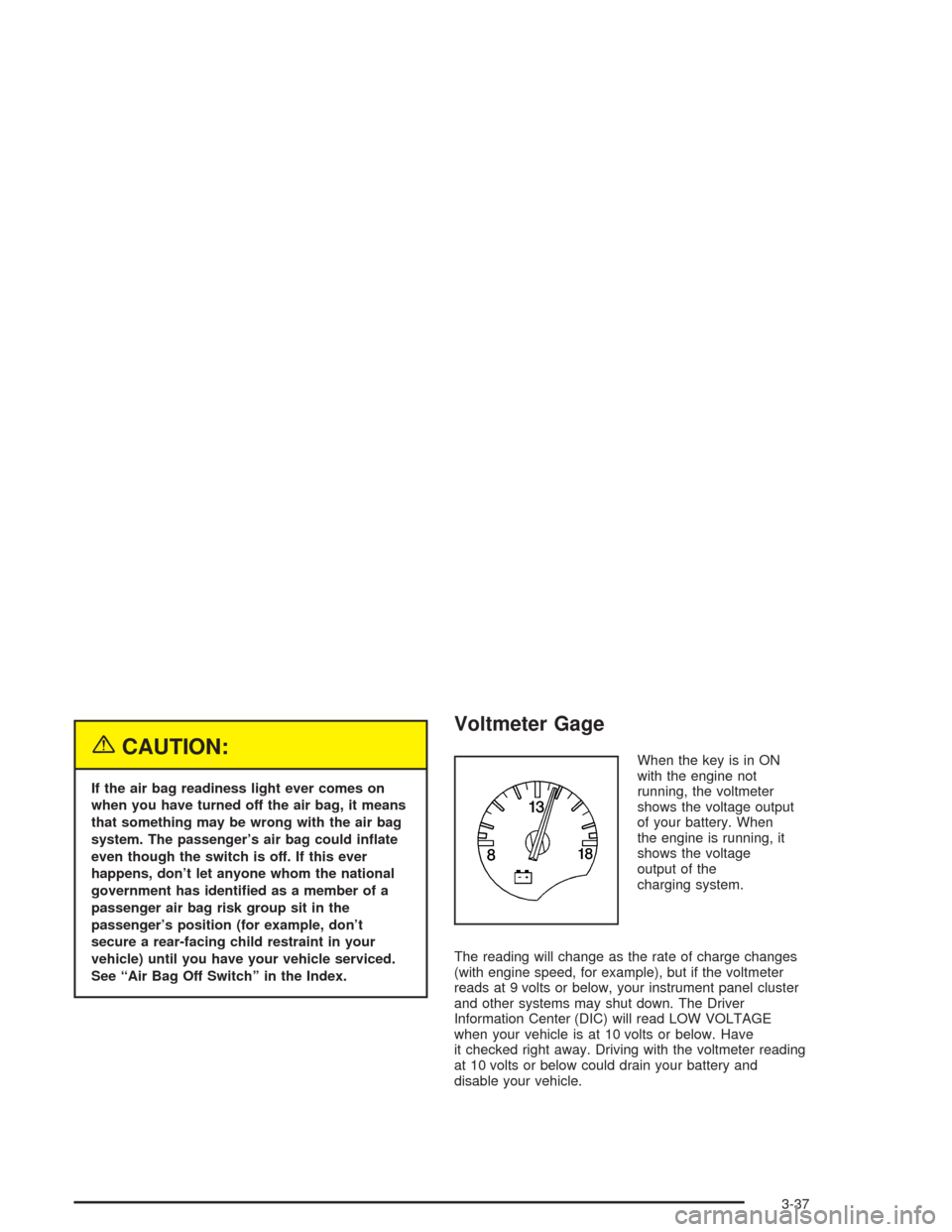
Voltmeter Gage
When the key is in ON
with the engine not
running, the voltmeter
shows the voltage output
of your battery. When
the engine is running, it
shows the voltage
output of the
charging system.
The reading will change as the rate of charge changes
(with engine speed, for example), but if the voltmeter
reads at 9 volts or below, your instrument panel cluster
and other systems may shut down. The Driver
Information Center (DIC) will read LOW VOLTAGE
when your vehicle is at 10 volts or below. Have
it checked right away. Driving with the voltmeter reading
at 10 volts or below could drain your battery and
disable your vehicle.
3-37
Page 242 of 384

And, if you do have a heavy load, you should spread it
out. Do not carry more than 100 lbs. (45 kg) in your
rear area.
{CAUTION:
Do not load your vehicle any heavier than the
GVWR, or either the maximum front or rear
GAWR. If you do, parts on your vehicle can
break, and it can change the way your vehicle
handles. These could cause you to lose
control and crash. Also, overloading can
shorten the life of your vehicle.
Notice:Overloading your vehicle may cause
damage. Repairs would not be covered by your
warranty. Do not overload your vehicle.
If you put things inside your vehicle – like suitcases,
tools, packages or anything else – they will go as fast as
the vehicle goes. If you have to stop or turn quickly,
or if there is a crash, they will keep going.
{CAUTION:
Things you put inside your vehicle can strike
and injure people in a sudden stop or turn, or
in a crash.
Put things in the rear area of your vehicle.
Try to spread the weight evenly.
Never stack heavier things, like suitcases,
inside the vehicle so that some of them
are above the tops of the seats.
Do not leave an unsecured child restraint
in your vehicle.
When you carry something inside the
vehicle, secure it whenever you can.
Towing a Trailer
Your Corvette is neither designed nor intended to tow a
trailer.
4-38
Page 373 of 384
Checking Things Under the Hood......................5-10
Chemical Paint Spotting...................................5-90
Child Restraints
Child Restraint Systems...............................1-25
Infants and Young Children...........................1-22
Lower Anchorages and Top Tethers for
Children (LATCH System)..........................1-30
Older Children.............................................1-19
Securing a Child Restraint Designed for
the LATCH System...................................1-33
Securing a Child Restraint in the
Passenger Seat Position...........................1-36
Top Strap...................................................1-28
Top Strap Anchor Location............................1-30
Cigarette Lighter.............................................3-23
Cleaning
Fiberglass Springs.......................................5-90
Inside of Your Vehicle..................................5-83
Outside of Your Vehicle................................5-85
Titanium Exhaust System..............................5-89
Underbody Maintenance...............................5-89
Weatherstrips..............................................5-85
Cleaning Aluminum Wheels..............................5-88
Cleaning Coated Moldings................................5-83
Cleaning Exterior Lamps/Lenses.......................5-86
Cleaning Fabric/Carpet....................................5-83
Cleaning Glass Surfaces..................................5-84
Cleaning Interior Plastic Components.................5-84Cleaning Leather............................................5-84
Cleaning Removable Roof Panel.......................5-87
Cleaning the Convertible Top............................5-88
Cleaning the Security Shade and
Convenience Net.........................................5-84
Cleaning the Top of the Instrument Panel...........5-84
Cleaning Tires................................................5-88
Cleaning Windshield and Wiper Blades..............5-87
Climate Control System
Dual Automatic............................................3-23
Outlet Adjustment........................................3-31
Clutch, Hydraulic.............................................5-22
Competitive Driving Mode................................4-12
Control of a Vehicle.......................................... 4-6
Convenience Net............................................2-43
Convertible Top..............................................2-50
Lowering the Convertible Top........................2-51
Raising the Convertible Top..........................2-55
Coolant
Engine Temperature Gage............................3-41
Heater, Engine............................................2-23
Surge Tank Pressure Cap.............................5-26
Cooling System..............................................5-29
Courtesy Lamps.............................................3-17
Cruise Control................................................3-10
Cupholder(s)..................................................2-40
Current and Past Model Order Forms................7-12
Customer Assistance Information
Courtesy Transportation.................................. 7-7
3
Page 377 of 384
I
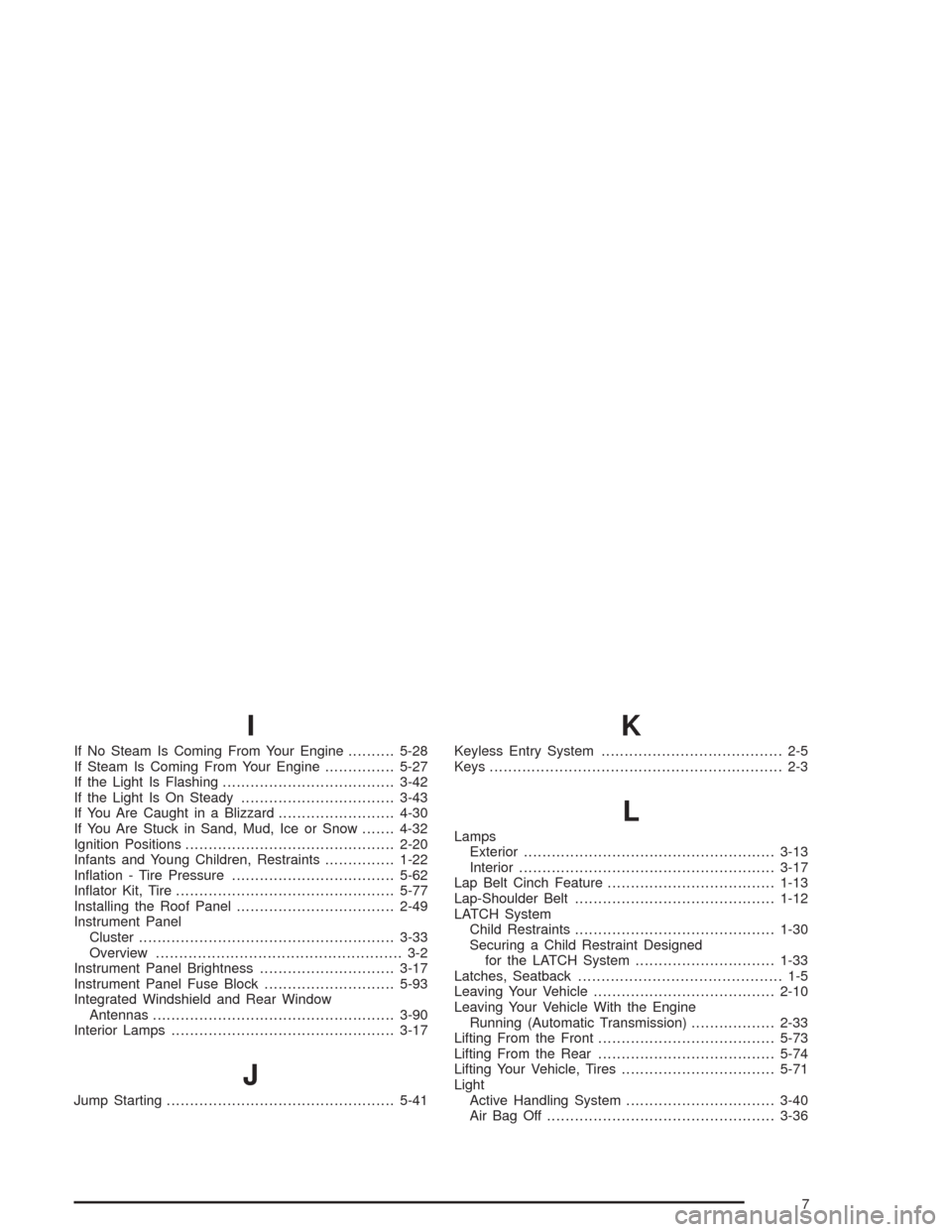
If No Steam Is Coming From Your Engine..........5-28
If Steam Is Coming From Your Engine...............5-27
If the Light Is Flashing.....................................3-42
If the Light Is On Steady.................................3-43
If You Are Caught in a Blizzard.........................4-30
If You Are Stuck in Sand, Mud, Ice or Snow.......4-32
Ignition Positions.............................................2-20
Infants and Young Children, Restraints...............1-22
Inflation - Tire Pressure...................................5-62
Inflator Kit, Tire...............................................5-77
Installing the Roof Panel..................................2-49
Instrument Panel
Cluster.......................................................3-33
Overview..................................................... 3-2
Instrument Panel Brightness.............................3-17
Instrument Panel Fuse Block............................5-93
Integrated Windshield and Rear Window
Antennas....................................................3-90
Interior Lamps................................................3-17
J
Jump Starting.................................................5-41
K
Keyless Entry System....................................... 2-5
Keys............................................................... 2-3
L
Lamps
Exterior......................................................3-13
Interior.......................................................3-17
Lap Belt Cinch Feature....................................1-13
Lap-Shoulder Belt...........................................1-12
LATCH System
Child Restraints...........................................1-30
Securing a Child Restraint Designed
for the LATCH System..............................1-33
Latches, Seatback............................................ 1-5
Leaving Your Vehicle.......................................2-10
Leaving Your Vehicle With the Engine
Running (Automatic Transmission)..................2-33
Lifting From the Front......................................5-73
Lifting From the Rear......................................5-74
Lifting Your Vehicle, Tires.................................5-71
Light
Active Handling System................................3-40
Air Bag Off .................................................3-36
7
Page 379 of 384
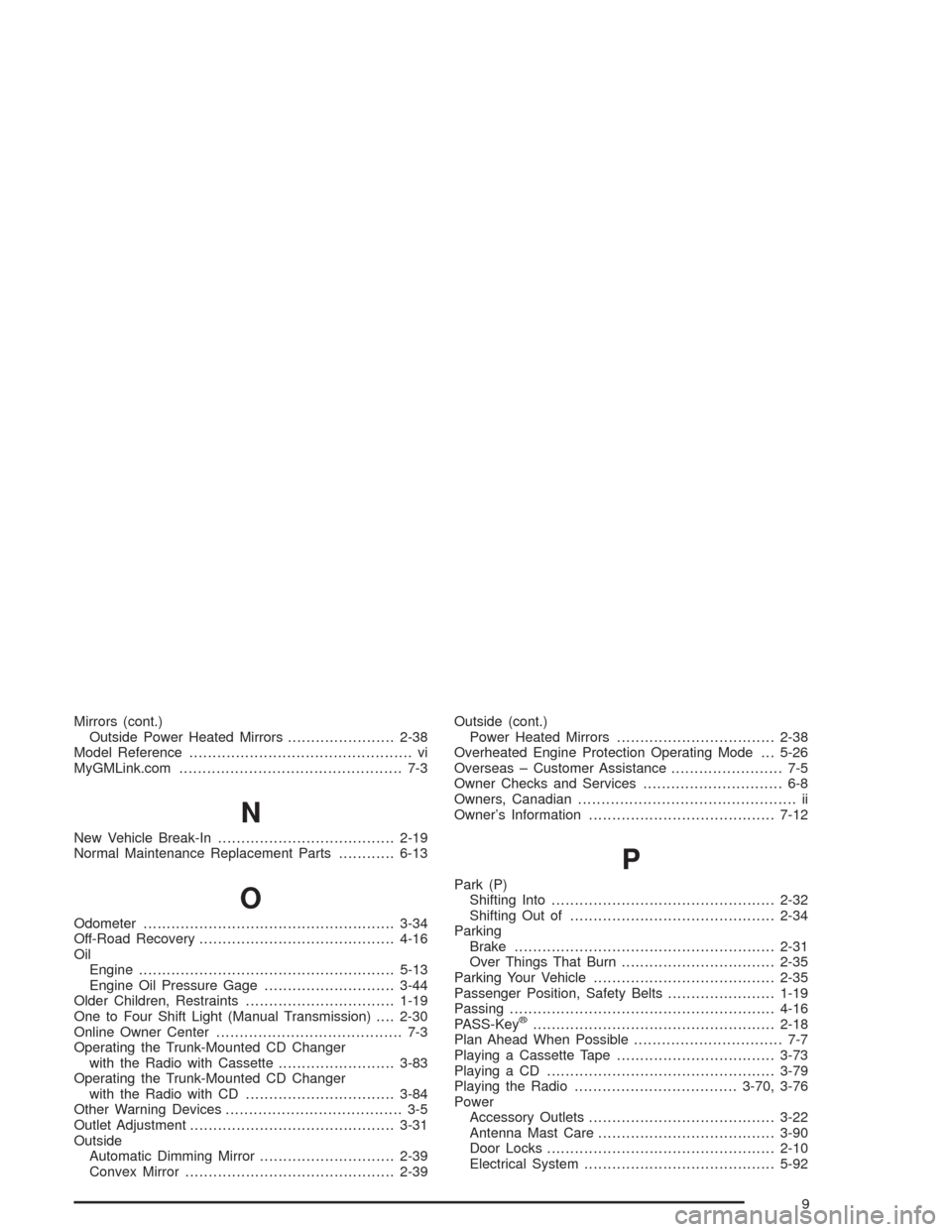
Mirrors (cont.)
Outside Power Heated Mirrors.......................2-38
Model Reference................................................ vi
MyGMLink.com................................................ 7-3
N
New Vehicle Break-In......................................2-19
Normal Maintenance Replacement Parts............6-13
O
Odometer......................................................3-34
Off-Road Recovery..........................................4-16
Oil
Engine.......................................................5-13
Engine Oil Pressure Gage............................3-44
Older Children, Restraints................................1-19
One to Four Shift Light (Manual Transmission)....2-30
Online Owner Center........................................ 7-3
Operating the Trunk-Mounted CD Changer
with the Radio with Cassette.........................3-83
Operating the Trunk-Mounted CD Changer
with the Radio with CD................................3-84
Other Warning Devices...................................... 3-5
Outlet Adjustment............................................3-31
Outside
Automatic Dimming Mirror.............................2-39
Convex Mirror.............................................2-39Outside (cont.)
Power Heated Mirrors..................................2-38
Overheated Engine Protection Operating Mode . . . 5-26
Overseas – Customer Assistance........................ 7-5
Owner Checks and Services.............................. 6-8
Owners, Canadian............................................... ii
Owner’s Information........................................7-12
P
Park (P)
Shifting Into................................................2-32
Shifting Out of............................................2-34
Parking
Brake........................................................2-31
Over Things That Burn.................................2-35
Parking Your Vehicle.......................................2-35
Passenger Position, Safety Belts.......................1-19
Passing.........................................................4-16
PASS-Key
®....................................................2-18
Plan Ahead When Possible................................ 7-7
Playing a Cassette Tape..................................3-73
Playing a CD.................................................3-79
Playing the Radio...................................3-70, 3-76
Power
Accessory Outlets........................................3-22
Antenna Mast Care......................................3-90
Door Locks.................................................2-10
Electrical System.........................................5-92
9
Page 381 of 384
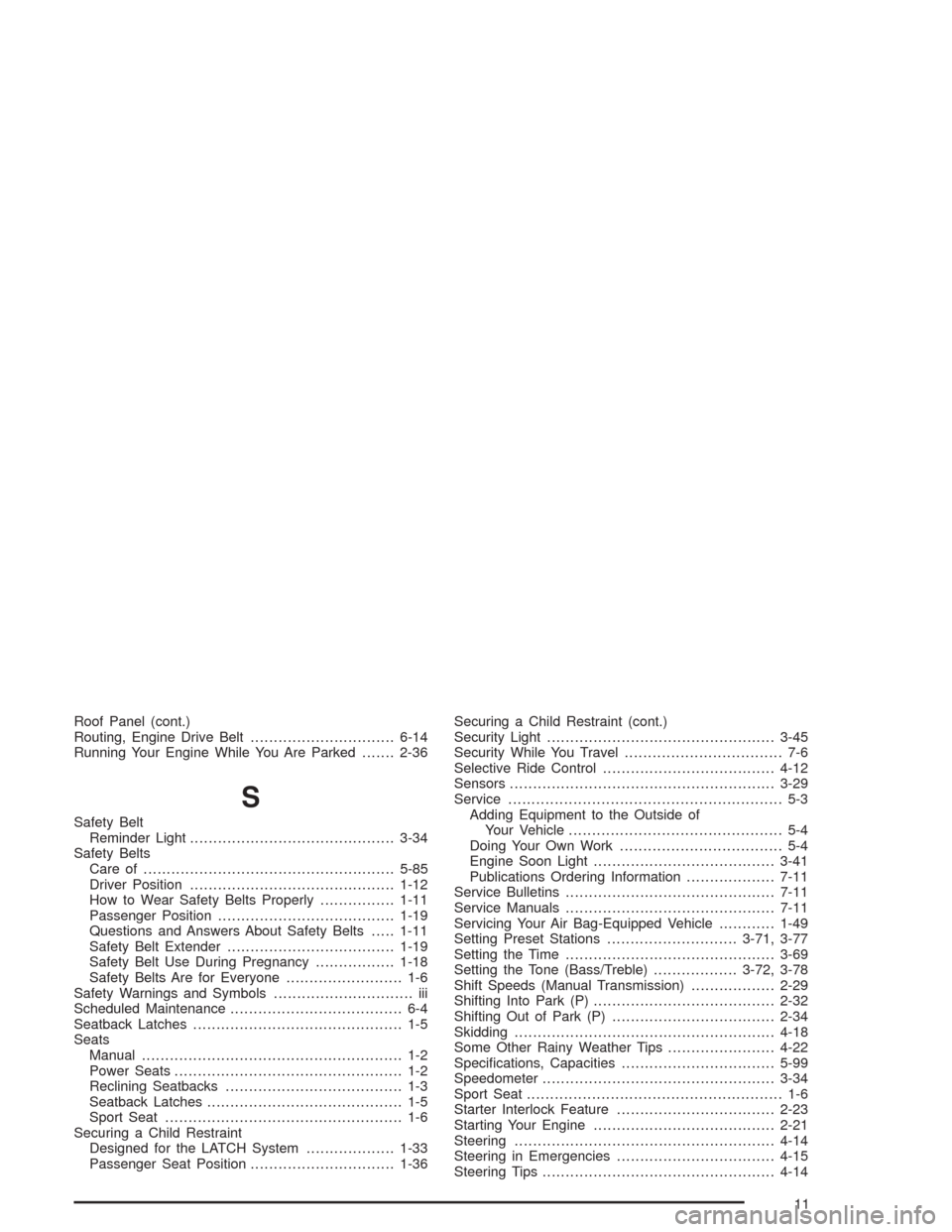
Roof Panel (cont.)
Routing, Engine Drive Belt...............................6-14
Running Your Engine While You Are Parked.......2-36
S
Safety Belt
Reminder Light............................................3-34
Safety Belts
Care of......................................................5-85
Driver Position............................................1-12
How to Wear Safety Belts Properly................1-11
Passenger Position......................................1-19
Questions and Answers About Safety Belts.....1-11
Safety Belt Extender....................................1-19
Safety Belt Use During Pregnancy.................1-18
Safety Belts Are for Everyone......................... 1-6
Safety Warnings and Symbols.............................. iii
Scheduled Maintenance..................................... 6-4
Seatback Latches............................................. 1-5
Seats
Manual........................................................ 1-2
Power Seats................................................. 1-2
Reclining Seatbacks...................................... 1-3
Seatback Latches.......................................... 1-5
Sport Seat................................................... 1-6
Securing a Child Restraint
Designed for the LATCH System...................1-33
Passenger Seat Position...............................1-36Securing a Child Restraint (cont.)
Security Light.................................................3-45
Security While You Travel.................................. 7-6
Selective Ride Control.....................................4-12
Sensors.........................................................3-29
Service........................................................... 5-3
Adding Equipment to the Outside of
Your Vehicle.............................................. 5-4
Doing Your Own Work................................... 5-4
Engine Soon Light.......................................3-41
Publications Ordering Information...................7-11
Service Bulletins.............................................7-11
Service Manuals.............................................7-11
Servicing Your Air Bag-Equipped Vehicle............1-49
Setting Preset Stations............................3-71, 3-77
Setting the Time.............................................3-69
Setting the Tone (Bass/Treble)..................3-72, 3-78
Shift Speeds (Manual Transmission)..................2-29
Shifting Into Park (P).......................................2-32
Shifting Out of Park (P)...................................2-34
Skidding........................................................4-18
Some Other Rainy Weather Tips.......................4-22
Specifications, Capacities.................................5-99
Speedometer..................................................3-34
Sport Seat....................................................... 1-6
Starter Interlock Feature..................................2-23
Starting Your Engine.......................................2-21
Steering........................................................4-14
Steering in Emergencies..................................4-15
Steering Tips..................................................4-14
11