2004 CHEVROLET AVEO light
[x] Cancel search: lightPage 227 of 334
3. Turn off the ignition on both vehicles. Unplug
unnecessary accessories plugged into the cigarette
lighter or in the accessory power outlet. Turn off
the radio and all lamps that are not needed. This will
avoid sparks and help save both batteries. And it
could save your radio!
4. Open the hoods and locate the batteries. Find the
positive (+) and negative (−) terminal locations on
each vehicle. Your vehicle’s positive (+) terminal
is located under a red tethered cap on the battery.
SeeEngine Compartment Overview on page 5-14
for more information on location.
Flip the cap up to access the positive (+) terminal.
{CAUTION:
An electric fan can start up even when the
engine is not running and can injure you.
Keep hands, clothing and tools away from
any underhood electric fan.
{CAUTION:
Using a match near a battery can cause battery
gas to explode. People have been hurt doing
this, and some have been blinded. Use a
ashlight if you need more light.
Be sure the battery has enough water. You do
not need to add water to the battery installed
in your new vehicle. But if a battery has ller
caps, be sure the right amount of uid is there.
If it is low, add water to take care of that rst.
If you don’t, explosive gas could be present.
Battery uid contains acid that can burn you.
Do not get it on you. If you accidentally get it
in your eyes or on your skin, ush the place
with water and get medical help immediately.
5-41
Page 243 of 334

Intended Outboard Sidewall:The side of an
asymmetrical tire that must always face outward when
mounted on a vehicle.
Kilopascal (kPa):The metric unit for air pressure.
There are 6.9 kPa’s to one psi.
Light Truck (LT-Metric) Tire:A tire used on light duty
trucks and some multipurpose passenger vehicles.
Load Index:An assigned number ranging from 1 to 279
that corresponds to the load carrying capacity of a tire.
Maximum Ination Pressure:The maximum cold
inflation pressure to which a tire may be inflated.
Maximum Load Rating:The load rating for a tire at
the maximum permissible inflation pressure for that tire.
Maximum Loaded Vehicle Weight:The sum of
curb weight; accessory weight; vehicle capacity weight;
and production options weight.
Normal Occupant Weight:The number of occupants a
vehicle is designed to seat multiplied by 150 pounds
(68 kg). SeeLoading Your Vehicle on page 4-32.
Occupant Distribution:Designated seating positions.Outward Facing Sidewall:The side of a asymmetrical
tire that has a particular side that faces outward
when mounted on a vehicle. The side of the tire that
contains a whitewall, bears white lettering or bears
manufacturer, brand and or model name molding that is
higher or deeper than the same moldings on the
other sidewall of the tire.
Passenger (P-Metric) Tire:A tire used on passenger
cars and some light duty trucks and multipurpose
vehicles.
Recommended Ination Pressure:Vehicle
manufacturer’s recommended tire inflation pressure
shown on the tire placard. SeeInflation - Tire Pressure
on page 5-59andLoading Your Vehicle on page 4-32.
Radial Ply tire:A pneumatic tire in which the ply cords
that extend to the beads are laid at 90 degrees to the
centerline of the tread.
Rim:A metal support for a tire and upon which the tire
beads are seated.
Sidewall:The portion of a tire between the tread and
the bead.
5-57
Page 249 of 334

Uniform Tire Quality Grading
Quality grades can be found where applicable on the
tire sidewall between tread shoulder and maximum
section width. For example:
Treadwear 200 Traction AA Temperature A
The following information relates to the system
developed by the United States National Highway
Traffic Safety Administration, which grades tires by
treadwear, traction and temperature performance.
(This applies only to vehicles sold in the United States.)
The grades are molded on the sidewalls of most
passenger car tires. The Uniform Tire Quality Grading
system does not apply to deep tread, winter-type
snow tires, space-saver or temporary use spare tires,
tires with nominal rim diameters of 10 to 12 inches
(25 to 30 cm), or to some limited-production tires.
While the tires available on General Motors passenger
cars and light trucks may vary with respect to these
grades, they must also conform to federal safety
requirements and additional General Motors Tire
Performance Criteria (TPC) standards.
Treadwear
The treadwear grade is a comparative rating based on
the wear rate of the tire when tested under controlled
conditions on a specified government test course.
For example, a tire graded 150 would wear one and
a half (1.5) times as well on the government course as
a tire graded 100. The relative performance of tires
depends upon the actual conditions of their use,
however, and may depart significantly from the norm
due to variations in driving habits, service practices and
differences in road characteristics and climate.
Traction – AA, A, B, C
The traction grades, from highest to lowest, are AA, A,
B, and C. Those grades represent the tire’s ability
to stop on wet pavement as measured under controlled
conditions on specified government test surfaces of
asphalt and concrete. A tire marked C may have poor
traction performance. Warning: The traction grade
assigned to this tire is based on straight-ahead braking
traction tests, and does not include acceleration,
cornering, hydroplaning, or peak traction characteristics.
5-63
Page 269 of 334

Vehicle Care/Appearance Materials
(cont’d)
Description Usage
Swirl Remover PolishRemoves swirl marks,
fine scratches and
other light surface
contamination.
Cleaner WaxRemoves light scratches
and protects finish.
Foaming Tire Shine
Low GlossCleans, shines and
protects in one easy step,
no wiping necessary.
Wash Wax ConcentrateMedium foaming
shampoo. Cleans and
lightly waxes.
Biodegradable and
phosphate free.
Spot LifterQuickly and easily
removes spots and stains
from carpets, vinyl and
cloth upholstery.
Odor EliminatorOdorless spray odor
eliminator used on
fabrics, vinyl, leather
and carpet.
See your General Motors parts department for these
products. SeePart D: Recommended Fluids and
Lubricants on page 6-26.
Vehicle Identication
Vehicle Identication Number (VIN)
This is the legal identifier for your vehicle. It appears on
a plate in the front corner of the instrument panel, on
the driver’s side. You can see it if you look through the
windshield from outside your vehicle. The VIN also
appears on the Vehicle Certification and Service Parts
labels and the certificates of title and registration.
Engine Identication
The 8th character in your VIN is the engine code.
This code will help you identify your engine,
specifications and replacement parts.
5-83
Page 271 of 334
Fuses and Circuit Breakers
The wiring circuits in your vehicle are protected from
short circuits by a combination of fuses, circuit breakers
and fusible thermal links in the wiring itself.
Look at the silver-colored band inside the fuse. If the
band is broken or melted, replace the fuse. Be sure you
replace a bad fuse with a new one of the identical
size and rating.
There are spare fuses provided in the engine
compartment fuse block. If you ever have a problem on
the road and do not have a spare fuse, you can borrow
one that has the same amperage. Just pick a feature of
your vehicle that you can get along without — like the
radio or cigarette lighter — and use its fuse, if it is the
correct amperage. Replace it as soon as you can.
There are two fuse blocks in your vehicle: the instrument
panel fuse block and the engine compartment fuse
block.
There is a fuse puller located on the engine
compartment fuse block. It can be used to easily
remove fuses from the fuse block.
Instrument Panel Fuse Block
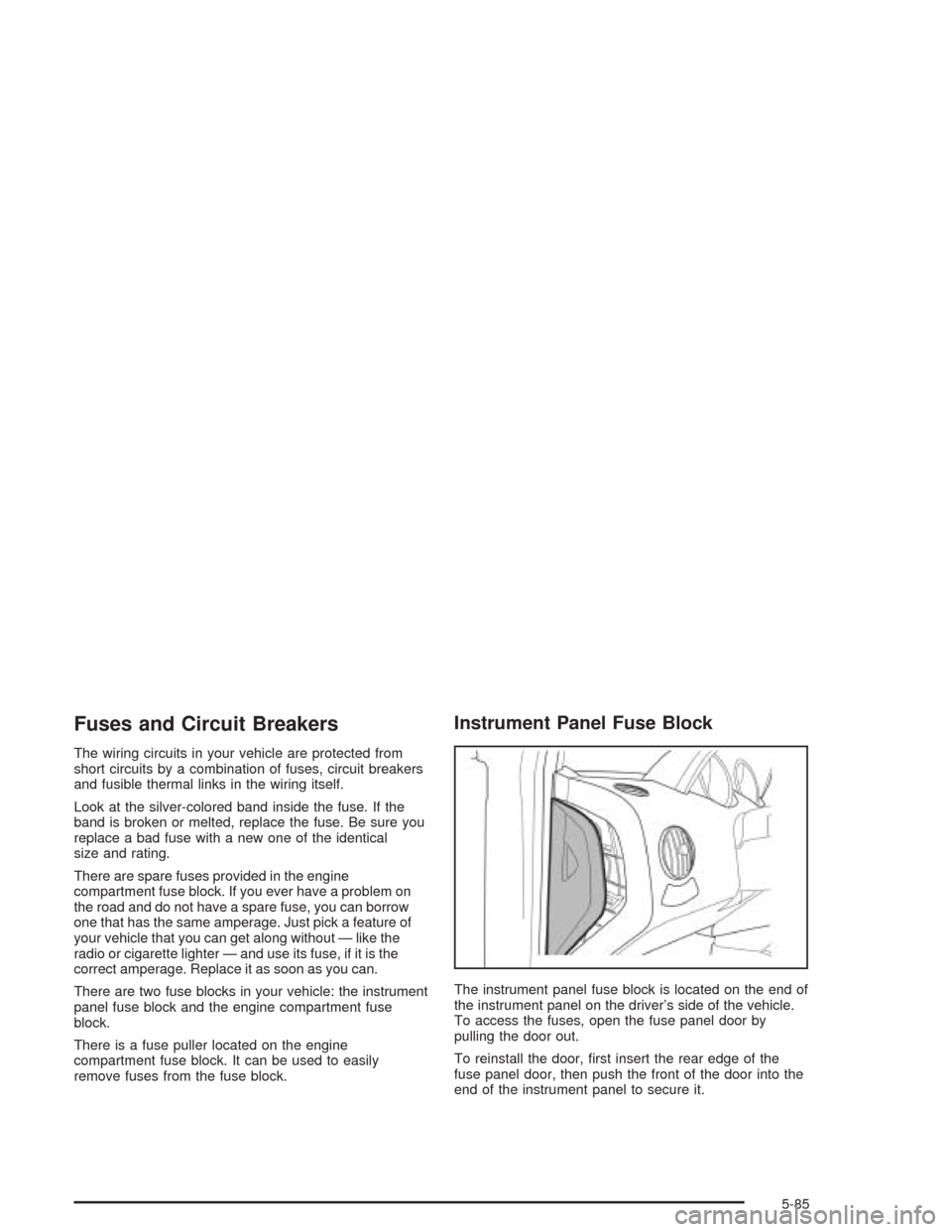
The instrument panel fuse block is located on the end of
the instrument panel on the driver’s side of the vehicle.
To access the fuses, open the fuse panel door by
pulling the door out.
To reinstall the door, first insert the rear edge of the
fuse panel door, then push the front of the door into the
end of the instrument panel to secure it.
5-85
Page 298 of 334

At Least Twice a Year
Restraint System Check
Make sure the safety belt reminder light and all your
belts, buckles, latch plates, retractors and anchorages
are working properly. Look for any other loose or
damaged safety belt system parts. If you see anything
that might keep a safety belt system from doing its
job, have it repaired. Have any torn or frayed safety belts
replaced.
Also look for any opened or broken air bag coverings,
and have them repaired or replaced. (The air bag
system does not need regular maintenance.)
Wiper Blade Check
Inspect wiper blades for wear or cracking. Replace
blade inserts that appear worn or damaged or that
streak or miss areas of the windshield. Also see
Cleaning the Outside of Your Vehicle on page 5-79.
Weatherstrip Lubrication
Silicone grease on weatherstrips will make them last
longer, seal better, and not stick or squeak. Apply
silicone grease with a clean cloth. During very cold,
damp weather more frequent application may be
required. SeePart D: Recommended Fluids and
Lubricants on page 6-26.
Manual Transaxle Check
It is not necessary to check the transaxle fluid level.
Check for leaks. A fluid leak is the only reason for fluid
loss. Have the system inspected and repaired if needed.
Automatic Transaxle Inspection
It is not necessary to check the transaxle fluid level.
A transaxle fluid leak is the only reason for fluid loss.
Check for leaks. If a leak occurs, take the vehicle to your
dealer and have it repaired as soon as possible.
Hydraulic Clutch System Check
Check the fluid level in the brake/clutch reservoir.
SeeHydraulic Clutch on page 5-22. A fluid loss in this
system could indicate a problem. Have the system
inspected and repaired at once.
6-20
Page 321 of 334
A
Accessory Power Outlets.................................3-11
Adding Washer Fluid.......................................5-35
Additional Program Information........................... 7-9
Additives, Fuel................................................. 5-6
Add-On Electrical Equipment............................5-84
Adjusting the Speakers (Balance/Fade)......3-35, 3-37
Air Bag
Readiness Light..........................................3-26
Air Bag Systems.............................................1-50
How Does an Air Bag Restrain?....................1-56
Servicing Your Air Bag-Equipped Vehicle.........1-58
What Makes an Air Bag Inflate?....................1-55
What Will You See After an
Air Bag Inflates?......................................1-56
When Should an Air Bag Inflate?...................1-55
Where Are the Air Bags?..............................1-53
Air Cleaner/Filter, Engine.................................5-20
Airbag Sensing and Diagnostic Module (SDM)......... 7-9
AM ...............................................................3-43
AM-FM Radio.................................................3-34
Antenna, Backglass.........................................3-44
Anti-lock Brake System (ABS)............................ 4-7
Anti-Lock Brake, System Warning Light..............3-27Appearance Care............................................5-76
Care of Safety Belts....................................5-79
Chemical Paint Spotting...............................5-82
Cleaning the Inside of Your Vehicle................5-76
Cleaning the Outside of Your Vehicle..............5-79
Finish Damage............................................5-81
Sheet Metal Damage...................................5-81
Underbody Maintenance...............................5-82
Vehicle Care/Appearance Materials................5-82
Weatherstrips..............................................5-79
Arming the System.........................................2-15
Ashtrays........................................................3-12
Audio System(s).............................................3-34
AM-FM Radio.............................................3-34
Backglass Antenna......................................3-44
Care of Your CD Player...............................3-44
Care of Your CDs........................................3-44
Radio with CD............................................3-36
Theft-Deterrent Feature................................3-43
Understanding Radio Reception.....................3-43
Automatic Transaxle........................................2-20
Fluid..........................................................5-21
Operation...................................................2-22
Automatic Transaxle Inspection.........................6-20
Automatic Transaxle Shift Lock Control
System Check.............................................6-22
1
Page 322 of 334
B
Backglass Antenna.........................................3-44
Battery..........................................................5-39
Battery Replacement......................................... 2-6
Before Leaving on a Long Trip.........................4-21
Body Lubrication Service..................................6-21
Brake
Parking......................................................2-28
System Inspection.......................................6-25
System Warning Light..................................3-20
Brake Fluid....................................................5-36
Brake Wear...................................................5-37
Brakes..........................................................5-36
Braking........................................................... 4-6
Braking in Emergencies..................................... 4-9
Break-In, New Vehicle.....................................2-18
Bulb Replacement...........................................5-45
Fog Lamps.................................................5-48
Front Turn Signal and Parking Lamps.............5-46
Halogen Bulbs............................................5-45
Headlamp Aiming........................................5-45
Headlamps.................................................5-46
Sidemarker Lamps...............................5-48, 5-49
Taillamps, Turn Signal, Stoplamps and
Back-up Lamps........................................5-49
Turn Signal Lamps......................................5-47
Buying New Tires...........................................5-62
C
California Fuel.................................................. 5-6
Canada – Customer Assistance.......................... 7-4
Canadian Owners................................................ ii
Canadian Roadside Assistance........................... 7-7
Canceling the Rear Door Security Lock............... 2-9
Capacities and Specifications............................5-91
Carbon Monoxide...........4-24, 4-37, 2-10, 2-12, 2-32
Care of
Safety Belts................................................5-79
Your CD Player...........................................3-44
Your CDs ...................................................3-44
Cassette Tape Player Service...........................6-19
CD Messages................................................3-42
Center Rear Passenger Position, Safety Belts.....1-26
Chains, Tires..................................................5-66
Charging System Light....................................3-27
Check
Engine Light...............................................3-28
Check Engine Light.........................................3-28
Checking Coolant............................................5-24
Checking Engine Oil........................................5-15
Checking Things Under the Hood......................5-11
Checking Your Restraint Systems......................1-58
Chemical Paint Spotting...................................5-82
2