Page 246 of 354

243 Contents – Instrument cluster display
Te ch n i c a l
data Instruments
and controlsOperation DrivingInstrument
cluster displayPractical hints Car care Index
Instrument cluster displayMalfunction and indicator lamps in
the instrument cluster .............244
On-board diagnostic system .....244
Check engine malfunction
indicator lamp .............................244
Brake warning lamp ..................245
Supplemental restraint system
(SRS) indicator lamp ..................246
Fuel reserve and fuel cap
placement warning ....................246
Electronic stability program (ESP)
— warning lamp ..........................247
BAS / ESP malfunction indicator
lamp ..............................................247ABS malfunction
indicator lamp ............................ 248
Seat belt warning lamp ............. 248
Malfunction and indicator lamp in
the center console .................... 249
AIRBAG OFF indicator lamp .... 249
Malfunction and warning
messages in the multifunction
display ........................................ 250
DISPLAY DEFECTIVE................ 251
BATTERY / ALTERNATOR ........ 252
ABS-SYSTEM .............................. 253
BRAKE ASSIST........................... 253
BRAKE LINING WEAR .............. 254
BRAKE FLUID ............................ 254PARKING BRAKE .......................255
ENGINE FAN ...............................255
COOLANT (coolant level) ..........256
COOLANT TEMP. ........................257
LIGHTING SYSTEM ....................258
LIGHT SENSOR ...........................259
REMOVE KEY .............................259
STEERING GEAR OIL................. 260
ENGINE OIL LEVEL ................... 261
WASHER FLUID .........................262
ELEC. STABIL. PROG. (Electronic
stability program) ......................263
TELE AID ..................................... 263
Page 250 of 354
247 Malfunction and indicator lamps
Te ch n i c a l
data Instruments
and controlsOperation DrivingInstrument
cluster displayPractical hints Car care Index Electronic stability program (ESP) — warning lamp
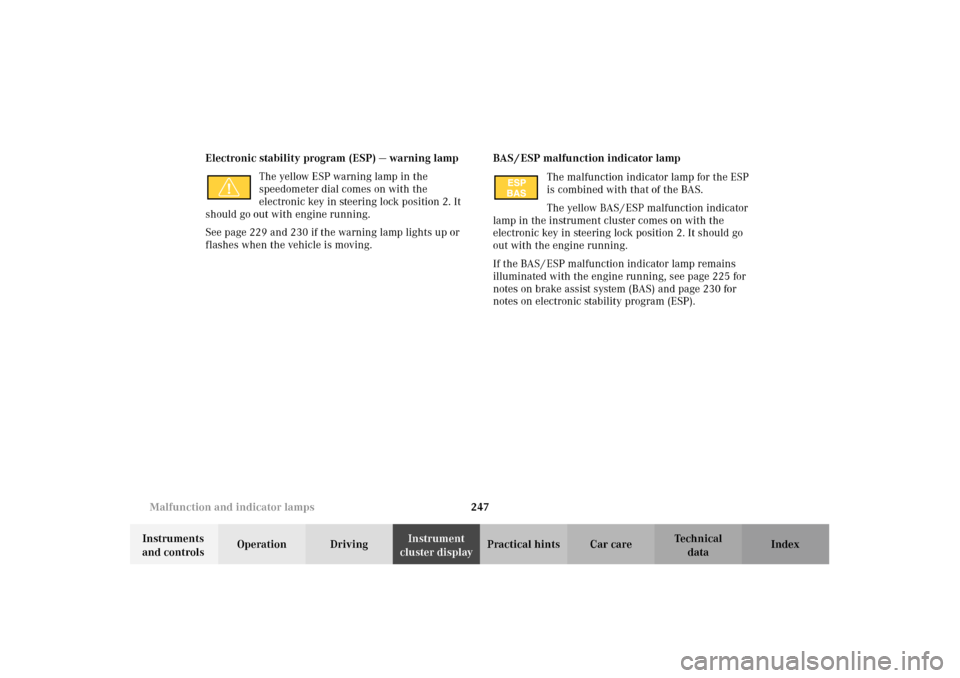
The yellow ESP warning lamp in the
speedometer dial comes on with the
electronic key in steering lock position 2. It
should go out with engine running.
See page 229 and 230 if the warning lamp lights up or
flashes when the vehicle is moving.BAS / ESP malfunction indicator lamp
The malfunction indicator lamp for the ESP
is combined with that of the BAS.
The yellow BAS / ESP malfunction indicator
lamp in the instrument cluster comes on with the
electronic key in steering lock position 2. It should go
out with the engine running.
If the BAS / ESP malfunction indicator lamp remains
illuminated with the engine running, see page 225 for
notes on brake assist system (BAS) and page 230 for
notes on electronic stability program (ESP).
Page 290 of 354
287 Tires, Wheels
Te ch n i c a l
data Instruments
and controlsOperation DrivingInstrument
cluster displayPractical hintsCar care Index Tire inflation pressure
A table (see fuel filler flap) lists the tire inflation
pressures specified for Mercedes-Benz recommended
tires as well as for the varying operating conditions.
Important!
Tire pressure changes by approximately 1.5 psi (0.1 bar)
per 18
°F (10
°C) of air temperature change. Keep this in
mind when checking tire pressure inside a garage -
especially in the winter.
Example:
If garage temperature = approximately +68
°F (+20
°C)
and ambient temperature = approximately +32
°F (0
°C)
then the adjusted air pressure = specified air pressure
+3 psi (+0.2 bar).The pressures listed for light loads are minimum values
offering high driving comfort.
Increased inflation pressures listed for heavier loads
may also be used for light loads. These higher pressures
produce favorable handling characteristics. The ride of
the vehicle, however, will be somewhat harder. Never
exceed the max. values or inflate tires below the min.
values listed in the fuel filler flap.
Tire temperature and pressure increase with the vehicle
speed. Tire pressure should therefore only be checked
and corrected on cold tires. Correct tire pressure in
warm tires only if pressure has dropped below the
pressure listed in the table and the respective operating
conditions are taken into consideration.
An underinflated tire due to a slow leak (e.g. due to a
nail in the tire) may cause damage such as tread
separation, bulging etc.. Regular tire pressure checks
(including the spare tire) at intervals of no more than
14 days are therefore essential.