Page 2 of 256
Brakes 138
Traction control/AdvanceTrac 142
Transmission operation 144
Vehicle loading 154
Trailer towing 156
Roadside Emergencies 157
Getting roadside assistance 157
Hazard flasher switch 158
Fuel pump shut-off switch 159
Fuses and relays 160
Changing tires 165
Jump starting 170
Wrecker towing 175
Customer Assistance 176
Reporting safety defects (U.S. only) 186
Cleaning 187
Maintenance and Specifications 194
Engine compartment 197
Engine oil 199
Battery 203
Fuel information 214
Part numbers 237
Refill capacities 238
Lubricant specifications 240
Accessories 245
Index 248
All rights reserved. Reproduction by any means, electronic or
mechanical including photocopying, recording or by any
information storage and retrieval system or translation in
whole or part is not permitted without written authorization
from Ford Motor Company. Ford may change the contents
without notice and without incurring obligation.
Copyright © 2002 Ford Motor Company
Table of Contents
2
Page 13 of 256

Low fuel
Illuminates when the
fuel level in the fuel
tank is at, or near,
empty (refer toFuel
gaugein this chapter for more information).
O/D off (if equipped)
Illuminates when the
overdrive function has
been turned OFF using
the transmission control switch (TCS) on the
gearshift. If the light does not come on or the light
flashes steadily, have your vehicle serviced as soon
as possible, damage to the transmission could occur.
Traction Control�active
Illuminates when the
Traction Control�
system is active. It will
be lit for a minimum of
four seconds or for the duration of the Traction
Control�event.
For more information, refer to theDrivingchapter.
Anti-lock brake system (ABS)
To confirm the
anti-lock brake system
(ABS) warning light is
functional it will
momentarily illuminate when the ignition is turned
to the ON position (alternatively for some vehicles
when the ignition is moved from the ON position to
the START position, the light will momentarily
illuminate just prior to reaching the START
position). If the light remains on, continues to flash
or fails to illuminate, have the ABS serviced
immediately. If the ABS light remains on, it means
the anti-lock brake system has malfunctioned and is
disabled, however, the normal brake system will still
function unless the brake warning light also remains
LOW
FUEL
O/D
OFF
ABS
Instrument Cluster
13
Page 84 of 256
OVERDRIVE CONTROL (IF EQUIPPED)
Activating overdrive
(Overdrive) is the normal drive position for the
best fuel economy.
The overdrive function allows automatic upshifts and
downshifts through all available gears.
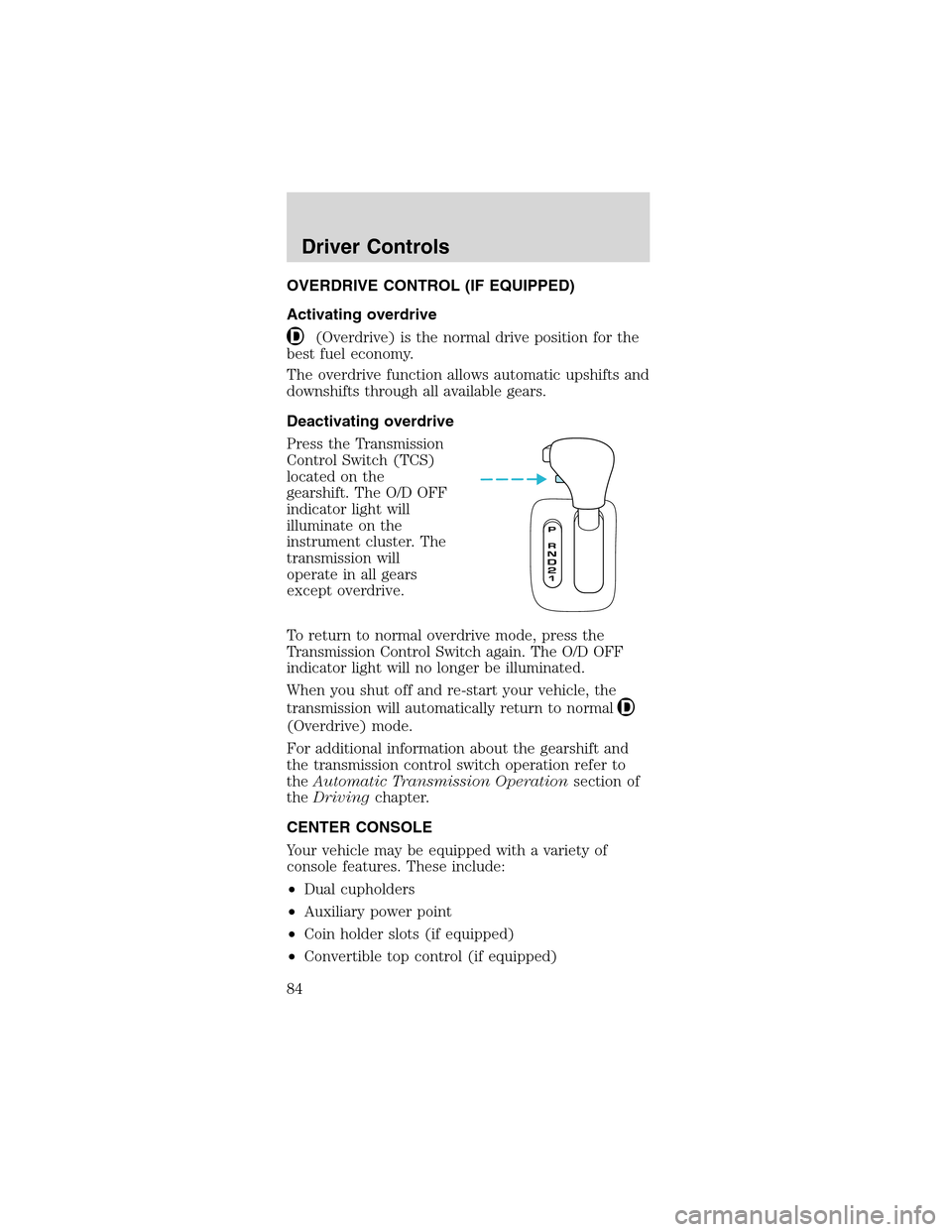
Deactivating overdrive
Press the Transmission
Control Switch (TCS)
located on the
gearshift. The O/D OFF
indicator light will
illuminate on the
instrument cluster. The
transmission will
operate in all gears
except overdrive.
To return to normal overdrive mode, press the
Transmission Control Switch again. The O/D OFF
indicator light will no longer be illuminated.
When you shut off and re-start your vehicle, the
transmission will automatically return to normal
(Overdrive) mode.
For additional information about the gearshift and
the transmission control switch operation refer to
theAutomatic Transmission Operationsection of
theDrivingchapter.
CENTER CONSOLE
Your vehicle may be equipped with a variety of
console features. These include:
•Dual cupholders
•Auxiliary power point
•Coin holder slots (if equipped)
•Convertible top control (if equipped)
Driver Controls
84
Page 90 of 256
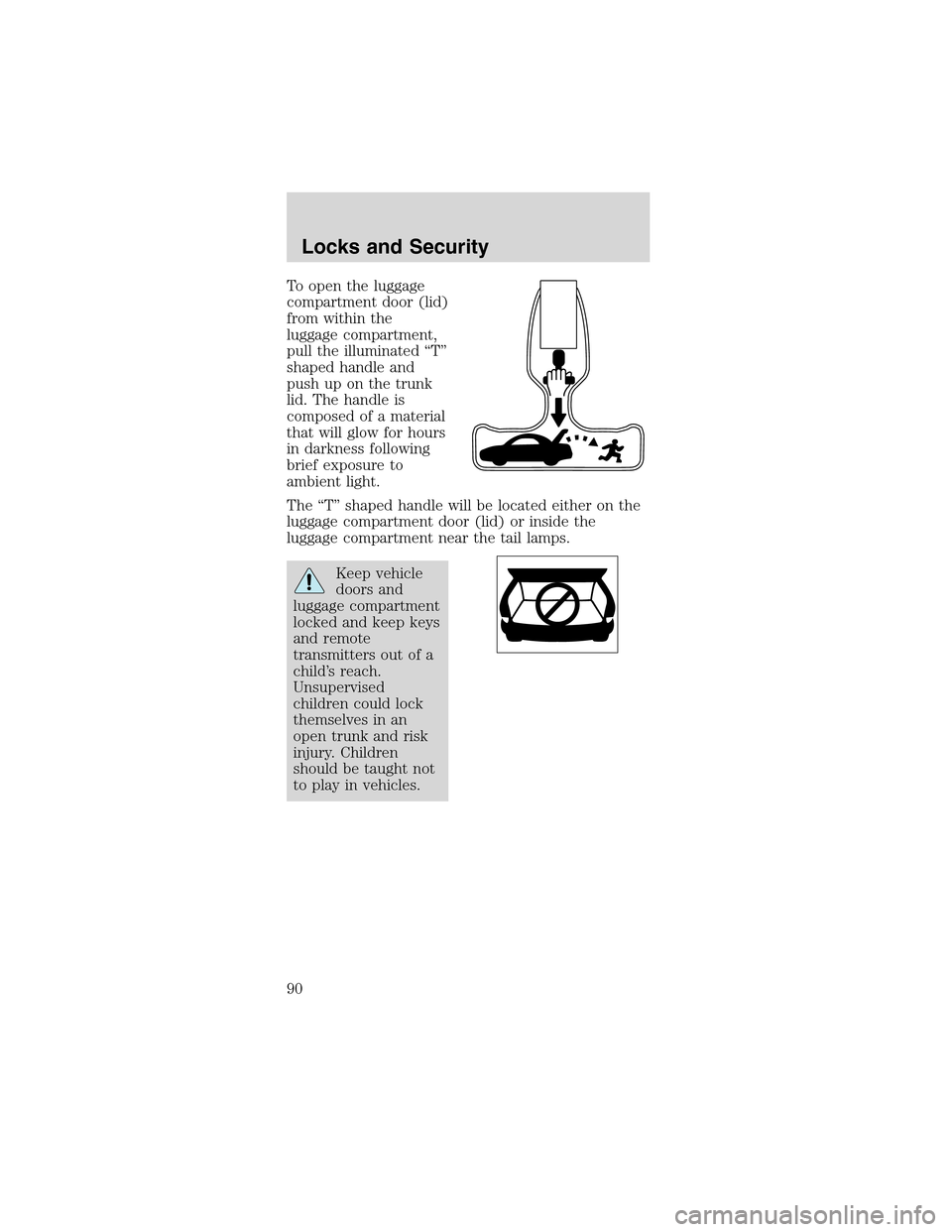
To open the luggage
compartment door (lid)
from within the
luggage compartment,
pull the illuminated“T”
shaped handle and
push up on the trunk
lid. The handle is
composed of a material
that will glow for hours
in darkness following
brief exposure to
ambient light.
The“T”shaped handle will be located either on the
luggage compartment door (lid) or inside the
luggage compartment near the tail lamps.
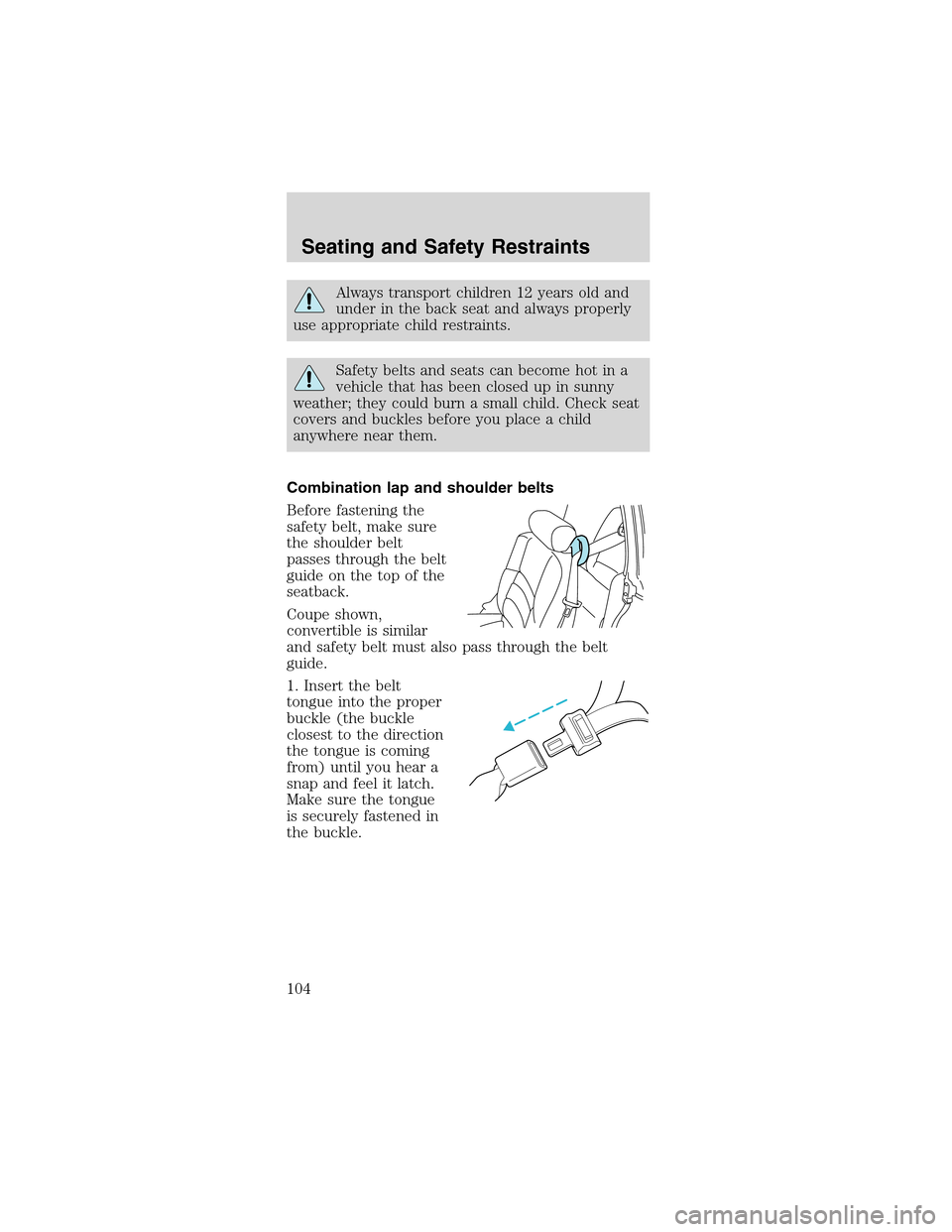
Keep vehicle
doors and
luggage compartment
locked and keep keys
and remote
transmitters out of a
child’s reach.
Unsupervised
children could lock
themselves in an
open trunk and risk
injury. Children
should be taught not
to play in vehicles.
Locks and Security
90
Page 91 of 256
On hot days, the temperature in the trunk
or vehicle interior can rise very quickly.
Exposure of people or animals to these high
temperatures for even a short time can cause
death or serious heat-related injuries, including
brain damage. Small children are particularly at
risk.
REMOTE ENTRY SYSTEM
This device complies with part 15 of the FCC rules
and with RS-210 of Industry Canada. Operation is
subject to the following two conditions: (1) This
device may not cause harmful interference, and (2)
This device must accept any interference received,
including interference that may cause undesired
operation.
Changes or modifications not expressly
approved by the party responsible for
compliance could void the user’s authority to
operate the equipment.
The remote entry system allows you to:
•lock or unlock all vehicle doors without a key
•open the trunk
•activate the panic alarm
•confirms that the vehicle is locked with a short
“beep”from the horn.
The remote entry features only operate with the
ignition in the LOCK position.
If there is any potential remote keyless entry
problem with your vehicle, ensureALL remote
entry transmittersare brought to the dealership,
to aid in troubleshooting.
Locks and Security
91
Page 93 of 256
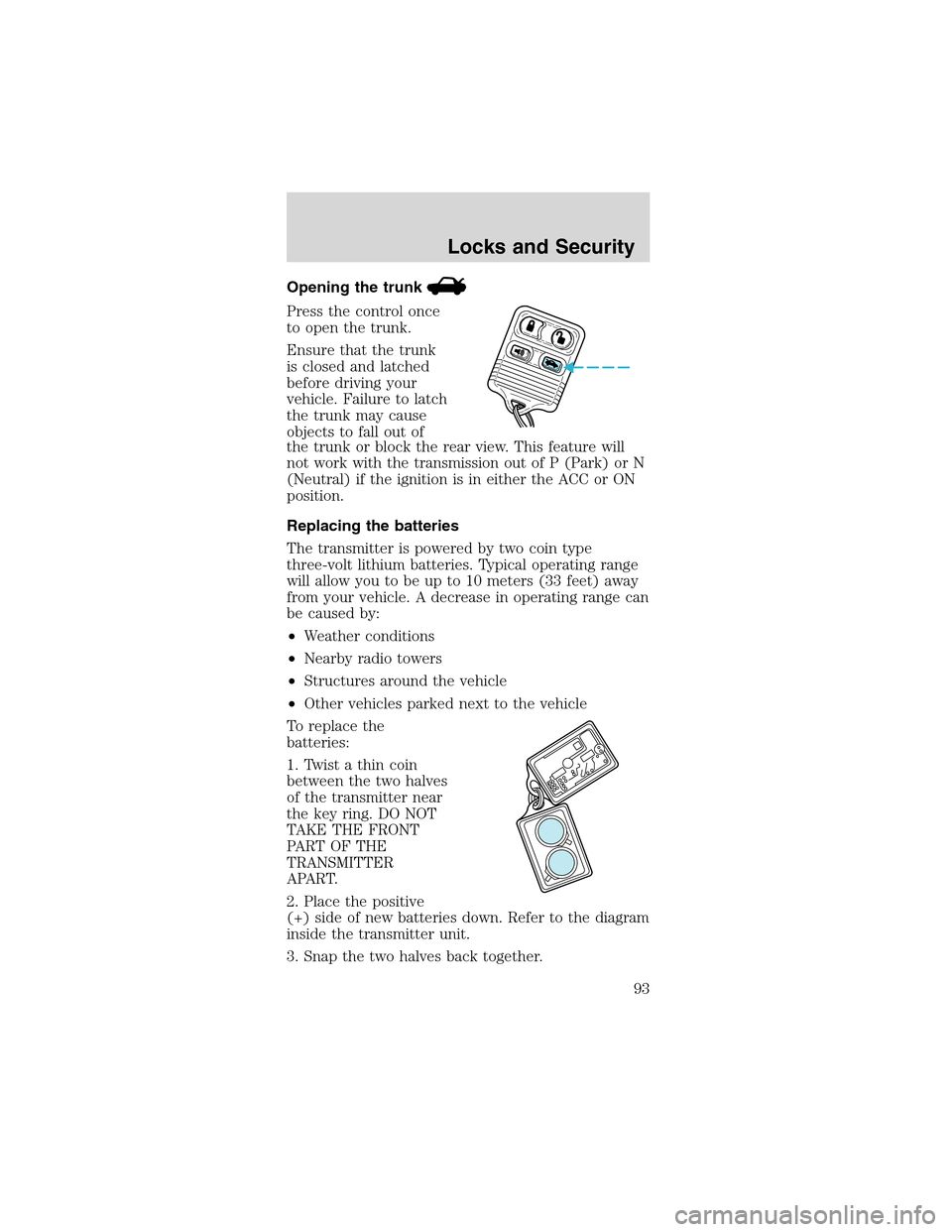
Opening the trunk
Press the control once
to open the trunk.
Ensure that the trunk
is closed and latched
before driving your
vehicle. Failure to latch
the trunk may cause
objects to fall out of
the trunk or block the rear view. This feature will
not work with the transmission out of P (Park) or N
(Neutral) if the ignition is in either the ACC or ON
position.
Replacing the batteries
The transmitter is powered by two coin type
three-volt lithium batteries. Typical operating range
will allow you to be up to 10 meters (33 feet) away
from your vehicle. A decrease in operating range can
be caused by:
•Weather conditions
•Nearby radio towers
•Structures around the vehicle
•Other vehicles parked next to the vehicle
To replace the
batteries:
1. Twist a thin coin
between the two halves
of the transmitter near
the key ring. DO NOT
TAKE THE FRONT
PART OF THE
TRANSMITTER
APART.
2. Place the positive
(+) side of new batteries down. Refer to the diagram
inside the transmitter unit.
3. Snap the two halves back together.
Locks and Security
93
Page 94 of 256

Replacement of the battery willnotcause the
remote transmitter to become deprogrammed from
your vehicle. The remote transmitter should operate
normally after battery replacement.
Replacing lost transmitters
•Take all your
vehicle’s transmitters
to your dealer if
service is required.
•If you purchase
additional
transmitters (up to
four may be
programmed into memory), perform the following
procedure.
To reprogram the transmitters yourself, place the
key in the ignition and turn from LOCK to OFF and
cycle between OFF and ON eight times in rapid
succession (within 10 seconds) ending in ON. After
doors lock/unlock, press any control on all
transmitters (up to four). With each control press of
the transmitters, the door should cycle (lock/unlock)
to confirm programming. When completed, turn the
ignition to OFF. The door locks should cycle
(lock/unlock) one last time to confirm completion of
programming.
All transmittersmustbe programmed at the same
time.
Illuminated entry
The interior lamps illuminate when the remote entry
system is used to unlock the door(s) or sound the
personal alarm.
The system automatically turns off after 25 seconds
or when the ignition is turned to the START/RUN or
ACC position. The dome lamp control (if equipped)
mustnotbe set to the OFF position for the
illuminated entry system to operate.
Locks and Security
94
Page 104 of 256
Always transport children 12 years old and
under in the back seat and always properly
use appropriate child restraints.
Safety belts and seats can become hot in a
vehicle that has been closed up in sunny
weather; they could burn a small child. Check seat
covers and buckles before you place a child
anywhere near them.
Combination lap and shoulder belts
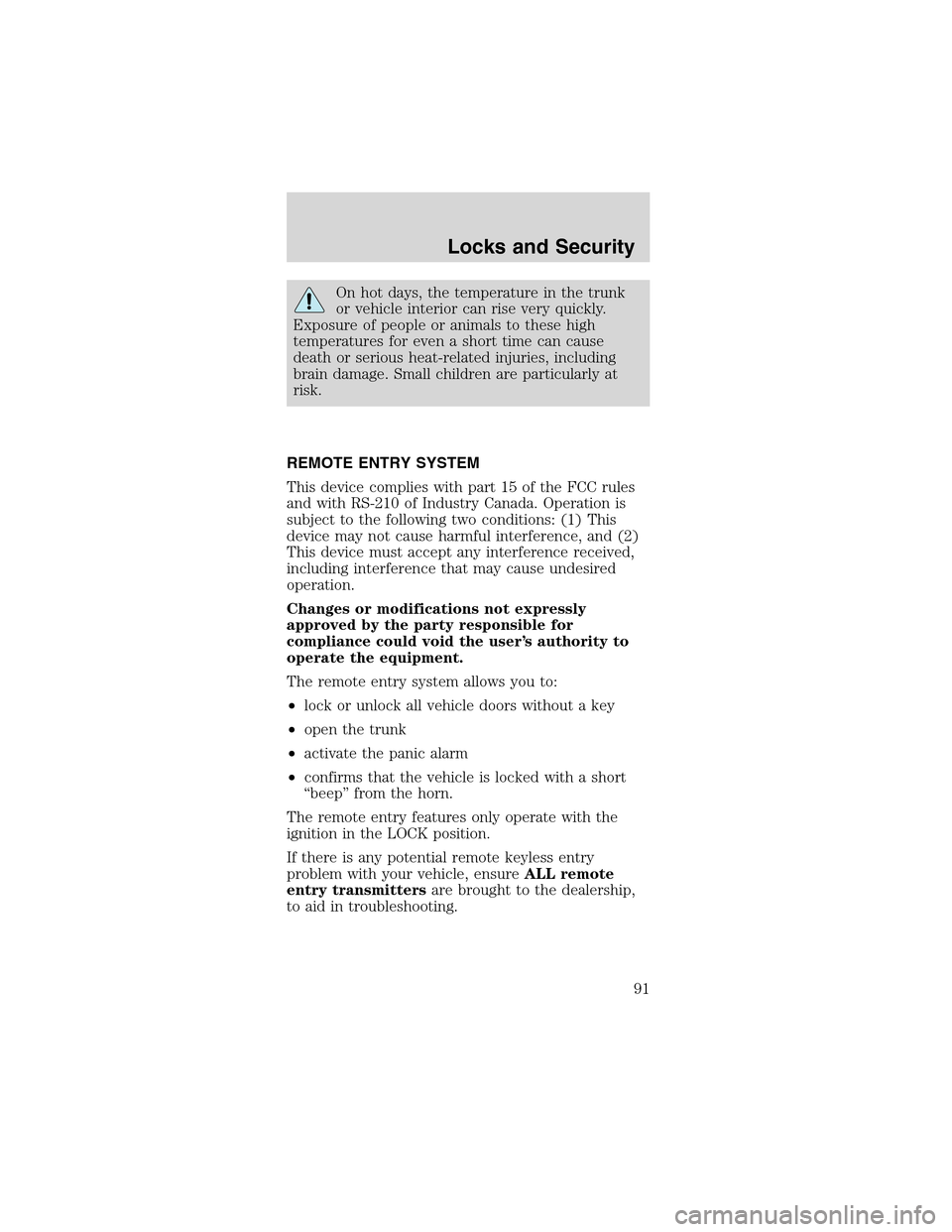
Before fastening the
safety belt, make sure
the shoulder belt
passes through the belt
guide on the top of the
seatback.
Coupe shown,
convertible is similar
and safety belt must also pass through the belt
guide.
1. Insert the belt
tongue into the proper
buckle (the buckle
closest to the direction
the tongue is coming
from) until you hear a
snap and feel it latch.
Make sure the tongue
is securely fastened in
the buckle.
Seating and Safety Restraints
104