2003 CHEVROLET MALIBU battery replacement
[x] Cancel search: battery replacementPage 66 of 326
At times you may notice a decrease in range. This is
normal for any remote keyless entry system. If the
transmitter does not work or if you have to stand closer
to your vehicle for the transmitter to work, try this:
·Check the distance. You may be too far from your
vehicle. You may need to stand closer during
rainy or snowy weather.
·Check the location. Other vehicles or objects may
be blocking the signal. Take a few steps to the
left or right, hold the transmitter higher, and
try again.
·Check to determine if battery replacement is
necessary. See ªBattery Replacementº under
Remote Keyless Entry System Operation on
page 2-4.
·If you are still having trouble, see your dealer or
a quali®ed technician for service.
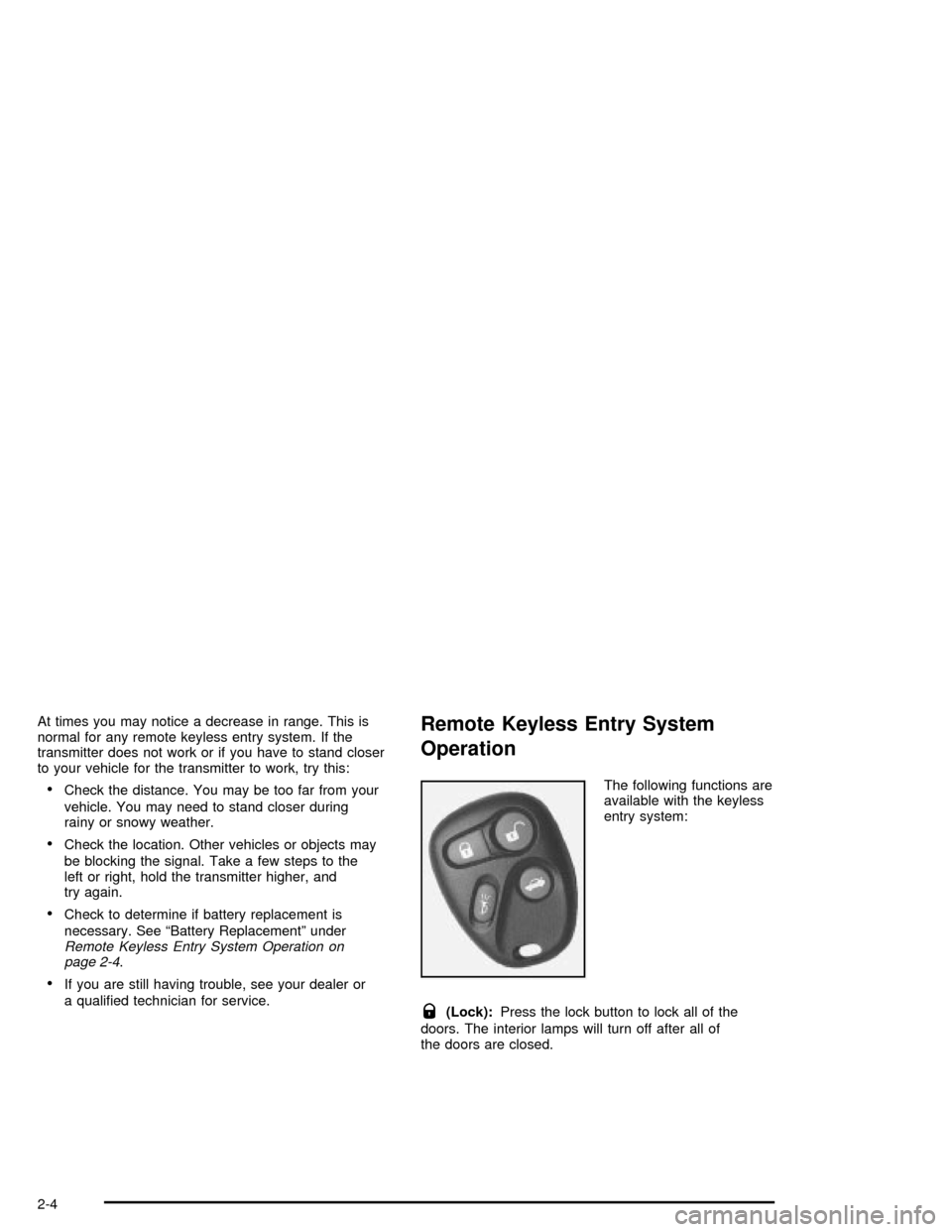
Remote Keyless Entry System
Operation
The following functions are
available with the keyless
entry system:
Q(Lock):Press the lock button to lock all of the
doors. The interior lamps will turn off after all of
the doors are closed.
2-4
Page 68 of 326
Battery Replacement
Under normal use, the battery in your remote keyless
entry transmitter should last about four years.
You can tell the battery is weak if the transmitter won't
work at the normal range in any location. If you have
to get close to your vehicle before the transmitter works,
it's probably time to change the battery.
Notice:When replacing the battery, use care not to
touch any of the circuitry. Static from your body
transferred to these surfaces may damage the
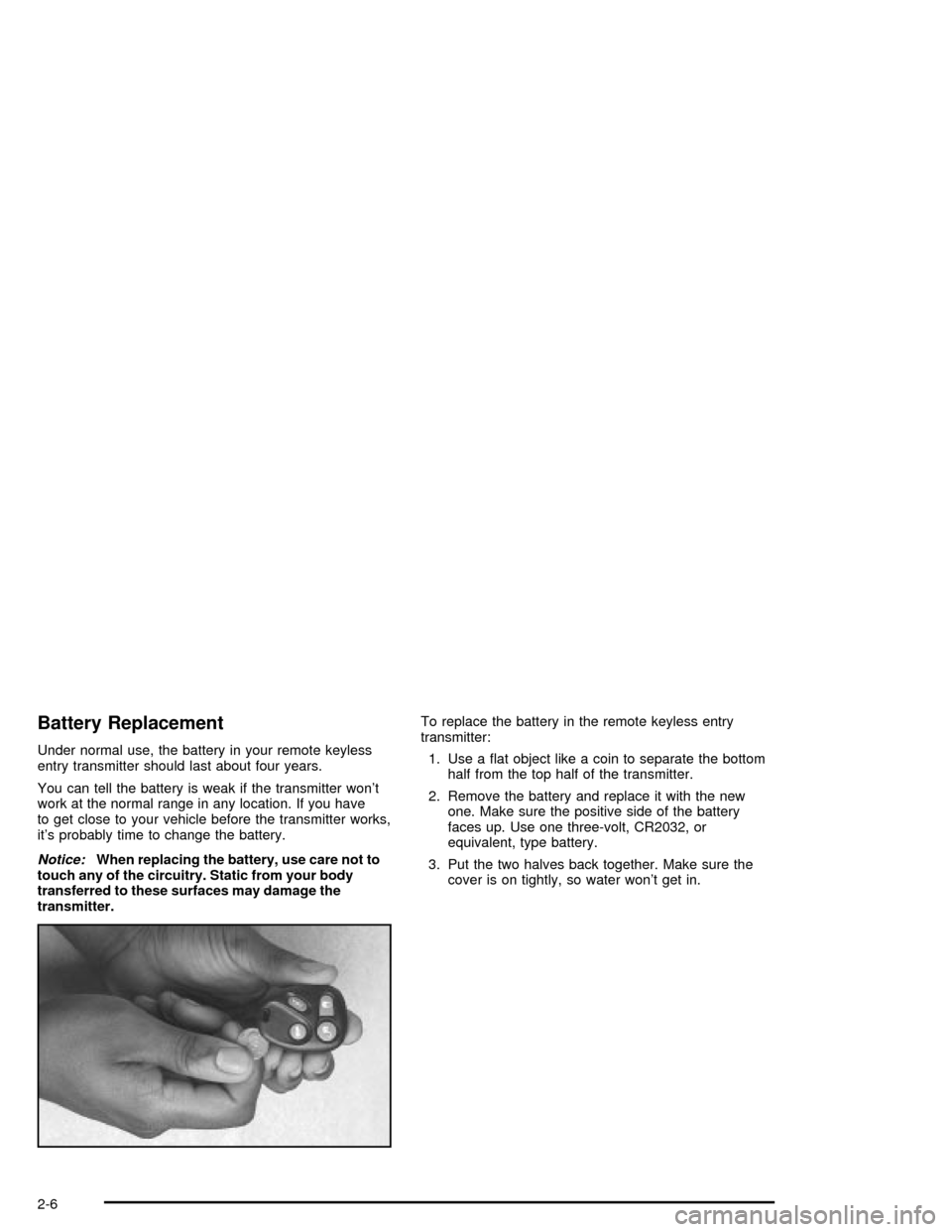
transmitter.To replace the battery in the remote keyless entry
transmitter:
1. Use a ¯at object like a coin to separate the bottom
half from the top half of the transmitter.
2. Remove the battery and replace it with the new
one. Make sure the positive side of the battery
faces up. Use one three-volt, CR2032, or
equivalent, type battery.
3. Put the two halves back together. Make sure the
cover is on tightly, so water won't get in.
2-6
Page 195 of 326

Service............................................................5-3
Doing Your Own Service Work.........................5-3
Adding Equipment to the Outside of
Your Vehicle..............................................5-4
Fuel................................................................5-4
Gasoline Octane............................................5-4
Gasoline Speci®cations....................................5-4
California Fuel...............................................5-5
Additives.......................................................5-5
Fuels in Foreign Countries...............................5-6
Filling Your Tank............................................5-6
Filling a Portable Fuel Container.......................5-9
Checking Things Under the Hood.....................5-9
Hood Release..............................................5-10
Engine Compartment Overview.......................5-12
Engine Oil...................................................5-13
Engine Air Cleaner/Filter................................5-17
Automatic Transaxle Fluid..............................5-18
Engine Coolant.............................................5-19
Coolant Surge Tank Pressure Cap..................5-21
Engine Overheating.......................................5-22
Cooling System............................................5-24
Power Steering Fluid.....................................5-30
Windshield Washer Fluid................................5-31Brakes........................................................5-32
Battery........................................................5-36
Jump Starting...............................................5-36
Bulb Replacement..........................................5-42
Halogen Bulbs..............................................5-42
Headlamps..................................................5-42
Front Turn Signal Lamps...............................5-44
Center High-Mounted Stoplamp (CHMSL).........5-44
Taillamps, Turn Signal, Stoplamps and
Back-up Lamps.........................................5-45
Replacement Bulbs.......................................5-47
Windshield Wiper Blade Replacement..............5-48
Tires..............................................................5-48
In¯ation -- Tire Pressure................................5-49
Tire Inspection and Rotation...........................5-50
When It Is Time for New Tires.......................5-51
Buying New Tires.........................................5-52
Uniform Tire Quality Grading..........................5-53
Wheel Alignment and Tire Balance..................5-54
Wheel Replacement......................................5-54
Tire Chains..................................................5-55
If a Tire Goes Flat........................................5-56
Changing a Flat Tire.....................................5-57
Compact Spare Tire......................................5-66
Section 5 Service and Appearance Care
5-1
Page 230 of 326
Battery
Your new vehicle comes with a maintenance free
ACDelcožbattery. When it's time for a new battery, get
one that has the replacement number shown on the
original battery's label. We recommend an ACDelco
ž
battery. SeeEngine Compartment Overview on
page 5-12for battery location.
Warning:Battery posts, terminals and related
accessories contain lead and lead compounds,
chemicals known to the State of California to cause
cancer and reproductive harm. Wash hands after
handling.
Vehicle Storage
If you're not going to drive your vehicle for 25 days or
more, remove the black, negative (-) cable from
the battery. This will help keep your battery from
running down.
{CAUTION:
Batteries have acid that can burn you and gas
that can explode. You can be badly hurt if you
aren't careful. See ªJump Startingº next for
tips on working around a battery without
getting hurt.Contact your dealer to learn how to prepare your
vehicle for longer storage periods.
Also, for your audio system, see
Theft-Deterrent
Feature (Non-RDS Radios) on page 3-57orTheft-Deterrent Feature (RDS Radios) on page 3-57.
Jump Starting
If your battery has run down, you may want to use
another vehicle and some jumper cables to start your
vehicle. Be sure to follow the steps below to do it safely.
{CAUTION:
Batteries can hurt you. They can be dangerous
because:
·They contain acid that can burn you.
·They contain gas that can explode or
ignite.
·They contain enough electricity to
burn you.
If you don't follow these steps exactly, some
or all of these things can hurt you.
5-36
Page 314 of 326

B
Backing Up....................................................4-38
Battery Replacement......................................... 2-6
Battery Run-Down Protection............................3-16
Battery..........................................................5-36
Before Leaving on a Long Trip.........................4-20
Body Lubrication Service..................................6-16
Brake............................................................2-23
Parking......................................................2-23
System Inspection.......................................6-20
System Warning Light..................................3-27
Brake Adjustment............................................5-35
Brake Fluid....................................................5-32
Brake Pedal Travel.........................................5-35
Brake Wear...................................................5-34
Brakes..........................................................5-32
Braking in Emergencies..................................... 4-8
Braking........................................................... 4-6
Break-In, New Vehicle.....................................2-16
Bulb Replacement...........................................5-42
Center High-Mounted Stoplamp (CHMSL)........5-44
Front Turn Signal Lamps..............................5-44
Halogen Bulbs............................................5-42
Headlamps.................................................5-42
Replacement Bulbs......................................5-47Bulb Replacement (cont.)
Taillamps, Turn Signal, Stoplamps and
Back-up Lamps........................................5-45
Buying New Tires...........................................5-52
C
California Fuel.................................................. 5-5
Canada ± Customer Assistance.......................... 7-4
Canadian Owners................................................ ii
Canadian Roadside Assistance........................... 7-6
Capacities and Speci®cations............................5-82
Carbon Monoxide...................4-23, 4-34, 2-11, 2-26
Care of.........................................................5-70
Safety Belts................................................5-70
Your Cassette Tape Player............................3-58
Your CD Player...........................................3-59
Your CDs ...................................................3-59
Cassette Tape Messages.................................3-54
Cassette Tape Player Service...........................6-15
CD Adapter Kits.............................................3-54
Center Console Storage Area...........................2-30
Center High-Mounted Stoplamp (CHMSL)...........5-44
Center Rear Passenger Position, Safety Belts.....1-24
Chains, Tires..................................................5-55
2