10
M54engMS43/ST036/6/2000
MS 43 NEW FUNCTIONS
ELECTRONIC THROTTLE SYSTEM - EML
The M54 engine with MS 43 engine control uses an electronic throttle control system
adopted from the ME 7.2 system on the M62 engine. The system incorporates an electric
throttle valve (EDK) and pedal position sensor (PWG) for engine power control.
The MS 43 control module monitors the PWG input and activates the EDK motor based on
the programmed maps for throttle control. The MS 43 module self checks the activation of
the EDK via feedback potentiometers motor on the EDK motor.
Additional functions of the EML system include:
• Cruise control function
• DSC throttle interventions
• Maximum engine and road speed control
ART-SCANDIAGRAM
38
M54engMS43/ST036/6/2000
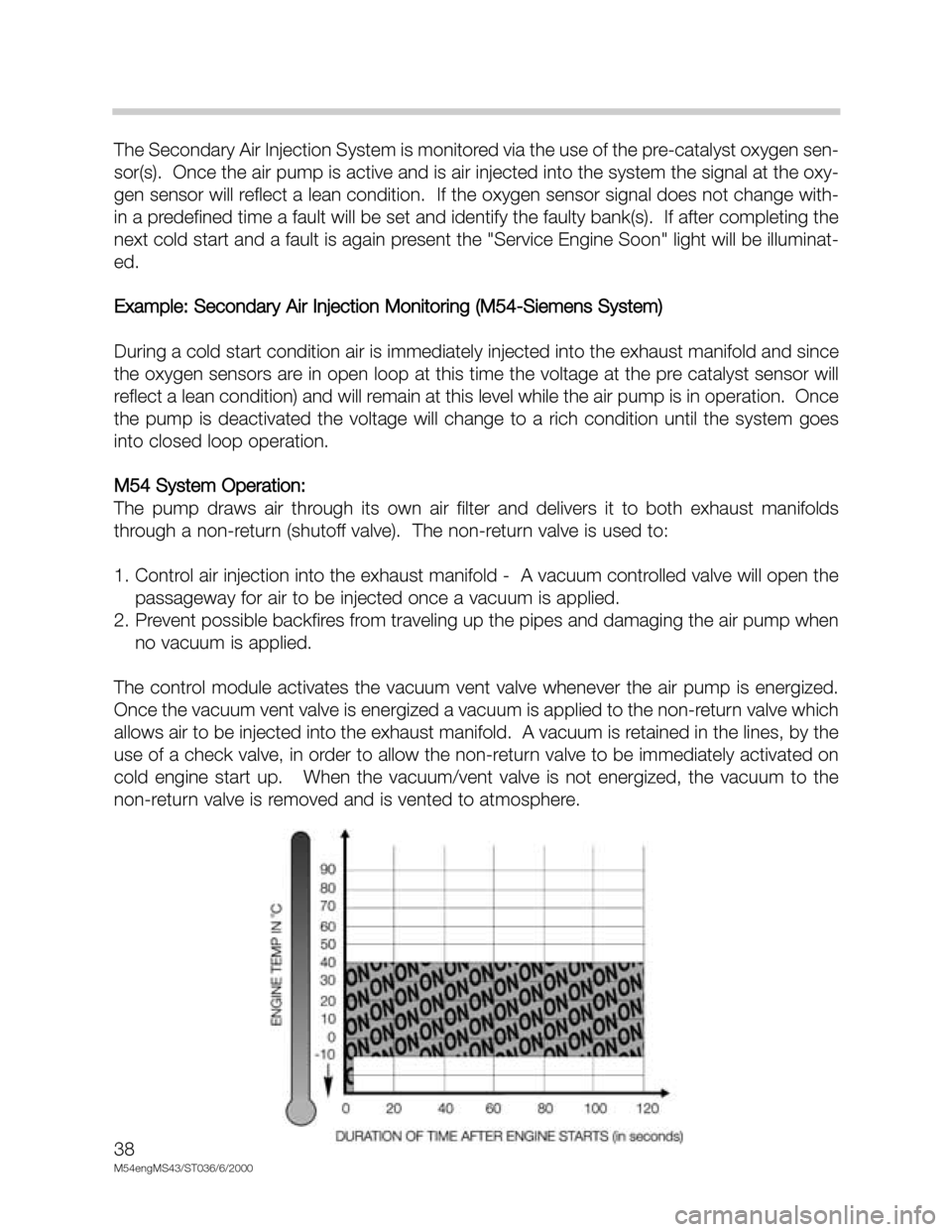
The Secondary Air Injection System is monitored via the use of the pre-catalyst oxygen sen-
sor(s). Once the air pump is active and is air injected into the system the signal at the oxy-
gen sensor will reflect a lean condition. If the oxygen sensor signal does not change with-
in a predefined time a fault will be set and identify the faulty bank(s). If after completing the
next cold start and a fault is again present the "Service Engine Soon" light will be illuminat-
ed.
Example: Secondary Air Injection Monitoring (M54-Siemens System)
During a cold start condition air is immediately injected into the exhaust manifold and since
the oxygen sensors are in open loop at this time the voltage at the pre catalyst sensor will
reflect a lean condition) and will remain at this level while the air pump is in operation. Once
the pump is deactivated the voltage will change to a rich condition until the system goes
into closed loop operation.
M54 System Operation:
The pump draws air through its own air filter and delivers it to both exhaust manifolds
through a non-return (shutoff valve). The non-return valve is used to:
1. Control air injection into the exhaust manifold - A vacuum controlled valve will open the
passageway for air to be injected once a vacuum is applied.
2. Prevent possible backfires from traveling up the pipes and damaging the air pump when
no vacuum is applied.
The control module activates the vacuum vent valve whenever the air pump is energized.
Once the vacuum vent valve is energized a vacuum is applied to the non-return valve which
allows air to be injected into the exhaust manifold. A vacuum is retained in the lines, by the
use of a check valve, in order to allow the non-return valve to be immediately activated on
cold engine start up. When the vacuum/vent valve is not energized, the vacuum to the
non-return valve is removed and is vented to atmosphere.