Page 121 of 397

2-55
The exterior lamps control has three positions:
OFF:Pushing the control all the way in turns off the
exterior lamps.
Parking Lamps:Pulling the control out halfway will
turn on the parking lamps together with the following:
�Taillamps
�LIcense Plate Lamps
�Instrument Panel Lights
Headlamps: Pulling the control all the way out turns on
the headlamps together with the previously listed lamps
and lights. See ªInterior Lampsº later in this section for
information on the instrument panel brightness control
and on the dome lamps. A warning chime will sound if
you open the driver's door when the ignition switch is
off and the headlamps are on.
Daytime Running Lamps / Automatic
Headlamp Control
Daytime Running Lamps (DRL) can make it easier for
others to see the front of your vehicle during the day.
DRL can be helpful in many different driving
conditions, but they can be especially helpful in the
short periods after dawn and before sunset. Fully
functional daytime running lamps are required on all
vehicles first sold in Canada.A light sensor on top of the instrument panel makes the
DRL work, so be sure it isn't covered.
The DRL system's automatic headlamp control will
make your high
-beam headlamps come on at a reduced
brightness when the following conditions are met:
�The ignition is on,
�the exterior lamps control is off and
�the gearshift is not in PARK (P).
When the DRL are on, only your high
-beam
headlamps, at a reduced level of brightness, will be on.
The headlamps, taillamps, sidemarker and other lamps
won't be on. Your instrument panel and cluster won't be
lit up either.
When it's dark enough outside, your high
-beam
headlamps will turn off and the headlamps and parking
lamps will turn on. The other lamps that come on with
your headlamps will also come on.
When it's bright enough outside, your headlamps will go
off and your DRL will come on.
As with any vehicle, you should turn on the regular
headlamp system when you need it.
Page 146 of 397
2-80
Instrument Panel Cluster
Your instrument panel cluster is designed to let you know at a glance how your vehicle is running. You'll know
how fast you're going, about how much fuel is in your tank and many other things you need to drive safely
and economically.
3400 V6 Engine Cluster: United States version shown, Canada similar
Page 160 of 397

2-94
Here are four situations you may experience with
your fuel gage. None of these indicate a problem with
the fuel gage.
�At the gas station, the fuel pump shuts off before the
gage reads full.
�It takes a little more or less fuel to fill up than the
fuel gage indicated. For example, the gage may have
indicated the tank was half full, but it actually took a
little more or less than half the tank's capacity to fill
the tank.
�The gage goes back to empty when you turn off
the ignition.
�The gage pointer moves while cornering, braking
or acceleration.
Message Center
The message center is located below the temperature
gage or the tachometer gage (if equipped) on the
instrument panel cluster. It gives you important safety
and maintenance facts.
Modes
Service Traction System (If Equipped)
United States Canada
If this message appears when you are driving, there is a
problem with your traction control system and your
vehicle is in need of service.
When this message is displayed, the system will not
limit wheel spin. The message will stay on for 60
seconds and then go out. Four chimes will also be heard.
Adjust your driving accordingly.
When the ignition is turned off, this message will be
displayed again for three seconds to remind you that
your traction control system is not working properly. Be
sure to have your vehicle serviced right away.
Page 255 of 397
5-2
Hazard Warning Flashers
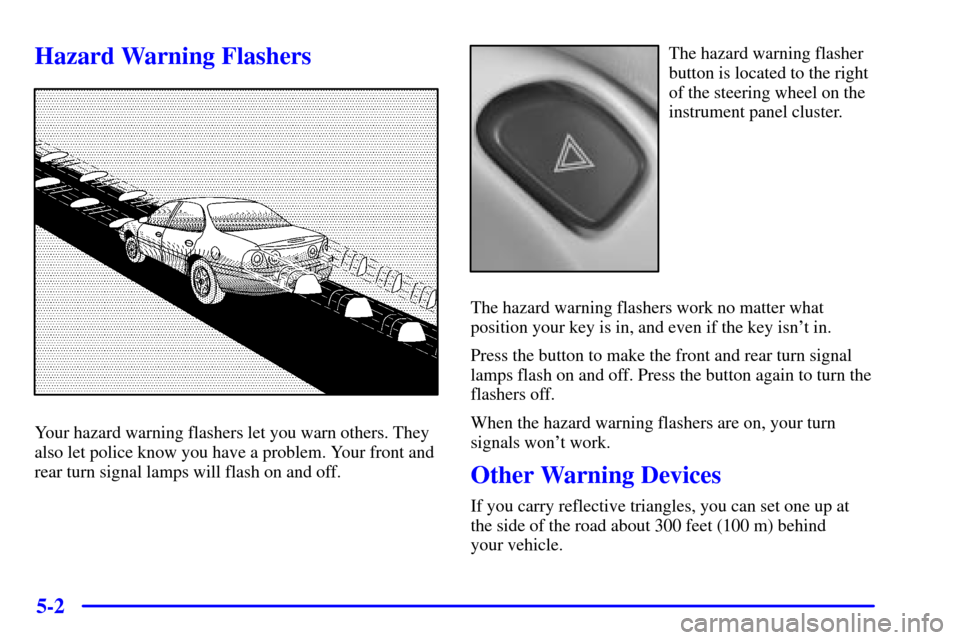
Your hazard warning flashers let you warn others. They
also let police know you have a problem. Your front and
rear turn signal lamps will flash on and off.
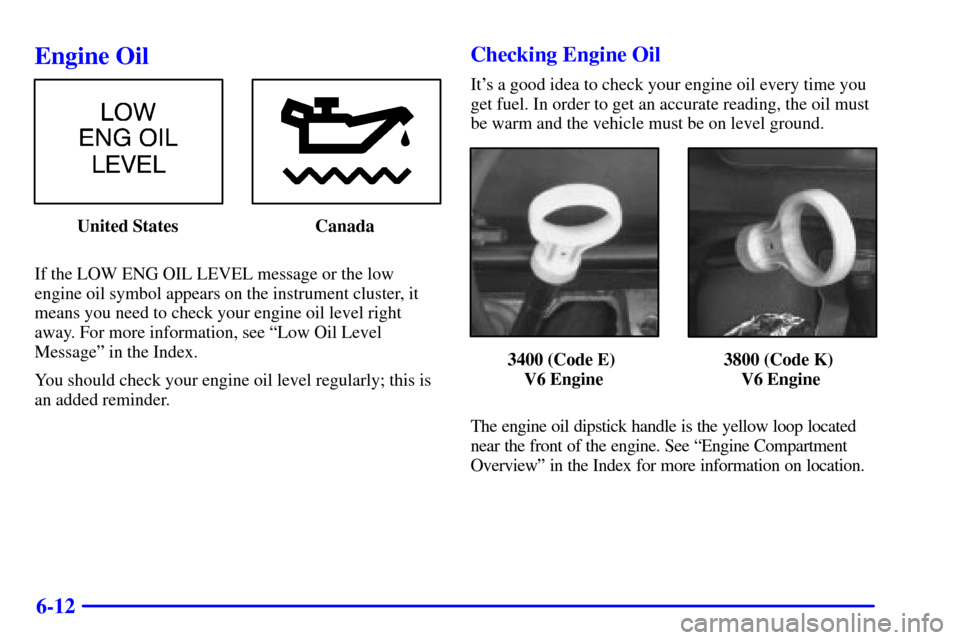
The hazard warning flasher
button is located to the right
of the steering wheel on the
instrument panel cluster.
The hazard warning flashers work no matter what
position your key is in, and even if the key isn't in.
Press the button to make the front and rear turn signal
lamps flash on and off. Press the button again to turn the
flashers off.
When the hazard warning flashers are on, your turn
signals won't work.
Other Warning Devices
If you carry reflective triangles, you can set one up at
the side of the road about 300 feet (100 m) behind
your vehicle.
Page 263 of 397
5-10
Towing Your Vehicle
Consult your dealer or a professional towing service
if you need to have your disabled vehicle towed.
See ªRoadside Assistanceº in the Index. If you
want to tow your vehicle behind another vehicle for
recreational purposes (such as behind a motorhome),
see ªRecreational Vehicle Towingº in the Index.
Engine Overheating
You will find a coolant temperature gage and a warning
message about a hot engine on your instrument panel
cluster. See ªEngine Coolant Temperature Gageº and
ªHot Coolant Temperature Messageº in the Index.
You also have a low coolant message on your instrument
panel cluster. See ªLow Coolant Level Messageº in
the Index.
Overheated Engine Protection
Operating Mode
This emergency operating mode allows your vehicle
to be driven to a safe place in an emergency situation.
If an overheated engine condition exists, an overheat
protection mode which alternates firing groups of
cylinders helps prevent engine damage. In this mode,
you will notice a significant loss in power and engine
performance. The low coolant light may come on and
the temperature gage will indicate an overheat condition
exists. Driving extended miles (km) and/or towing
a trailer in the overheat protection mode should
be avoided.
NOTICE:
After driving in the overheated engine protection
operating mode, to avoid engine damage, allow
the engine to cool before attempting any repair.
The engine oil will be severely degraded. Repair
the cause of coolant loss, change the oil and reset
the oil life system. See ªEngine Oilº in the Index.
Page 301 of 397
6-12
Engine Oil
United States Canada
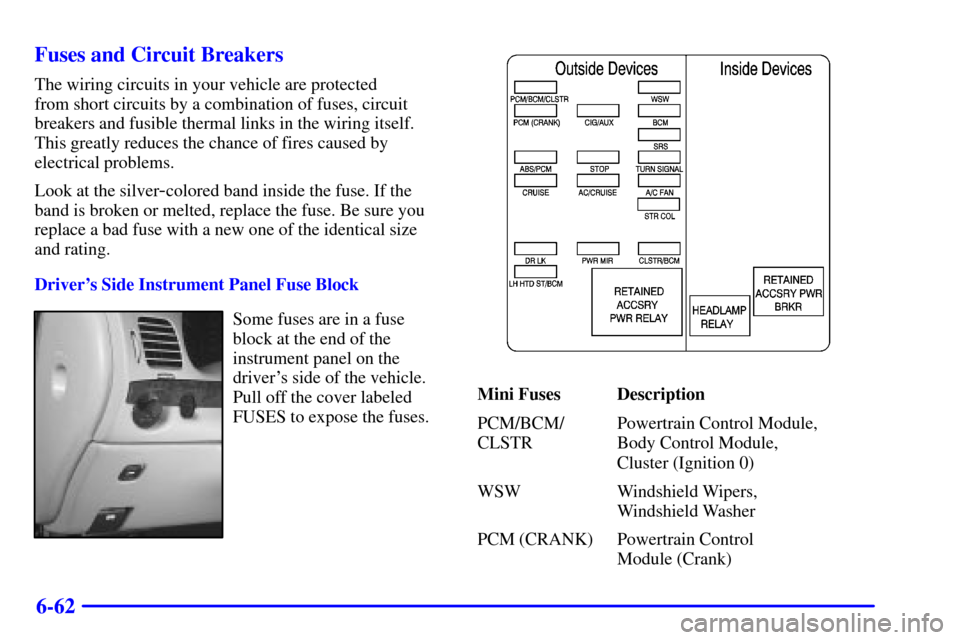
If the LOW ENG OIL LEVEL message or the low
engine oil symbol appears on the instrument cluster, it
means you need to check your engine oil level right
away. For more information, see ªLow Oil Level
Messageº in the Index.
You should check your engine oil level regularly; this is
an added reminder.
Checking Engine Oil
It's a good idea to check your engine oil every time you
get fuel. In order to get an accurate reading, the oil must
be warm and the vehicle must be on level ground.
3400 (Code E)
V6 Engine3800 (Code K)
V6 Engine
The engine oil dipstick handle is the yellow loop located
near the front of the engine. See ªEngine Compartment
Overviewº in the Index for more information on location.
Page 351 of 397
6-62 Fuses and Circuit Breakers
The wiring circuits in your vehicle are protected
from short circuits by a combination of fuses, circuit
breakers and fusible thermal links in the wiring itself.
This greatly reduces the chance of fires caused by
electrical problems.
Look at the silver
-colored band inside the fuse. If the
band is broken or melted, replace the fuse. Be sure you
replace a bad fuse with a new one of the identical size
and rating.
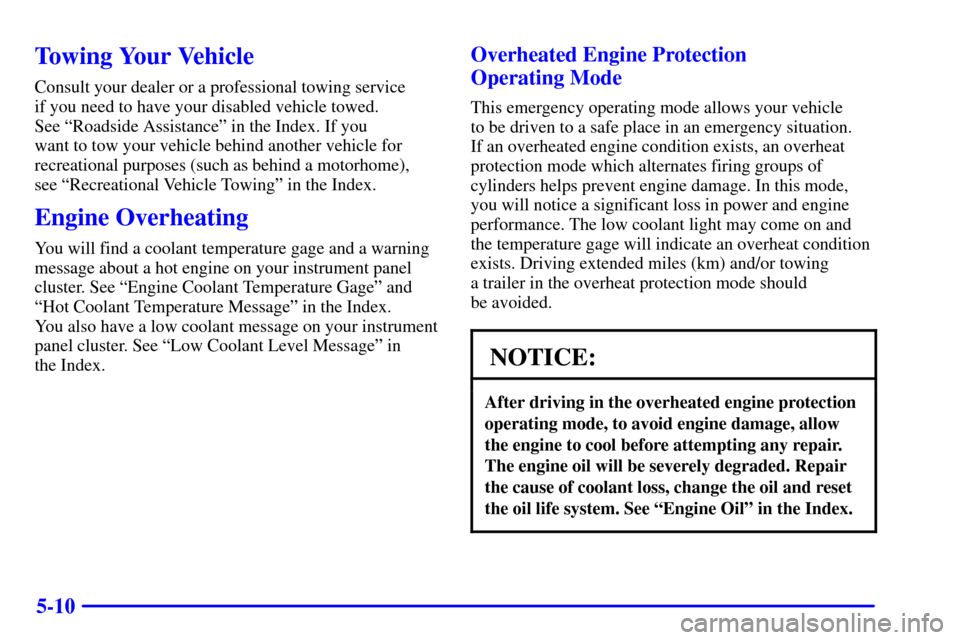
Driver's Side Instrument Panel Fuse Block
Some fuses are in a fuse
block at the end of the
instrument panel on the
driver's side of the vehicle.
Pull off the cover labeled
FUSES to expose the fuses.
Mini Fuses Description
PCM/BCM/
CLSTRPowertrain Control Module,
Body Control Module,
Cluster (Ignition 0)
WSW Windshield Wipers,
Windshield Washer
PCM (CRANK) Powertrain Control
Module (Crank)