Page 260 of 357
6-10 Engine Compartment Overview
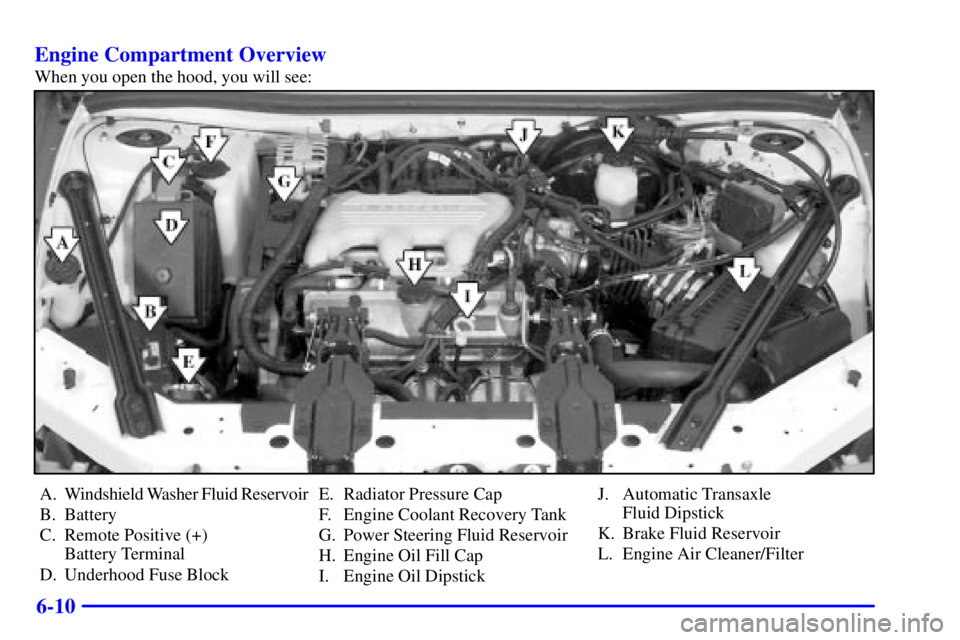
When you open the hood, you will see:
A. Windshield Washer Fluid Reservoir
B. Battery
C. Remote Positive (+)
Battery Terminal
D. Underhood Fuse BlockE. Radiator Pressure Cap
F. Engine Coolant Recovery Tank
G. Power Steering Fluid Reservoir
H. Engine Oil Fill Cap
I. Engine Oil DipstickJ. Automatic Transaxle
Fluid Dipstick
K. Brake Fluid Reservoir
L. Engine Air Cleaner/Filter
Page 275 of 357
6-25
CAUTION:
You can be burned if you spill coolant on hot
engine parts. Coolant contains ethylene glycol,
and it will burn if the engine parts are hot
enough. Don't spill coolant on a hot engine.
Occasionally check the coolant level in the radiator.
For information on how to add coolant to the radiator,
see ªCooling Systemº in the Index.
Radiator Pressure Cap
NOTICE:
Your radiator cap is a 15 psi (105 kPa)
pressure
-type cap and must be tightly installed to
prevent coolant loss and possible engine damage
from overheating. Be sure the arrows on the cap
line up with the overflow tube on the radiator
filler neck.
The radiator pressure cap is located near the front of
the engine compartment on the passenger's side of
the vehicle.
See ªEngine Compartment Overviewº in the Index for
more information on location.
Power Steering Fluid
The power steering fluid reservoir is located on the
passenger's side of the vehicle at the back of the
engine compartment.
Page 277 of 357
6-27
Windshield Washer Fluid
What to Use
When you need windshield washer fluid, be sure to read
the manufacturer's instructions before use. If you will be
operating your vehicle in an area where the temperature
may fall below freezing, use a fluid that has sufficient
protection against freezing. See ªEngine Compartment
Overviewº in the Index for reservoir location.
Adding Washer Fluid
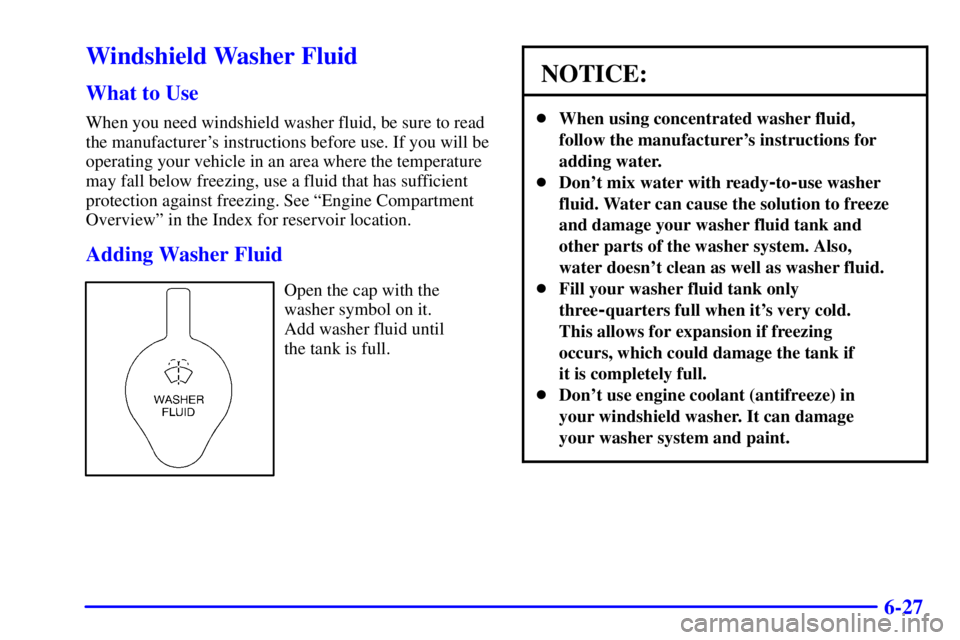
Open the cap with the
washer symbol on it.
Add washer fluid until
the tank is full.
NOTICE:
�When using concentrated washer fluid,
follow the manufacturer's instructions for
adding water.
�Don't mix water with ready
-to-use washer
fluid. Water can cause the solution to freeze
and damage your washer fluid tank and
other parts of the washer system. Also,
water doesn't clean as well as washer fluid.
�Fill your washer fluid tank only
three
-quarters full when it's very cold.
This allows for expansion if freezing
occurs, which could damage the tank if
it is completely full.
�Don't use engine coolant (antifreeze) in
your windshield washer. It can damage
your washer system and paint.