Page 5 of 104
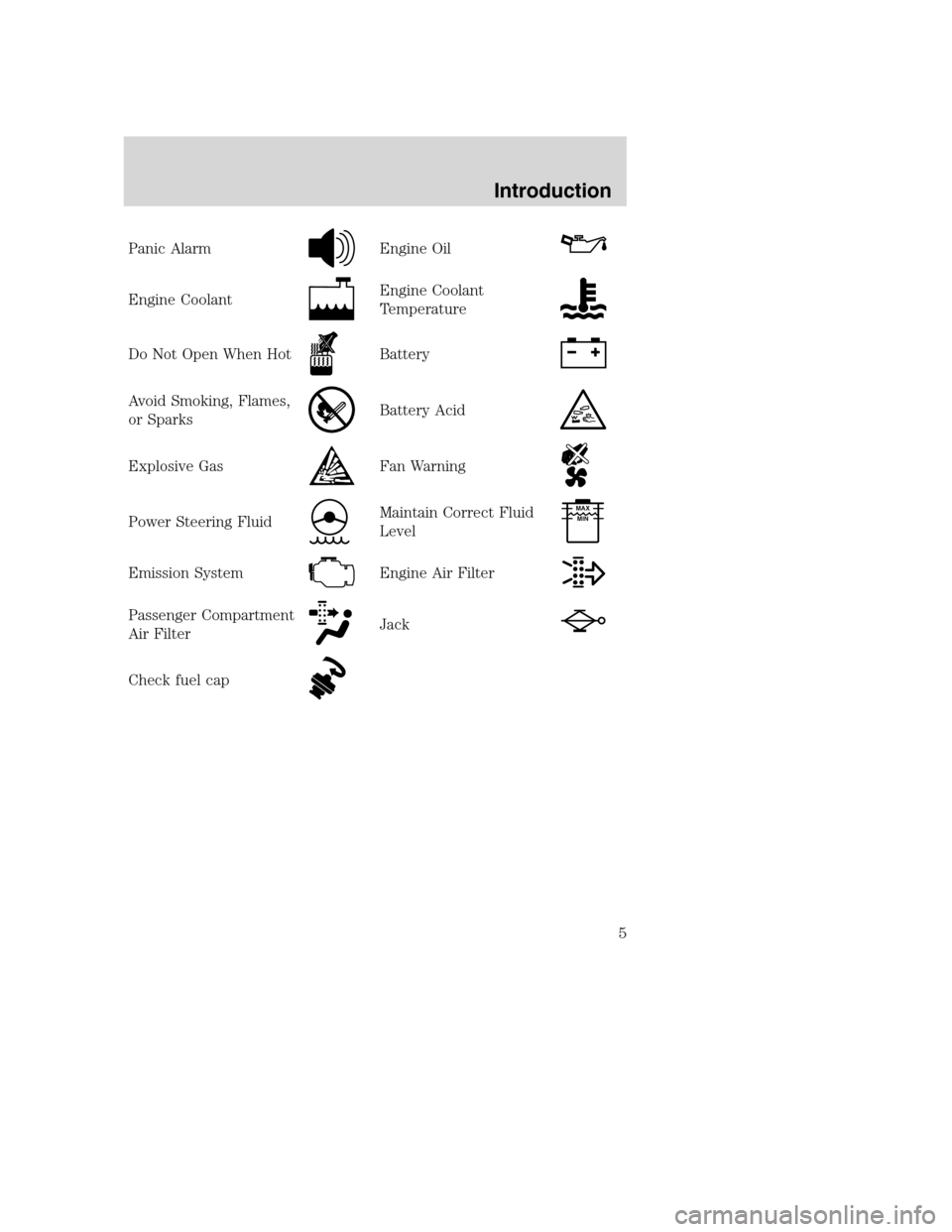
Panic AlarmEngine Oil
Engine CoolantEngine Coolant
Temperature
Do Not Open When HotBattery
Avoid Smoking, Flames,
or SparksBattery Acid
Explosive GasFan Warning
Power Steering FluidMaintain Correct Fluid
LevelMAX
MIN
Emission SystemEngine Air Filter
Passenger Compartment
Air FilterJack
Check fuel cap
Introduction
5
Page 6 of 104
WARNING LIGHTS AND CHIMES
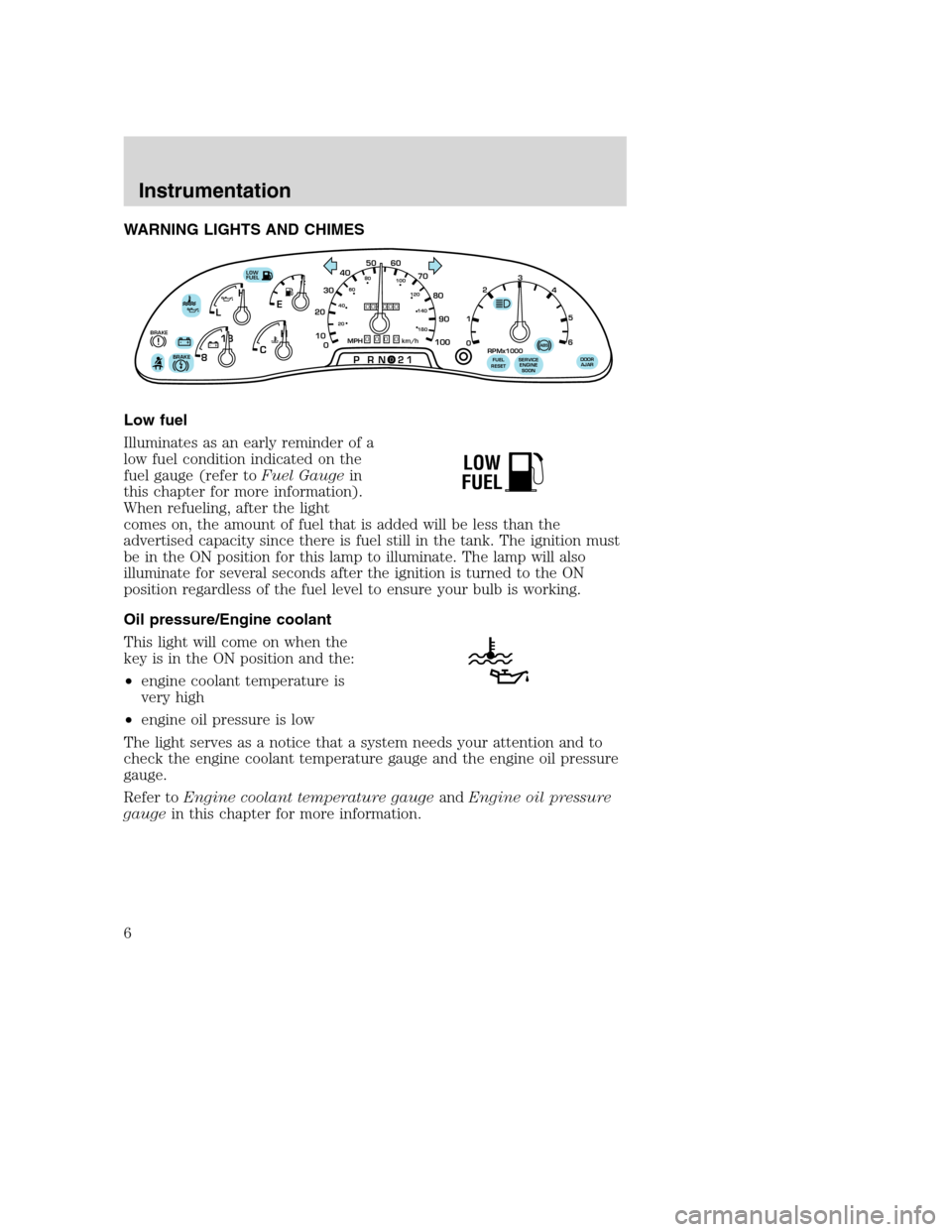
Low fuel
Illuminates as an early reminder of a
low fuel condition indicated on the
fuel gauge (refer toFuel Gaugein
this chapter for more information).
When refueling, after the light
comes on, the amount of fuel that is added will be less than the
advertised capacity since there is fuel still in the tank. The ignition must
be in the ON position for this lamp to illuminate. The lamp will also
illuminate for several seconds after the ignition is turned to the ON
position regardless of the fuel level to ensure your bulb is working.
Oil pressure/Engine coolant
This light will come on when the
key is in the ON position and the:
•engine coolant temperature is
very high
•engine oil pressure is low
The light serves as a notice that a system needs your attention and to
check the engine coolant temperature gauge and the engine oil pressure
gauge.
Refer toEngine coolant temperature gaugeandEngine oil pressure
gaugein this chapter for more information.
F
E
CH H
L
18
8
PRN 21LOW
FUEL
BRAKE!+ -+ -000000000
0
50
60
70
20
10
0 3040
80
90
100
20406080
100
120
140
180
MPH km/h
1
02
RPMx1000
3
4
5
6
SERVICE
ENGINE
SOONABSFUEL
RESETDOOR
AJARBRAKE
LOW
FUEL
Instrumentation
6
Page 64 of 104
ENGINE COOLANT
Checking engine coolant
Your engine’s cooloing system has been factory-filled with a 50/50
mixture of distilled water and Ford G05 Engine Coolant per Ford
Specification WSS-M97B51–A1.
A50/50 mixtureof distilled water and Ford G05 Engine Coolant
provides:
•maximum cooling system efficiency.
•freeze protection down to -36° C (-34° F).
•boiling protection up to 129° C (265° F).
•protection against rust and other forms of corrosion.
•an accurate temperature readout from the engine coolant
gauge.
The engine coolant must be maintained at the correct fluid level
and concentration to work properly. If the engine coolant fluid
level and concentration is not maintained correctly, damage to
the engine and cooling system may result.
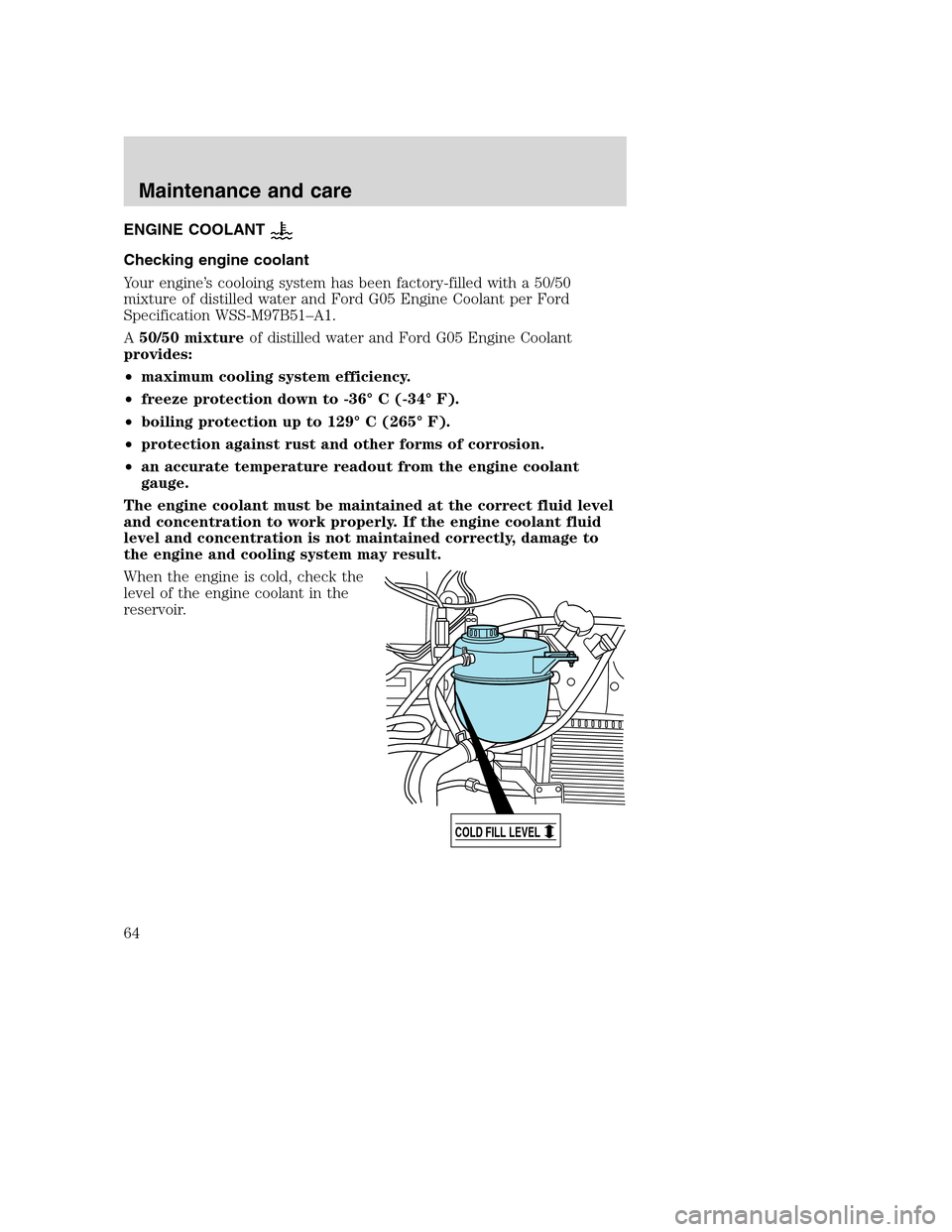
When the engine is cold, check the
level of the engine coolant in the
reservoir.
COLD FILL LEVEL
Maintenance and care
64
Page 86 of 104
•Combine errands and minimize stop-and-go driving.
Maintenance
•Keep tires properly inflated and use only recommended size.
•Operating a vehicle with the wheels out of alignment will reduce fuel
economy.
•Use recommended engine oil. Refer toLubricant Specifications.
•Perform all regularly scheduled maintenance items. Follow the
recommended maintenance schedule and owner maintenance checks
found in your vehicle scheduled maintenance guide.
Conditions
•Heavily loading a vehicle or towing a trailer may reduce fuel economy
at any speed.
•Carrying unnecessary weight may reduce fuel economy (approximately
0.4 km/L [1 mpg] is lost for every 180 kg [400 lb] of weight carried).
•Adding certain accessories to your vehicle (for example bug
deflectors, rollbars/light bars, running boards, ski/luggage racks) may
reduce fuel economy.
•Using fuel blended with alcohol may lower fuel economy.
•Fuel economy may decrease with lower temperatures during the first
12–16 km (8–10 miles) of driving.
•Driving on flat terrain offers improved fuel economy as compared to
driving on hilly terrain.
•Transmissions give their best fuel economy when operated in the top
cruise gear and with steady pressure on the gas pedal.
•Close windows for high speed driving.
EPA window sticker
Every new vehicle should have the EPA window sticker. Contact your
dealer if the window sticker is not supplied with your vehicle. The EPA
window sticker should be your guide for the fuel economy comparisons
with other vehicles.
It is important to note the box in the lower left corner of the window
sticker. These numbers represent the Range of L/100 km (MPG)
expected on the vehicle under optimum conditions. Your fuel economy
may vary depending upon the method of operation and conditions.
Maintenance and care
86
Page 101 of 104
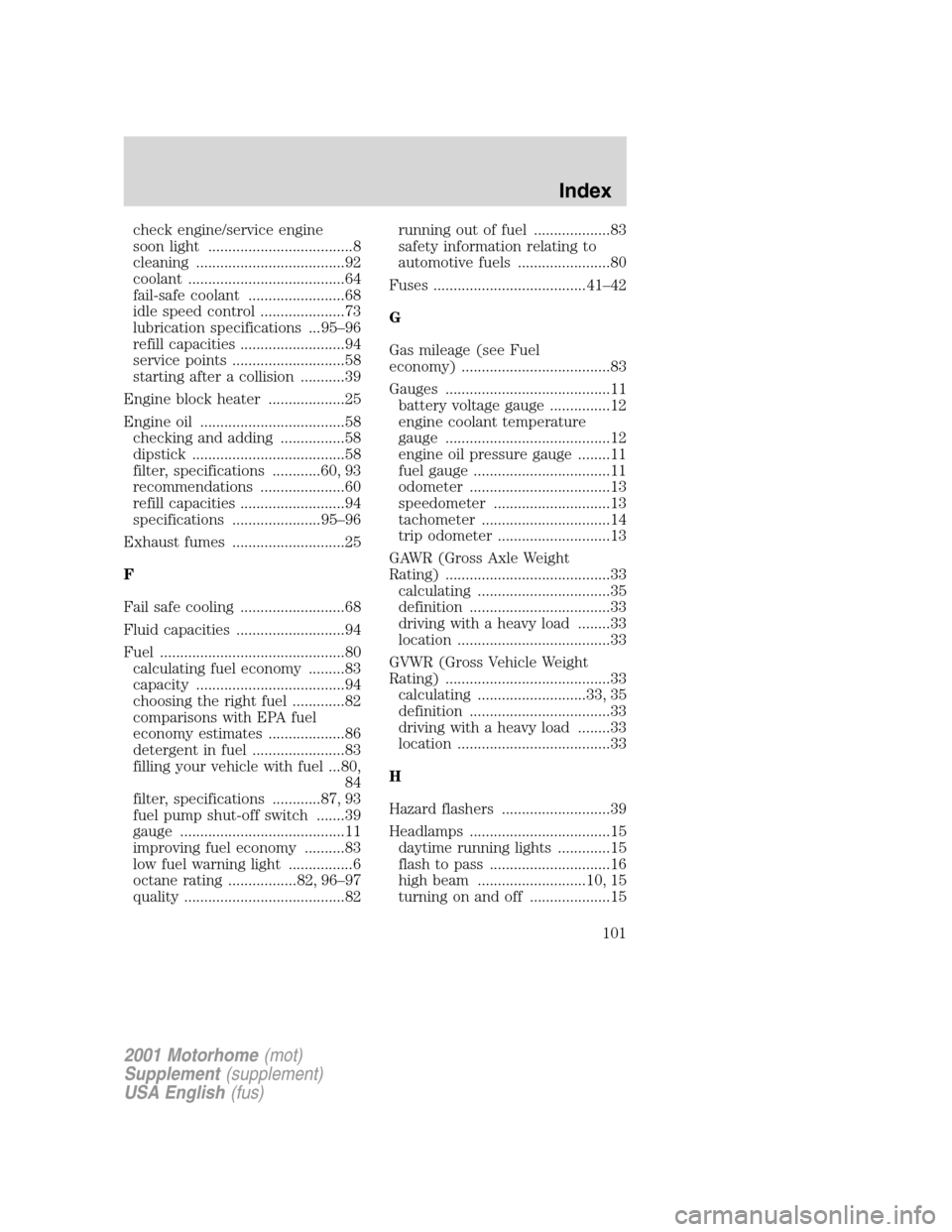
check engine/service engine
soon light ....................................8
cleaning .....................................92
coolant .......................................64
fail-safe coolant ........................68
idle speed control .....................73
lubrication specifications ...95–96
refill capacities ..........................94
service points ............................58
starting after a collision ...........39
Engine block heater ...................25
Engine oil ....................................58
checking and adding ................58
dipstick ......................................58
filter, specifications ............60, 93
recommendations .....................60
refill capacities ..........................94
specifications ......................95–96
Exhaust fumes ............................25
F
Fail safe cooling ..........................68
Fluid capacities ...........................94
Fuel ..............................................80
calculating fuel economy .........83
capacity .....................................94
choosing the right fuel .............82
comparisons with EPA fuel
economy estimates ...................86
detergent in fuel .......................83
filling your vehicle with fuel ...80,
84
filter, specifications ............87, 93
fuel pump shut-off switch .......39
gauge .........................................11
improving fuel economy ..........83
low fuel warning light ................6
octane rating .................82, 96–97
quality ........................................82running out of fuel ...................83
safety information relating to
automotive fuels .......................80
Fuses ......................................41–42
G
Gas mileage (see Fuel
economy) .....................................83
Gauges .........................................11
battery voltage gauge ...............12
engine coolant temperature
gauge .........................................12
engine oil pressure gauge ........11
fuel gauge ..................................11
odometer ...................................13
speedometer .............................13
tachometer ................................14
trip odometer ............................13
GAWR (Gross Axle Weight
Rating) .........................................33
calculating .................................35
definition ...................................33
driving with a heavy load ........33
location ......................................33
GVWR (Gross Vehicle Weight
Rating) .........................................33
calculating ...........................33, 35
definition ...................................33
driving with a heavy load ........33
location ......................................33
H
Hazard flashers ...........................39
Headlamps ...................................15
daytime running lights .............15
flash to pass ..............................16
high beam ...........................10, 15
turning on and off ....................15
2001 Motorhome(mot)
Supplement(supplement)
USA English(fus)
Index
101