Page 71 of 216
Vehicle sensitive mode
The vehicle sensitive mode is the normal retractor mode, allowing free
shoulder belt length adjustment to your movements and locking in
response to vehicle movement. For example, if the driver brakes
suddenly or turns a corner sharply, or the vehicle receives an impact of
approximately 8 km/h (5 mph) or more, the combination safety belts will
lock to help reduce forward movement of the driver and passengers.
Automatic locking mode
In this mode, the shoulder belt is automatically pre-locked. The belt will
still retract to remove any slack in the shoulder belt.
The automatic locking mode is not available on the driver safety belt.
When to use the automatic locking mode
²Any timea child safety seat is installed in a passenger front or
outboard rear seating position (if equipped). Children 12 years old and
under should be properly restrained in the rear seat whenever
possible. Refer toSafety Restraints for ChildrenorSafety Seats for
Childrenlater in this chapter.
How to use the automatic locking mode
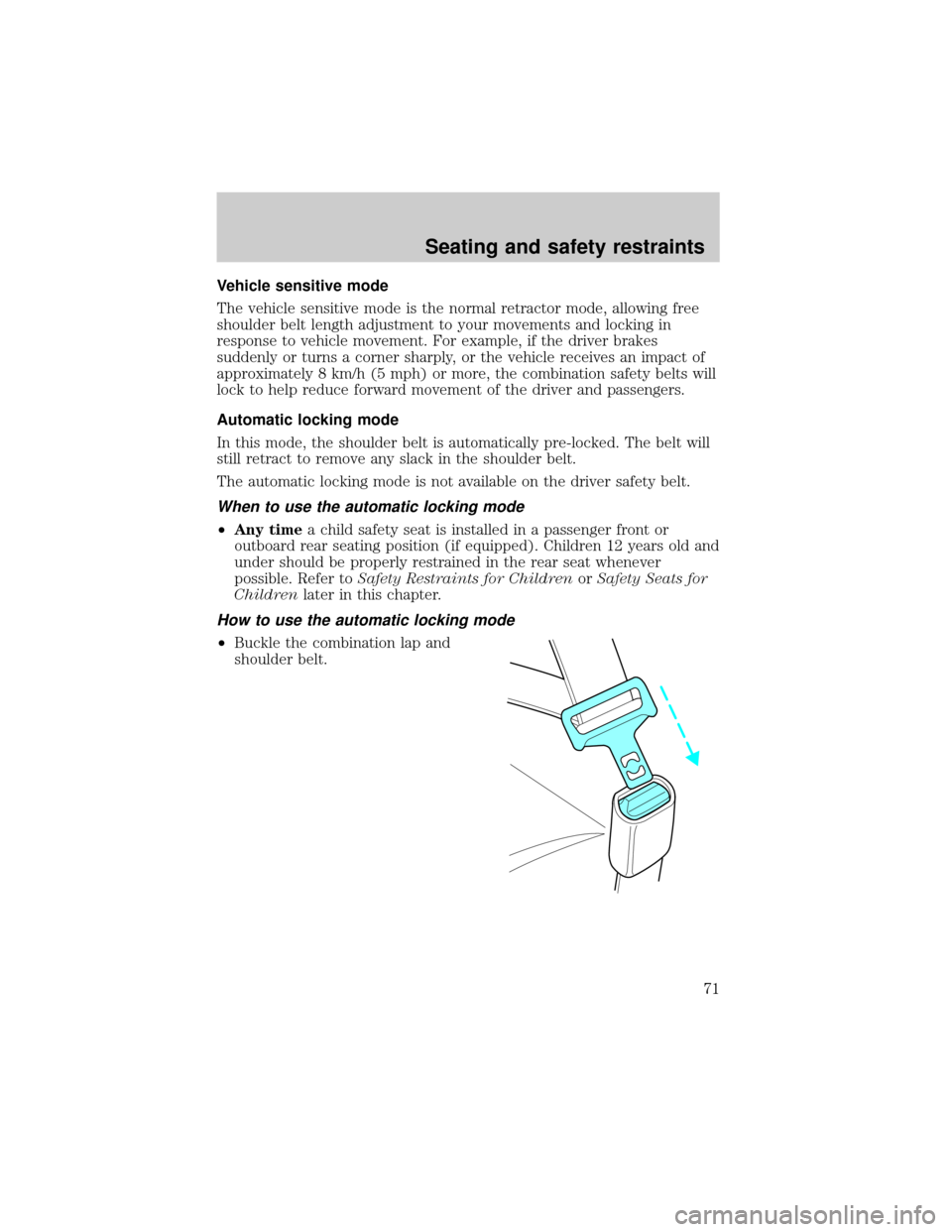
²Buckle the combination lap and
shoulder belt.
Seating and safety restraints
71
Page 100 of 216
The BRAKE warning lamp in the
instrument cluster illuminates and
remains illuminated (when the
ignition is turned ON) until the
parking brake is released.
The parking brake is not recommended to stop a moving vehicle.
However, if the normal brakes fail, the parking brake can be used to stop
your vehicle in an emergency. Since the parking brake applies only the
rear brakes, the vehicle's stopping distance will increase greatly and the
handling of your vehicle will be adversely affected.
Always set the parking brake fully and make sure that the
gearshift is securely latched in P (Park) (automatic transaxle) or
in 1 (First) (manual transaxle).
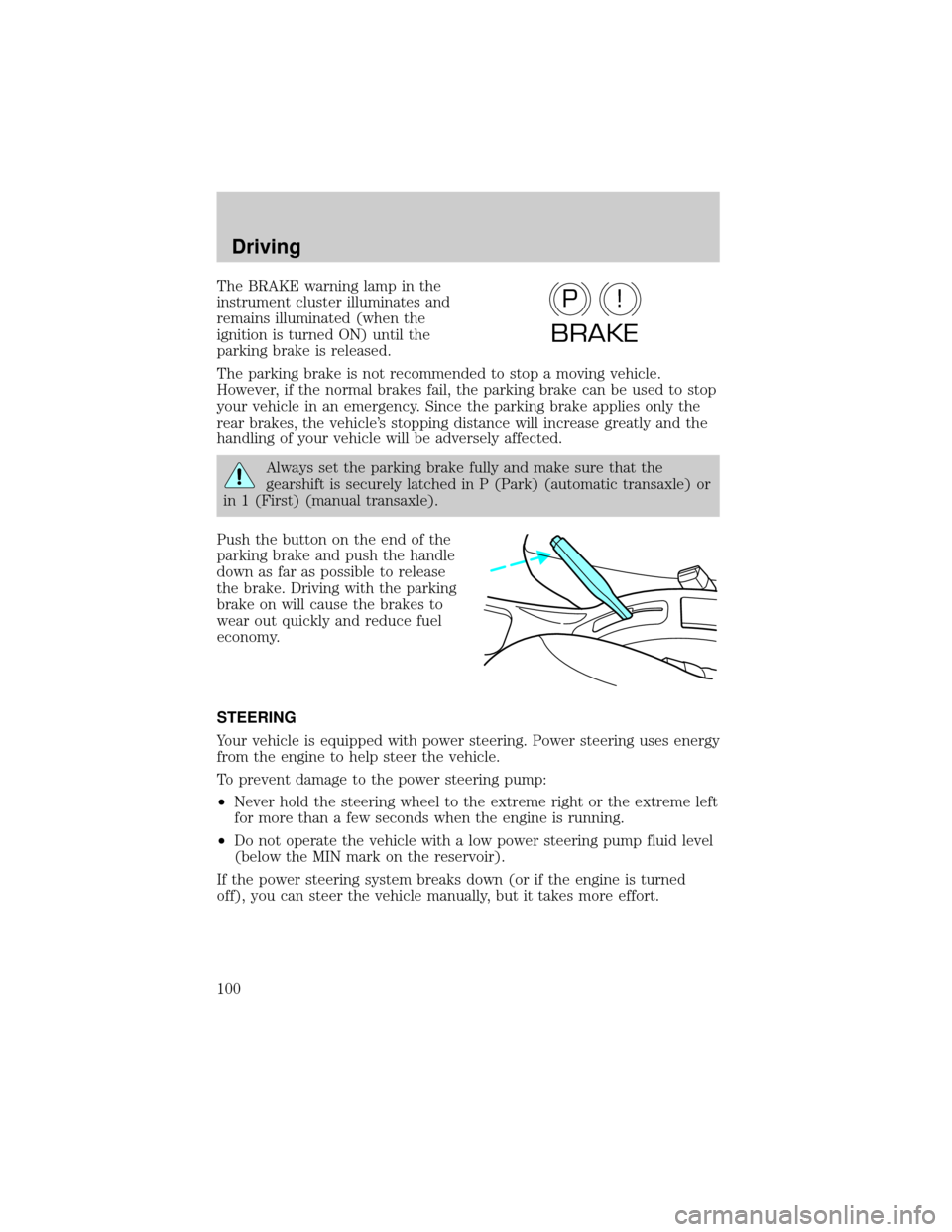
Push the button on the end of the
parking brake and push the handle
down as far as possible to release
the brake. Driving with the parking
brake on will cause the brakes to
wear out quickly and reduce fuel
economy.
STEERING
Your vehicle is equipped with power steering. Power steering uses energy
from the engine to help steer the vehicle.
To prevent damage to the power steering pump:
²Never hold the steering wheel to the extreme right or the extreme left
for more than a few seconds when the engine is running.
²Do not operate the vehicle with a low power steering pump fluid level
(below the MIN mark on the reservoir).
If the power steering system breaks down (or if the engine is turned
off), you can steer the vehicle manually, but it takes more effort.
P!
BRAKE
Driving
100
Page 209 of 216

A
Air bag supplemental restraint
system ....................................79±80
and child safety seats ..............82
description ................................80
disposal ......................................84
driver air bag ............................82
indicator light .....................10, 84
operation ...................................82
passenger air bag .....................82
Air cleaner filter .......159±160, 189
Air conditioning ..........................38
Antifreeze (see Engine
coolant) .....................................148
Anti-lock brake system (see
Brakes) ..................................98±99
Anti-theft system ........................62
arming the system ..............62±63
disarming a triggered
system .................................63±64
disarming an untriggered
system .......................................63
warning light .............................11
Audio system (see Radio) .........19
Automatic transaxle .................101
driving with .............................103
fluid, adding ............................154
fluid, checking ........................154
fluid, refill capacities ..............190
fluid, specification ..................192
Axle
lubricant specifications ..........191
B
Battery .......................................157
acid, treating emergencies .....157charging system warning
light ............................................11
jumping a disabled battery ....129
maintenance-free ....................157
replacement, specifications ...189
servicing ..................................157
Belt minder .................................75
Brakes ..........................................98
anti-lock ...............................98±99
anti-lock brake system
(ABS) warning light ...........11, 99
brake warning light ..................10
fluid, checking and adding ....145
fluid, refill capacities ..............190
fluid, specifications .........191±192
lubricant specifications ..191±192
parking ......................................99
shift interlock ..........................101
Break-in period .............................3
C
Capacities for refilling fluids ....190
Certification Label ....................194
Child safety restraints ................85
child safety belts ......................85
Child safety seats ........................86
attaching with tether straps ....90
in front seat ..............................88
in rear seat ................................88
Cleaning your vehicle ...............184
engine compartment ..............186
exterior ............................184±185
exterior lamps .........................186
instrument cluster lens ..........187
instrument panel ....................187
interior .............................187±188
mirrors .....................................185
plastic parts ............................185
Index
209