Page 185 of 232
The temperature grade for this tire is established for a tire that
is properly inflated and not overloaded. Excessive speed,
underinflation, or excessive loading, either separately or in
combination, can cause heat buildup and possible tire failure.
SERVICING YOUR TIRES
Checking the tire pressure
²Use an accurate tire pressure gauge.
²Check the tire pressure when tires are cold, after the vehicle has been
parked for at least one hour or has been driven less than 5 km (3
miles).
²Adjust tire pressure to recommended specifications found on the
Certification Label.
Improperly inflated tires can affect vehicle handling and can fail
suddenly, possibly resulting in loss of vehicle control.
Tire rotation
Because your vehicle's tires perform different jobs, they often wear
differently. To make sure your tires wear evenly and last longer, rotate
them as indicated in the Scheduled Maintenance Guide. If you notice
that the tires wear unevenly, have them checked.
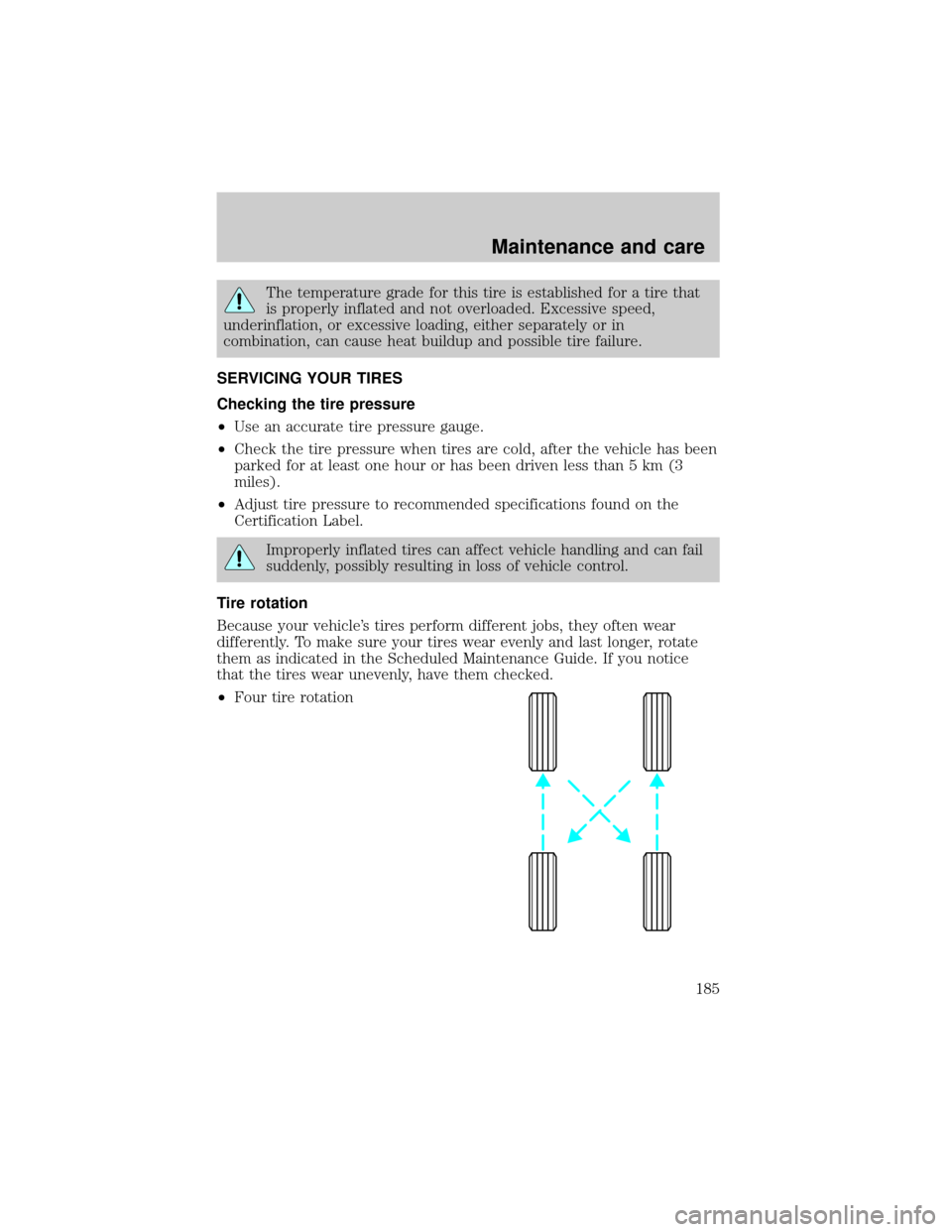
²Four tire rotation
Maintenance and care
185
Page 186 of 232
Replacing the tires
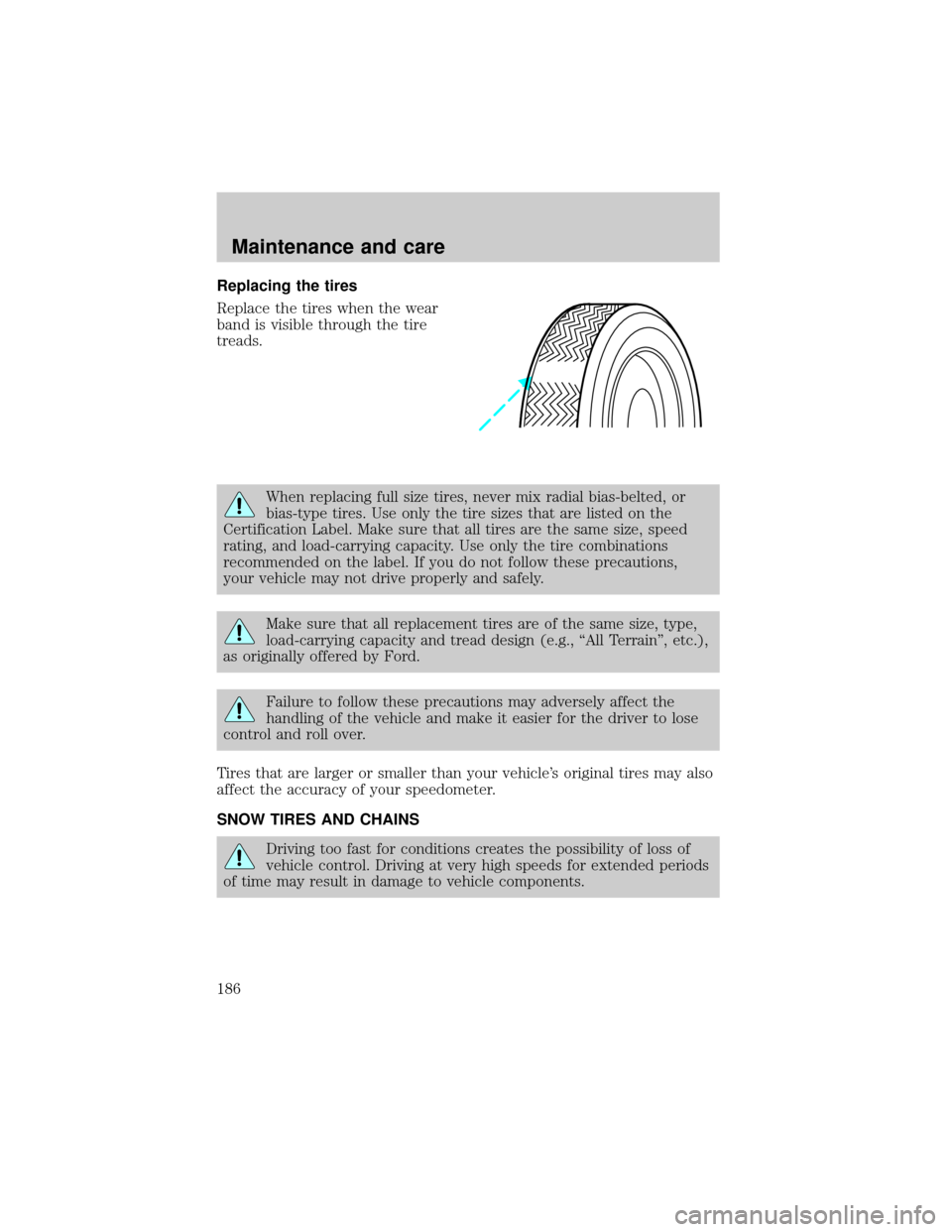
Replace the tires when the wear
band is visible through the tire
treads.
When replacing full size tires, never mix radial bias-belted, or
bias-type tires. Use only the tire sizes that are listed on the
Certification Label. Make sure that all tires are the same size, speed
rating, and load-carrying capacity. Use only the tire combinations
recommended on the label. If you do not follow these precautions,
your vehicle may not drive properly and safely.
Make sure that all replacement tires are of the same size, type,
load-carrying capacity and tread design (e.g., ªAll Terrainº, etc.),
as originally offered by Ford.
Failure to follow these precautions may adversely affect the
handling of the vehicle and make it easier for the driver to lose
control and roll over.
Tires that are larger or smaller than your vehicle's original tires may also
affect the accuracy of your speedometer.
SNOW TIRES AND CHAINS
Driving too fast for conditions creates the possibility of loss of
vehicle control. Driving at very high speeds for extended periods
of time may result in damage to vehicle components.
Maintenance and care
186
Page 187 of 232
Snow tires must be the same size and grade as the tires you
currently have on your vehicle.
Do not use any type of tire chains on this vehicle. This includes both
conventional and cable-type chains.
The tires on your vehicle have all-weather treads that provide traction in
rain or snow. However, during the winter months in some climates, you
may need to use snow tires.
WHAT YOU SHOULD KNOW ABOUT AUTOMOTIVE FUELS
Important safety precautions
Do not overfill the fuel tank. The pressure in an overfilled tank
may cause leakage and lead to fuel spray and fire.
The fuel system may be under pressure. If the fuel filler cap is
venting vapor or if you hear a hissing sound, wait until it stops
before completely removing the fuel filler cap. Otherwise, fuel may
spray out and injure you or others.
If you do not use the proper fuel filler cap, excessive pressure or
vacuum in the fuel tank may damage the fuel system or cause
the fuel system to work improperly in a collision, which may result in
possible personal injury.
Automotive fuels can cause serious injury or death if misused or
mishandled.
Gasoline may contain benzene, which is a cancer-causing agent.
Maintenance and care
187
Page 194 of 232

²Using the air conditioner or defroster may reduce fuel economy.
²You may want to turn off the speed control in hilly terrain if
unnecessary shifting between third and fourth gear occurs.
Unnecessary shifting of this type could result in reduced fuel
economy.
²Warming up a vehicle on cold mornings is not required and may
reduce fuel economy.
²Resting your foot on the brake pedal while driving may reduce fuel
economy.
²Combine errands and minimize stop-and-go driving.
Maintenance
²Keep tires properly inflated and use only recommended size.
²Operating a vehicle with the wheels out of alignment will reduce fuel
economy.
²Use recommended engine oil. Refer toLubricant Specifications.
²Perform all regularly scheduled maintenance items. Follow the
recommended maintenance schedule and owner maintenance checks
found in your vehicle Scheduled Maintenance Guide.
Conditions
²Heavily loading a vehicle or towing a trailer may reduce fuel economy
at any speed.
²Carrying unnecessary weight may reduce fuel economy (approximately
0.4 km/L [1 mpg] is lost for every 180 kg [400 lb] of weight carried).
²Adding certain accessories to your vehicle (for example bug
deflectors, rollbars/light bars, running boards, ski/luggage racks) may
reduce fuel economy.
²Using fuel blended with alcohol may lower fuel economy.
²Fuel economy may decrease with lower temperatures during the first
12±16 km (8±10 miles) of driving.
²Driving on flat terrain offers improved fuel economy as compared to
driving on hilly terrain.
²Transmissions give their best fuel economy when operated in the top
cruise gear and with steady pressure on the gas pedal.
²Close windows for high speed driving.
Maintenance and care
194
Page 230 of 232

SecuriLock passive
anti-theft system ...............88,89,90
Servicing your vehicle ..............162
Spark plugs,
specifications ......................209,211
Specification chart,
lubricants ............................210,211
Speed control ..............................49
Speedometer ...............................13
Starting your vehicle .........120,122
jump starting ..........................156
Steering
speed sensitive .......................129
Steering wheel
controls ......................................48
tilting .........................................53
Tachometer .................................13
Tilt steering wheel ......................53
Tires ........152,181,182,183,184,185
changing ...........................152,153
checking the pressure ............185
replacing ..................................186
rotating ....................................185
snow tires and chains ............186
tire grades ...............................184
treadwear ................................184
Towing .......................................185
recreational towing .................140
wrecker ....................................161
Traction control ........................127off light ......................................11
Transaxle
automatic operation ...............130
fluid, refill capacities ..............209
lubricant specifications ..........211
Transmission
fluid, checking and adding
(automatic) .............................174
lubricant specifications ..........210
Trunk ...........................................91
remote release .....................77,82
Turn signal .............................10,48
Vehicle dimensions ...................211
Vehicle Identification
Number (VIN) ...........................213
Vehicle loading ..........................135
Ventilating your vehicle ...........124
Warning chimes ......................11,12
Warning lights (see Lights) .........8
Washer fluid ..............................169
Water, Driving through .............135
Windows
power .........................................75
Windshield washer
fluid and wipers
checking and adding fluid .....169
checking and cleaning ............181
operation ...................................47
replacing wiper blades ...........181
Wrecker towing .........................161
Index
230