2000 FORD WINDSTAR heating
[x] Cancel search: heatingPage 164 of 280
Guarding against exhaust fumes
Although odorless and colorless, carbon monoxide is present in exhaust
fumes. Take precautions to avoid its dangerous effects.
If you ever smell exhaust fumes of any kind inside your vehicle,
have your dealer inspect and fix your vehicle immediately. Do
not drive if you smell exhaust fumes. These fumes are harmful and
could kill you.
Have the exhaust and body ventilation systems checked whenever:
²the vehicle is raised for service.
²the sound of the exhaust system changes.
²the vehicle has been damaged in a collision.
Engine exhaust, some of its constituents, and certain vehicle
components contain or emit chemicals known to the State of
California to cause cancer, and birth defects or other reproductive
harm.
Important ventilating information
If the engine is idling while the vehicle is stopped in an open area for
long periods of time, open the windows at least 2.5 cm (one inch).
Adjust the heating or air conditioning (if equipped) to bring in fresh air.
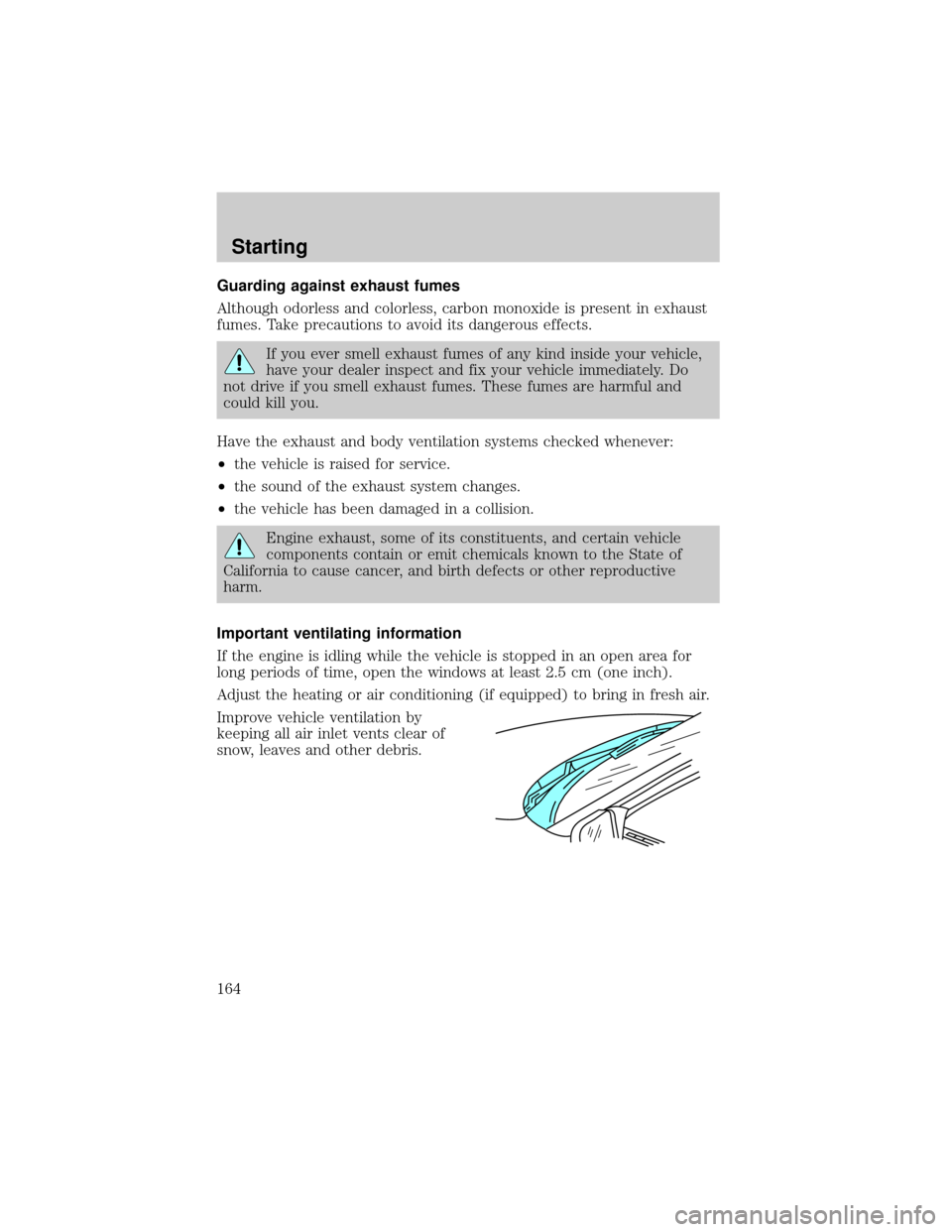
Improve vehicle ventilation by
keeping all air inlet vents clear of
snow, leaves and other debris.
Starting
164
Page 168 of 280

motor type of sound coming from the engine compartment and the
engine will not ªrev-upº when you push further on the accelerator. This
is normal system behavior.
If you should become stuck in snow or on a very slippery road surface,
try switching the Traction Controlysystem off with the traction control
switch located on the left hand side of the radio. This may allow excess
wheel spin to ªdigº the vehicle out or enable a successful ªrockingº
maneuver.
If the Traction Controlysystem is cycled excessively, the brake portion
of the system will shut down to prevent the front brakes from
overheating. A limited Traction Controlyfunction using only engine
torque reduction will still control wheels from over-spinning. When the
front brakes have cooled down, the system will again function normally.
Anti-lock braking is not affected by this condition and will function
normally during the cool down period.
If a system fault is detected, CHECK TRACTION CONTROL is displayed
on the message center, the ªTC OFFº warning indicator lamp is on and
your vehicle should be serviced.
STEERING
Your vehicle is equipped with power steering. Power steering uses energy
from the engine to help steer the vehicle.
To prevent damage to the power steering pump:
²Never hold the steering wheel to the extreme right or the extreme left
for more than a few seconds when the engine is running.
²Do not operate the vehicle with a low power steering pump fluid level.
If the power steering system breaks down (or if the engine is turned
off), you can steer the vehicle manually, but it takes more effort.
If the steering wanders or pulls, the condition could be caused by any of
the following:
²underinflated tire(s) on any wheel(s)
²high crown in center of road
²high crosswinds
²wheels out of alignment
²loose or worn components in steering linkage
Driving
168
Page 219 of 280
3. With the parking brake engaged and your foot on the brake pedal,
start the engine and move the gearshift lever through all of the gear
ranges. Allow sufficient time for each gear to engage.
4. Latch the gearshift lever in P (Park) and leave the engine running.
5. Remove the dipstick, wiping it clean with a clean, dry lint free rag. If
necessary, refer toIdentifying components in the engine compartment
in this chapter for the location of the dipstick.
6. Install the dipstick making sure it is fully seated in the filler tube.
7. Remove the dipstick and inspect the fluid level. The fluid should be in
the designated areas for normal operating temperature.
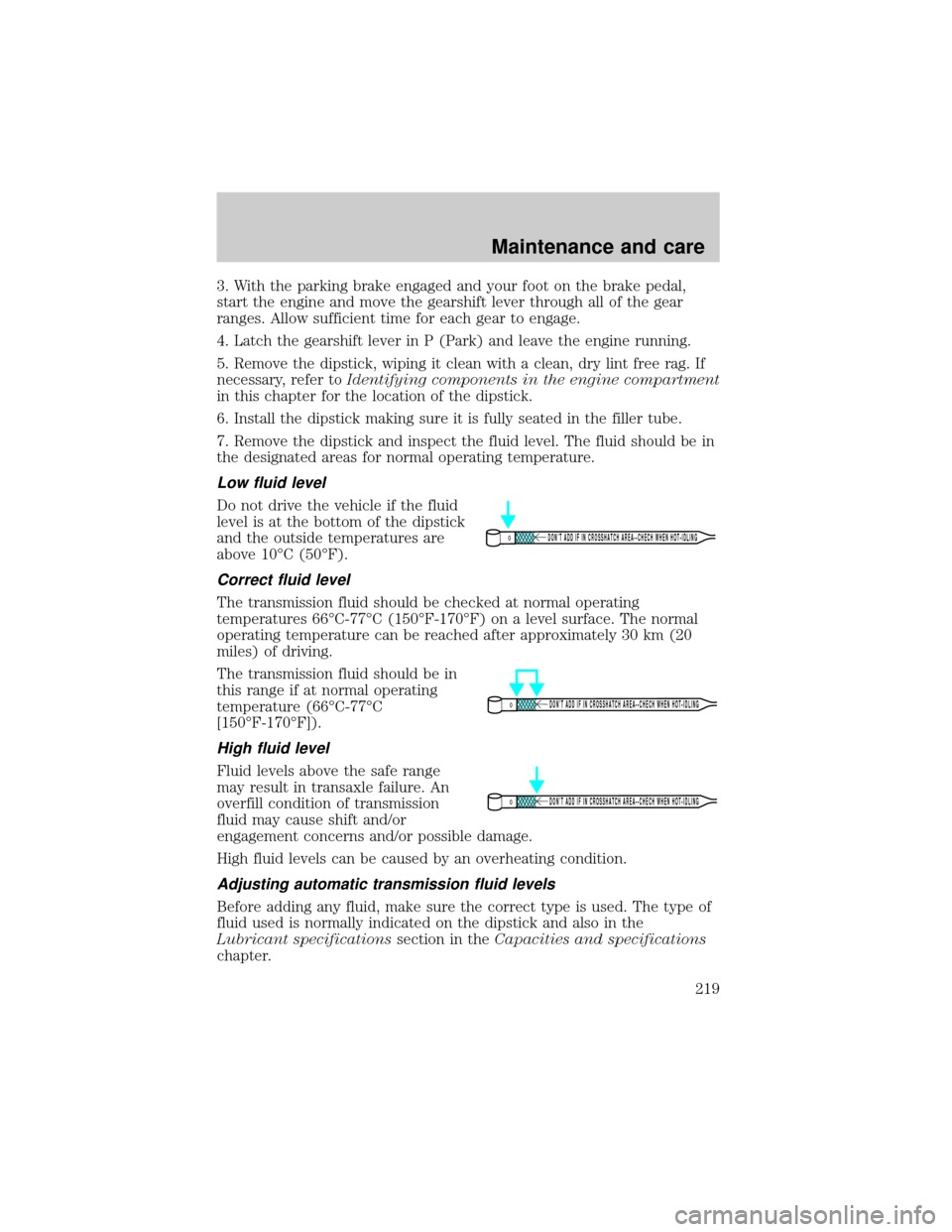
Low fluid level
Do not drive the vehicle if the fluid
level is at the bottom of the dipstick
and the outside temperatures are
above 10ÉC (50ÉF).
Correct fluid level
The transmission fluid should be checked at normal operating
temperatures 66ÉC-77ÉC (150ÉF-170ÉF) on a level surface. The normal
operating temperature can be reached after approximately 30 km (20
miles) of driving.
The transmission fluid should be in
this range if at normal operating
temperature (66ÉC-77ÉC
[150ÉF-170ÉF]).
High fluid level
Fluid levels above the safe range
may result in transaxle failure. An
overfill condition of transmission
fluid may cause shift and/or
engagement concerns and/or possible damage.
High fluid levels can be caused by an overheating condition.
Adjusting automatic transmission fluid levels
Before adding any fluid, make sure the correct type is used. The type of
fluid used is normally indicated on the dipstick and also in the
Lubricant specificationssection in theCapacities and specifications
chapter.
DON’T ADD IF IN CROSSHATCH AREA--CHECH WHEN HOT-IDLING
DON’T ADD IF IN CROSSHATCH AREA--CHECH WHEN HOT-IDLING
DON’T ADD IF IN CROSSHATCH AREA--CHECH WHEN HOT-IDLING
Maintenance and care
219
Page 273 of 280

Accessory delay ..........................90
Air bag supplemental
restraint system ..........140,141,145
and child safety seats ............142
description .......................141,145
disposal ....................................148
driver air bag ...................143,146
indicator light .............10,144,147
operation ..........................143,146
passenger air bag ............143,146
side air bag ..............................145
Air cleaner filter .......................254
Air conditioning ..........................28
Air filter, cabin ..........................220
Antifreeze
(see Engine coolant) ................211
Anti-lock brake system
(see Brakes) .......................165,166
Anti-theft system ......................113
arming the system ..................113
disarming a
triggered system .....................114
warning light ...............................9
Audio system (see Radio) .........38
Automatic transaxle .................169
driving with .............................170
fluid, adding ............................218
fluid, checking ........................218
fluid, refill capacities ..............255
fluid, specification ..................257
Auxiliary power point ...............116
Axle
lubricant specifications ..........256
Battery .......................................223
acid, treating emergencies .....223
charging system warning light ..8
jumping a disabled battery ....197
maintenance-free ....................223
replacement, specifications ...254
servicing ..................................223
Belt minder ...............................136
Brakes ........................................165anti-lock ............................165,166
anti-lock brake system
(ABS) warning light ..........10,166
brake warning light ..................10
fluid, checking and adding ....210
fluid, refill capacities ..............255
fluid, specifications ..........256,257
lubricant specifications ...256,257
parking ....................................166
pedals (see Power
adjustable foot pedals) ............81
shift interlock ..........................169
Break-in period .............................3
Capacities for refilling fluids ....255
Cargo net ...................................118
Cassette tape player ...................63
CD changer .................................74
Certification Label ....................259
Child safety restraints ..............148
child safety belts ....................148
Child safety seats ......................149
in front seat ............................150
in rear seat .......................150,153
tether anchorage hardware ...154
Cleaning your vehicle ...............248
engine compartment ..............250
exterior ....................................249
exterior lamps .........................250
instrument panel ....................251
instrument panel lens ............251
interior .......................251,252,253
mirrors .....................................249
plastic parts ............................249
safety belts ..............................252
washing ....................................248
waxing .....................................248
wheels ......................................249
windows ..................................252
wiper blades ............................250
woodtone trim ........................252
Climate control (see Air
conditioning or Heating) ............28
Index
273
Page 275 of 280

gauge .........................................14
improving fuel economy ........235
low fuel warning light ................8
octane rating ....................234,257
quality ......................................234
running out of fuel .................235
safety information relating
to automotive fuels ................230
Fuses ...................................182,183
Garage door opener ...............93,99
Gas cap (see Fuel cap) ............233
Gas mileage
(see Fuel economy) .................235
Gauges .........................................14
engine coolant
temperature gauge ...................15
fuel gauge ..................................14
odometer ...................................15
speedometer .............................15
tachometer ................................14
trip odometer ............................16
GAWR
(Gross Axle Weight Rating) .....173
calculating ...............................175
definition .................................173
driving with a heavy load ......173
location ....................................173
GVWR (Gross
Vehicle Weight Rating) .............173
calculating ........................173,175
definition .................................173
driving with a heavy load ......173
location ....................................173
Hazard flashers .........................181
Head restraints ..................119,122
Headlamps ...................................26
aiming ...............................246,247
autolamp system .......................28
bulb specifications ..................245
daytime running lights .............26
flash to pass ..............................27
high beam ............................10,26replacing bulbs .......................241
turning on and off ....................26
warning chime ..........................13
Heating ........................................28
heater only system ...................28
rear seat controls .....................36
HomeLink universal
transceiver (see Garage
door opener) .....................93,95,96
Hood ..........................................204
Ignition .......................................257
positions of the ignition ...........81
Infant seats
(see Safety seats) .....................149
Inspection/maintenance
(I/M) testing ..............................240
Instrument panel
cleaning ...................................251
cluster ...................................8,251
lighting up
panel and interior .....................27
location of components ..............8
Jump-starting your vehicle ......197
Keyless entry system
autolock ...................................113
Keys
key in ignition chime ...............13
positions of the ignition ...........81
Lamps
autolamp system .......................28
bulb replacement
specifications chart ................245
cargo lamps ...............................27
daytime running light ...............26
headlamps .................................26
headlamps, flash to pass ..........27
instrument panel, dimming .....27
interior lamps ...............98,99,100
replacing bulbs ..240,241,243,244
Lane change indicator
(see Turn signal) ........................85
Liftgate ...............................117,118
Index
275