2000 FORD POSTAL EXPLORER jump start
[x] Cancel search: jump startPage 37 of 80
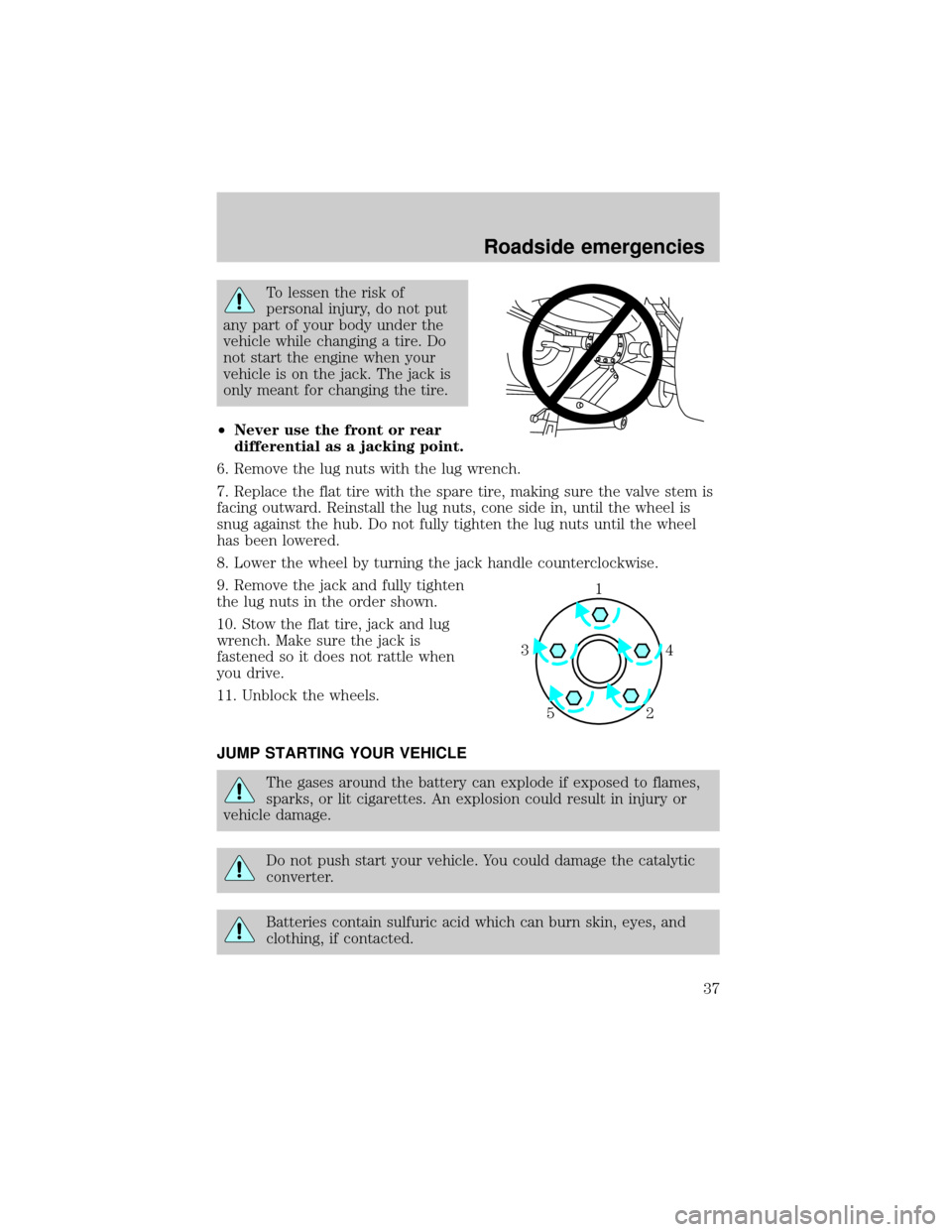
To lessen the risk of
personal injury, do not put
any part of your body under the
vehicle while changing a tire. Do
not start the engine when your
vehicle is on the jack. The jack is
only meant for changing the tire.
²Never use the front or rear
differential as a jacking point.
6. Remove the lug nuts with the lug wrench.
7. Replace the flat tire with the spare tire, making sure the valve stem is
facing outward. Reinstall the lug nuts, cone side in, until the wheel is
snug against the hub. Do not fully tighten the lug nuts until the wheel
has been lowered.
8. Lower the wheel by turning the jack handle counterclockwise.
9. Remove the jack and fully tighten
the lug nuts in the order shown.
10. Stow the flat tire, jack and lug
wrench. Make sure the jack is
fastened so it does not rattle when
you drive.
11. Unblock the wheels.
JUMP STARTING YOUR VEHICLE
The gases around the battery can explode if exposed to flames,
sparks, or lit cigarettes. An explosion could result in injury or
vehicle damage.
Do not push start your vehicle. You could damage the catalytic
converter.
Batteries contain sulfuric acid which can burn skin, eyes, and
clothing, if contacted.
1
4 3
2 5
Roadside emergencies
37
Page 38 of 80
Do not attempt to push start your vehicle. Automatic
transmissions do not have push-start capability.
Preparing your vehicle
When the battery is disconnected or a new battery is installed, the
transmission must relearn its adaptive strategy. As a result of this, the
transmission may shift firmly. This operation is considered normal and
will not effect function or durability of the transmission. Over time, the
adaptive learning process will fully update transmission operation to its
optimum shift feel.
1.Use only a 12±volt supply to start your vehicle.
2. Do not disconnect the battery of the disabled vehicle as this could
damage the vehicle's electrical system.
3. Park the booster vehicle close to the hood of the disabled vehicle
making sure the two vehiclesdo nottouch. Set the parking brake on
both vehicles and stay clear of the engine cooling fan and other moving
parts.
4. Check all battery terminals and remove any excessive corrosion before
you attach the battery cables. Ensure that vent caps are tight and level.
5. Turn the heater fan on in both vehicles to protect any electrical
surges. Turn all other accessories off.
Connecting the jumper cables
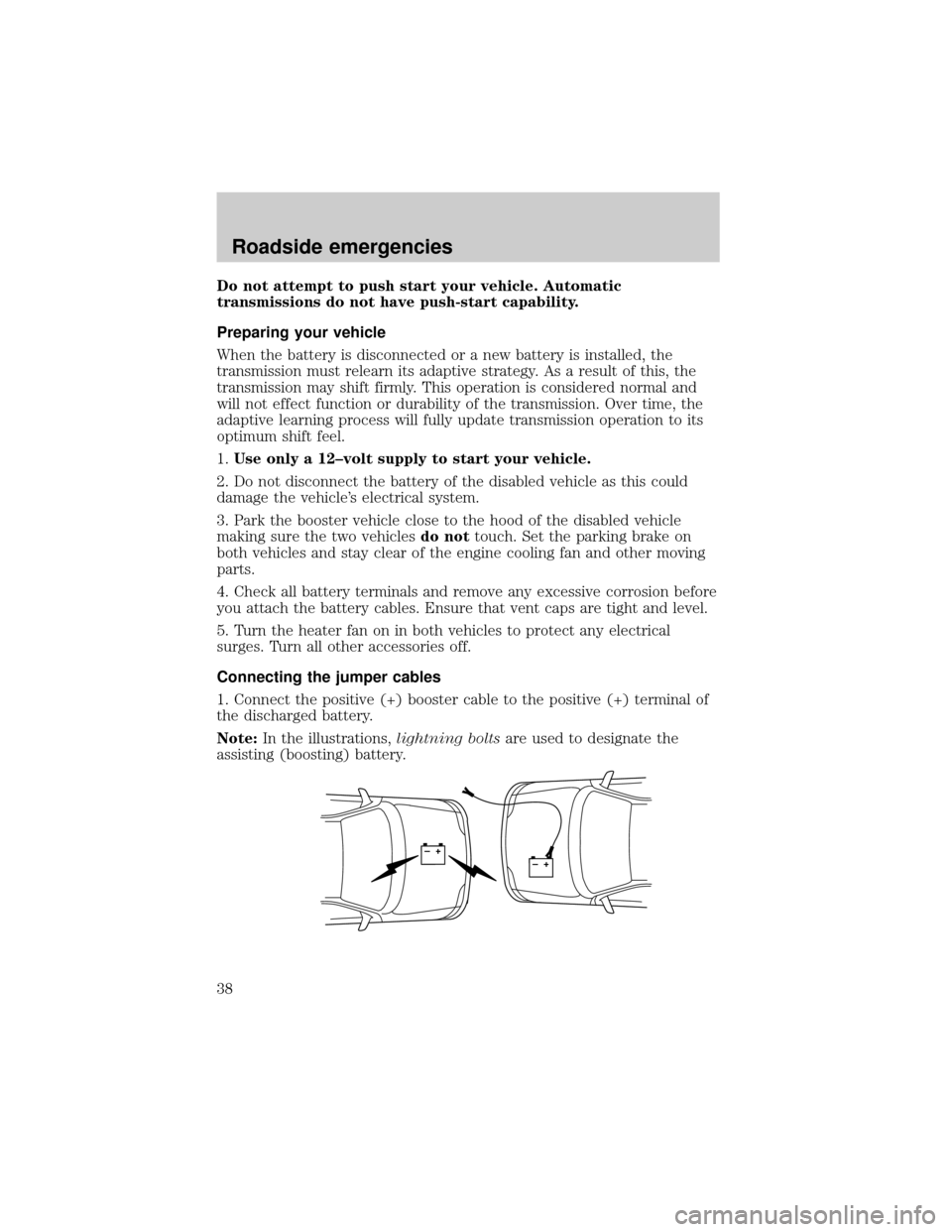
1. Connect the positive (+) booster cable to the positive (+) terminal of
the discharged battery.
Note:In the illustrations,lightning boltsare used to designate the
assisting (boosting) battery.
+–+–
Roadside emergencies
38
Page 40 of 80
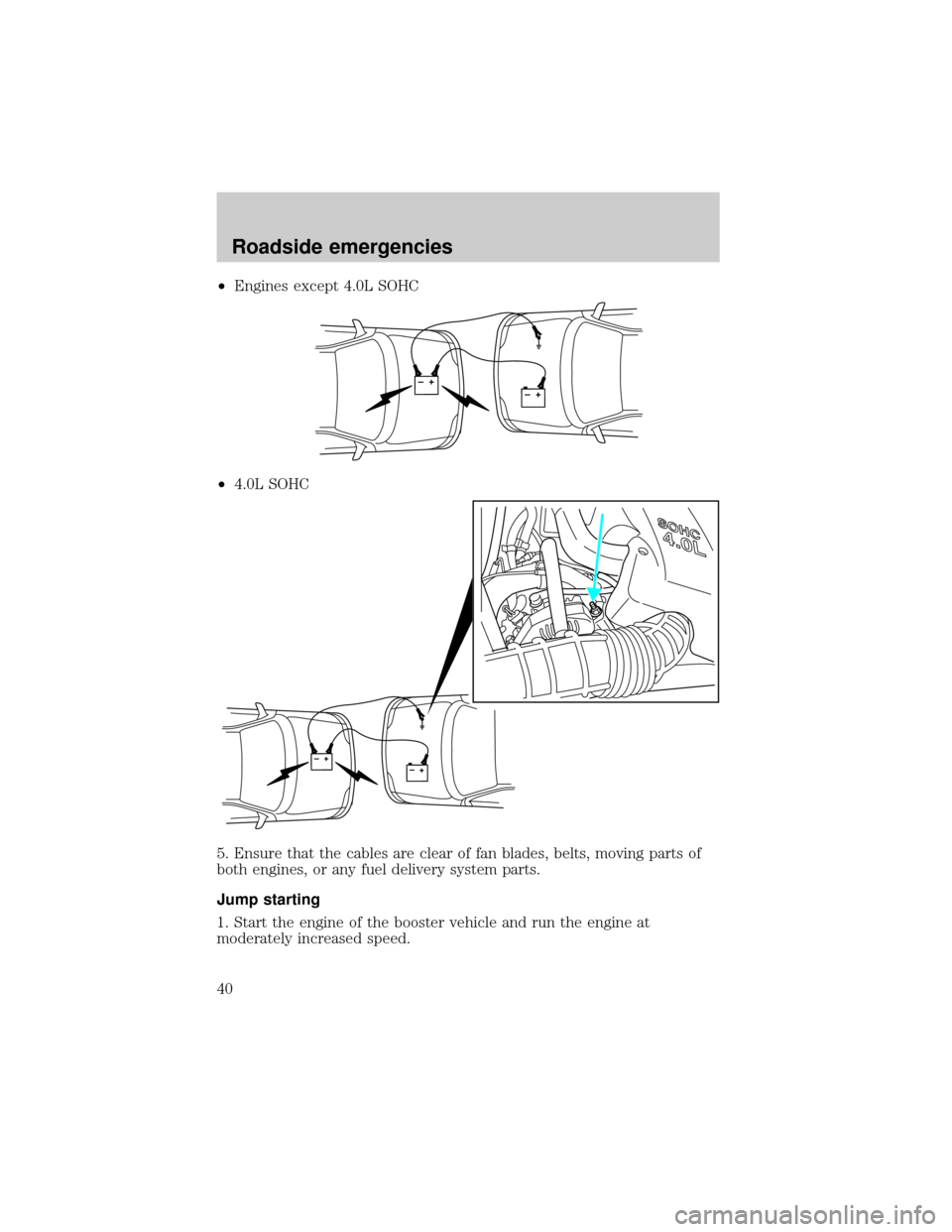
²Engines except 4.0L SOHC
²4.0L SOHC
5. Ensure that the cables are clear of fan blades, belts, moving parts of
both engines, or any fuel delivery system parts.
Jump starting
1. Start the engine of the booster vehicle and run the engine at
moderately increased speed.
+–+–
+–+–
Roadside emergencies
40
Page 41 of 80
2. Start the engine of the disabled vehicle.
3. Once the disabled vehicle has been started, run both engines for an
additional three minutes before disconnecting the jumper cables.
Removing the jumper cables
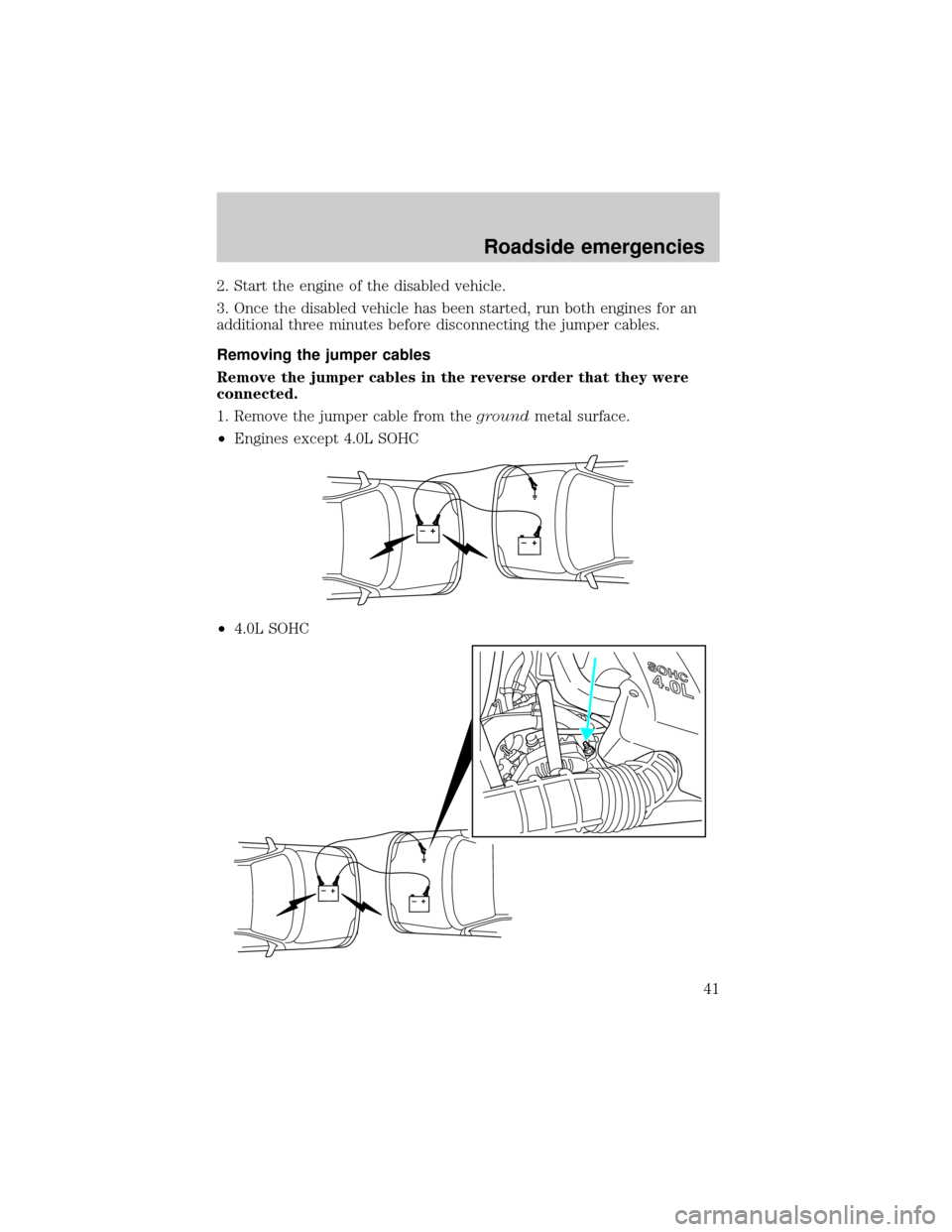
Remove the jumper cables in the reverse order that they were
connected.
1. Remove the jumper cable from thegroundmetal surface.
²Engines except 4.0L SOHC
²4.0L SOHC
+–+–
+–+–
Roadside emergencies
41
Page 43 of 80
After the disabled vehicle has been started and the jumper cables
removed, allow it to idle for several minutes so the engine computer can
relearnits idle conditions.
WRECKER TOWING
If the vehicle needs towing, a wheel lift or flatbed equipment is
recommended.
If a slingbelt or J-hook method is used, towing the vehicle from the rear
is recommended.
If the vehicle must be towed from the front with a slingbelt or J-hook,
the air dam may be damaged unless it is protected by using a wooden
crossbeam and spacer block assembly.
²Place the transmission in N(Neutral).
²Do not exceed a distance of 80 km (50 miles).
²Do not exceed 56 km/h (35 mph) vehicle speed.
If a distance of 80 km (50 miles) and/or a vehicle speed of 56 km/h (35
mph) must be exceeded, the drive shaft must be removed prior to
towing.
Roadside emergencies
43
Page 76 of 80

Air cleaner filter .........................72
Antifreeze
(see Engine coolant) ..................51
Anti-lock brake system
(see Brakes) ...........................22,23
Automatic transmission
driving an automatic
overdrive ...................................26
fluid, adding ..............................56
fluid, checking ..........................56
fluid, refill capacities ................72
fluid, specification ....................74
Axle
lubricant specifications .......73,74
refill capacities ..........................72
Battery .........................................59
acid, treating emergencies .......59
charging system warning light ..9
jumping a disabled battery ......37
maintenance-free ......................59
replacement, specifications .....72
servicing ....................................59
voltage gauge ............................11
Brakes ..........................................22
anti-lock ................................22,23
anti-lock brake system
(ABS) warning light ..............8,23
brake warning light ....................7
fluid, checking and adding ......50
fluid, refill capacities ................72
fluid, specifications ..............73,74
lubricant specifications .......73,74
shift interlock ............................25
Break-in period .............................3
Capacities for refilling fluids ......72
Coolant
checking and adding ................51
refill capacities .....................55,72
specifications .......................73,74
Dipstick
automatic transmission fluid ...56
engine oil ...................................48Doors
lubricant specifications ............73
Driveline universal
joint and slip yoke ......................58
Emergencies, roadside
jump-starting ............................37
Emission control system ............70
Engine ..........................................74
check engine/service engine
soon light ....................................6
coolant .......................................51
idle speed control .....................59
lubrication specifications ....73,74
refill capacities ..........................72
service points ............................47
starting after a collision ...........29
Engine oil ....................................48
checking and adding ................48
dipstick ......................................48
filter, specifications .............49,72
recommendations .....................49
refill capacities ..........................72
specifications .......................73,74
Exhaust fumes ............................20
Fluid capacities ...........................72
Fuel ..............................................65
cap .............................................69
capacity .....................................72
choosing the right fuel .............67
detergent in fuel .......................68
filling your
vehicle with fuel ..................65,69
filter, specifications .............70,72
fuel pump shut-off switch .......29
gauge .........................................12
octane rating ........................68,74
quality ........................................68
running out of fuel ...................69
safety information relating
to automotive fuels ..................65
Fuses .......................................29,30
Gas cap (see Fuel cap) ..............69
Index
76
Page 77 of 80

Gauges ...........................................9
battery voltage gauge ...............11
engine coolant
temperature gauge ...................10
engine oil pressure gauge ........11
fuel gauge ..................................12
odometer ...................................10
speedometer ...............................9
trip odometer ............................11
Headlamps ...................................13
flash to pass ..............................14
high beam ..............................8,13
turning on and off ....................13
Ignition ....................................14,74
Inspection/maintenance (I/M)
testing ..........................................71
Instrument panel
cluster ..........................................6
lighting up
panel and interior .....................13
Jump-starting your vehicle ........37
Keys
positions of the ignition ...........14
Lamps
cargo lamps ...............................13
headlamps .................................13
headlamps, flash to pass ..........14
instrument panel, dimming .....13
Lane change indicator
(see Turn signal) ........................16
Lights, warning and indicator ......6
anti-lock brakes (ABS) .........8,23
brake ............................................7
charging system ..........................9
high beam ...................................8
overdrive off ................................8
safety belt ...................................7
service engine soon ....................6
turn signal indicator ...................8
Lubricant specifications ........73,74
Manual transmission
fluid capacities ..........................72lubricant specifications ............74
Motorcraft parts .....................70,72
Octane rating ..............................68
Odometer .....................................10
Oil (see Engine oil) ....................48
Overdrive .....................................16
Parking brake ..............................23
Parts (see Motorcraft parts) ......72
Power distribution box
(see Fuses) .................................32
Power steering ............................24
fluid, checking and adding ......56
fluid, refill capacity ..................72
fluid, specifications ..............73,74
Relays .....................................29,34
Safety defects, reporting ............75
Safety restraints
warning light and chime .........7,9
Servicing your vehicle ................46
Spark plugs, specifications ....72,74
Special notice ................................3
utility-type vehicles ....................3
Specification chart,
lubricants ................................73,74
Speedometer .................................9
Starting your vehicle .............17,19
jump starting ............................37
Steering wheel
tilting .........................................15
Tires ..............................35,61,62,63
changing ....................................35
checking the pressure ..............63
replacing ....................................64
rotating ......................................63
snow tires and chains ..............64
tire grades .................................62
treadwear ..................................62
Towing .........................................63
wrecker ......................................43
Transmission ...............................25
fluid, checking and adding
(automatic) ...............................56
Index
77