2000 FORD POSTAL EXPLORER check oil
[x] Cancel search: check oilPage 10 of 80
Engine coolant temperature gauge
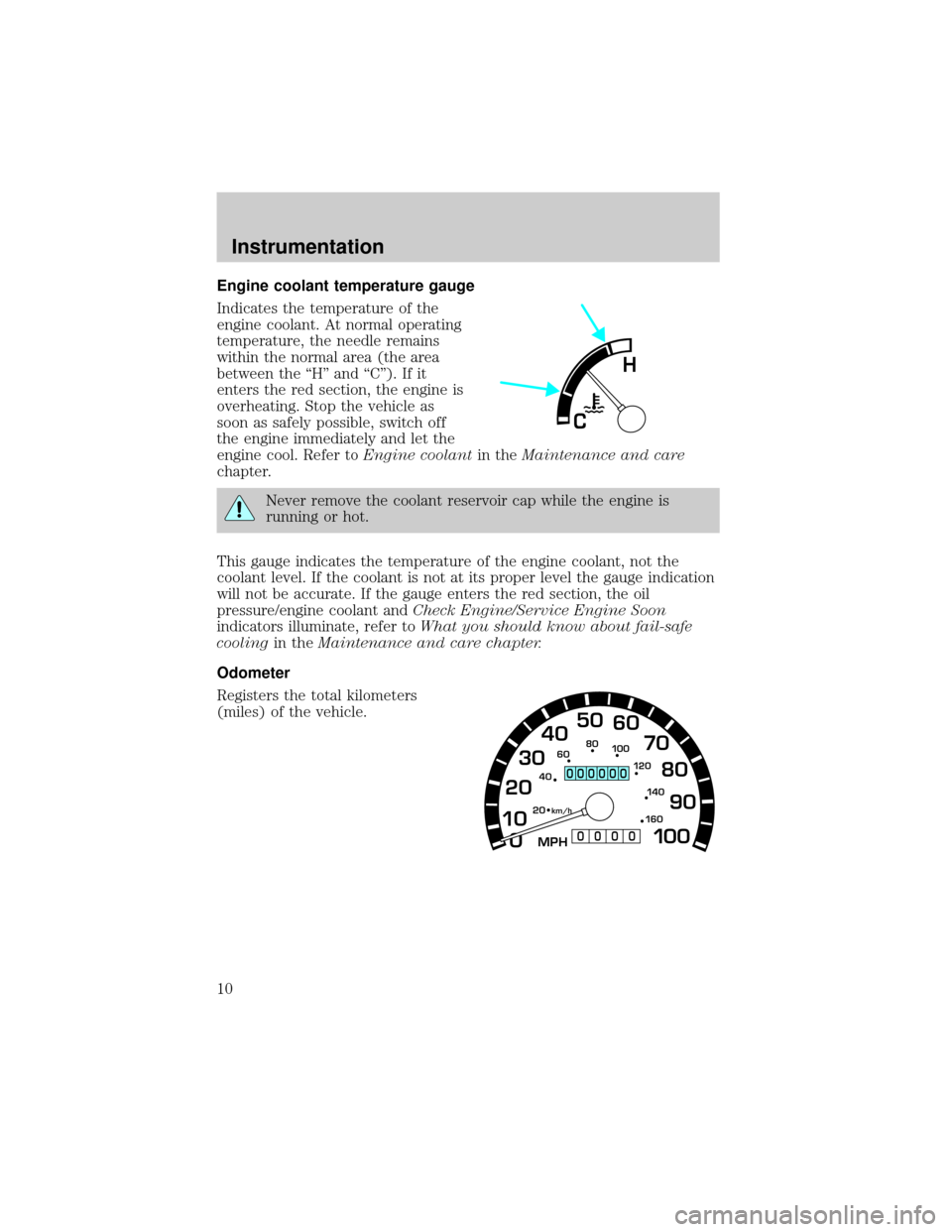
Indicates the temperature of the
engine coolant. At normal operating
temperature, the needle remains
within the normal area (the area
between the ªHº and ªCº). If it
enters the red section, the engine is
overheating. Stop the vehicle as
soon as safely possible, switch off
the engine immediately and let the
engine cool. Refer toEngine coolantin theMaintenance and care
chapter.
Never remove the coolant reservoir cap while the engine is
running or hot.
This gauge indicates the temperature of the engine coolant, not the
coolant level. If the coolant is not at its proper level the gauge indication
will not be accurate. If the gauge enters the red section, the oil
pressure/engine coolant andCheck Engine/Service Engine Soon
indicators illuminate, refer toWhat you should know about fail-safe
coolingin theMaintenance and care chapter.
Odometer
Registers the total kilometers
(miles) of the vehicle.
H
C
0 1020304050
60
70
80
90
10 0
20 km/h
406080
10 0
12 0
14 0
16 0
MPH
000000
0000
Instrumentation
10
Page 11 of 80
Trip odometer
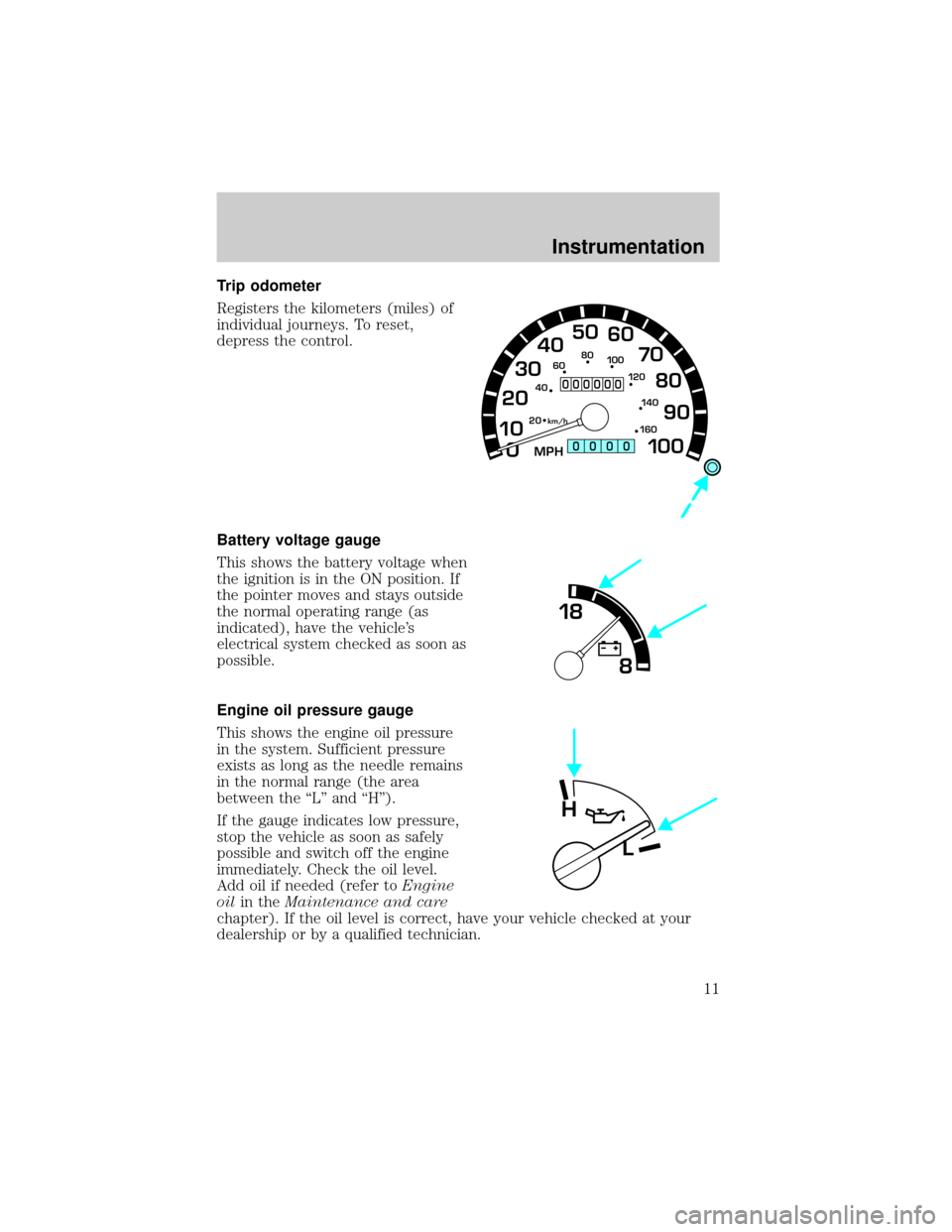
Registers the kilometers (miles) of
individual journeys. To reset,
depress the control.
Battery voltage gauge
This shows the battery voltage when
the ignition is in the ON position. If
the pointer moves and stays outside
the normal operating range (as
indicated), have the vehicle's
electrical system checked as soon as
possible.
Engine oil pressure gauge
This shows the engine oil pressure
in the system. Sufficient pressure
exists as long as the needle remains
in the normal range (the area
between the ªLº and ªHº).
If the gauge indicates low pressure,
stop the vehicle as soon as safely
possible and switch off the engine
immediately. Check the oil level.
Add oil if needed (refer toEngine
oilin theMaintenance and care
chapter). If the oil level is correct, have your vehicle checked at your
dealership or by a qualified technician.
0 1020304050
60
70
80
90
10 0
20 km/h
406080
10 0
12 0
14 0
16 0
MPH
000000
0000
18
8
H
L
Instrumentation
11
Page 48 of 80
ENGINE OIL
Checking the engine oil
Refer to the scheduled maintenance guide for the appropriate intervals
for checking the engine oil.
1. Make sure the vehicle is on level ground.
2. Turn the engine off and wait a few minutes for the oil to drain into the
oil pan.
3. Set the parking brake and ensure the gearshift is securely latched in P
(Park).
4. Open the hood. Protect yourself from engine heat.
5. Locate and carefully remove the engine oil level indicator (dipstick).
6. Wipe the indicator clean. Insert the indicator fully, then remove it
again.
²If the oil level isbetween the MIN and MAX marks,the oil level is
acceptable.DO NOT ADD OIL.
²If the oil level is below the MIN mark, add enough oil to raise the level
within the MIN-MAX range.
²Oil levels above the MAX mark may cause engine damage. Some oil
must be removed from the engine by a qualified service technician.
7. Put the indicator back in and ensure it is fully seated.
Adding engine oil
1. Check the engine oil. For instructions, refer toChecking the engine
oilin this chapter.
2. If the engine oil level is not within the normal range, add only certified
engine oil of the recommended viscosity. Remove the engine oil filler cap
and use a funnel to pour the engine oil into the opening.
3. Recheck the engine oil level. Make sure the oil level is not above the
MAX mark on the engine oil level indicator (dipstick).
4. Install the indicator and ensure it is fully seated.
5. Fully install the engine oil filler cap by turning the filler cap clockwise
until three clicks are heard or until it is latched.
To avoid possible oil loss, DO NOT operate the vehicle with the
engine oil level indicator and/or the engine oil filler cap removed.
Maintenance and care
48
Page 52 of 80
A50/50 mixtureof distilled water and Ford Premium Engine Coolant
provides:
²maximum cooling system efficiency.
²freeze protection down to -36É C (-34É F).
²boiling protection up to 129É C (265É F).
²protection against rust and other forms of corrosion.
²an accurate temperature readout from the engine coolant
gauge.
The engine coolant must be maintained at the correct fluid level
and concentration to work properly. If the engine coolant fluid
level and concentration is not maintained correctly, damage to
the engine and cooling system may result.
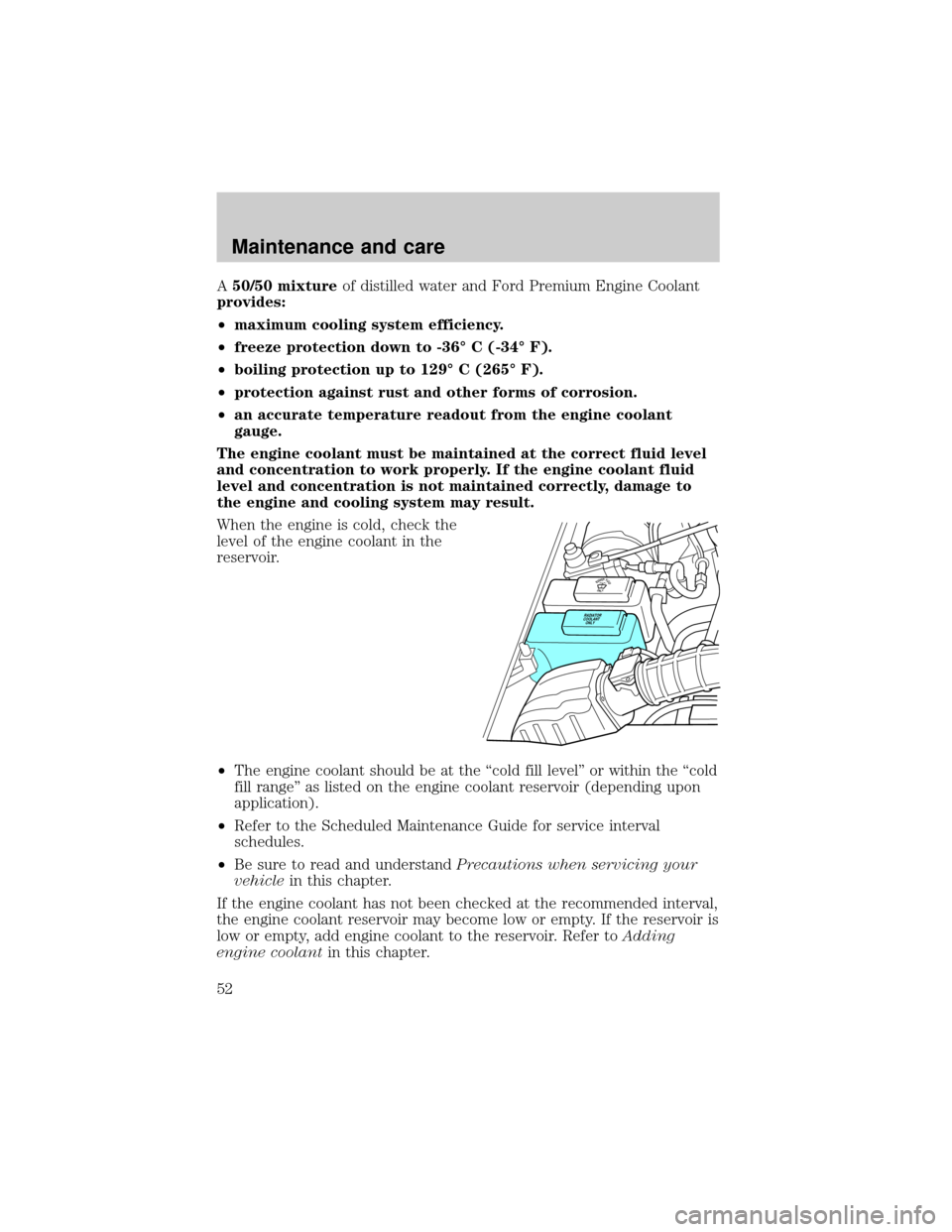
When the engine is cold, check the
level of the engine coolant in the
reservoir.
²The engine coolant should be at the ªcold fill levelº or within the ªcold
fill rangeº as listed on the engine coolant reservoir (depending upon
application).
²Refer to the Scheduled Maintenance Guide for service interval
schedules.
²Be sure to read and understandPrecautions when servicing your
vehiclein this chapter.
If the engine coolant has not been checked at the recommended interval,
the engine coolant reservoir may become low or empty. If the reservoir is
low or empty, add engine coolant to the reservoir. Refer toAdding
engine coolantin this chapter.
RADIATOR
COOLANT
ONLY
WASHERFLUIDONLY
Maintenance and care
52
Page 76 of 80

Air cleaner filter .........................72
Antifreeze
(see Engine coolant) ..................51
Anti-lock brake system
(see Brakes) ...........................22,23
Automatic transmission
driving an automatic
overdrive ...................................26
fluid, adding ..............................56
fluid, checking ..........................56
fluid, refill capacities ................72
fluid, specification ....................74
Axle
lubricant specifications .......73,74
refill capacities ..........................72
Battery .........................................59
acid, treating emergencies .......59
charging system warning light ..9
jumping a disabled battery ......37
maintenance-free ......................59
replacement, specifications .....72
servicing ....................................59
voltage gauge ............................11
Brakes ..........................................22
anti-lock ................................22,23
anti-lock brake system
(ABS) warning light ..............8,23
brake warning light ....................7
fluid, checking and adding ......50
fluid, refill capacities ................72
fluid, specifications ..............73,74
lubricant specifications .......73,74
shift interlock ............................25
Break-in period .............................3
Capacities for refilling fluids ......72
Coolant
checking and adding ................51
refill capacities .....................55,72
specifications .......................73,74
Dipstick
automatic transmission fluid ...56
engine oil ...................................48Doors
lubricant specifications ............73
Driveline universal
joint and slip yoke ......................58
Emergencies, roadside
jump-starting ............................37
Emission control system ............70
Engine ..........................................74
check engine/service engine
soon light ....................................6
coolant .......................................51
idle speed control .....................59
lubrication specifications ....73,74
refill capacities ..........................72
service points ............................47
starting after a collision ...........29
Engine oil ....................................48
checking and adding ................48
dipstick ......................................48
filter, specifications .............49,72
recommendations .....................49
refill capacities ..........................72
specifications .......................73,74
Exhaust fumes ............................20
Fluid capacities ...........................72
Fuel ..............................................65
cap .............................................69
capacity .....................................72
choosing the right fuel .............67
detergent in fuel .......................68
filling your
vehicle with fuel ..................65,69
filter, specifications .............70,72
fuel pump shut-off switch .......29
gauge .........................................12
octane rating ........................68,74
quality ........................................68
running out of fuel ...................69
safety information relating
to automotive fuels ..................65
Fuses .......................................29,30
Gas cap (see Fuel cap) ..............69
Index
76
Page 77 of 80

Gauges ...........................................9
battery voltage gauge ...............11
engine coolant
temperature gauge ...................10
engine oil pressure gauge ........11
fuel gauge ..................................12
odometer ...................................10
speedometer ...............................9
trip odometer ............................11
Headlamps ...................................13
flash to pass ..............................14
high beam ..............................8,13
turning on and off ....................13
Ignition ....................................14,74
Inspection/maintenance (I/M)
testing ..........................................71
Instrument panel
cluster ..........................................6
lighting up
panel and interior .....................13
Jump-starting your vehicle ........37
Keys
positions of the ignition ...........14
Lamps
cargo lamps ...............................13
headlamps .................................13
headlamps, flash to pass ..........14
instrument panel, dimming .....13
Lane change indicator
(see Turn signal) ........................16
Lights, warning and indicator ......6
anti-lock brakes (ABS) .........8,23
brake ............................................7
charging system ..........................9
high beam ...................................8
overdrive off ................................8
safety belt ...................................7
service engine soon ....................6
turn signal indicator ...................8
Lubricant specifications ........73,74
Manual transmission
fluid capacities ..........................72lubricant specifications ............74
Motorcraft parts .....................70,72
Octane rating ..............................68
Odometer .....................................10
Oil (see Engine oil) ....................48
Overdrive .....................................16
Parking brake ..............................23
Parts (see Motorcraft parts) ......72
Power distribution box
(see Fuses) .................................32
Power steering ............................24
fluid, checking and adding ......56
fluid, refill capacity ..................72
fluid, specifications ..............73,74
Relays .....................................29,34
Safety defects, reporting ............75
Safety restraints
warning light and chime .........7,9
Servicing your vehicle ................46
Spark plugs, specifications ....72,74
Special notice ................................3
utility-type vehicles ....................3
Specification chart,
lubricants ................................73,74
Speedometer .................................9
Starting your vehicle .............17,19
jump starting ............................37
Steering wheel
tilting .........................................15
Tires ..............................35,61,62,63
changing ....................................35
checking the pressure ..............63
replacing ....................................64
rotating ......................................63
snow tires and chains ..............64
tire grades .................................62
treadwear ..................................62
Towing .........................................63
wrecker ......................................43
Transmission ...............................25
fluid, checking and adding
(automatic) ...............................56
Index
77