2000 FORD POSTAL EXPLORER automatic transmission
[x] Cancel search: automatic transmissionPage 57 of 80
working properly, i.e., if the transmission slips or shifts slowly or if you
notice some sign of fluid leakage.
Automatic transmission fluid expands when warmed. To obtain an
accurate fluid check, drive the vehicle until it is at normal operating
temperature (approximately 30 km [20 miles]). If your vehicle has been
operated for an extended period at high speeds, in city traffic during hot
weather or pulling a trailer, the vehicle should be turned off for about 30
minutes to allow fluid to cool before checking.
1. Drive the vehicle 30 km (20 miles) or until it reaches normal operating
temperature.
2. Park the vehicle on a level surface and engage the parking brake.
3. With the parking brake engaged and your foot on the brake pedal,
start the engine and move the gearshift lever through all of the gear
ranges. Allow sufficient time for each gear to engage.
4. Latch the gearshift lever in P (Park) and leave the engine running.
5. Remove the dipstick, wiping it clean with a clean, dry lint free rag. If
necessary, refer toIdentifying components in the engine compartment
in this chapter for the location of the dipstick.
6. Install the dipstick making sure it is fully seated in the filler tube.
7. Remove the dipstick and inspect the fluid level. The fluid should be in
the designated area for normal operating temperature or ambient
temperature.
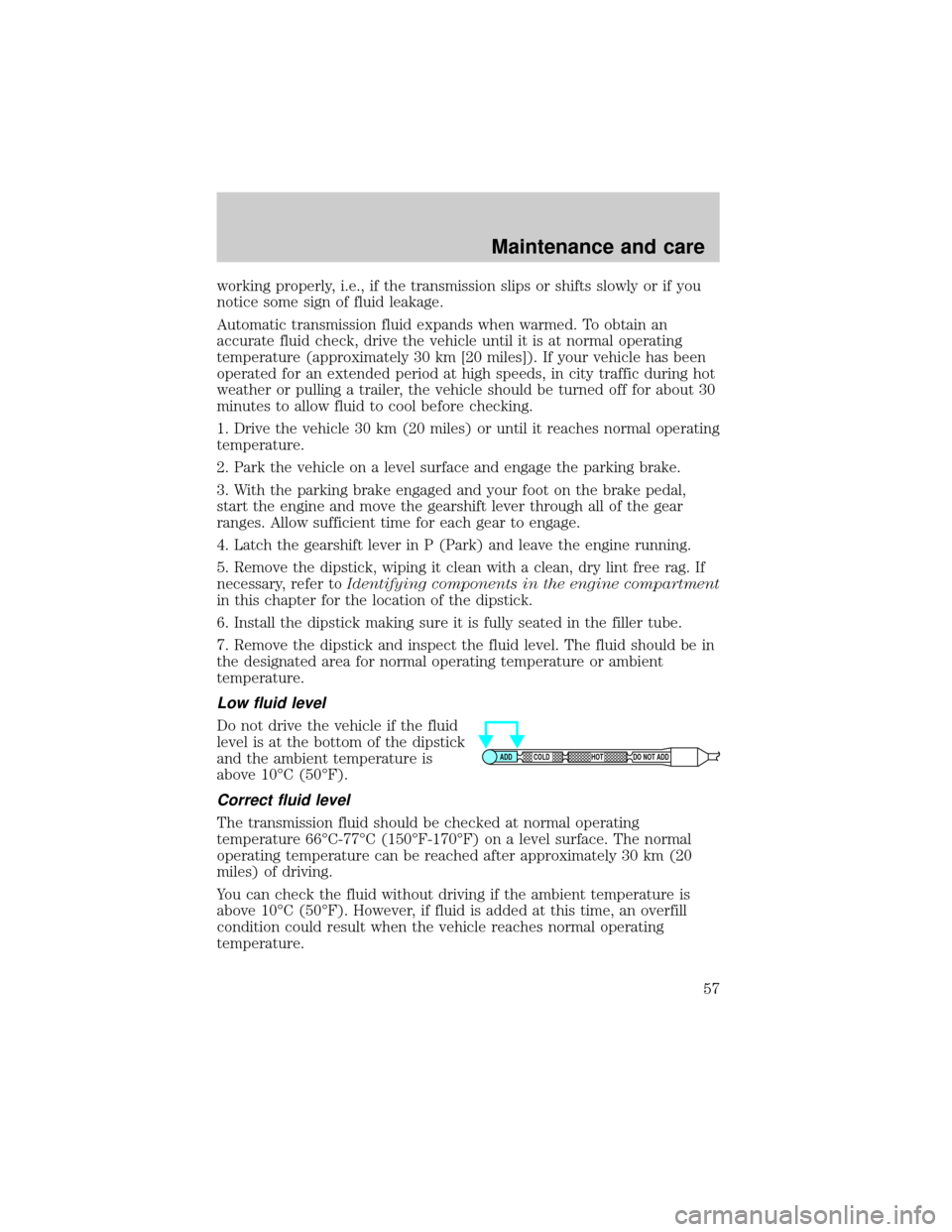
Low fluid level
Do not drive the vehicle if the fluid
level is at the bottom of the dipstick
and the ambient temperature is
above 10ÉC (50ÉF).
Correct fluid level
The transmission fluid should be checked at normal operating
temperature 66ÉC-77ÉC (150ÉF-170ÉF) on a level surface. The normal
operating temperature can be reached after approximately 30 km (20
miles) of driving.
You can check the fluid without driving if the ambient temperature is
above 10ÉC (50ÉF). However, if fluid is added at this time, an overfill
condition could result when the vehicle reaches normal operating
temperature.
ADD COLD HOT DO NOT ADD
Maintenance and care
57
Page 58 of 80
![FORD POSTAL EXPLORER 2000 2.G Owners Manual The transmission fluid should be in
this range if at normal operating
temperature (66ÉC-77ÉC
[150ÉF-170ÉF]).
The transmission fluid should be in
this range if at ambient temperature
(10ÉC-35ÉC [](/manual-img/11/5322/w960_5322-57.png "FORD POSTAL EXPLORER 2000 2.G Owners Manual The transmission fluid should be in
this range if at normal operating
temperature (66ÉC-77ÉC
[150ÉF-170ÉF]).
The transmission fluid should be in
this range if at ambient temperature
(10ÉC-35ÉC [")
The transmission fluid should be in
this range if at normal operating
temperature (66ÉC-77ÉC
[150ÉF-170ÉF]).
The transmission fluid should be in
this range if at ambient temperature
(10ÉC-35ÉC [50ÉF-95ÉF]).
High fluid level
Fluid levels above the safe range
may result in transmission failure.
An overfill condition of transmission
fluid may cause shift and/or
engagement concerns and/or possible damage.
High fluid levels can be caused by an overheating condition.
Adjusting automatic transmission fluid levels
Before adding any fluid, make sure the correct type is used. The type of
fluid used is normally indicated on the dipstick and also in the
Lubricant specificationssection in theCapacities and specifications
chapter.
Use of a non-approved automatic transmission fluid may cause
internal transmission component damage.
If necessary, add fluid in 250 mL (1/2 pint) increments through the filler
tube until the level is correct.
If an overfill occurs, excess fluid
should be removed by a qualified
technician.
An overfill condition of
transmission fluid may cause shift and/or engagement concerns
and/or possible damage.
DRIVELINE UNIVERSAL JOINT AND SLIP YOKE
Your vehicle may be equipped with universal joints that require
lubrication. Refer to the scheduled maintenance guide for maintenance
intervals. If the original universal joints are replaced with universal joints
equipped with grease fittings, lubrication will also be necessary.
ADD COLD HOT DO NOT ADD
ADD COLD HOT DO NOT ADD
ADD COLD HOT DO NOT ADD
ADD COLD HOT DO NOT ADD
Maintenance and care
58
Page 60 of 80
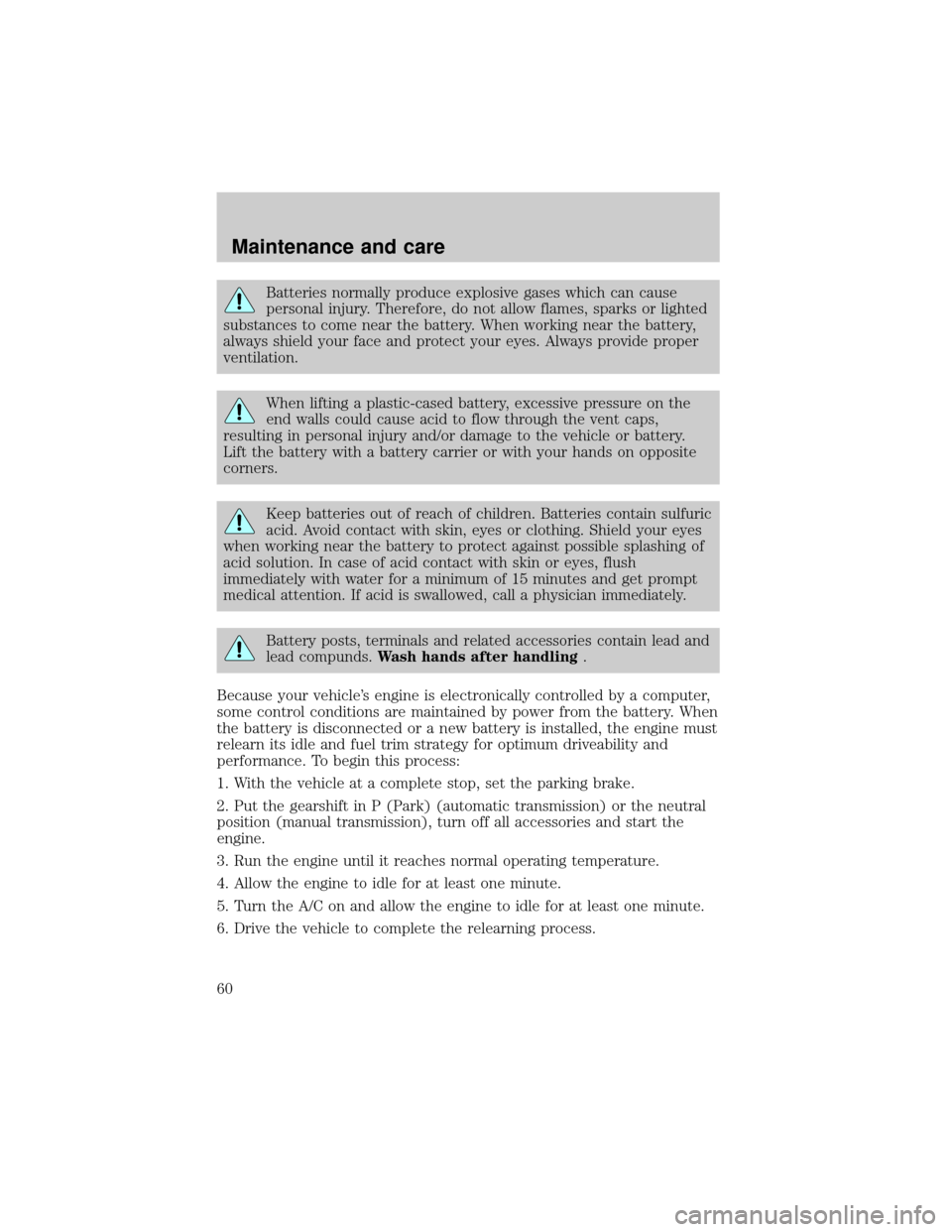
Batteries normally produce explosive gases which can cause
personal injury. Therefore, do not allow flames, sparks or lighted
substances to come near the battery. When working near the battery,
always shield your face and protect your eyes. Always provide proper
ventilation.
When lifting a plastic-cased battery, excessive pressure on the
end walls could cause acid to flow through the vent caps,
resulting in personal injury and/or damage to the vehicle or battery.
Lift the battery with a battery carrier or with your hands on opposite
corners.
Keep batteries out of reach of children. Batteries contain sulfuric
acid. Avoid contact with skin, eyes or clothing. Shield your eyes
when working near the battery to protect against possible splashing of
acid solution. In case of acid contact with skin or eyes, flush
immediately with water for a minimum of 15 minutes and get prompt
medical attention. If acid is swallowed, call a physician immediately.
Battery posts, terminals and related accessories contain lead and
lead compunds.Wash hands after handling.
Because your vehicle's engine is electronically controlled by a computer,
some control conditions are maintained by power from the battery. When
the battery is disconnected or a new battery is installed, the engine must
relearn its idle and fuel trim strategy for optimum driveability and
performance. To begin this process:
1. With the vehicle at a complete stop, set the parking brake.
2. Put the gearshift in P (Park) (automatic transmission) or the neutral
position (manual transmission), turn off all accessories and start the
engine.
3. Run the engine until it reaches normal operating temperature.
4. Allow the engine to idle for at least one minute.
5. Turn the A/C on and allow the engine to idle for at least one minute.
6. Drive the vehicle to complete the relearning process.
Maintenance and care
60
Page 73 of 80
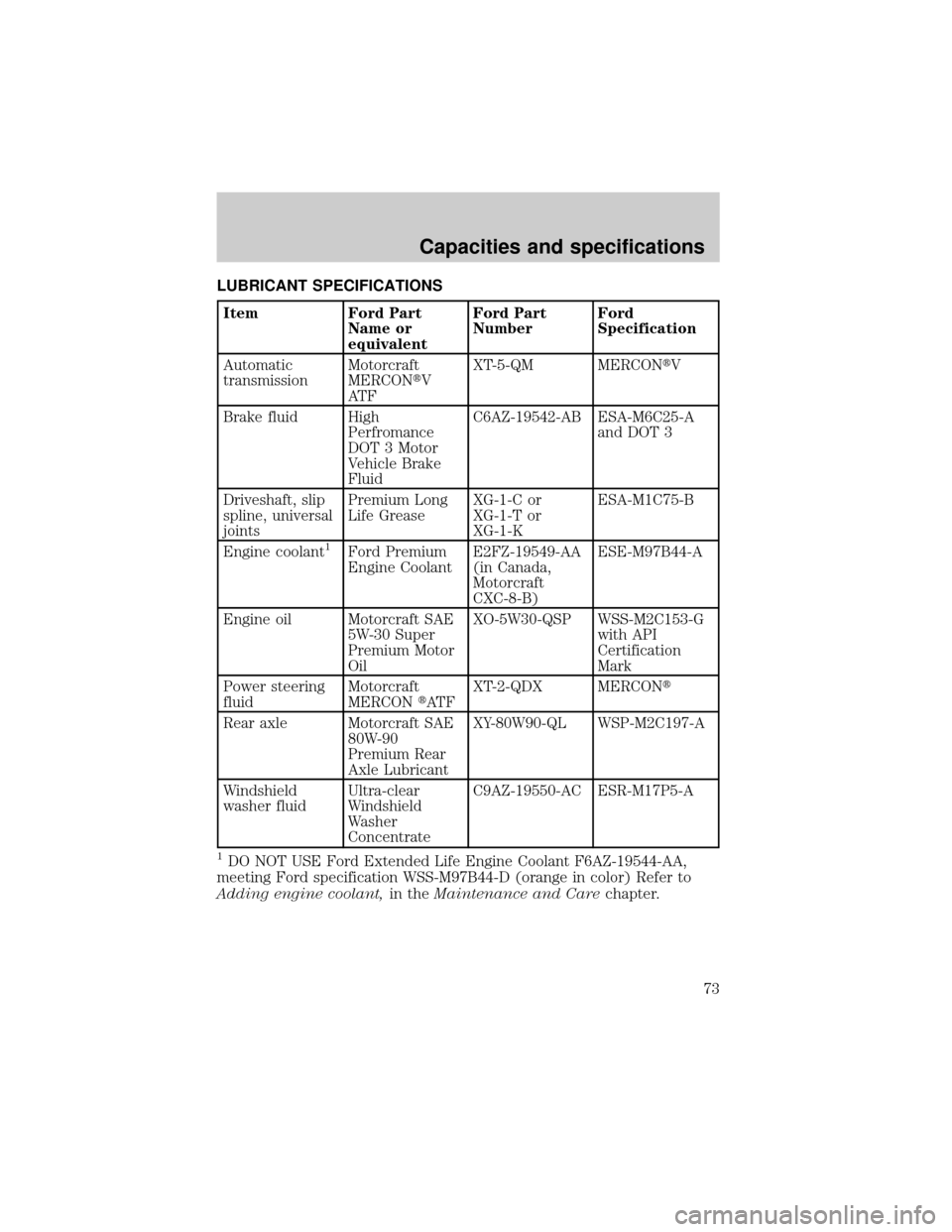
LUBRICANT SPECIFICATIONS
Item Ford Part
Name or
equivalentFord Part
NumberFord
Specification
Automatic
transmissionMotorcraft
MERCONtV
AT FXT-5-QM MERCONtV
Brake fluid High
Perfromance
DOT 3 Motor
Vehicle Brake
FluidC6AZ-19542-AB ESA-M6C25-A
and DOT 3
Driveshaft, slip
spline, universal
jointsPremium Long
Life GreaseXG-1-C or
XG-1-T or
XG-1-KESA-M1C75-B
Engine coolant
1Ford Premium
Engine CoolantE2FZ-19549-AA
(in Canada,
Motorcraft
CXC-8-B)ESE-M97B44-A
Engine oil Motorcraft SAE
5W-30 Super
Premium Motor
OilXO-5W30-QSP WSS-M2C153-G
with API
Certification
Mark
Power steering
fluidMotorcraft
MERCONtAT FXT-2-QDX MERCONt
Rear axle Motorcraft SAE
80W-90
Premium Rear
Axle LubricantXY-80W90-QL WSP-M2C197-A
Windshield
washer fluidUltra-clear
Windshield
Washer
ConcentrateC9AZ-19550-AC ESR-M17P5-A
1DO NOT USE Ford Extended Life Engine Coolant F6AZ-19544-AA,
meeting Ford specification WSS-M97B44-D (orange in color) Refer to
Adding engine coolant,in theMaintenance and Carechapter.
Capacities and specifications
73
Page 76 of 80

Air cleaner filter .........................72
Antifreeze
(see Engine coolant) ..................51
Anti-lock brake system
(see Brakes) ...........................22,23
Automatic transmission
driving an automatic
overdrive ...................................26
fluid, adding ..............................56
fluid, checking ..........................56
fluid, refill capacities ................72
fluid, specification ....................74
Axle
lubricant specifications .......73,74
refill capacities ..........................72
Battery .........................................59
acid, treating emergencies .......59
charging system warning light ..9
jumping a disabled battery ......37
maintenance-free ......................59
replacement, specifications .....72
servicing ....................................59
voltage gauge ............................11
Brakes ..........................................22
anti-lock ................................22,23
anti-lock brake system
(ABS) warning light ..............8,23
brake warning light ....................7
fluid, checking and adding ......50
fluid, refill capacities ................72
fluid, specifications ..............73,74
lubricant specifications .......73,74
shift interlock ............................25
Break-in period .............................3
Capacities for refilling fluids ......72
Coolant
checking and adding ................51
refill capacities .....................55,72
specifications .......................73,74
Dipstick
automatic transmission fluid ...56
engine oil ...................................48Doors
lubricant specifications ............73
Driveline universal
joint and slip yoke ......................58
Emergencies, roadside
jump-starting ............................37
Emission control system ............70
Engine ..........................................74
check engine/service engine
soon light ....................................6
coolant .......................................51
idle speed control .....................59
lubrication specifications ....73,74
refill capacities ..........................72
service points ............................47
starting after a collision ...........29
Engine oil ....................................48
checking and adding ................48
dipstick ......................................48
filter, specifications .............49,72
recommendations .....................49
refill capacities ..........................72
specifications .......................73,74
Exhaust fumes ............................20
Fluid capacities ...........................72
Fuel ..............................................65
cap .............................................69
capacity .....................................72
choosing the right fuel .............67
detergent in fuel .......................68
filling your
vehicle with fuel ..................65,69
filter, specifications .............70,72
fuel pump shut-off switch .......29
gauge .........................................12
octane rating ........................68,74
quality ........................................68
running out of fuel ...................69
safety information relating
to automotive fuels ..................65
Fuses .......................................29,30
Gas cap (see Fuel cap) ..............69
Index
76
Page 77 of 80

Gauges ...........................................9
battery voltage gauge ...............11
engine coolant
temperature gauge ...................10
engine oil pressure gauge ........11
fuel gauge ..................................12
odometer ...................................10
speedometer ...............................9
trip odometer ............................11
Headlamps ...................................13
flash to pass ..............................14
high beam ..............................8,13
turning on and off ....................13
Ignition ....................................14,74
Inspection/maintenance (I/M)
testing ..........................................71
Instrument panel
cluster ..........................................6
lighting up
panel and interior .....................13
Jump-starting your vehicle ........37
Keys
positions of the ignition ...........14
Lamps
cargo lamps ...............................13
headlamps .................................13
headlamps, flash to pass ..........14
instrument panel, dimming .....13
Lane change indicator
(see Turn signal) ........................16
Lights, warning and indicator ......6
anti-lock brakes (ABS) .........8,23
brake ............................................7
charging system ..........................9
high beam ...................................8
overdrive off ................................8
safety belt ...................................7
service engine soon ....................6
turn signal indicator ...................8
Lubricant specifications ........73,74
Manual transmission
fluid capacities ..........................72lubricant specifications ............74
Motorcraft parts .....................70,72
Octane rating ..............................68
Odometer .....................................10
Oil (see Engine oil) ....................48
Overdrive .....................................16
Parking brake ..............................23
Parts (see Motorcraft parts) ......72
Power distribution box
(see Fuses) .................................32
Power steering ............................24
fluid, checking and adding ......56
fluid, refill capacity ..................72
fluid, specifications ..............73,74
Relays .....................................29,34
Safety defects, reporting ............75
Safety restraints
warning light and chime .........7,9
Servicing your vehicle ................46
Spark plugs, specifications ....72,74
Special notice ................................3
utility-type vehicles ....................3
Specification chart,
lubricants ................................73,74
Speedometer .................................9
Starting your vehicle .............17,19
jump starting ............................37
Steering wheel
tilting .........................................15
Tires ..............................35,61,62,63
changing ....................................35
checking the pressure ..............63
replacing ....................................64
rotating ......................................63
snow tires and chains ..............64
tire grades .................................62
treadwear ..................................62
Towing .........................................63
wrecker ......................................43
Transmission ...............................25
fluid, checking and adding
(automatic) ...............................56
Index
77
Page 80 of 80
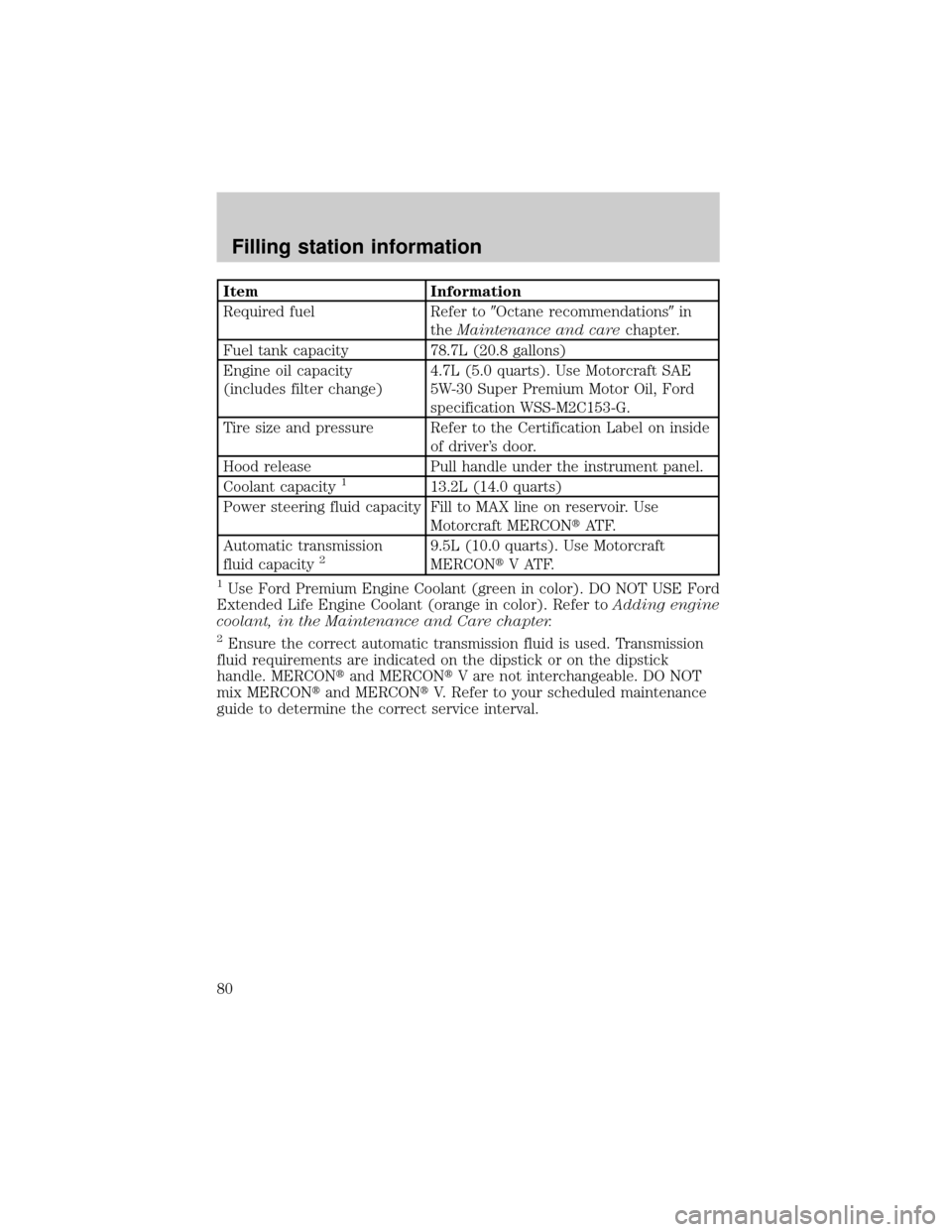
Item Information
Required fuel Refer to9Octane recommendations9in
theMaintenance and carechapter.
Fuel tank capacity 78.7L (20.8 gallons)
Engine oil capacity
(includes filter change)4.7L (5.0 quarts). Use Motorcraft SAE
5W-30 Super Premium Motor Oil, Ford
specification WSS-M2C153-G.
Tire size and pressure Refer to the Certification Label on inside
of driver's door.
Hood release Pull handle under the instrument panel.
Coolant capacity
113.2L (14.0 quarts)
Power steering fluid capacity Fill to MAX line on reservoir. Use
Motorcraft MERCONtAT F.
Automatic transmission
fluid capacity
29.5L (10.0 quarts). Use Motorcraft
MERCONtV ATF.
1Use Ford Premium Engine Coolant (green in color). DO NOT USE Ford
Extended Life Engine Coolant (orange in color). Refer toAdding engine
coolant, in the Maintenance and Care chapter.
2Ensure the correct automatic transmission fluid is used. Transmission
fluid requirements are indicated on the dipstick or on the dipstick
handle. MERCONtand MERCONtV are not interchangeable. DO NOT
mix MERCONtand MERCONtV. Refer to your scheduled maintenance
guide to determine the correct service interval.
Filling station information
80