Page 5 of 232
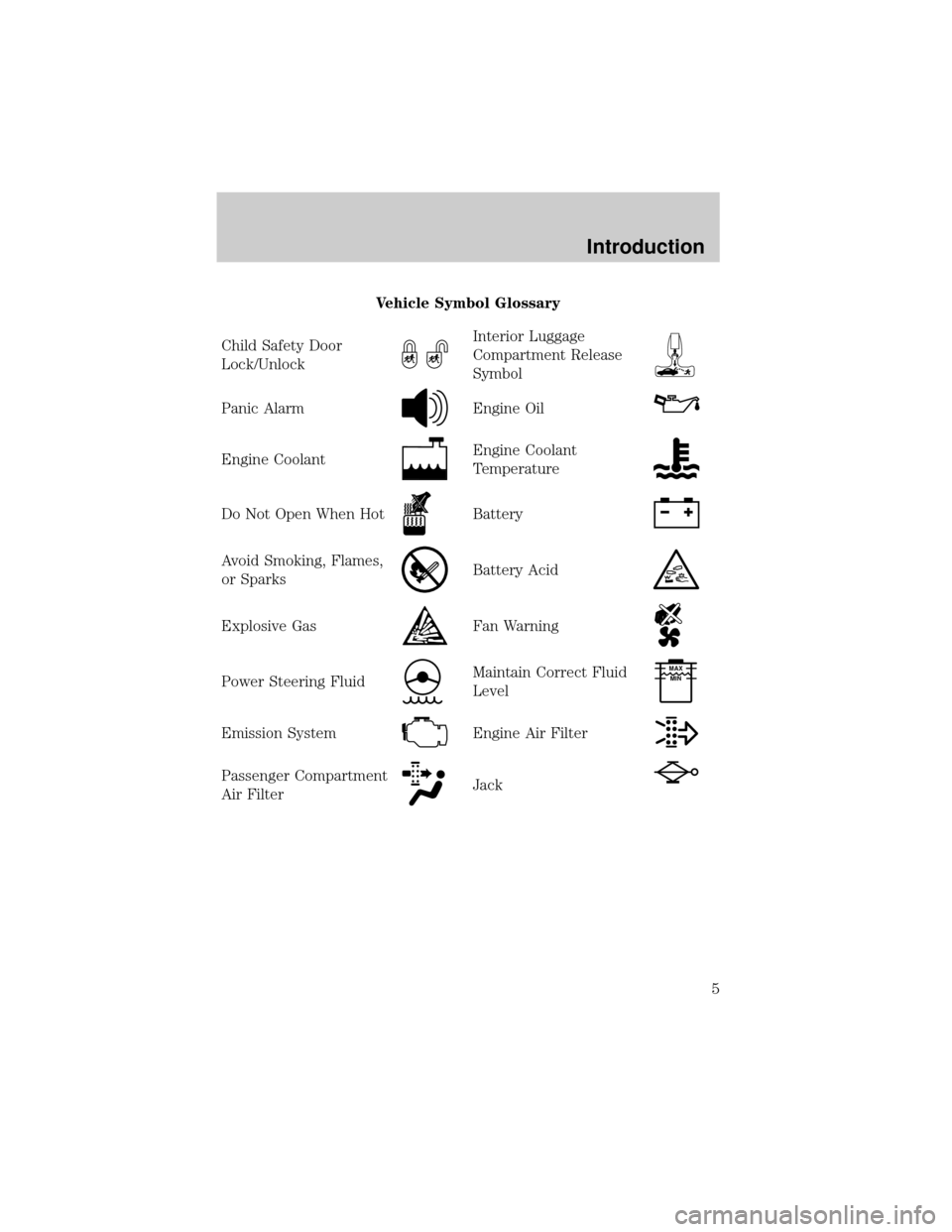
Vehicle Symbol Glossary
Child Safety Door
Lock/Unlock
Interior Luggage
Compartment Release
Symbol
Panic AlarmEngine Oil
Engine CoolantEngine Coolant
Temperature
Do Not Open When HotBattery
Avoid Smoking, Flames,
or SparksBattery Acid
Explosive GasFan Warning
Power Steering FluidMaintain Correct Fluid
LevelMAX
MIN
Emission SystemEngine Air Filter
Passenger Compartment
Air FilterJack
Introduction
5
Page 13 of 232

Four wheel drive low
Momentarily illuminates when the
ignition is turned to the START
position. Illuminates when
four-wheel drive low is engaged. If
the light continues to flash have the system serviced.
Door ajar
Illuminates when the ignition is in
the ON or START position and any
door is open.
Oil pressure/Engine coolant
This light will come on when the
key is in the ON position and the:
²engine coolant temperature is
very high
²engine oil pressure is low
The light serves as a notice that a system needs your attention and to
check the engine coolant temperature gauge and the engine oil pressure
gauge.
Refer toEngine coolant temperature gaugeandEngine oil pressure
gaugein this chapter for more information.
Speed control
This light comes on when either the
COAST/SET or RES/ACCEL controls
are pressed. It turns off when the
cruise cancel control is pressed, the brake is applied or the ignition is
turned to the OFF position.
SecuriLockYanti-theft system
This light indicates the anti-theft
alarm system is armed. Momentarily
illuminates when the ignition is
turned to ON/START. If the light
fails to illuminate, continues to flash
LOW
RANGE
DOOR
AJAR
CRUISE
THEFT
Instrumentation
13
Page 166 of 232

A50/50 mixtureof distilled water and Ford Premium Engine Coolant
provides:
²maximum cooling system efficiency.
²freeze protection down to -36É C (-34É F).
²boiling protection up to 129É C (265É F).
²protection against rust and other forms of corrosion.
²an accurate temperature readout from the engine coolant
gauge.
The engine coolant must be maintained at the correct fluid level
and concentration to work properly. If the engine coolant fluid
level and concentration is not maintained correctly, damage to
the engine and cooling system may result.
When the engine is cold, check the
level of the engine coolant in the
reservoir.
²The engine coolant should be at the ªcold fill levelº or within the ªcold
fill rangeº as listed on the engine coolant reservoir (depending upon
application).
²Refer to the Scheduled Maintenance Guide for service interval
schedules.
²Be sure to read and understandPrecautions when servicing your
vehiclein this chapter.
If the engine coolant has not been checked at the recommended interval,
the engine coolant reservoir may become low or empty. If the reservoir is
low or empty, add engine coolant to the reservoir. Refer toAdding
engine coolantin this chapter.
COLD FILL
RANGEMAX
MIN
Maintenance and care
166
Page 191 of 232

economy under current driving conditions. Additionally, keeping records
during summer and winter will show how temperature impacts fuel
economy. In general, lower temperatures give lower fuel economy.
Driving style Ð good driving and fuel economy habits
Give consideration to the lists that follow and you may be able to change
a number of variables and improve your fuel economy.
Habits
²Smooth, moderate operation can yield up to 10% savings in fuel.
²Steady speeds without stopping will usually give the best fuel
economy.
²Idling for long periods of time (greater than one minute) may waste
fuel.
²Anticipate stopping; slowing down may eliminate the need to stop.
²Sudden or hard accelerations may reduce fuel economy.
²Slow down gradually.
²Driving at reasonable speeds (traveling at 88 km/h [55 mph] uses 15%
less fuel than traveling at 105 km/h [65 mph]).
²Revving the engine before turning it off may reduce fuel economy.
²Using the air conditioner or defroster may reduce fuel economy.
²You may want to turn off the speed control in hilly terrain if
unnecessary shifting between third and fourth gear occurs.
Unnecessary shifting of this type could result in reduced fuel
economy.
²Warming up a vehicle on cold mornings is not required and may
reduce fuel economy.
²Resting your foot on the brake pedal while driving may reduce fuel
economy.
²Combine errands and minimize stop-and-go driving.
Maintenance
²Keep tires properly inflated and use only recommended size.
²Operating a vehicle with the wheels out of alignment will reduce fuel
economy.
²Use recommended engine oil. Refer toLubricant Specifications.
Maintenance and care
191
Page 227 of 232

Engine block heater .................110
Engine oil ..................................160
checking and adding ..............160
dipstick ....................................160
filter, specifications ........162, 204
recommendations ...................162
refill capacities ........................204
specifications ..................207, 209
Exhaust fumes ..........................111
F
Fail safe cooling ........................170
Fluid capacities .........................204
Four-Wheel Drive vehicles..13, 119
control trac ...............................19
description ..............................121
driving off road .......................123
electronic shift ..........19, 120±121
indicator light ...................12, 120
preparing to drive your
vehicle .....................................115
Fuel ............................................185
calculating fuel economy .......189
cap ...........................................188
capacity ...................................204
choosing the right fuel ...........187
comparisons with EPA fuel
economy estimates .................192
detergent in fuel .....................188
filling your vehicle
with fuel ..................185, 188±189
filter, specifications ........189, 204
fuel pump shut-off switch .....137
gauge .........................................15
improving fuel economy ........189
low fuel warning light ................8
octane rating ...................187, 209
quality ......................................187
running out of fuel .................188safety information relating to
automotive fuels .....................185
Fuses ..................................138±139
G
Garage door opener ....................56
Gas cap (see Fuel cap) ............188
Gas mileage
(see Fuel economy) .................189
Gauges .........................................14
battery voltage gauge ...............17
engine coolant temperature
gauge .........................................15
engine oil pressure gauge ........17
fuel gauge ..................................15
odometer ...................................16
speedometer .............................15
tachometer ................................17
trip odometer ............................16
GAWR (Gross
Axle Weight Rating) .................125
calculating ...............................127
definition .................................125
driving with a heavy load ......125
location ....................................125
GVWR (Gross
Vehicle Weight Rating) .............125
calculating .......................125, 127
definition .................................125
driving with a heavy load ......125
location ....................................125
H
Hazard flashers .........................137
Head restraints ...........................77
Headlamps ...................................18
aiming ......................................199
Index
227