6-28 Headlamps
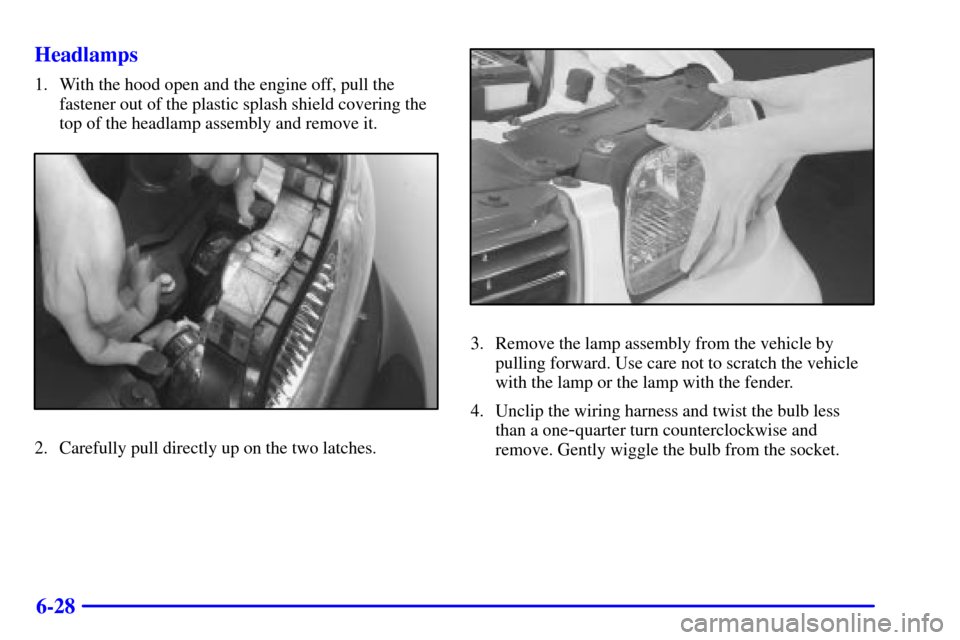
1. With the hood open and the engine off, pull the
fastener out of the plastic splash shield covering the
top of the headlamp assembly and remove it.
2. Carefully pull directly up on the two latches.
3. Remove the lamp assembly from the vehicle by
pulling forward. Use care not to scratch the vehicle
with the lamp or the lamp with the fender.
4. Unclip the wiring harness and twist the bulb less
than a one
-quarter turn counterclockwise and
remove. Gently wiggle the bulb from the socket.
6-30 Front Turn Signal Lamp Bulb Replacement
1. With the hood open and the engine off, pull the
fastener out of the plastic splash shield covering the
top of the headlamp assembly and remove it.
2. Carefully pull directly up on the two latches.
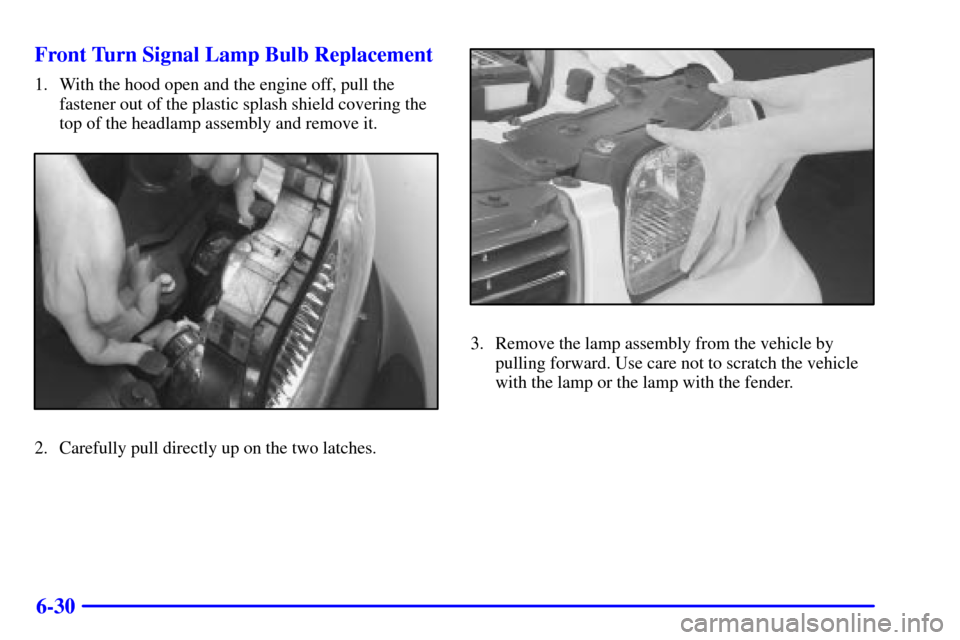
3. Remove the lamp assembly from the vehicle by
pulling forward. Use care not to scratch the vehicle
with the lamp or the lamp with the fender.
7-28 At Least Twice a Year
Restraint System Check
Make sure the safety belt reminder light and all your
belts, buckles, latch plates, retractors and anchorages are
working properly. Look for any other loose or damaged
safety belt system parts. If you see anything that might
keep a safety belt system from doing its job, have it
repaired. Have any torn or frayed safety belts replaced.
Also look for any opened or broken air bag coverings,
and have them repaired or replaced. (The air bag system
does not need regular maintenance.)
Wiper Blade Check
Inspect wiper blades for wear or cracking. Replace blade
inserts that appear worn or damaged or that streak or
miss areas of the windshield. Also see ªWiper Blades,
Cleaningº in the Index.
Weatherstrip Lubrication
Silicone grease on weatherstrips will make them last
longer, seal better, and not stick or squeak. Apply
silicone grease with a clean cloth. During very cold,
damp weather more frequent application may be
required. (See ªRecommended Fluids and Lubricantsº in
the Index.)Automatic Transaxle Inspection
It is not necessary to check the transaxle fluid level.
A transaxle fluid leak is the only reason for fluid loss.
Check for leaks. If a leak occurs, take the vehicle to
your Chevrolet dealership service department and have
it repaired as soon as possible.
At Least Once a Year
Key Lock Cylinders Service
Lubricate the key lock cylinders with the lubricant
specified in Part D.
Body Lubrication Service
Lubricate all the body door hinges and latches, including
those for the hood and the trunk lid. Part D tells you
what to use. More frequent lubrication may be required
when exposed to a corrosive environment.