Page 194 of 330
Vehicl
e Stabilit y Assis t (VSA ) Syste m
VSA is turned on every time you start the engine, even if you turned it
off the last time you drove the car. VS
A an d Tir e Size s
Driving with varying tire or wheel sizes may cause the VSA to
malfunction. When replacing tires,
make sure they are of the same size and type as your original tires (see
page 245).
Deactivate the VSA system if you
need to drive with the compact spare
tire installed (see page 270).If you install winter tires, make sure
they are the same size as those that
were originally supplied with your car. Exercise the same cautionduring winter driving as you would if
your car was not equipped with VSA.
Driving
Page 196 of 330
Drivin
g in Ba d Weathe r
Visibilit y — Being able to see
clearly in all directions and being
visible to other drivers are important in all weather conditions. This is
more difficult in bad weather. To be seen more clearly during daylight
hours, turn on your headlights.
Inspect your windshield wipers and
washers frequently. Keep the wind- shield washer reservoir full of the
proper fluid. Have the windshield
wiper blades replaced if they start to streak the windshield or leave parts
unwiped. Use the defroster and air conditioning to keep the windows
from fogging up on the inside (see
pages 126 and 131). Tractio
n — Check your tires
frequently for wear and proper pressure. Both are important in
preventing "hydroplaning" (loss of
traction on a wet surface). In the
winter, mount snow tires on all four
wheels for the best handling.
Watch road conditions carefully, they can change from moment to
moment. Wet leaves can be as slip-
pery as ice. "Clear" roads can have
patches of ice. Driving conditions can be very hazardous when the
outside temperature is near freezing.
The road surface can become covered with areas of water puddles
mixed with areas of ice, so your
traction can change without warning.
Be careful when downshifting. If
traction is low, you can lock up the drive wheels for a moment and cause
a skid. Be very cautious when passing, or
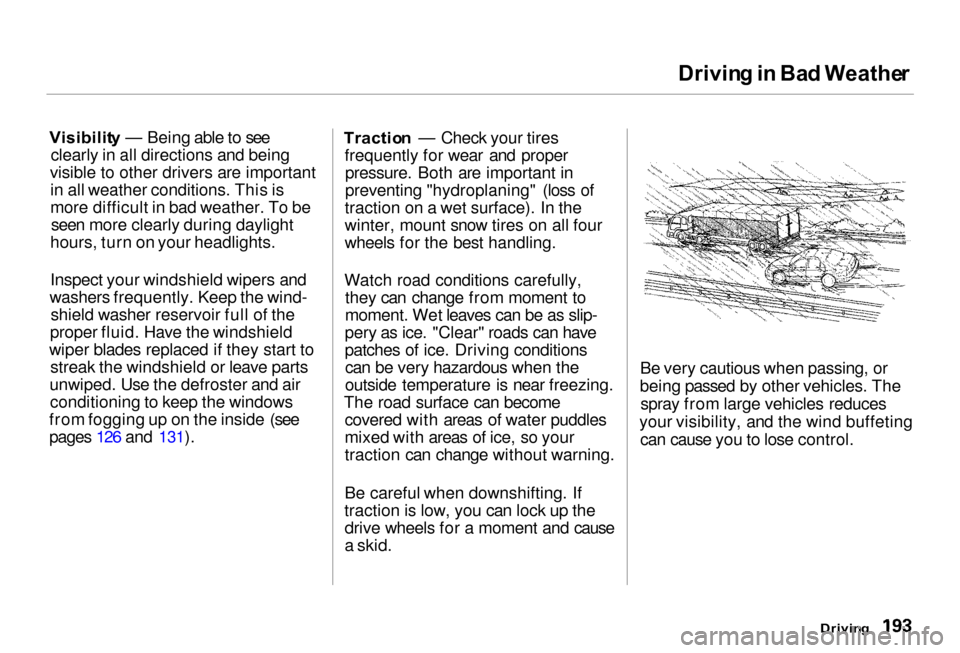
being passed by other vehicles. The spray from large vehicles reduces
your visibility, and the wind buffeting can cause you to lose control.
Driving
Page 204 of 330

Maintenanc
e
This section explains why it is important to keep your car well
maintained and to follow basic
maintenance safety precautions.
This section also includes Maintenance Schedules for normal
driving and severe driving conditions,
a Maintenance Record, and instruc-
tions for simple maintenance tasks
you may want to take care of
yourself.
If you have the skills and tools to per-
form more complex maintenance tasks on your Acura, you may want
to purchase the Service Manual. See
page 315 for information on how to obtain a copy, or see your Acura
dealer.
Maintenance Safety....................... 202
Important Safety Precautions.. 203
Maintenance Schedule.................. 204
Required Maintenance Record.... 211
Owner Maintenance Checks........ 213
Fluid Locations............................... 214
Engine Oil....................................... 215 Adding Oil................................... 215
Recommended Oil..................... 215
Synthetic Oil............................... 216
Additives..................................... 216 Changing the Oil and Filter...... 217
Cooling System.............................. 219 Adding Engine Coolant............. 219Replacing Engine Coolant........ 221
Windshield Washers..................... 225
Automatic Transmission Fluid..... 226
Differential Oil............................... 227
Brake Fluid..................................... 227
Brake System............................. 228
Power Steering............................... 228
Hood Latch..................................... 229
Air Cleaner Element...................... 229 Spark Plugs..................................... 231 Replacement............................... 231
Specifications............................. 234 Battery............................................ 234
Wiper Blades.................................. 237
Air Conditioning System............... 239
Air Conditioning Filter.................. 240
Drive Belts...................................... 240
Timing Belt..................................... 241 Tires................................................ 241 Inflation....................................... 241
Inspection................................... 243
Maintenance............................... 244
Tire Rotation.............................. 244
Replacing Tires and Wheels.... 245
Wheels and Tires....................... 246
Winter Driving........................... 246
Snow Tires.............................. 247
Tire Chains............................. 247
Lights.............................................. 248 Replacing Bulbs......................... 250
Storing Your Car............................ 259
Maintenance
Page 249 of 330

Tire
s
The ABS and VSA system work by comparing the speed of the wheels.
When replacing tires, use the same size originally supplied with the car.
Tire size and construction can affect wheel speed and may cause the system to work inconsistently.
If you ever need to replace a wheel,
make sure you use an identical style
aluminum alloy wheel that originally
came on your Acura. Replacement
wheels are available at your Acura
dealer.
Wheel
s an d Tire s
Wheels:16x 7 J J
Tires:
P215/60R1694 V
See page 301 for information about
DOT Tire Quality Grading.
Winte
r Drivin g
Tires that are marked "M
+ S" or
"All Season
" on the sidewall have an
all-weather tread design. They should be suitable for most winter
driving conditions. Tires without
these markings are designed for optimum traction in dry conditions.
They may not provide adequate performance in winter driving.For the best performance in snowy
or icy conditions, you should installsnow tires or tire chains. They may
be required by local laws under certain conditions.
Maintenanc e
