Page 142 of 248
Automatic locking modeÐ in this mode, the shoulder belt is
automatically pre-locked to limit the child's movement in the seat. The
belt will still retract to remove any slack in the shoulder belts. The
automatic locking mode should be used if the child is sleeping or
attempting to get out of the seat.
The retractor will switch from the vehicle sensitive mode to the
automatic locking mode when the left hand shoulder belt is pulled all the
way out. The retractor will switch back to the vehicle sensitive mode
when the belts are unbuckled and the shoulder belts retract completely.
Frequently check the child seat's lap and shoulder harness belts for
correct placement and tightness. Use the child seat only if the harness
belts will stay snug when belts are placed into the lock mode with a child
in the seat. If belts do not remain snug, take the vehicle to the dealer for
child seat repair.
Always adjust the lap and shoulder harness belts provided with this child
seat snugly around your child.
Placing your child in the built-in child seat
Failure to follow all of the instructions on the use of this child
restraint system can result in your child striking the vehicle's
interior during a sudden stop or crash.
Never use the Built-In Child Seat as a booster cushion with the
adult safety belts. A child using the adult belts could slide
forward and out from under the safety belts.
Seating and safety restraints
142
Page 143 of 248
1. Ensure head restraint is in the
down position, then pull child seat
down completely. The child seat can
only be folded down when the head
restraint is in the down position.
The head restraint cannot be raised
when the child seat is folded down.
2. Read the information and
warnings on both sides of the child
seat cushion protector flap. Check
the child's size, weight and age to be
sure the child is not too small or too
large for the child seat. Then fold
the flap down onto the adult seat
cushion.
3. If connected, disconnect the chest clip and buckles.
4. Place the child on the child seat
and position the shoulder belts over
each shoulder.
Seating and safety restraints
143
Page 144 of 248
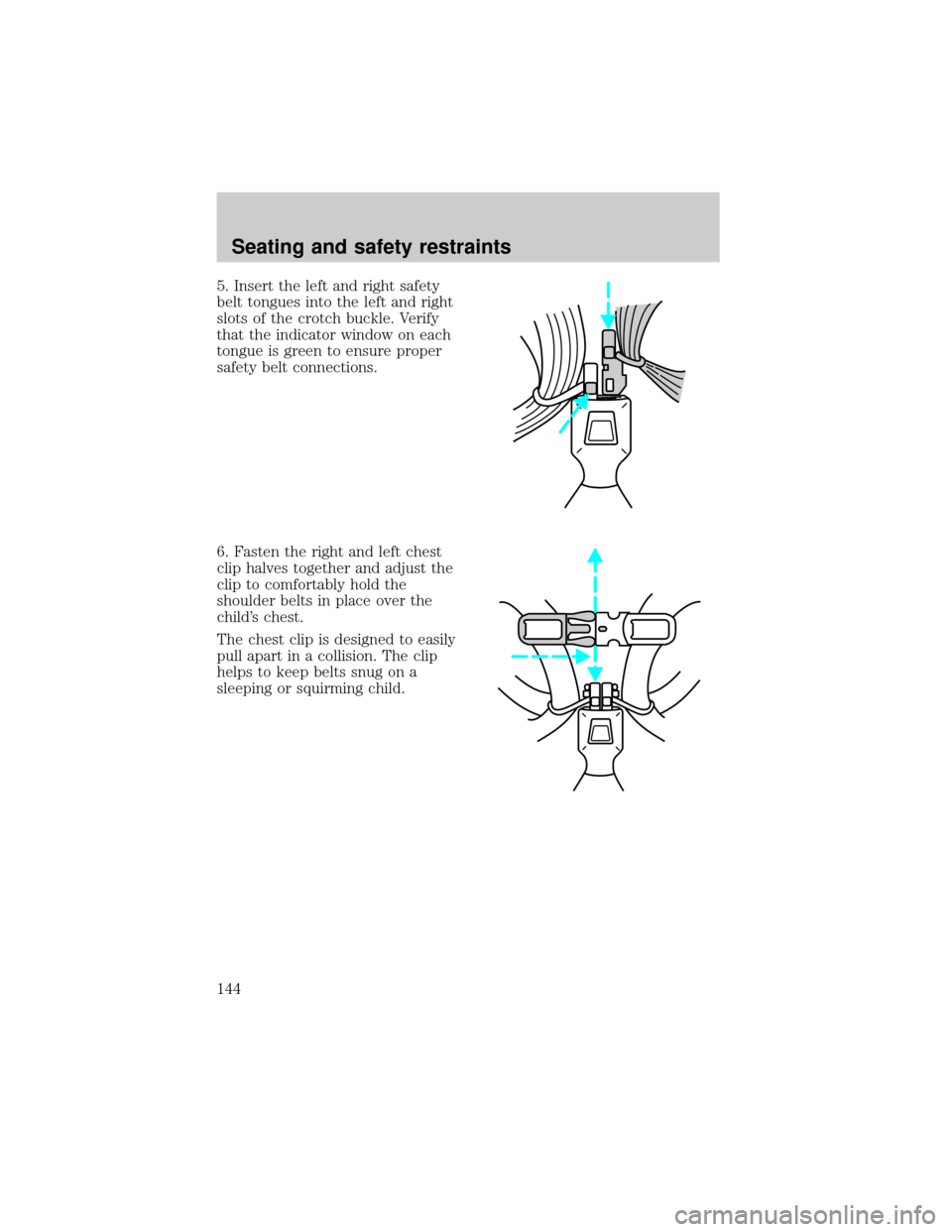
5. Insert the left and right safety
belt tongues into the left and right
slots of the crotch buckle. Verify
that the indicator window on each
tongue is green to ensure proper
safety belt connections.
6. Fasten the right and left chest
clip halves together and adjust the
clip to comfortably hold the
shoulder belts in place over the
child's chest.
The chest clip is designed to easily
pull apart in a collision. The clip
helps to keep belts snug on a
sleeping or squirming child.
Seating and safety restraints
144
Page 145 of 248

7. Pull on the safety belt tongues to
ensure that they are both securely
latched. If they are not properly
latched, repeat steps five through
seven.
Activating the automatic locking mode on the built-in child safety
seat
1. Fully extend the left shoulder belt.
2. Allow the belts to tighten snugly against the child's shoulders. As the
belt retracts, you will hear a clicking sound which indicates the safety
belt is now in the automatic locking mode.
Deactivating the automatic locking mode on the built-in child
safety seat
1. Disconnect the chest clip and remove the left and right safety belt
tongues from the crotch buckle.
2. Allow the shoulder belts to fully retract.
Removing your child from the built-in child seat
1. Disconnect the chest clip by
squeezing the release tabs together
and pulling the two sides apart.
2. Press the release button on the
crotch buckle.
3. Slide the shoulder belts off the
child's shoulders and remove the
child from the seat.
Seating and safety restraints
145
Page 147 of 248

PREPARING TO START YOUR VEHICLE
Engine starting is controlled by the ignition system. This system meets
all Canadian Interference-Causing Equipment standard requirements
regulating the impulse electrical field strength of radio noise.
When starting a fuel-injected engine, avoid pressing the accelerator
before or during starting. Only use the accelerator when you have
difficulty starting the engine. For more information on starting the
vehicle, refer toStarting the enginein this chapter.
Extended idling at high engine speeds can produce very high
temperatures in the engine and exhaust system, creating the risk
of fire or other damage.
Do not park, idle, or drive your vehicle in dry grass or other dry
ground cover. The emission system heats up the engine
compartment and exhaust system, which can start a fire.
Do not start your vehicle in a closed garage or in other enclosed
areas. Exhaust fumes can be toxic. Always open the garage door
before you start the engine. SeeGuarding against exhaust fumesin
this chapter for more instructions.
If you smell exhaust fumes inside your vehicle, have your dealer
inspect your vehicle immediately. Do not drive if you smell
exhaust fumes.
Important safety precautions
A computer system controls the engine's idle revolutions per minute
(RPM). When the engine starts, the idle RPM runs faster to warm the
engine. If the engine idle speed does not slow down automatically, have
the vehicle checked. Do not allow the vehicle to idle for more than ten
minutes at the higher engine RPM.
Before starting the vehicle:
1. Make sure all vehicle occupants have buckled their safety belts. For
more information on safety belts and their proper usage, refer to the
Seating and safety restraintschapter.
Starting
147
Page 149 of 248
²If the driver's safety belt is fastened, thelight may not illuminate.
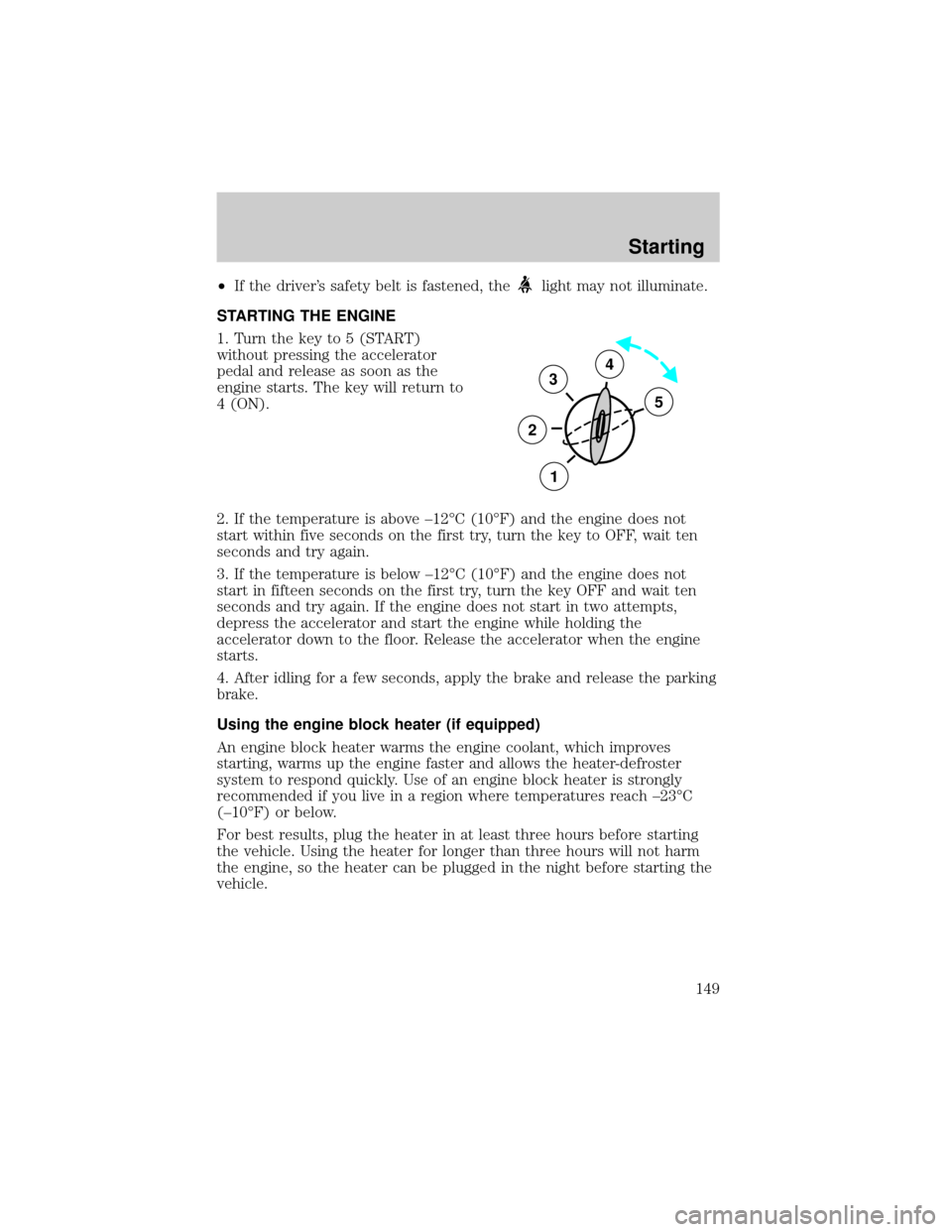
STARTING THE ENGINE
1. Turn the key to 5 (START)
without pressing the accelerator
pedal and release as soon as the
engine starts. The key will return to
4 (ON).
2. If the temperature is above ±12ÉC (10ÉF) and the engine does not
start within five seconds on the first try, turn the key to OFF, wait ten
seconds and try again.
3. If the temperature is below ±12ÉC (10ÉF) and the engine does not
start in fifteen seconds on the first try, turn the key OFF and wait ten
seconds and try again. If the engine does not start in two attempts,
depress the accelerator and start the engine while holding the
accelerator down to the floor. Release the accelerator when the engine
starts.
4. After idling for a few seconds, apply the brake and release the parking
brake.
Using the engine block heater (if equipped)
An engine block heater warms the engine coolant, which improves
starting, warms up the engine faster and allows the heater-defroster
system to respond quickly. Use of an engine block heater is strongly
recommended if you live in a region where temperatures reach ±23ÉC
(±10ÉF) or below.
For best results, plug the heater in at least three hours before starting
the vehicle. Using the heater for longer than three hours will not harm
the engine, so the heater can be plugged in the night before starting the
vehicle.
3
2
1
5
4
Starting
149
Page 185 of 248
5. Be sure that the cables are clear of fan blades, belts and other moving
parts of both engines.
Jump starting
1. Start the engine of the booster vehicle and run the engine at
moderately increased speed.
2. Start the engine of the disabled vehicle.
3. Once the disabled vehicle has been started, run both engines for a
further three minutes before disconnecting the jumper cables.
Removing the jumper cables
Remove the jumper cables in the reverse order that they were
connected.
1. Remove the jumper cable from thegroundmetal surface.
2. Remove the jumper cable on the negative (-) connection of the
booster vehicle's battery.
+–+–
+–+–
Roadside emergencies
185
Page 187 of 248
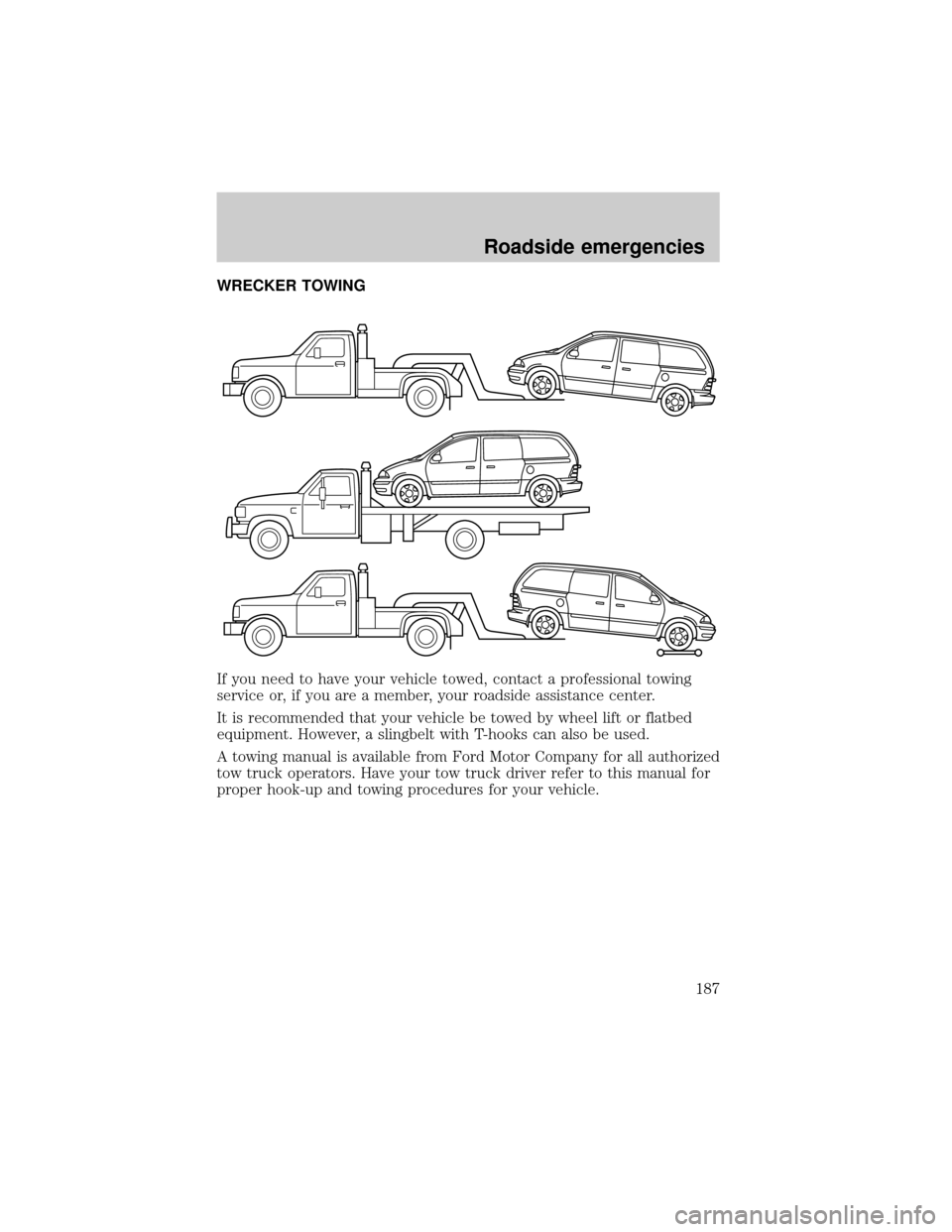
WRECKER TOWING
If you need to have your vehicle towed, contact a professional towing
service or, if you are a member, your roadside assistance center.
It is recommended that your vehicle be towed by wheel lift or flatbed
equipment. However, a slingbelt with T-hooks can also be used.
A towing manual is available from Ford Motor Company for all authorized
tow truck operators. Have your tow truck driver refer to this manual for
proper hook-up and towing procedures for your vehicle.
Roadside emergencies
187