Page 140 of 248
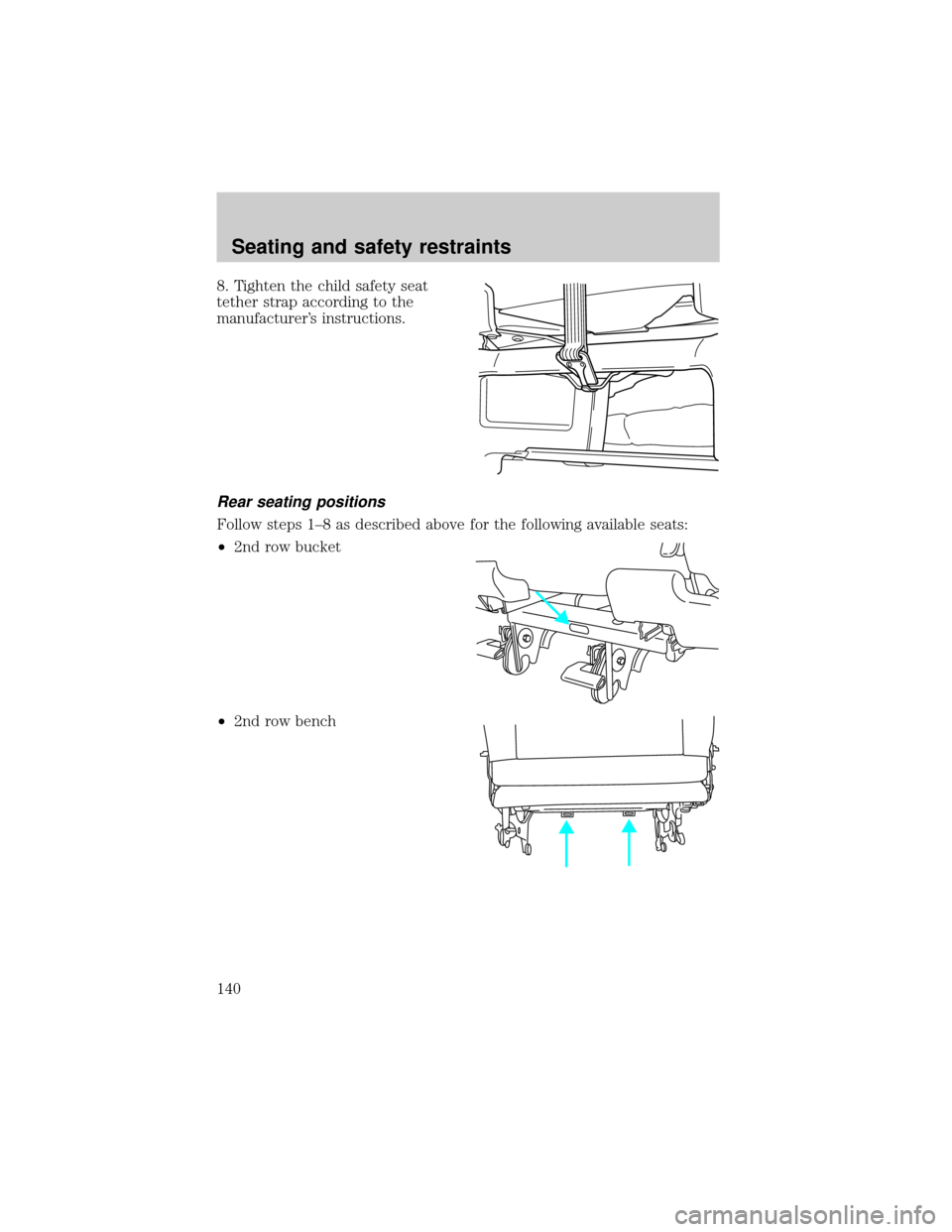
8. Tighten the child safety seat
tether strap according to the
manufacturer's instructions.
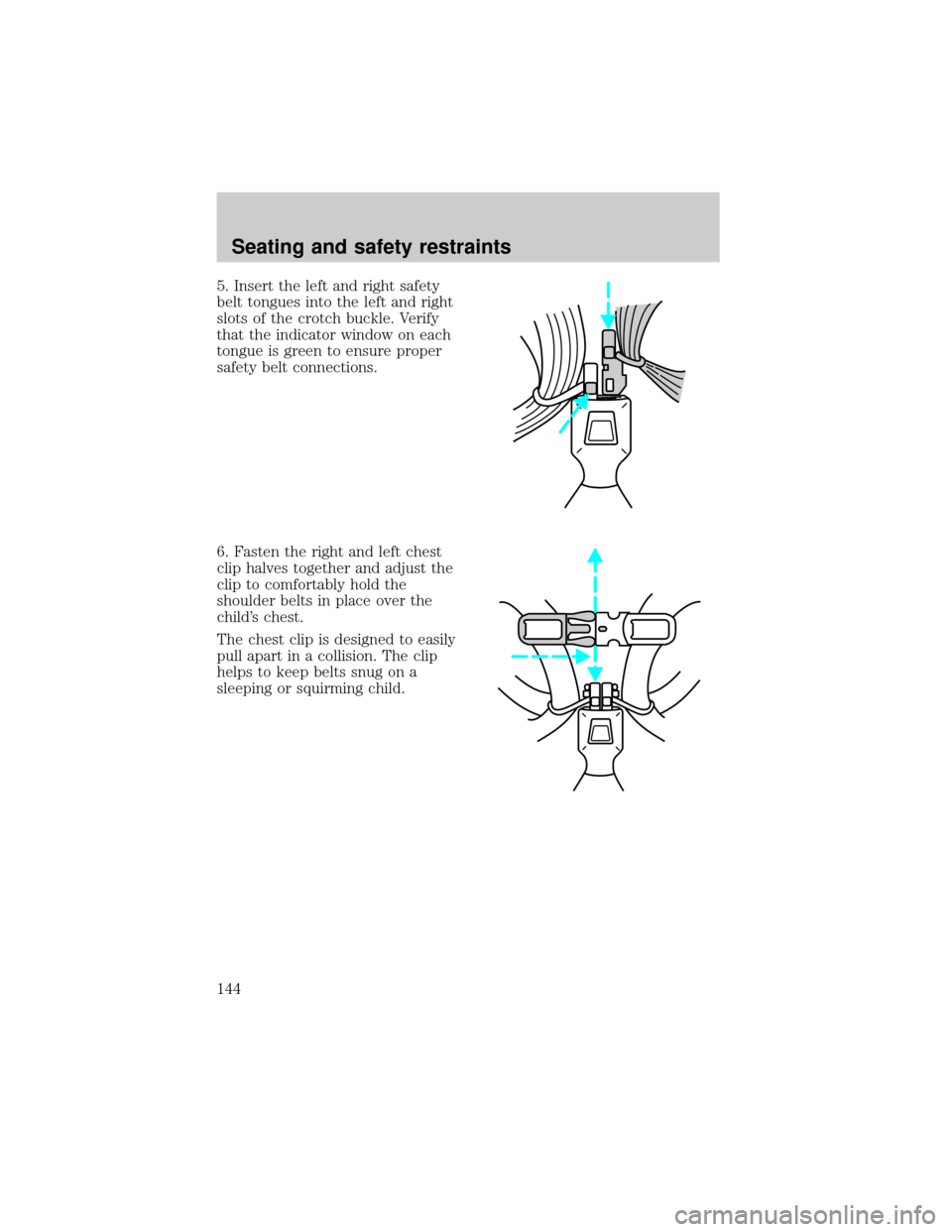
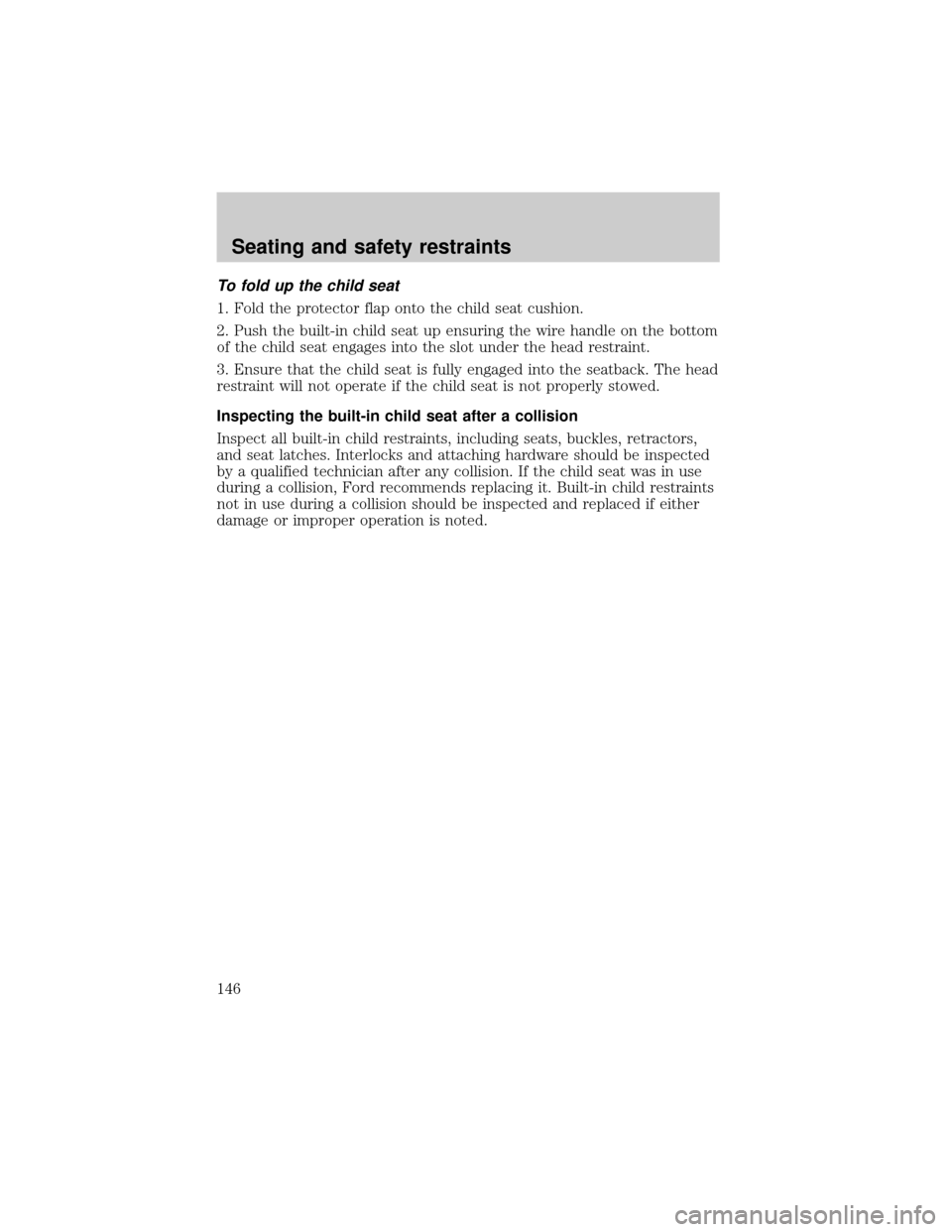
Rear seating positions
Follow steps 1±8 as described above for the following available seats:
²2nd row bucket
²2nd row bench
Seating and safety restraints
140
Page 141 of 248
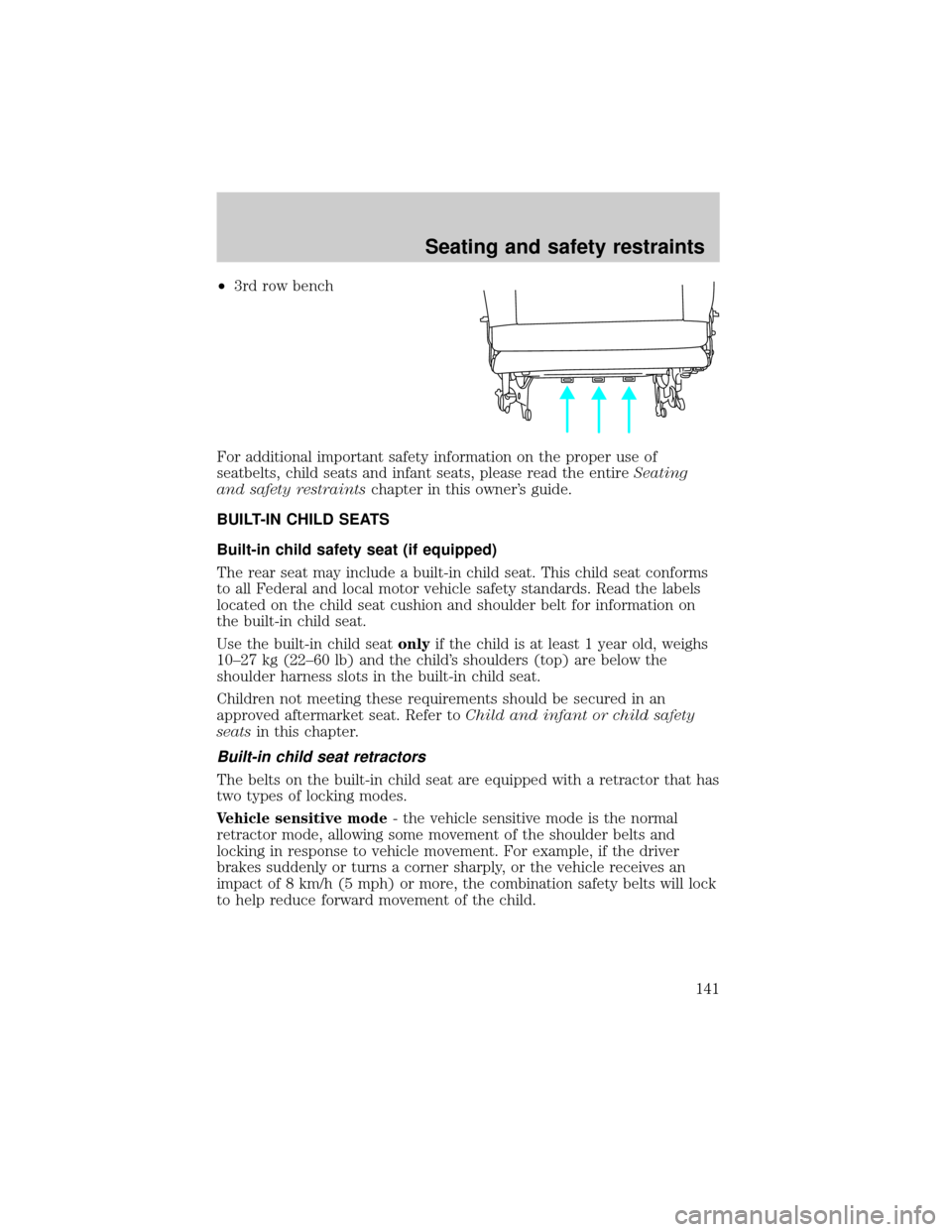
²3rd row bench
For additional important safety information on the proper use of
seatbelts, child seats and infant seats, please read the entireSeating
and safety restraintschapter in this owner's guide.
BUILT-IN CHILD SEATS
Built-in child safety seat (if equipped)
The rear seat may include a built-in child seat. This child seat conforms
to all Federal and local motor vehicle safety standards. Read the labels
located on the child seat cushion and shoulder belt for information on
the built-in child seat.
Use the built-in child seatonlyif the child is at least 1 year old, weighs
10±27 kg (22±60 lb) and the child's shoulders (top) are below the
shoulder harness slots in the built-in child seat.
Children not meeting these requirements should be secured in an
approved aftermarket seat. Refer toChild and infant or child safety
seatsin this chapter.
Built-in child seat retractors
The belts on the built-in child seat are equipped with a retractor that has
two types of locking modes.
Vehicle sensitive mode- the vehicle sensitive mode is the normal
retractor mode, allowing some movement of the shoulder belts and
locking in response to vehicle movement. For example, if the driver
brakes suddenly or turns a corner sharply, or the vehicle receives an
impact of 8 km/h (5 mph) or more, the combination safety belts will lock
to help reduce forward movement of the child.
Seating and safety restraints
141
Page 142 of 248
Automatic locking modeÐ in this mode, the shoulder belt is
automatically pre-locked to limit the child's movement in the seat. The
belt will still retract to remove any slack in the shoulder belts. The
automatic locking mode should be used if the child is sleeping or
attempting to get out of the seat.
The retractor will switch from the vehicle sensitive mode to the
automatic locking mode when the left hand shoulder belt is pulled all the
way out. The retractor will switch back to the vehicle sensitive mode
when the belts are unbuckled and the shoulder belts retract completely.
Frequently check the child seat's lap and shoulder harness belts for
correct placement and tightness. Use the child seat only if the harness
belts will stay snug when belts are placed into the lock mode with a child
in the seat. If belts do not remain snug, take the vehicle to the dealer for
child seat repair.
Always adjust the lap and shoulder harness belts provided with this child
seat snugly around your child.
Placing your child in the built-in child seat
Failure to follow all of the instructions on the use of this child
restraint system can result in your child striking the vehicle's
interior during a sudden stop or crash.
Never use the Built-In Child Seat as a booster cushion with the
adult safety belts. A child using the adult belts could slide
forward and out from under the safety belts.
Seating and safety restraints
142
Page 143 of 248
1. Ensure head restraint is in the
down position, then pull child seat
down completely. The child seat can
only be folded down when the head
restraint is in the down position.
The head restraint cannot be raised
when the child seat is folded down.
2. Read the information and
warnings on both sides of the child
seat cushion protector flap. Check
the child's size, weight and age to be
sure the child is not too small or too
large for the child seat. Then fold
the flap down onto the adult seat
cushion.
3. If connected, disconnect the chest clip and buckles.
4. Place the child on the child seat
and position the shoulder belts over
each shoulder.
Seating and safety restraints
143
Page 144 of 248
5. Insert the left and right safety
belt tongues into the left and right
slots of the crotch buckle. Verify
that the indicator window on each
tongue is green to ensure proper
safety belt connections.
6. Fasten the right and left chest
clip halves together and adjust the
clip to comfortably hold the
shoulder belts in place over the
child's chest.
The chest clip is designed to easily
pull apart in a collision. The clip
helps to keep belts snug on a
sleeping or squirming child.
Seating and safety restraints
144
Page 145 of 248

7. Pull on the safety belt tongues to
ensure that they are both securely
latched. If they are not properly
latched, repeat steps five through
seven.
Activating the automatic locking mode on the built-in child safety
seat
1. Fully extend the left shoulder belt.
2. Allow the belts to tighten snugly against the child's shoulders. As the
belt retracts, you will hear a clicking sound which indicates the safety
belt is now in the automatic locking mode.
Deactivating the automatic locking mode on the built-in child
safety seat
1. Disconnect the chest clip and remove the left and right safety belt
tongues from the crotch buckle.
2. Allow the shoulder belts to fully retract.
Removing your child from the built-in child seat
1. Disconnect the chest clip by
squeezing the release tabs together
and pulling the two sides apart.
2. Press the release button on the
crotch buckle.
3. Slide the shoulder belts off the
child's shoulders and remove the
child from the seat.
Seating and safety restraints
145
Page 146 of 248
To fold up the child seat
1. Fold the protector flap onto the child seat cushion.
2. Push the built-in child seat up ensuring the wire handle on the bottom
of the child seat engages into the slot under the head restraint.
3. Ensure that the child seat is fully engaged into the seatback. The head
restraint will not operate if the child seat is not properly stowed.
Inspecting the built-in child seat after a collision
Inspect all built-in child restraints, including seats, buckles, retractors,
and seat latches. Interlocks and attaching hardware should be inspected
by a qualified technician after any collision. If the child seat was in use
during a collision, Ford recommends replacing it. Built-in child restraints
not in use during a collision should be inspected and replaced if either
damage or improper operation is noted.
Seating and safety restraints
146
Page 235 of 248
Cleaning and maintaining the safety belts
Clean the safety belts with a mild soap solution recommended for
cleaning upholstery or carpets. Do not bleach or dye the belts, because
these actions may weaken the belt webbing.
Check the safety belt system periodically to make sure there are no
nicks, wear or cuts. If your vehicle has been involved in an accident,
refer to theSafety belt maintenancesection in theSeating and safety
restraintschapter.
Cleaning the built-in child seat (if equipped)
Clean with mild soap and water. Do not use household cleaning products
because they may weaken the safety belt webbing or damage the vinyl
parts of the seat.
The child seat liner is removable and may be machine-washed and air
dried.
Inside windows
Use glass cleaner for the inside windows if they become fogged.
Cleaning mirrors
Do not clean your mirrors with a dry cloth or abrasive materials. Use a
soft cloth and mild detergent and water. Be careful when removing ice
from outside mirrors because you may damage the reflective surface.
Maintenance and care
235