Page 121 of 188
Fuse/Relay
LocationFuse Amp
RatingDescription
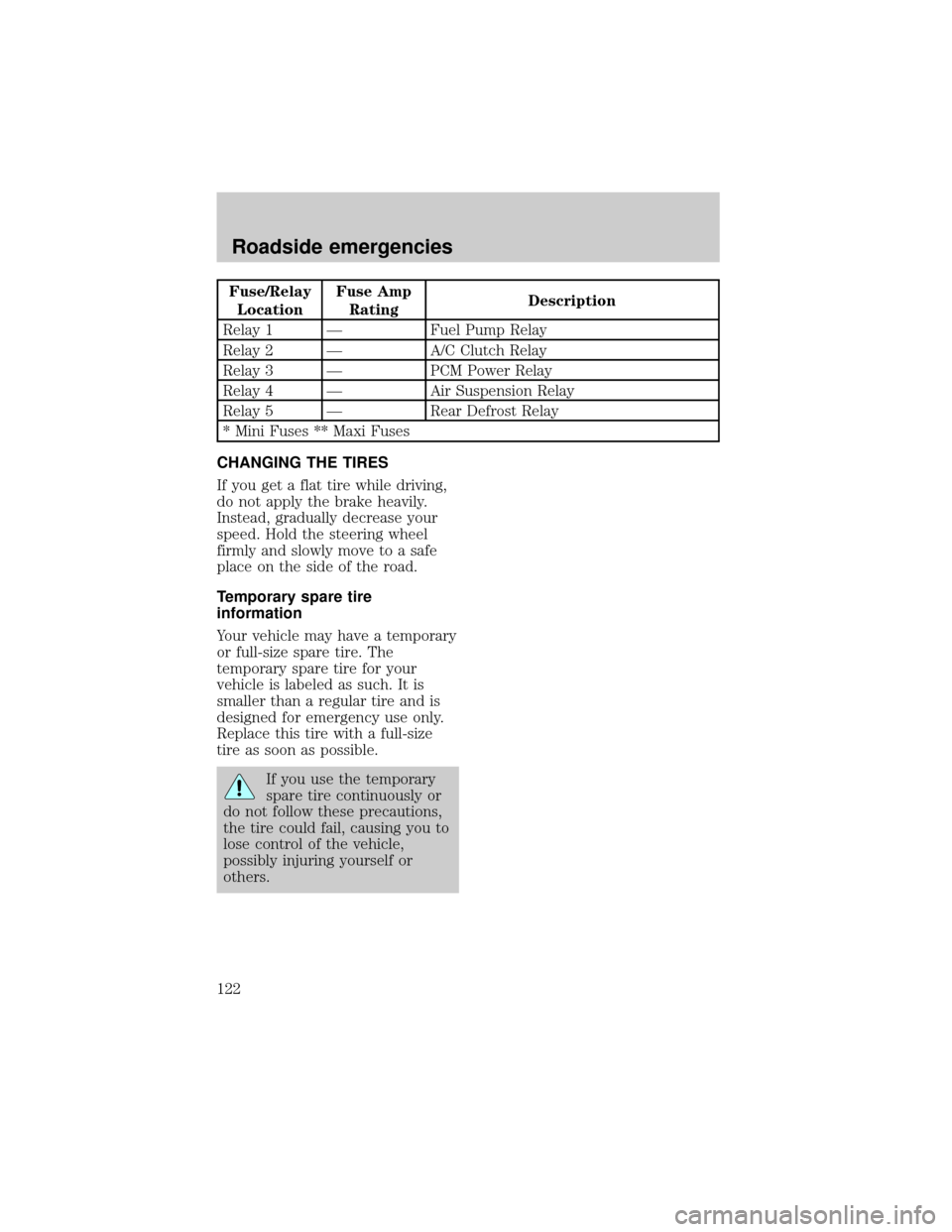
Relay 1 Ð Fuel Pump Relay
Relay 2 Ð A/C Clutch Relay
Relay 3 Ð PCM Power Relay
Relay 4 Ð Air Suspension Relay
Relay 5 Ð Rear Defrost Relay
* Mini Fuses ** Maxi Fuses
CHANGING THE TIRES
If you get a flat tire while driving,
do not apply the brake heavily.
Instead, gradually decrease your
speed. Hold the steering wheel
firmly and slowly move to a safe
place on the side of the road.
Temporary spare tire
information
Your vehicle may have a temporary
or full-size spare tire. The
temporary spare tire for your
vehicle is labeled as such. It is
smaller than a regular tire and is
designed for emergency use only.
Replace this tire with a full-size
tire as soon as possible.
If you use the temporary
spare tire continuously or
do not follow these precautions,
the tire could fail, causing you to
lose control of the vehicle,
possibly injuring yourself or
others.
Roadside emergencies
122
Page 124 of 188
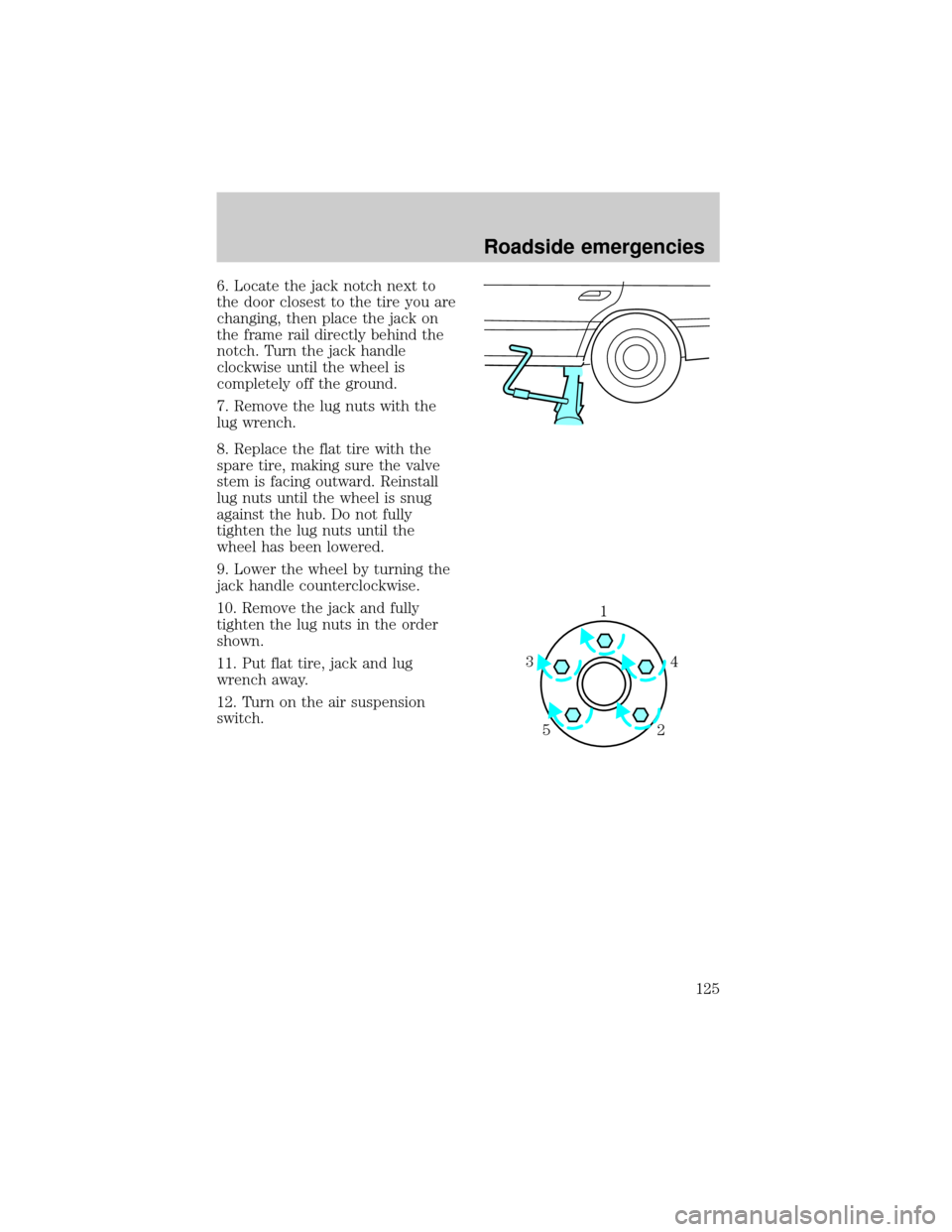
6. Locate the jack notch next to
the door closest to the tire you are
changing, then place the jack on
the frame rail directly behind the
notch. Turn the jack handle
clockwise until the wheel is
completely off the ground.
7. Remove the lug nuts with the
lug wrench.
8. Replace the flat tire with the
spare tire, making sure the valve
stem is facing outward. Reinstall
lug nuts until the wheel is snug
against the hub. Do not fully
tighten the lug nuts until the
wheel has been lowered.
9. Lower the wheel by turning the
jack handle counterclockwise.
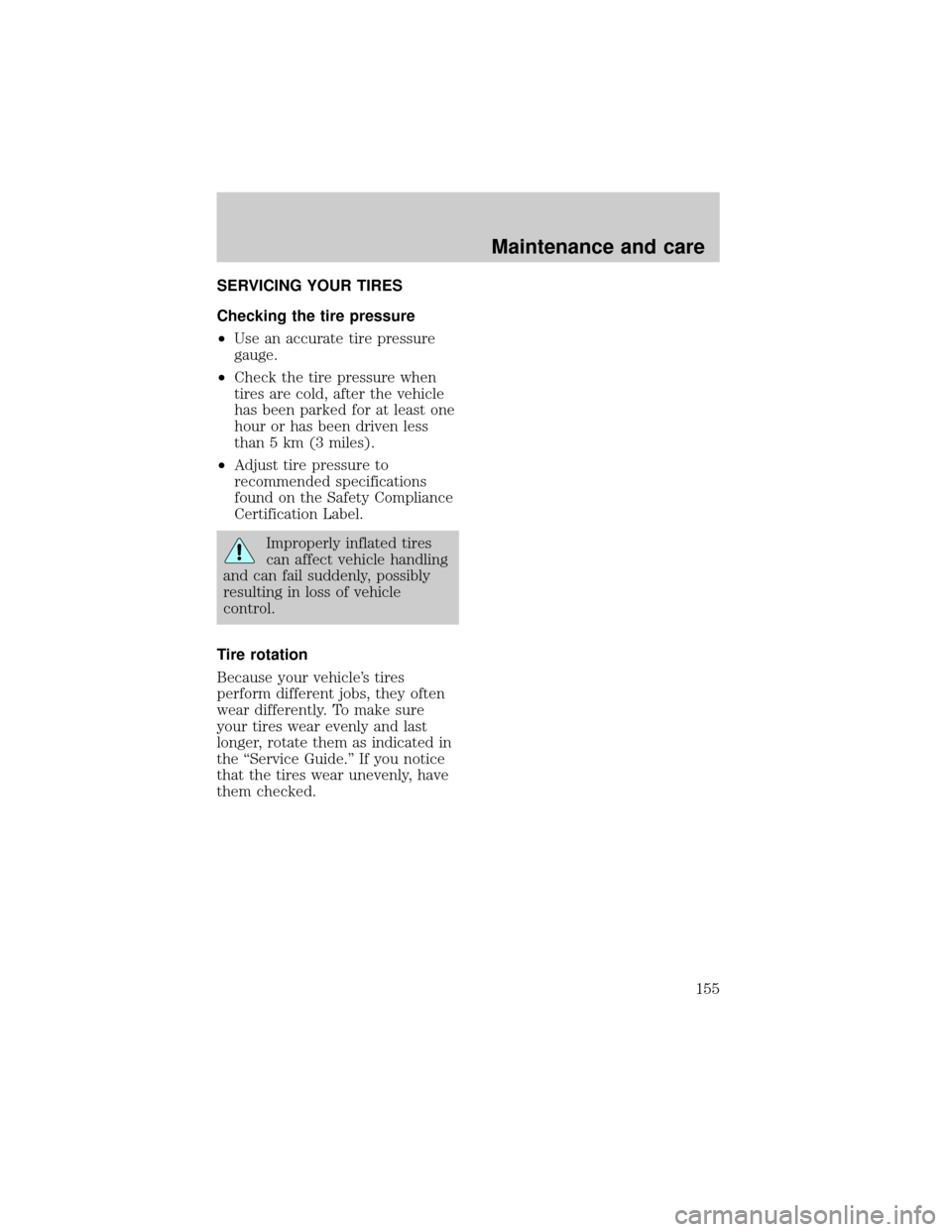
10. Remove the jack and fully
tighten the lug nuts in the order
shown.
11. Put flat tire, jack and lug
wrench away.
12. Turn on the air suspension
switch.
1
4 3
52
Roadside emergencies
125
Page 153 of 188
The traction grade
assigned to this tire is
based on braking (straight
ahead) traction tests and does
not include cornering (turning)
traction.
Temperature A B C
The temperature grades are A (the
highest), B, and C, representing
the tire's resistance to the
generation of heat and its ability to
dissipate heat when tested under
controlled conditions on a
specified indoor laboratory test
wheel. Sustained high temperature
can cause the material of the tire
to degenerate and reduce tire life,
and excessive temperature can
lead to sudden tire failure. The
grade C corresponds to a level of
performance which all passenger
car tires must meet under the
Federal Motor Vehicle Safety
Standard No. 109. Grades B and A
represent higher levels of
performance on the laboratory test
wheel than the minimum required
by law.
The temperature grade for
this tire is established for a
tire that is properly inflated and
not overloaded. Excessive speed,
underinflation, or excessive
loading, either separately or in
combination, can cause heat
buildup and possible tire failure.
Maintenance and care
154
Page 154 of 188
SERVICING YOUR TIRES
Checking the tire pressure
²Use an accurate tire pressure
gauge.
²Check the tire pressure when
tires are cold, after the vehicle
has been parked for at least one
hour or has been driven less
than 5 km (3 miles).
²Adjust tire pressure to
recommended specifications
found on the Safety Compliance
Certification Label.
Improperly inflated tires
can affect vehicle handling
and can fail suddenly, possibly
resulting in loss of vehicle
control.
Tire rotation
Because your vehicle's tires
perform different jobs, they often
wear differently. To make sure
your tires wear evenly and last
longer, rotate them as indicated in
the ªService Guide.º If you notice
that the tires wear unevenly, have
them checked.
Maintenance and care
155