Page 158 of 210
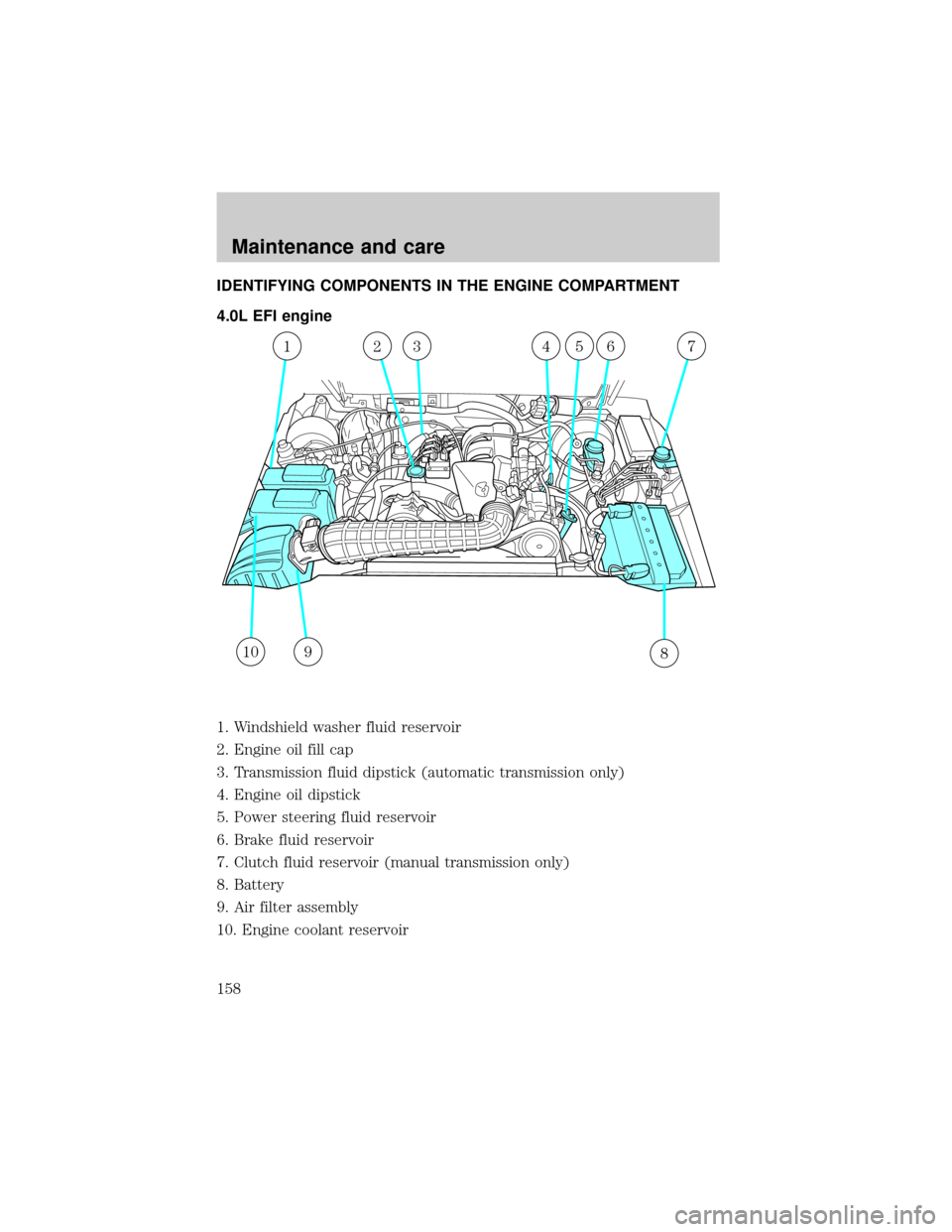
IDENTIFYING COMPONENTS IN THE ENGINE COMPARTMENT
4.0L EFI engine
1. Windshield washer fluid reservoir
2. Engine oil fill cap
3. Transmission fluid dipstick (automatic transmission only)
4. Engine oil dipstick
5. Power steering fluid reservoir
6. Brake fluid reservoir
7. Clutch fluid reservoir (manual transmission only)
8. Battery
9. Air filter assembly
10. Engine coolant reservoir
10
1235674
89
Maintenance and care
158
Page 159 of 210
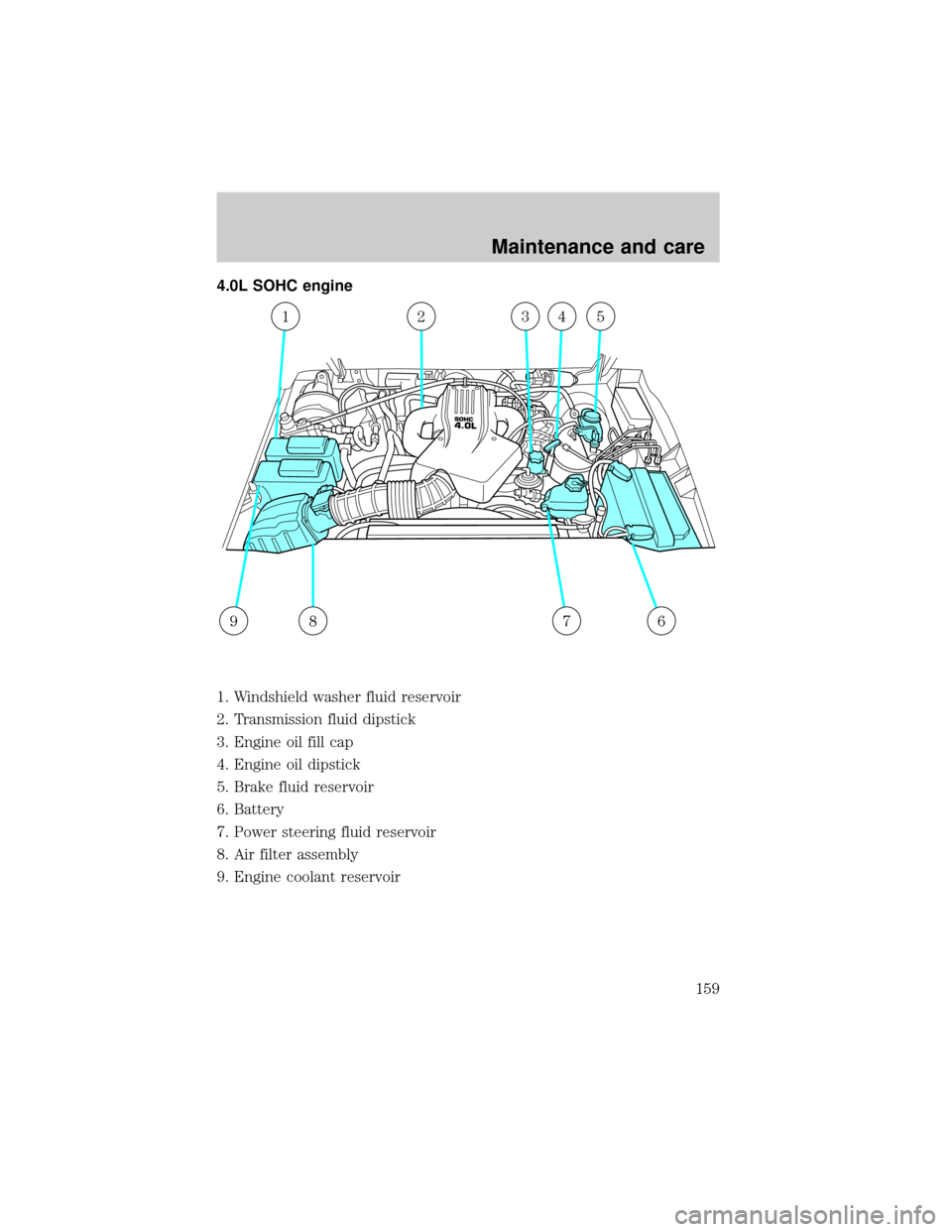
4.0L SOHC engine
1. Windshield washer fluid reservoir
2. Transmission fluid dipstick
3. Engine oil fill cap
4. Engine oil dipstick
5. Brake fluid reservoir
6. Battery
7. Power steering fluid reservoir
8. Air filter assembly
9. Engine coolant reservoir
9
13425
867
Maintenance and care
159
Page 160 of 210
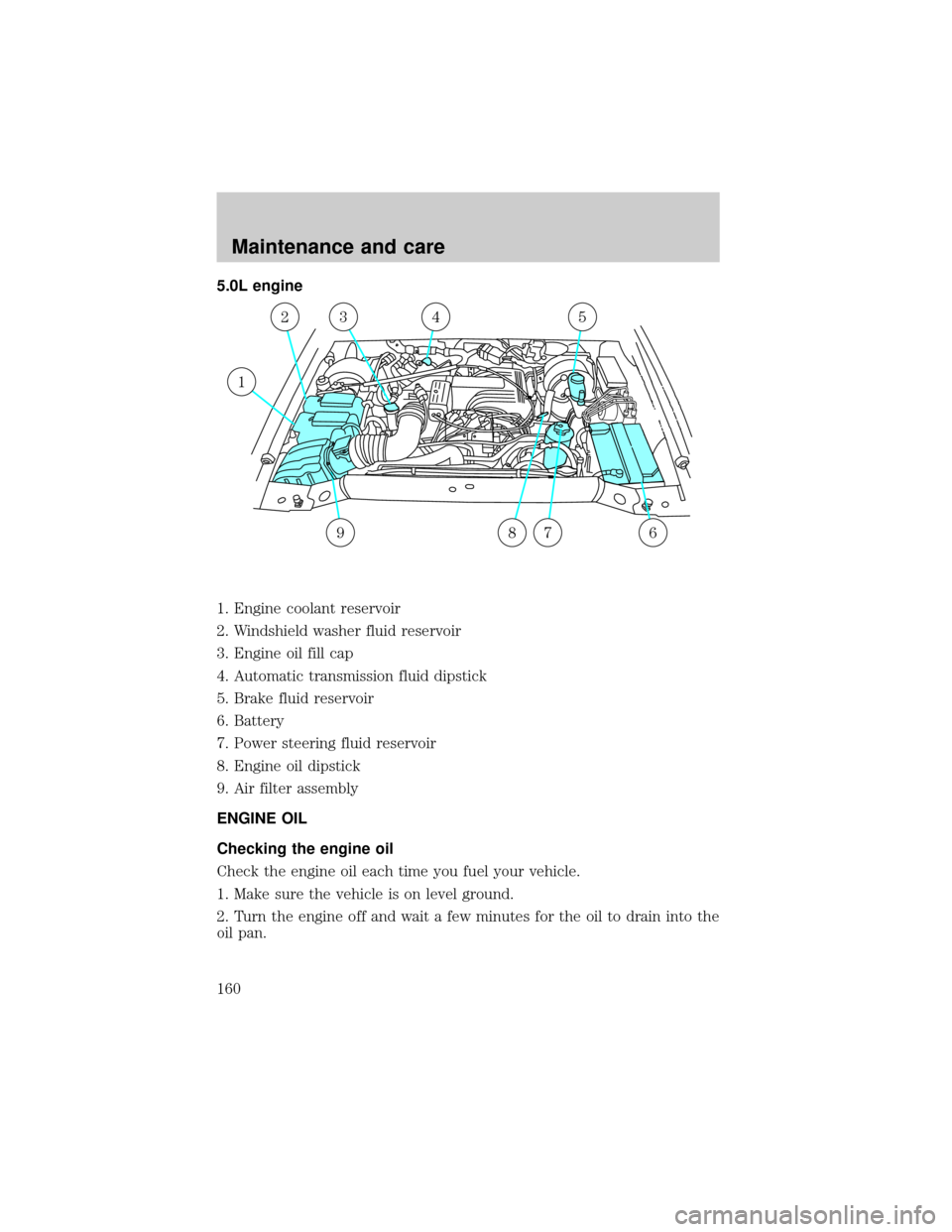
5.0L engine
1. Engine coolant reservoir
2. Windshield washer fluid reservoir
3. Engine oil fill cap
4. Automatic transmission fluid dipstick
5. Brake fluid reservoir
6. Battery
7. Power steering fluid reservoir
8. Engine oil dipstick
9. Air filter assembly
ENGINE OIL
Checking the engine oil
Check the engine oil each time you fuel your vehicle.
1. Make sure the vehicle is on level ground.
2. Turn the engine off and wait a few minutes for the oil to drain into the
oil pan.
1
23
6
54
879
Maintenance and care
160
Page 161 of 210
3. Set the parking brake and ensure the gearshift is securely latched in P
(Park) (automatic transmissions) or 1 (First) (manual transmissions).
4. Open the hood. Protect yourself from engine heat.
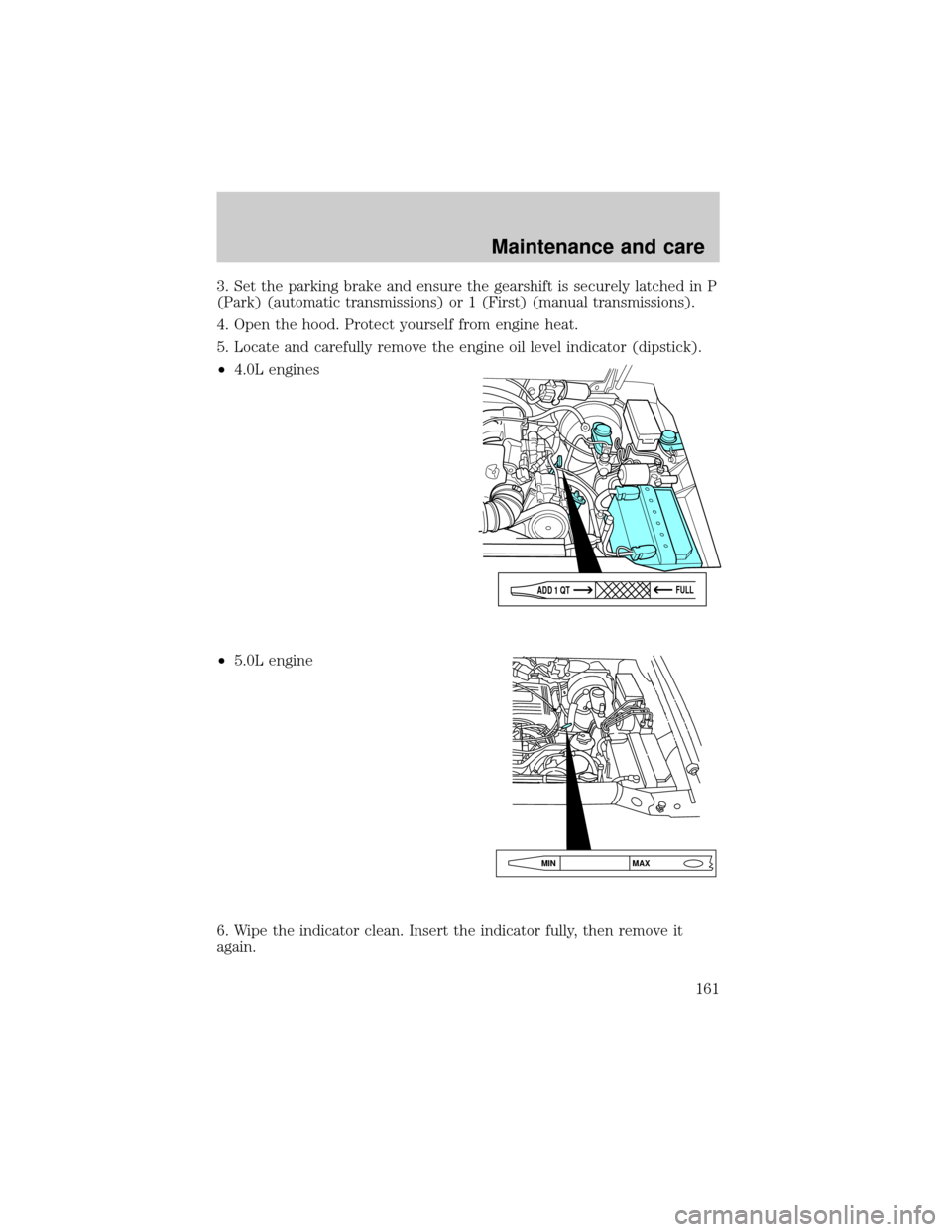
5. Locate and carefully remove the engine oil level indicator (dipstick).
²4.0L engines
²5.0L engine
6. Wipe the indicator clean. Insert the indicator fully, then remove it
again.
ADD 1 QTFULL
MAX MIN
Maintenance and care
161
Page 164 of 210
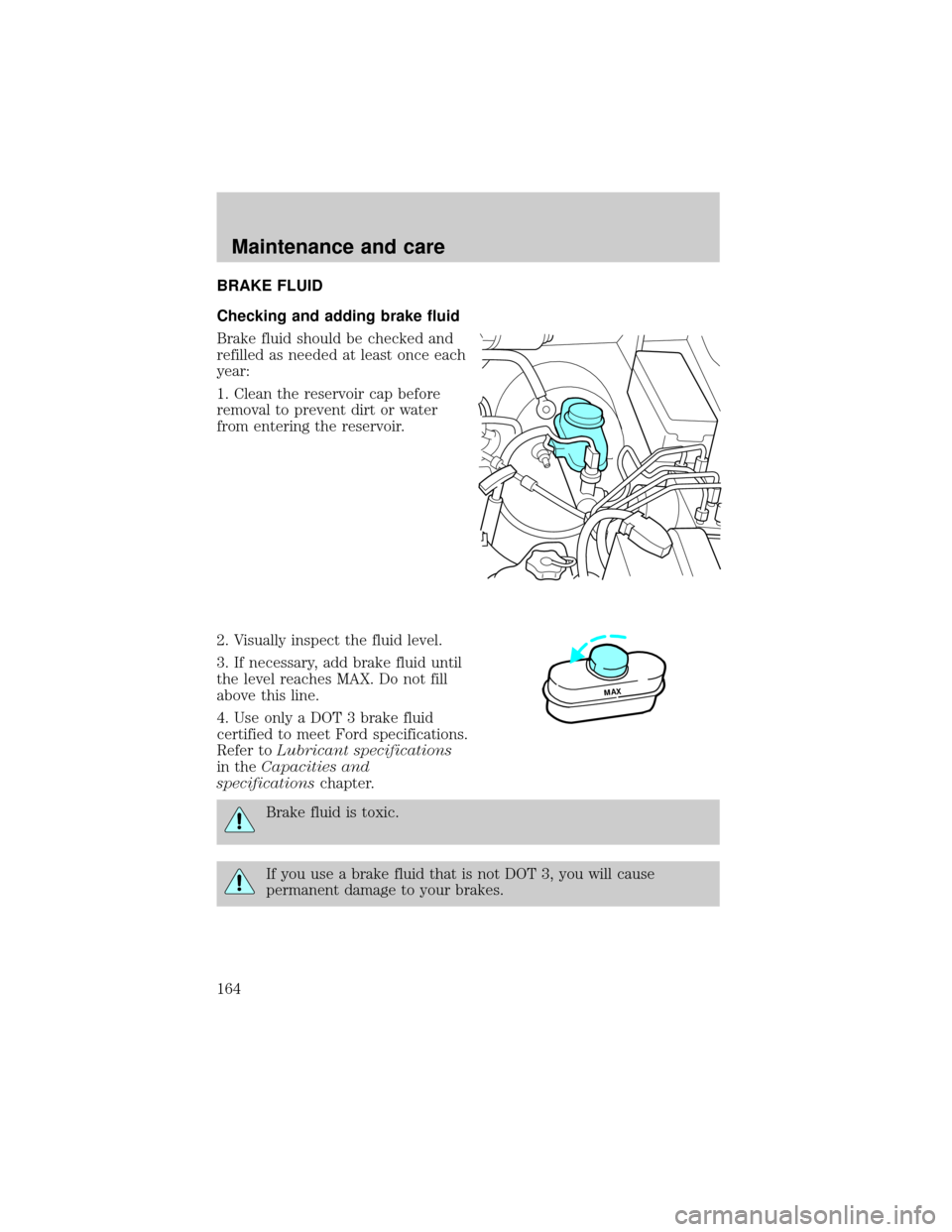
BRAKE FLUID
Checking and adding brake fluid
Brake fluid should be checked and
refilled as needed at least once each
year:
1. Clean the reservoir cap before
removal to prevent dirt or water
from entering the reservoir.
2. Visually inspect the fluid level.
3. If necessary, add brake fluid until
the level reaches MAX. Do not fill
above this line.
4. Use only a DOT 3 brake fluid
certified to meet Ford specifications.
Refer toLubricant specifications
in theCapacities and
specificationschapter.
Brake fluid is toxic.
If you use a brake fluid that is not DOT 3, you will cause
permanent damage to your brakes.
MAX
Maintenance and care
164
Page 165 of 210
Do not let the reservoir for the master cylinder run dry. This
may cause the brakes to fail.
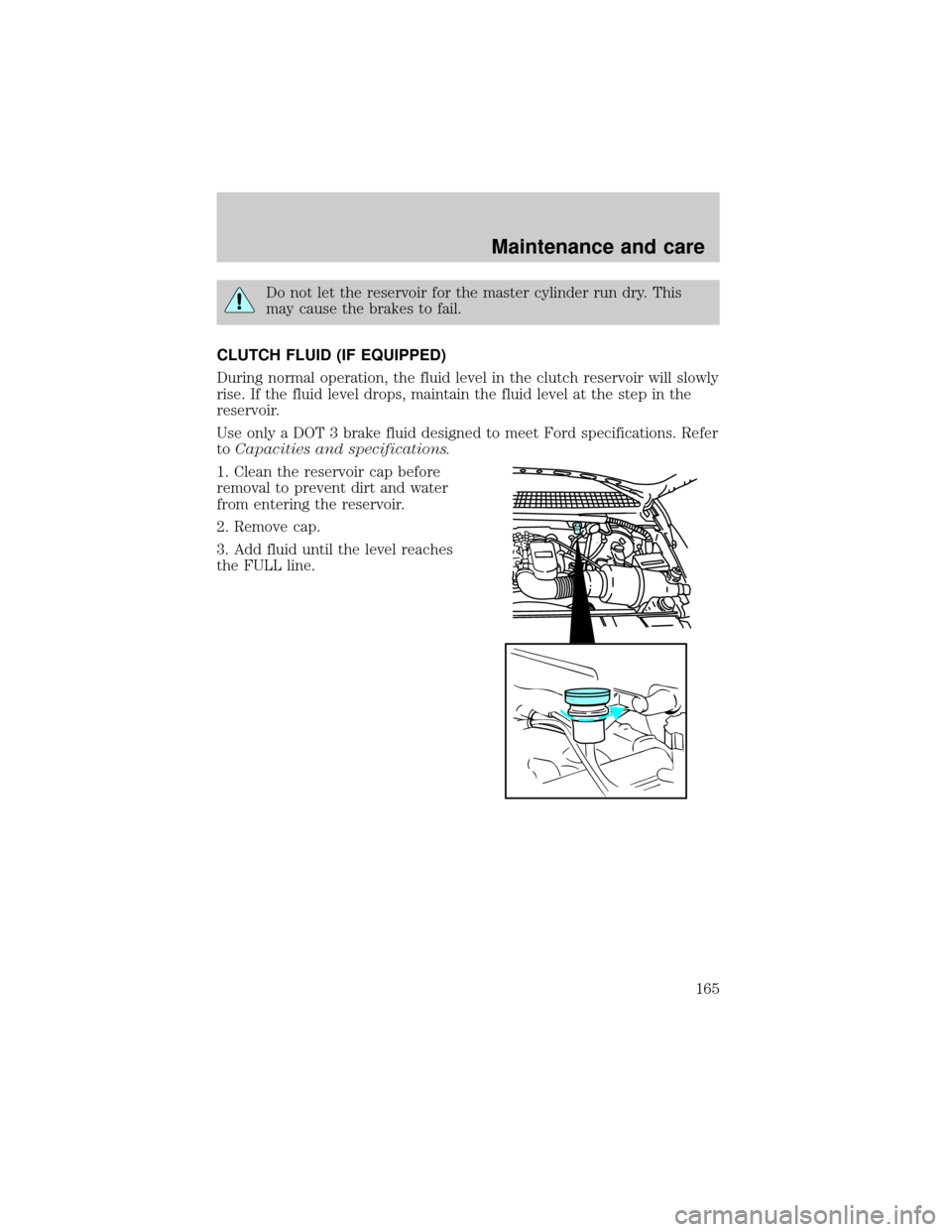
CLUTCH FLUID (IF EQUIPPED)
During normal operation, the fluid level in the clutch reservoir will slowly
rise. If the fluid level drops, maintain the fluid level at the step in the
reservoir.
Use only a DOT 3 brake fluid designed to meet Ford specifications. Refer
toCapacities and specifications.
1. Clean the reservoir cap before
removal to prevent dirt and water
from entering the reservoir.
2. Remove cap.
3. Add fluid until the level reaches
the FULL line.
Maintenance and care
165
Page 171 of 210
An overfill condition of transmission fluid may cause shift and/or
engagement concerns and/or possible damage.
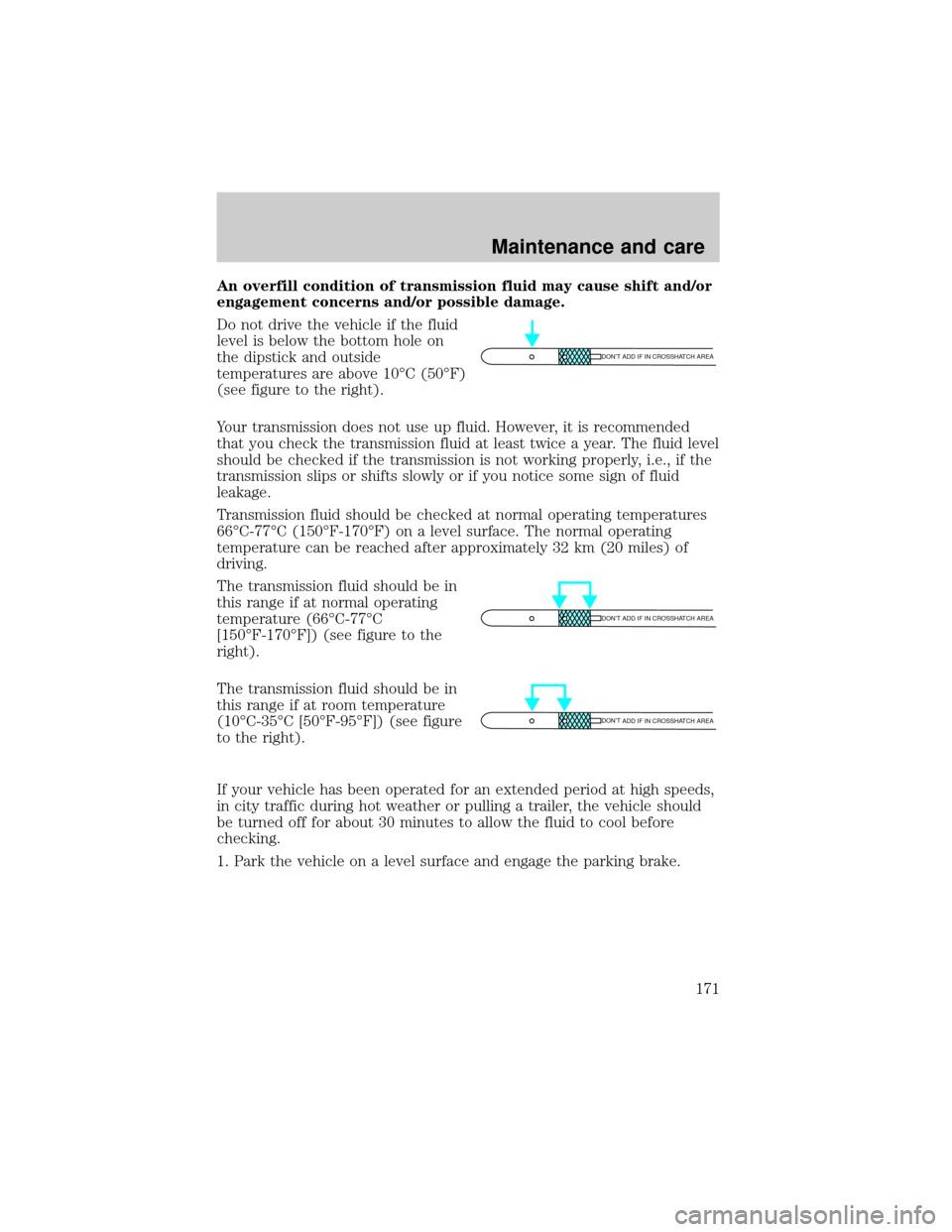
Do not drive the vehicle if the fluid
level is below the bottom hole on
the dipstick and outside
temperatures are above 10ÉC (50ÉF)
(see figure to the right).
Your transmission does not use up fluid. However, it is recommended
that you check the transmission fluid at least twice a year. The fluid level
should be checked if the transmission is not working properly, i.e., if the
transmission slips or shifts slowly or if you notice some sign of fluid
leakage.
Transmission fluid should be checked at normal operating temperatures
66ÉC-77ÉC (150ÉF-170ÉF) on a level surface. The normal operating
temperature can be reached after approximately 32 km (20 miles) of
driving.
The transmission fluid should be in
this range if at normal operating
temperature (66ÉC-77ÉC
[150ÉF-170ÉF]) (see figure to the
right).
The transmission fluid should be in
this range if at room temperature
(10ÉC-35ÉC [50ÉF-95ÉF]) (see figure
to the right).
If your vehicle has been operated for an extended period at high speeds,
in city traffic during hot weather or pulling a trailer, the vehicle should
be turned off for about 30 minutes to allow the fluid to cool before
checking.
1. Park the vehicle on a level surface and engage the parking brake.
DON’T ADD IF IN CROSSHATCH AREA
DON’T ADD IF IN CROSSHATCH AREA
DON’T ADD IF IN CROSSHATCH AREA
Maintenance and care
171
Page 172 of 210
2. With the parking brake engaged
and your foot on the brake pedal,
start the engine and move the
gearshift lever through all of the
gear ranges. Allow sufficient time
for each gear to engage.
3. Latch the gearshift lever in P
(Park) and leave the engine running.
4. Remove the dipstick, wiping it clean with a clean, dry lint free rag.
5. Install the dipstick making sure it is fully seated in the filler tube.
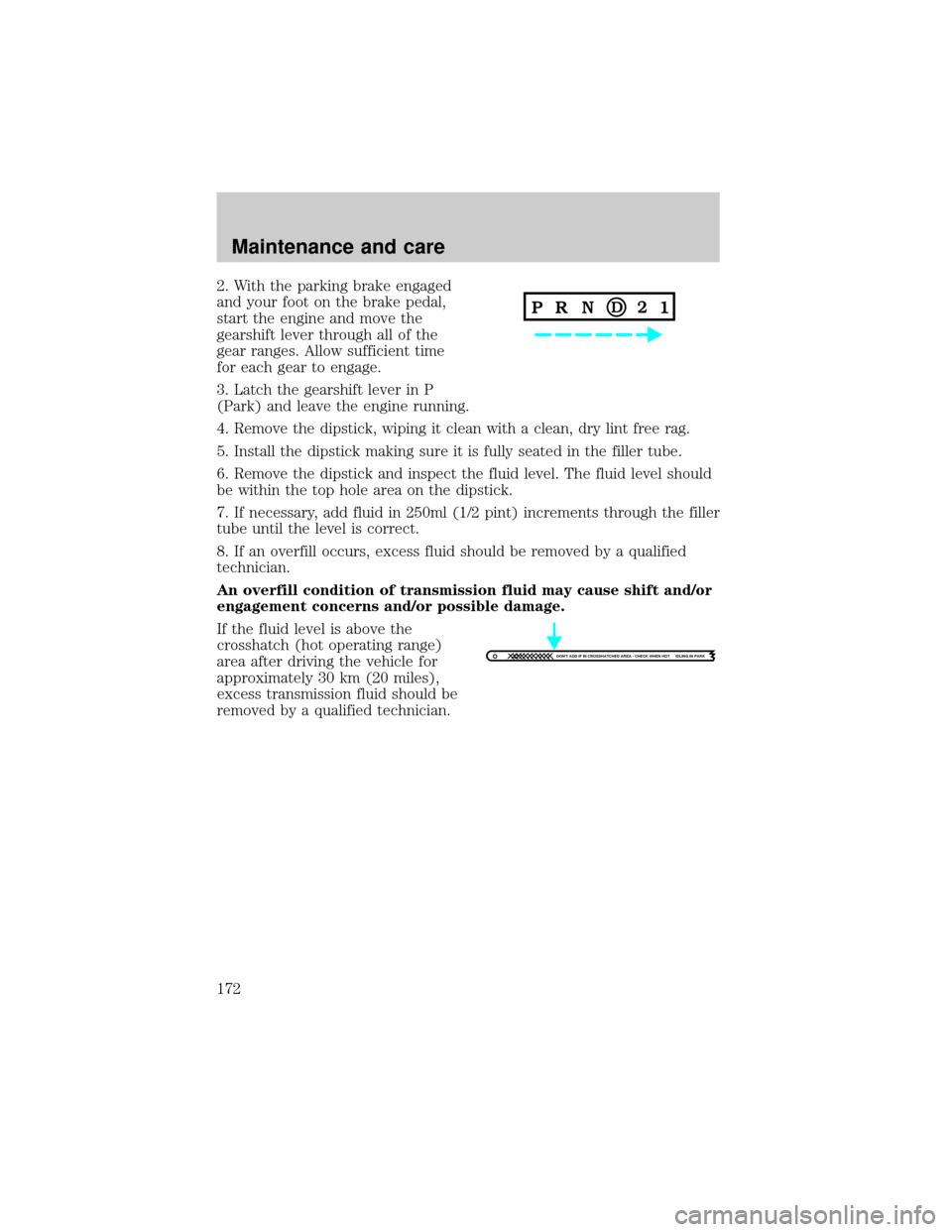
6. Remove the dipstick and inspect the fluid level. The fluid level should
be within the top hole area on the dipstick.
7. If necessary, add fluid in 250ml (1/2 pint) increments through the filler
tube until the level is correct.
8. If an overfill occurs, excess fluid should be removed by a qualified
technician.
An overfill condition of transmission fluid may cause shift and/or
engagement concerns and/or possible damage.
If the fluid level is above the
crosshatch (hot operating range)
area after driving the vehicle for
approximately 30 km (20 miles),
excess transmission fluid should be
removed by a qualified technician.
DON'T ADD IF IN CROSSHATCHED AREA • CHECK WHEN HOT IDLING IN PARK
Maintenance and care
172