Page 133 of 191
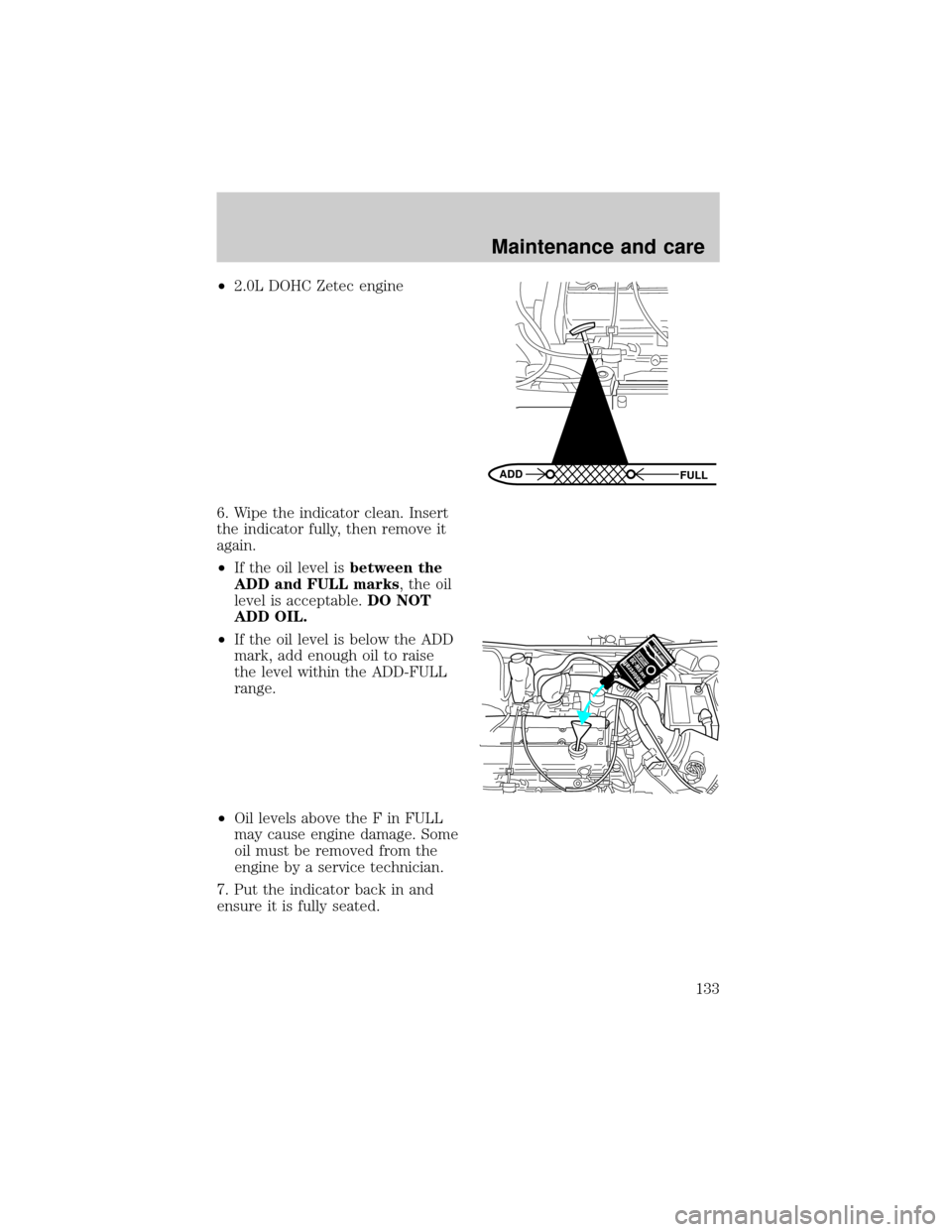
²2.0L DOHC Zetec engine
6. Wipe the indicator clean. Insert
the indicator fully, then remove it
again.
²If the oil level isbetween the
ADD and FULL marks, the oil
level is acceptable.DO NOT
ADD OIL.
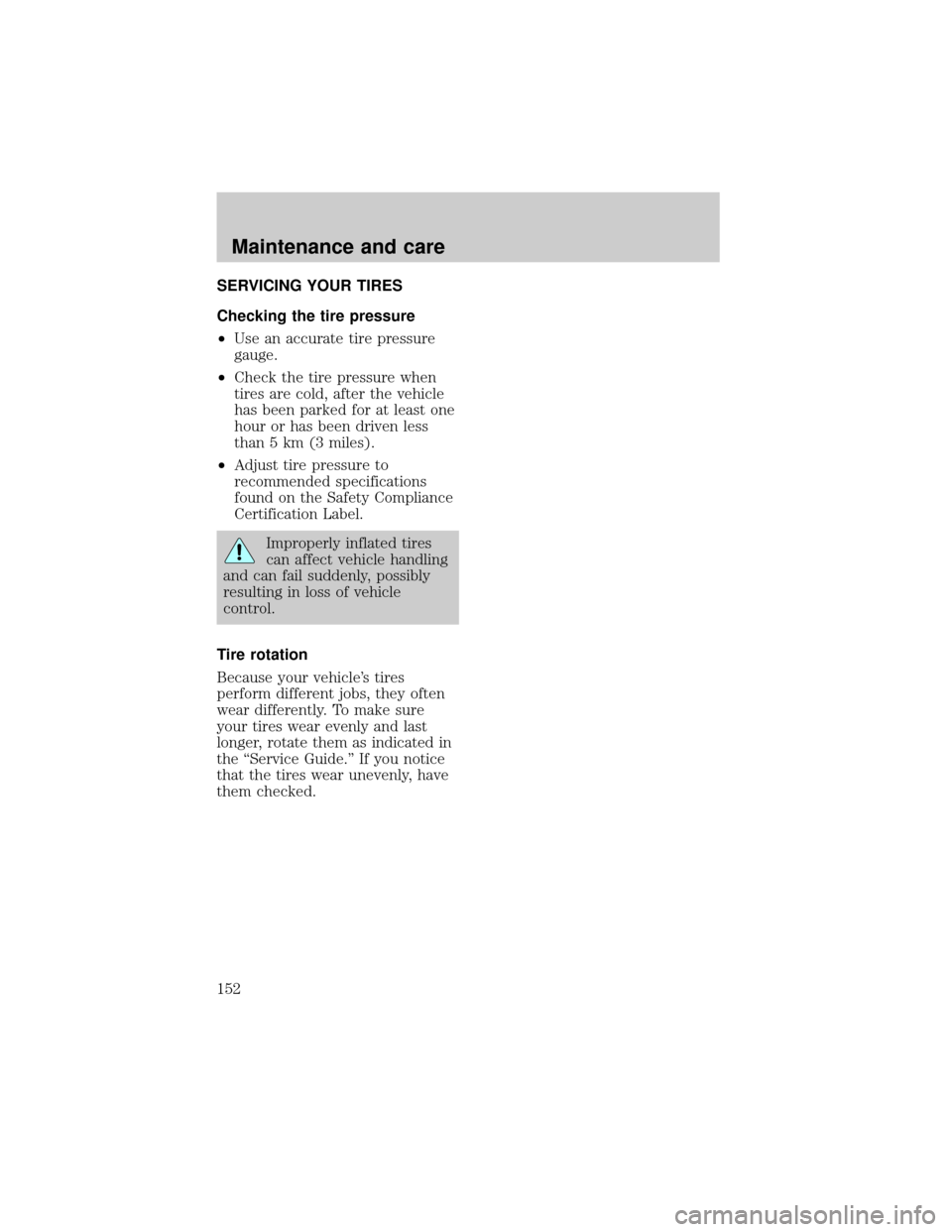
²If the oil level is below the ADD
mark, add enough oil to raise
the level within the ADD-FULL
range.
²Oil levels above the F in FULL
may cause engine damage. Some
oil must be removed from the
engine by a service technician.
7. Put the indicator back in and
ensure it is fully seated.
FULL ADD
Maintenance and care
133
Page 135 of 191
Changing the engine oil and
filter
Change your engine oil and filter
according to the following mileage
and time requirements, whichever
occurs first:
²Normal Schedule ± 8,000 km
(5,000 miles) or six months.
²Severe Duty Schedule -
5,000 km (3,000 miles) or three
months. Severe duty operation
would include extensive idling,
trailer towing, driving in severe
dust and police, taxi or delivery
service.
Ford production and aftermarket
(Motorcraft) oil filters are designed
for added engine protection and
long life. If a replacement oil filter
is used that does not meet Ford
material and design specifications,
startup engine noises or knock
may be experienced.
It is recommended you use the
appropriate Motorcraft oil filter (or
another brand meeting Ford
specifications) for your engine
application.
Maintenance and care
135
Page 143 of 191

center of the NORMAL band).
2. While the engine idles, turn the
steering wheel left and right
several times.
3. Turn the engine off.
4. Check the fluid level in the
reservoir. It should be between the
MIN and MAX lines. Do not add
fluid if the level is in this range.
5. If the fluid is low, add fluid in
small amounts, continuously
checking the level until it reaches
the range between the MIN and
MAX lines. Be sure to put the cap
back on the reservoir.
TRANSMISSION FLUID
Checking and adding automatic
transmission fluid
Follow the scheduled service
intervals outlined in the ªService
Guide.º
Before adding any fluid, make sure
the correct type is used. The type
of fluid used is normally indicated
on the dipstick and/or dipstick
handle and also in theLubricant
specificationssection in the
Capacities and specifications
chapter.
Do not drive the vehicle if the fluid
level is below the hole at the
bottom of the dipstick and outside
temperatures are above 10ÉC
(50ÉF).
Your transaxle does not use up
fluid. However, it is recommended
that you check the transmission
Maintenance and care
143
Page 145 of 191
6. Remove the dipstick and inspect
the fluid level. The fluid level
should be between the notches on
the dipstick.
7. If necessary, add fluid in .25L
(1/2 pint) increments through the
filler tube until the level is correct.
8. If an overfill occurs, excess fluid
should be removed by a qualified
technician.
Checking and adding manual
transmission fluid
The lubricant level and quality
should not deteriorate under
normal conditions. However, you
should have the fluid checked
occasionally. If lubricant is
required, refer toLubricant
specificationsin this section.
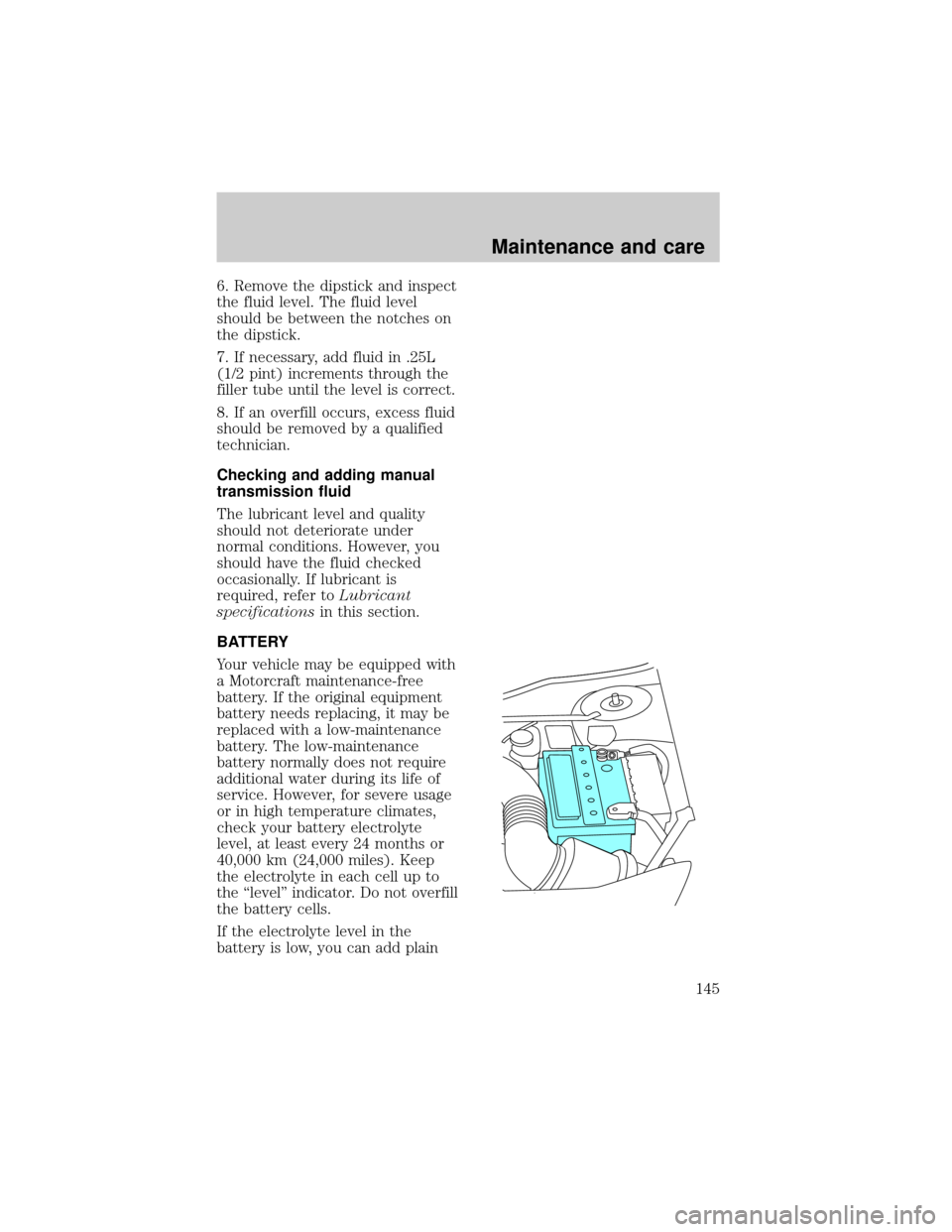
BATTERY
Your vehicle may be equipped with
a Motorcraft maintenance-free
battery. If the original equipment
battery needs replacing, it may be
replaced with a low-maintenance
battery. The low-maintenance
battery normally does not require
additional water during its life of
service. However, for severe usage
or in high temperature climates,
check your battery electrolyte
level, at least every 24 months or
40,000 km (24,000 miles). Keep
the electrolyte in each cell up to
the ªlevelº indicator. Do not overfill
the battery cells.
If the electrolyte level in the
battery is low, you can add plain
Maintenance and care
145
Page 149 of 191
make replacing the wipers easy,
turn the ignition to ACC, then turn
the wipers on. When the wipers
reach the vertical position, turn
the ignition to LOCK.
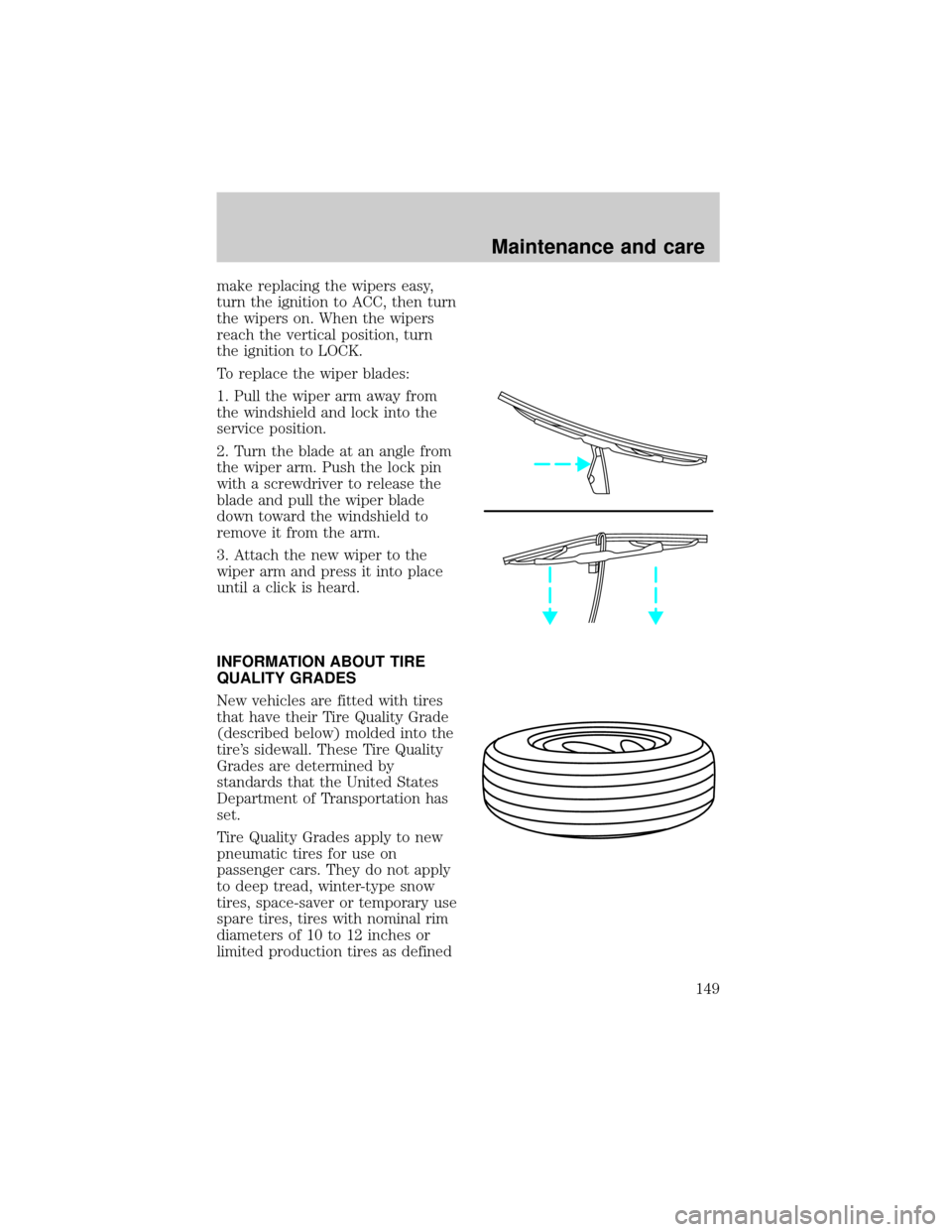
To replace the wiper blades:
1. Pull the wiper arm away from
the windshield and lock into the
service position.
2. Turn the blade at an angle from
the wiper arm. Push the lock pin
with a screwdriver to release the
blade and pull the wiper blade
down toward the windshield to
remove it from the arm.
3. Attach the new wiper to the
wiper arm and press it into place
until a click is heard.
INFORMATION ABOUT TIRE
QUALITY GRADES
New vehicles are fitted with tires
that have their Tire Quality Grade
(described below) molded into the
tire's sidewall. These Tire Quality
Grades are determined by
standards that the United States
Department of Transportation has
set.
Tire Quality Grades apply to new
pneumatic tires for use on
passenger cars. They do not apply
to deep tread, winter-type snow
tires, space-saver or temporary use
spare tires, tires with nominal rim
diameters of 10 to 12 inches or
limited production tires as defined
Maintenance and care
149
Page 150 of 191

in Title 49 Code of Federal
Regulations Part 575.104(c)(2).
U.S. Department of
Transportation-Tire quality
grades:The U.S. Department of
Transportation requires Ford to
give you the following information
about tire grades exactly as the
government has written it.
Treadwear
The treadwear grade is a
comparative rating based on the
wear rate of the tire when tested
under controlled conditions on a
specified government test course.
For example, a tire grade 150
would wear one and one-half
(1 1/2) times as well on the
government course as a tire grade
100. The relative performance of
tires depends upon the actual
conditions of their use, however,
and may depart significantly from
the norm due to variations in
driving habits, service practices,
and differences in road
characteristics and climate.
Traction A B C
The traction grades, from highest
to lowest are A, B, and C, and they
represent the tire's ability to stop
on wet pavement as measured
under test surfaces of asphalt and
concrete. A tire marked C may
have poor traction performance.
Maintenance and care
150
Page 152 of 191
SERVICING YOUR TIRES
Checking the tire pressure
²Use an accurate tire pressure
gauge.
²Check the tire pressure when
tires are cold, after the vehicle
has been parked for at least one
hour or has been driven less
than 5 km (3 miles).
²Adjust tire pressure to
recommended specifications
found on the Safety Compliance
Certification Label.
Improperly inflated tires
can affect vehicle handling
and can fail suddenly, possibly
resulting in loss of vehicle
control.
Tire rotation
Because your vehicle's tires
perform different jobs, they often
wear differently. To make sure
your tires wear evenly and last
longer, rotate them as indicated in
the ªService Guide.º If you notice
that the tires wear unevenly, have
them checked.
Maintenance and care
152
Page 157 of 191
Your vehicle was not designed to
use fuel or fuel additives with
metallic compounds, including
manganese-based compounds
containing MMT.
Vehicles certified to California
emission standards (indicated on
the underhood Vehicle Emissions
Control Information label) are
designed to operate on California
reformulated gasolines. If
California reformulated gasoline is
not available when you refuel, your
vehicle can be operated on
non-California fuels. However, even
though your engine will perform
adequately on other gasolines, the
performance of the emission
control devices and systems may
be adversely affected.
Repair of damage caused by using
a fuel that your vehicle was not
designed for may not be covered
by your warranty.
Octane recommendations
Your vehicle is designed to use
regular unleaded with an (R+M)/2
octane rating of 87. We do not
recommend gasolines labeled as
ªregularº in high altitude areas that
are sold with octane ratings of 86
or even less.
Do not be concerned if your
vehicle sometimes knocks lightly.
However, if it knocks heavily under
most driving conditions on fuel
with the recommended octane, see
your dealer or a qualified service
87
Maintenance and care
157