Page 17 of 358
Downloaded from www.Manualslib.com manuals search engine Driver’s Side Power Seat (Option)
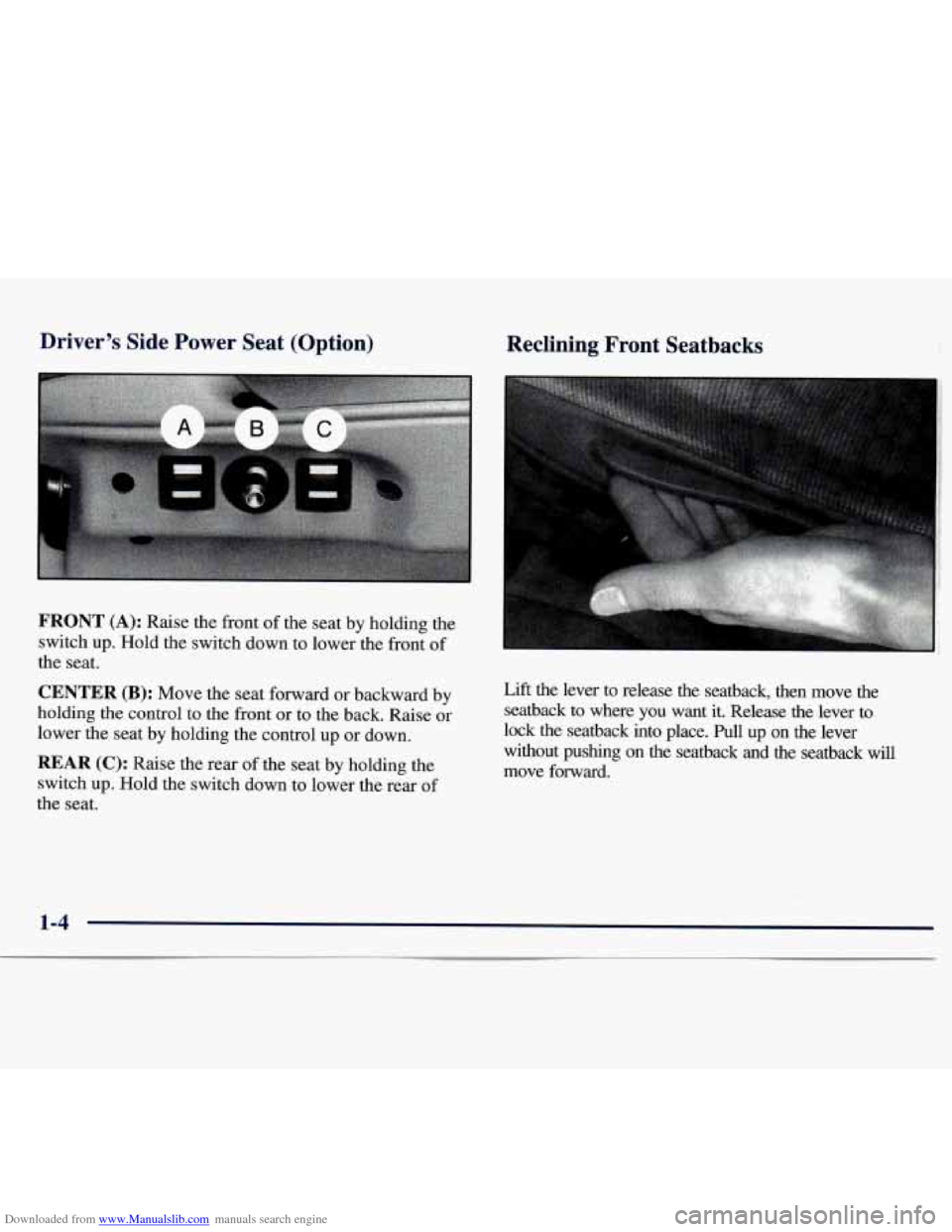
FRONT (A): Raise the front of the seat by holding the
switch up. Hold the switch down to lower the front of
the seat.
CENTER (B): Move the seat forward or backward by
holding the control to the front or to the back. Raise or
lower the seat by holding the control up or down.
REAR (C): Raise the rear of the seat by holding the
switch up. Hold the switch down to lower the rear of
the seat.
Reclining Front Seatbacks
Lift the lever to release the seatback, then move the
seatback to where
you want it. Release the lever to
lock the seatback into place.
Pull up on the lever
without pushing
on the seatback and the seatback will
move forward.
1-4
Page 19 of 358
Downloaded from www.Manualslib.com manuals search engine Head Restraints
Slide the head restraint up or down so that the top of the
restraint is closest to the top
of your ears. This position
reduces the chance of a neck injury in a crash.
Seatback Latches
The front seat folds forward
to let people get into the
back seat. Your seatback
will move back and forth
freely, unless you come to a
sudden stop. Then it will
lock into place.
If your vehicle is parked facing down a fairly steep hill,
the seatback may not fold without some help from you.
To fold the locked seatback forward, push the seatback
toward the rear and lift this latch. Then the seatback will
fold forward. The latch must be down for the seat to
work properly.
Split Folding Rear Seat
Pull forward on the seat tab latch to fold the seat cushion
down. This feature allows you direct access to the trunk.
To return the seat to its original position, push it back up
and make sure it latches.
Page 26 of 358
Downloaded from www.Manualslib.com manuals search engine Driver Position
This part describes the driver’s restraint system.
Lap-Shoulder Belt
The driver has a lap-shoulder belt. Here’s how to wear
it properly.
1. Close and lock the door.
2. Adjust the seat (to see how, see “Seats” in the Index)
so you can sit up straight.
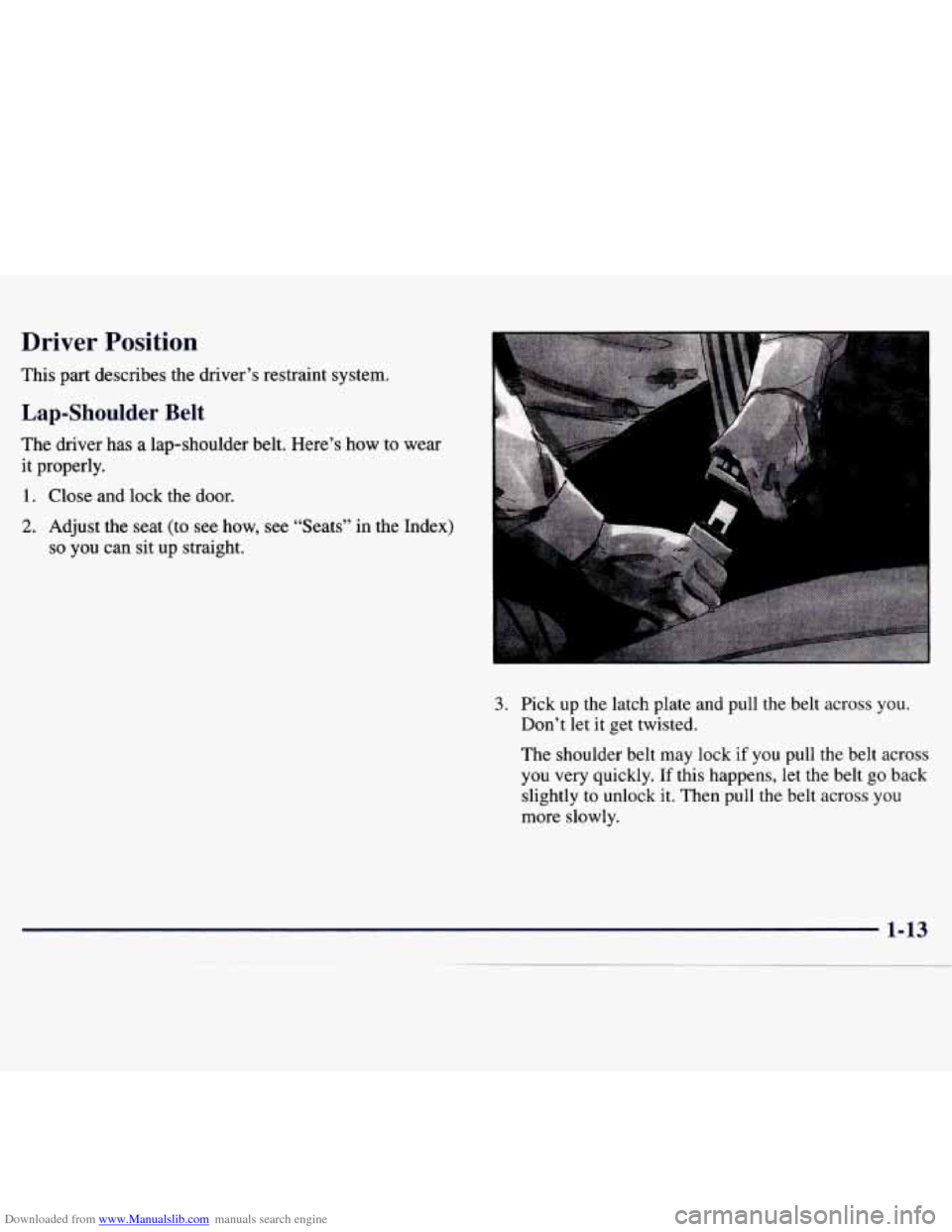
3. Pick up the latch plate and pull the belt across you.
Don’t let
it get twisted.
The shoulder belt may lock
if you pull the belt across
you very quickly.
If this happens, let the belt go back
slightly to unlock it. Then pull the belt
across you
more slowly.
1-13
Page 27 of 358
Downloaded from www.Manualslib.com manuals search engine 4. Push the latch plate into the buckle until it clicks.
Pull up on the latch plate
to make sure it is secure. If
the belt isn’t long enough, see “Safety Belt
Extender” at the end
of this section.
Make sure the release button on the buckle is
positioned
so you would be able to unbuckle the
safety belt quickly if you ever had
to.
5.
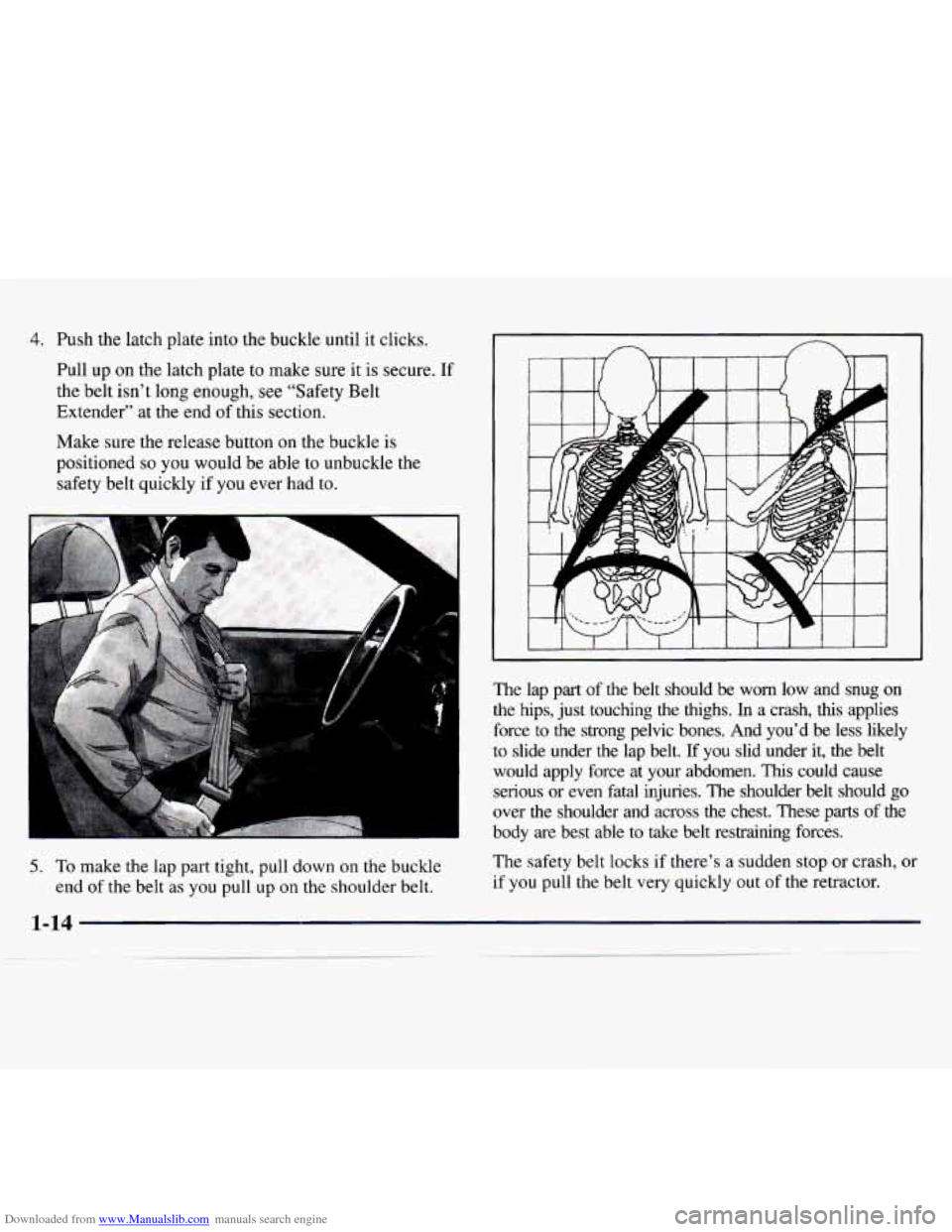
To make the lap part tight, pull down on the buckle
end
of the belt as you pull up on the shoulder belt. The lap part
of the belt should be worn low and snug on
the hips, just touching the thighs. In a crash,
this applies
force to the strong pelvic bones. And you’d be less likely \
to slide under the lap belt. If you slid under
it, the belt
would apply force at your abdomen.
This could cause
serious
or even fatal injuries. The shoulder belt should go
over the shoulder and across the chest. These parts
of the
body are best able to take belt restraining forces.
The safety belt locks if there’s a sudden stop or crash, or
if you pull
the belt very quickly out of the retractor.
Page 33 of 358
Downloaded from www.Manualslib.com manuals search engine The best way to protect the fetus is to protect the
mother. When a safety belt is worn properly, it’s more
likely that the fetus won’t be hurt in a crash. For
pregnant women, as for anyone, the key to making
safety belts effective is wearing them properly.
Right Front Passenger Position
The right front passenger’s safety belt works the same
way as the driver’s safety belt. See “Driver Position,”
earlier in this section.
When the shoulder belt is pulled out all the way, it will
lock. If it does, let it go back all the way and start again.
Air Bag System
This part explains the air bag system.
Your Chevrolet has two air bags
-- one air bag for the
driver and another air bag for the right front passenger.
Here are the
most important things to know about the air
bag system:
You can be severely injured or killed in a crash if
you aren’t wearing your safety belt -- even if you
have air bags. Wearing your safety belt during
a
crash helps reduce your chance of hitting things
inside the vehicle or being ejected from
it. Air
bags are “supplemental restraints” to the safety
belts. All
air bags are designed to work with
safety belts, but don’t replace them.
Air bags are
designed to work only
in moderate to severe
crashes where the front
of your vehicle hits
something. They aren’t designed to inflate
at all
in rollover, rear, side
or low-speed frontal
crashes. Everyone in your vehicle should wear
a
safety belt properly -- whether or not there’s an
air bag for that person.
Page 41 of 358
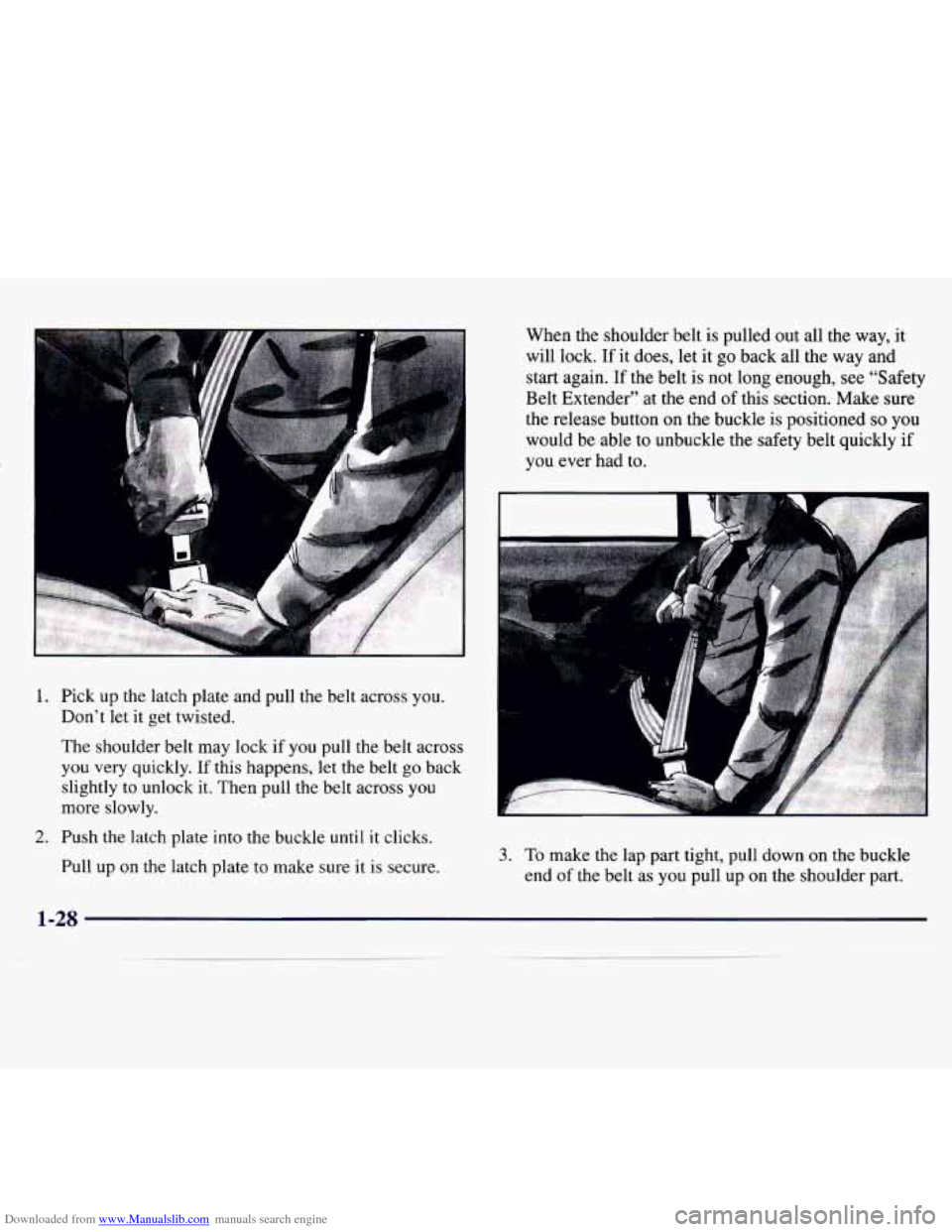
Downloaded from www.Manualslib.com manuals search engine 1. Pick up the latch plate and pull the belt across you.
Don’t let it get twisted.
The shoulder belt may lock
if you pull the belt across
you very quickly. If this happens, let the belt go back
slightly to unlock
it. Then pull the belt across you
more slowly.
2. Push the latch plate into the buckle until it clicks.
Pull up on the latch plate
to make sure it is secure. When
the shoulder belt
is pulled out all the way, it
will lock. If it does, let
it go back all the way and
start again. If the belt is not long enough, see “Safety
Belt Extender” at the end of this section. Make sure
the release button on the buckle is positioned
so you
would be able to unbuckle the safety belt quickly if
you ever had to.
3. To make the lap part tight, pull down on the buckle
end of the belt as you pull up on the shoulder
part.
1-28
Page 42 of 358
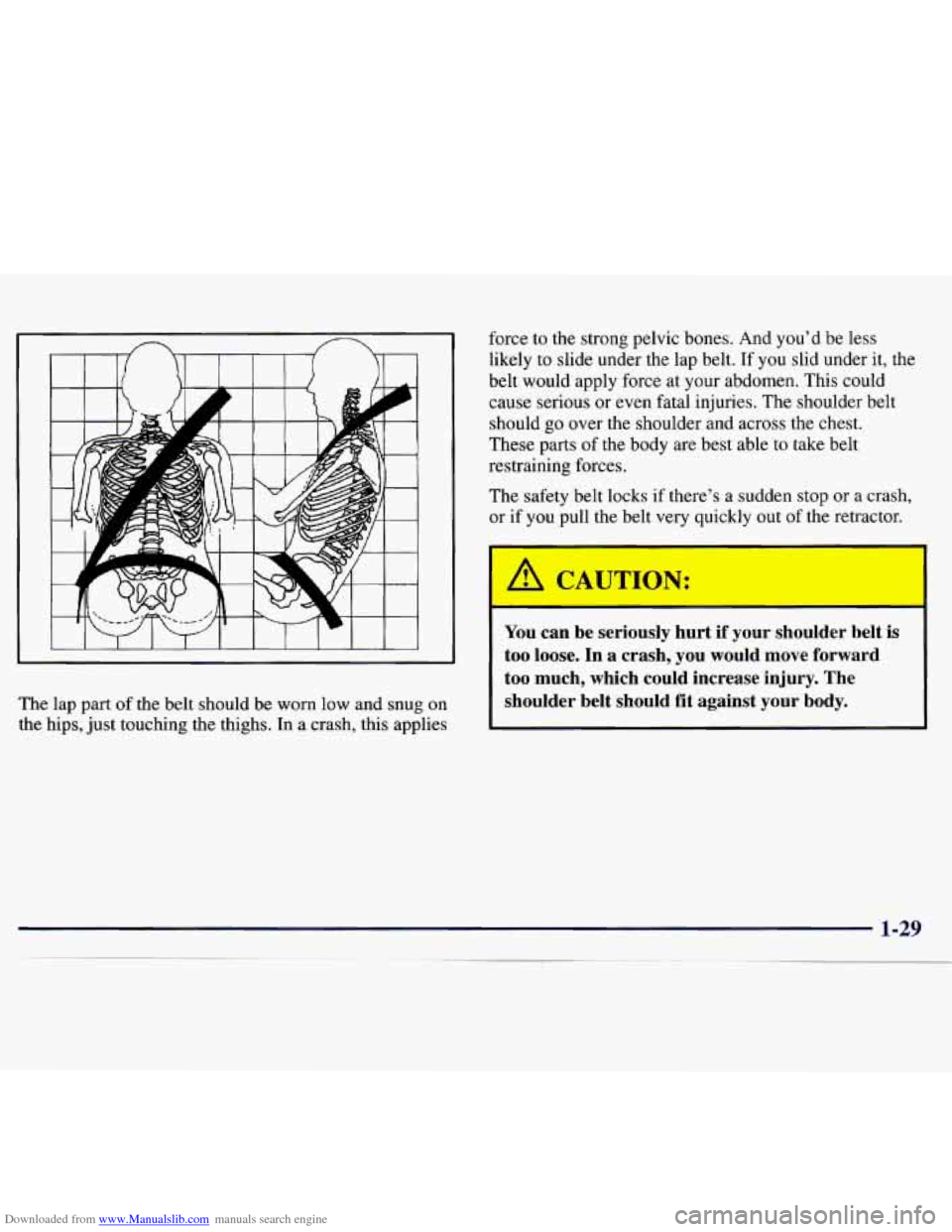
Downloaded from www.Manualslib.com manuals search engine The lap part of the belt should be worn low and snug on
the hips, just touching the thighs. In a crash, this applies force
to the strong pelvic bones. And you’d be less
likely to slide under the lap belt.
If you slid under it, the
belt would apply force at your abdomen. This could
cause serious or even fatal injuries. The shoulder belt
should
go over the shoulder and across the chest.
These parts of the body are best able to take belt
restraining forces.
The safety belt locks if there’s a sudden stop
or a crash,
or
if you pull the belt very quickly out of the retractor.
I
You can be seriously hurt if your snoulder belt is
too loose. In a crash, you would move forward
too much, which could increase injury. The
shoulder belt should
fit against your body.
Page 50 of 358
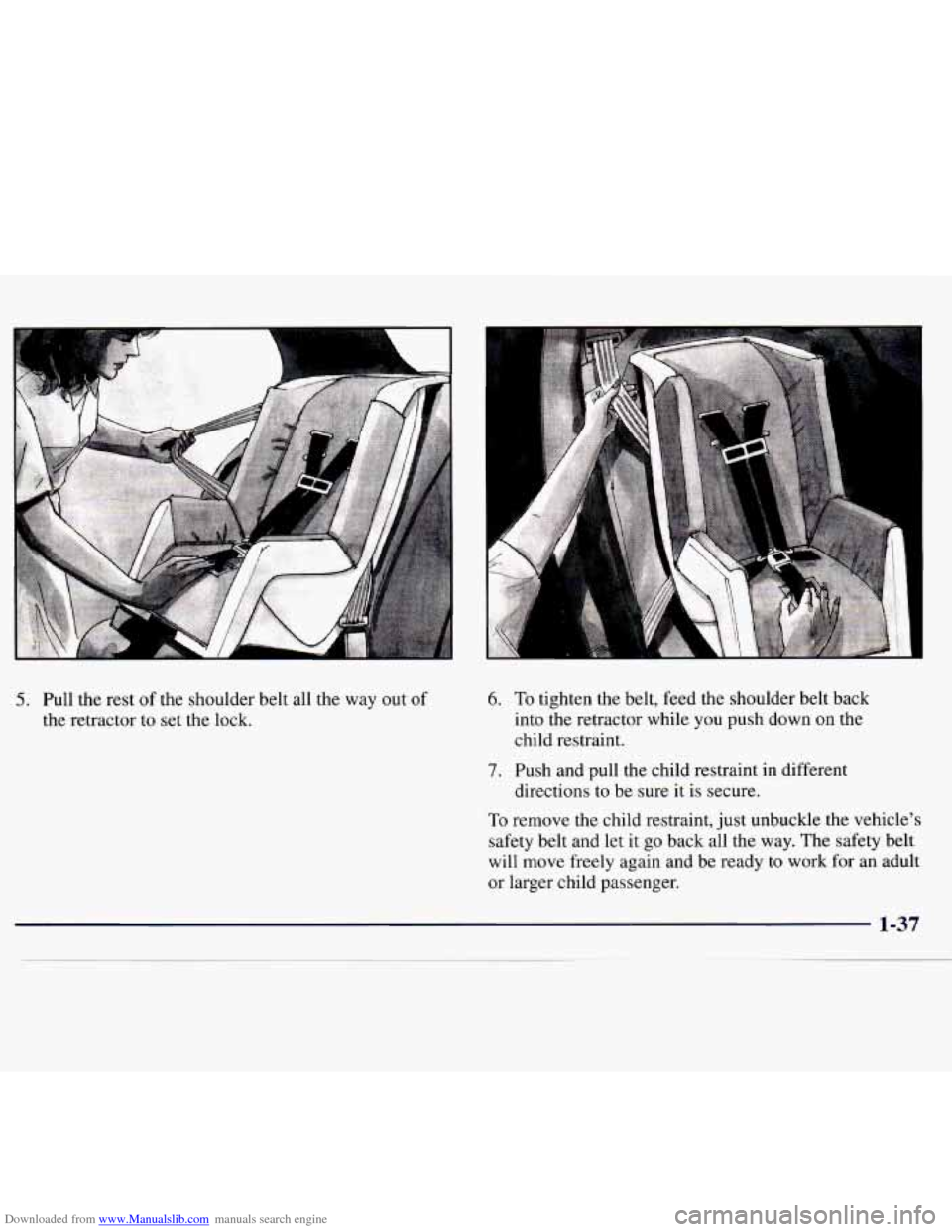
Downloaded from www.Manualslib.com manuals search engine 5. Pull the rest of the shoulder belt all the way out of
the retractor to set the lock.
6. To tighten the belt, feed the shoulder belt back
into the retractor while you push down on the
child restraint.
7. Push and pull the child restraint in different
directions to be sure it is secure.
To remove the child restraint, just unbuckle the vehicle’s
safety belt and let it
go back all the way. The safety belt
will move freely again and be ready to work for an adult
or larger child passenger.