Page 123 of 386
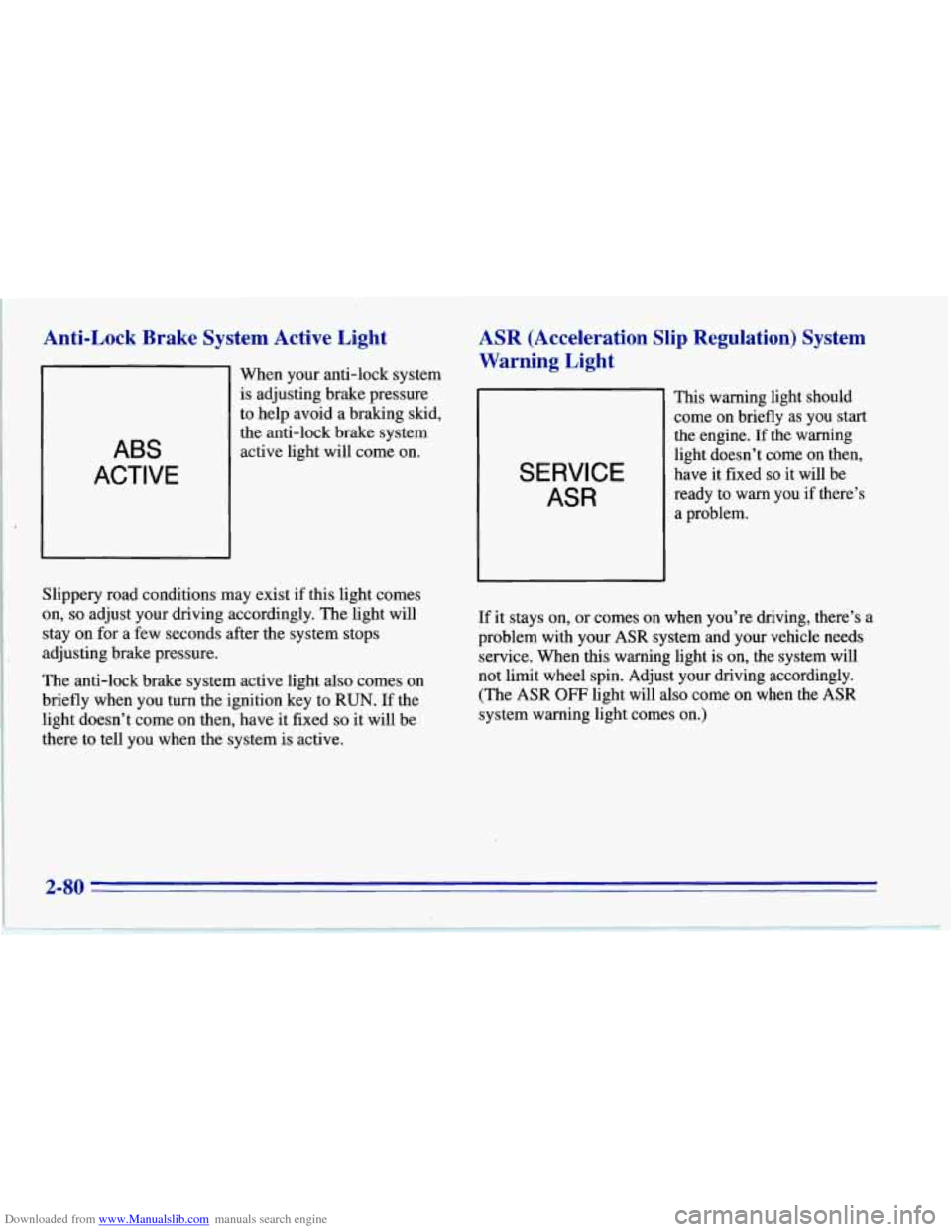
Downloaded from www.Manualslib.com manuals search engine Anti-Lock Brake System Active Light
ABS
ACTIVE
When your anti-lock system
is adjusting brake pressure
to help avoid a braking skid,
the anti-lock brake system
active light will come on.
ASR (Acceleration Slip Regulation) System
Warning Light
SERVICE
ASR
This warning light should
come on briefly as you start
the engine. If the warning
light doesn’t come on then,
have it fixed
so it-will be
ready to
warn you if there’s
a problem.
Slippery road conditions may exist if this light comes
on, so adjust your driving accordingly. The light will
stay on for a few seconds after the system stops
adjusting brake pressure.
The anti-lock brake system active light
also comes on
briefly when you turn the ignition key to
RUN. If the
light doesn’t come on then, have it fixed
so it will be
there to tell you when the system is active. If it
stays on, or comes on when you’re driving, there’s a
problem with your
ASR system and your vehicle needs
service. When this warning light is on, the system will
not limit wheel spin. Adjust your driving accordingly.
(The
ASR OFF light will also come on when the ASR
system warning light comes on.)
2-80
Page 141 of 386
Downloaded from www.Manualslib.com manuals search engine Driver Information Center
SERVICE ASR ASR OFF
ASR LOW ACTIVE COOLANT
PASSIVE
KEYLESS
ENTRY
AIR BAG
SERVICE LOWFLAT LTPWS TIRE
ABS SERVICE CONTROL
ACTIVE
RIDE
SERVICE
SERVICE
0 SOON (63)
LOW OIL
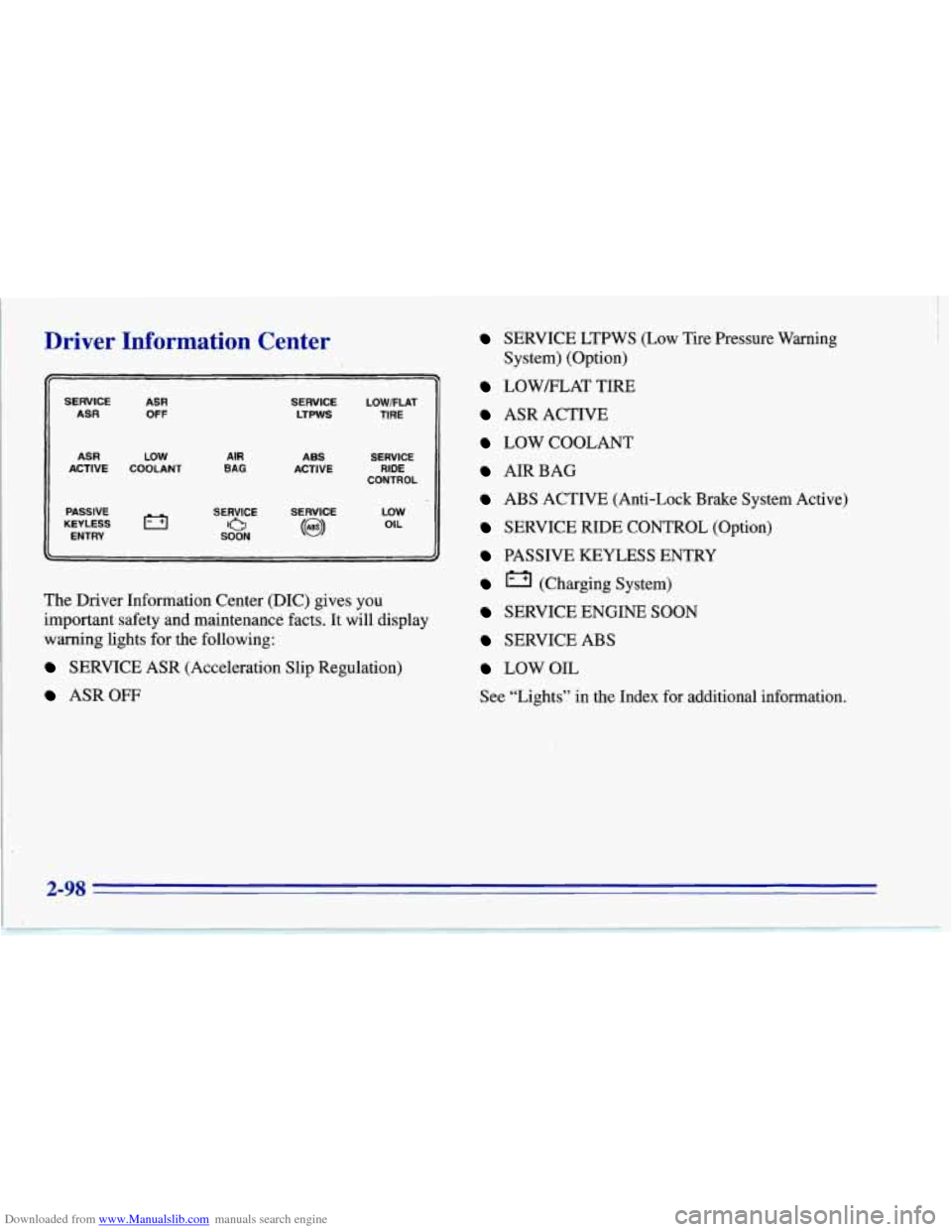
The Driver
Information Center (DIC) gives you
important safety and maintenance facts. It will display
warning lights for the following:
SERVICE ASR (Acceleration Slip Regulation)
ASROW
SERVICE LTPWS (Low Tire Pressure Warning
LOWELAT TIRE
ASR ACTIVE
LOW COOLANT
AIRBAG
ABS ACTIVE (Anti-Lock Brake System Active)
SERVICE RIDE CONTROL (Option)
PASSIVE KEYLESS ENTRY
(Charging System)
SERVICE ENGINE SOON
SERVICE ABS
LOWOIL
See “Lights” in the Index for additional information.
System) (Option)
2-98
Page 167 of 386
Downloaded from www.Manualslib.com manuals search engine Avoid needless heavy braking. Some people drive
in spurts
-- heavy acceleration followed by heavy
braking
-- rather than keeping pace with traffic. This
is a mistake. Your brakes may not have time to cool
between hard stops. Your brakes will wear out much
faster if you do a lot
of heavy braking. If you keep pace
with the traffic and allow realistic following distances,,
you will eliminate a lot of unnecessary braking. That
means better braking and longer brake life.
If your engine ever stops while you’re driving, brake
normally but don’t pump your brakes. If you
do, the
pedal may get harder to push down. If your engine
stops, you will still have some power brake assist. But
you will use it when you brake. Once the power assist is
used up, it may take longer to stop and the brake pedal
will be harder to push.
Anti-Lock Brakes
Your vehicle has anti-lock brakes (ABS). ABS is an
advanced electronic braking system that will help
prevent a braking skid.
When you start your engine and begin to drive away,
your anti-lock brake system will check itself.
You may
hear a momentary motor or clicking noise while this test
is going on, and you may even notice that your brake
pedal moves a little. This is normal.
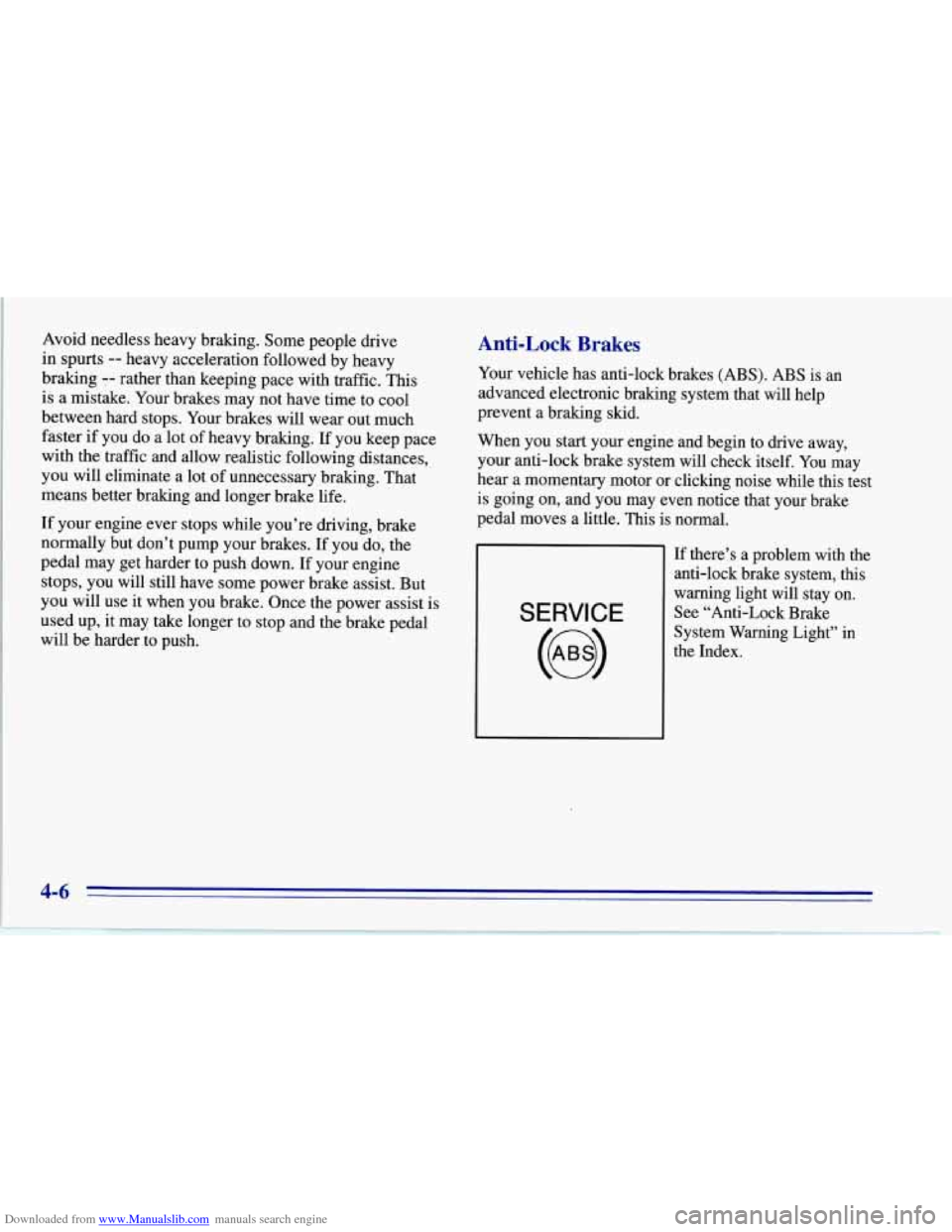
SERVICE
If there’s a problem with the
anti-lock brake system, this
warning light will stay on.
See “Anti-Lock Brake
System Warning Light” in
the Index.
Page 169 of 386
Downloaded from www.Manualslib.com manuals search engine Remember: Anti-lock doesn’t change the time you need
to get your foot up to the brake pedal or always decrease
stopping distance. If you get too close to the vehicle in
front of you, you won’t have time to apply your brakes
if that vehicle suddenly slows or stops. Always leave
enough room up ahead to stop, even though you have
anti-lock brakes.
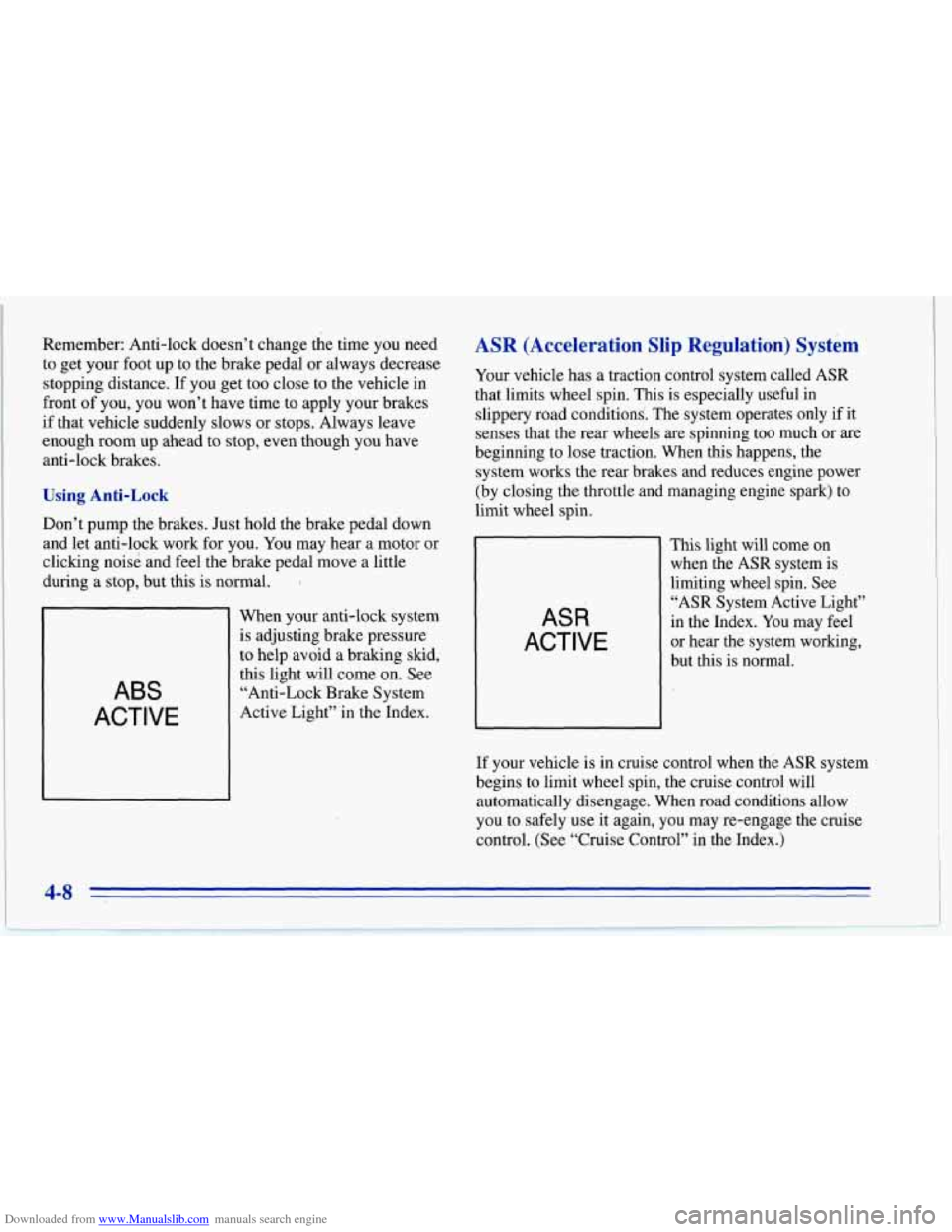
Using Anti-Lock
Don’t pump the brakes. Just hold the brake pedal down
and let anti-lock work for you. You may hear a motor or
clicking noid and feel the brake pedal move a little
during
a stop, but this is normal.
ABS
ACTIVE
When your anti-lock system
is adjusting brake pressure
to help avoid a braking skid,
this light will come on. See
“Anti-Lock Brake System
Active Light” in the Index.
ASR (Acceleration Slip Regulation) System
Your vehicle has a traction control system called ASR
that limits wheel spin. This is especially useful in
slippery road conditions’. The system operates only if it
senses that the rear wheels
are spinning too much or are
beginning to lose traction. When this happens, the
system works the rear brakes and reduces engine power
(by closing the throttle and managing engine spark) to
limit wheel spin.
ASR
ACTIVE
This light will come on
when the ASR system is
limiting wheel spin. See
“ASR System Active Light”
in the Index. You may feel
or hear the system working,
but this is normal.
If your vehicle is in cruise control when the ASR system
begins to limit wheel spin, the cruise control will
automatically disengage. When road conditions allow
you to safely use it again, you may re-engage the cruise
control. (See “Cruise Control” in the Index.)
J
Page 170 of 386
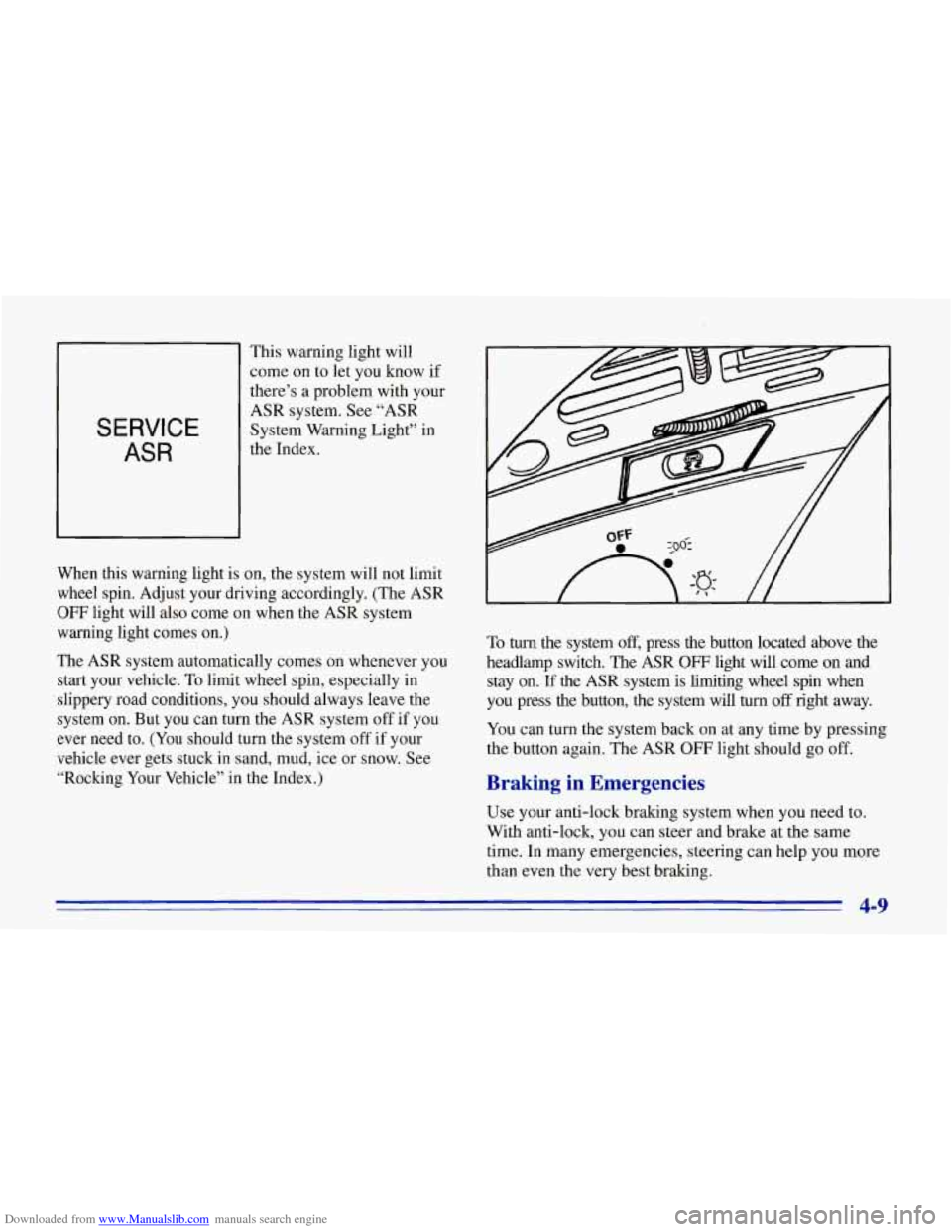
Downloaded from www.Manualslib.com manuals search engine SERVICE
ASR
This warning light will
come on to let you know if
there’s a problem with your
ASR system. See “ASR
System Warning Light” in
the Index.
When this warning light is on, the system will not limit
wheel spin. Adjust your driving accordingly. (The ASR
OFF light will also come on when the ASR system
warning light comes on.)
The ASR system automatically comes on whenever you
start your vehicle.
To limit wheel spin, especially in
I slippery road conditions, you should always leave the
system on. But you can
turn the ASR system off if you
ever need to. (You should turn the system off if your
vehicle ever gets stuck in sand, mud, ice or snow. See
“Rocking Your Vehicle” in the Index.) To
turn the system off, press the button located
above-the
headlamp switch. The ASR
OFF light will come on and
stay on.
If the ASR system is limiting wheel spin when
you press the button,
the system will turn off right away.
You can turn the system back on at any time by pressing
the button again. The ASR
OFF light should go off.
Braking in Emergencies
Use your anti-lock braking system when you need to.
With anti-lock, you can steer and brake at the same
time. In many emergencies, steering can help you more
than even the very best braking.
4-9
Page 178 of 386
Downloaded from www.Manualslib.com manuals search engine The heavier the rain, the harder it is to see. Even if your Driving too fast through large water puddles or even
windshield wiper blades are in good shape, a heavy rain can
going through some car washes can cause problems, too.
make it harder to
see road signs and traffic signals, pavement The water may affect your brakes. Try to avoid puddles.
markings, the edge
of the road and even people walking. But if you can’t, try to slow down before you hit them.
It’s wise to keep your windshield wiping equipment in
good shape and keep your windshield washer tank filled
with washer fluid. Replace your windshield wiper
inserts when they show signs of streaking
or missing
areas on the windshield, or when strips of rubber start to
separate from the inserts.
I
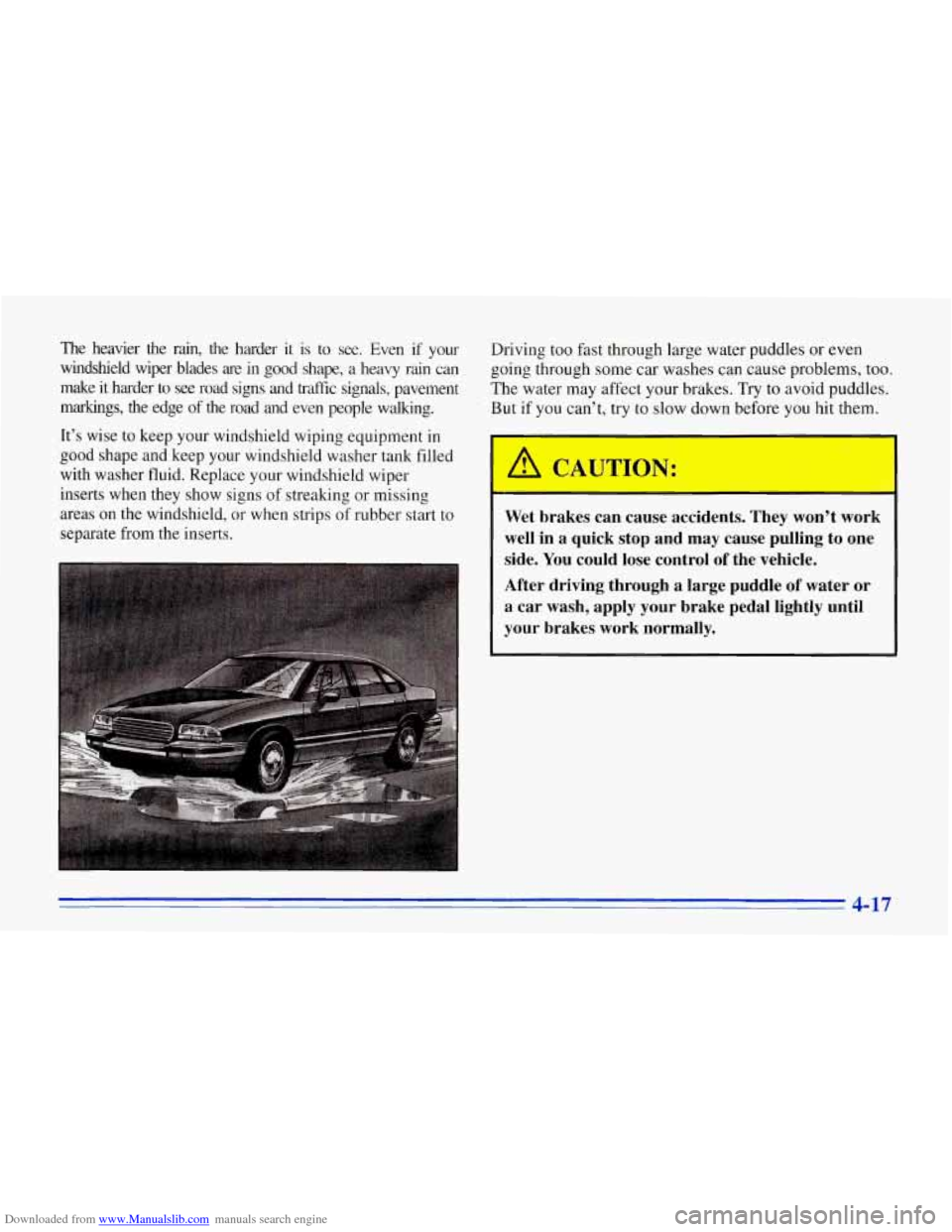
Wet brakes can cause accidents. They won’t work
well in a quick stop and may cause pulling to one
side. You could lose control of the vehicle.
After driving through a large puddle of water or a car wash, apply your brake pedal lightly until
~ 1 your brakes work normally.
Page 224 of 386
Downloaded from www.Manualslib.com manuals search engine NOTICE:
Improperly tightened wheel nuts can lead to
brake pulsation and rotor damage.
To avoid
expensive brake repairs, evenly tighten the wheel
nuts in the proper sequence and to the proper
torque specification.
The LOWPLAT TIRE or SERVICE LTPWS light
will stay on as long as
you are using the compact spare
tire. It should
go out when the original tire is replaced.
After you have the flat tire repaired or replaced,
install the plastic nut caps and tighten them to
22 lb-in (2.5 N-m).
Storing a mat -- Except Grand Sport Coupe
Rear Tires
or Spare Tire and Tools
-A
,A CAUTION:
Storing a jack, a tire or other equipment in the
passenger compartment
of the vehicle could
cause injury. In a sudden stop or collision, loose
equipment could strike someone. Store all these
in the proper place.
5-33
Page 265 of 386
Downloaded from www.Manualslib.com manuals search engine Brake Wear
Your Corvette has four-wheel disc brakes.
Disc brake pads have built-in wear indicators that make
a high-pitched warning sound when the brake pads
are
worn and new pads are needed. The sound may come
and go or be heard all the time your vehicle is moving
(except when you
are pushing on the brake pedal
firmly).
I A CAUTION:
The brake wear warning sound means that
sooner or later your brakes won’t work well.
That could lead to an accident. When you hear
-.he brake wear warning sound, have your vehicle
I serviced*
NOTICE:
Continuing to drive with worn-out brake pads
could result in costly brake repair.
Some driving conditions or climates may cause a brake
squeal when the brakes are first applied or lightly
applied. This does not mean something is wrong with
your brakes.
Brake linings should always be replaced as complete
axle sets.
Brake Pedal Travel
See your dealer if the brake pedal does not return to
normal height, or
if there is a rapid increase in pedal
travel. This could be a sign of brake trouble.
Brake Adjustment
As you make brake stops, your disc brakes
automatically adjust for wear.
6-34