Page 146 of 274
Battery acid
opera tin g co ndi tions, the bat
tery your
how ever , to check the at
be
between the and marks in each
the marks correct
th e conditio n.
a doctor.
and cause
starting ,
and the etc., are used more frequently .
traffic or when traveling short d1stances. Let your authorized test the battery 's capac
i ty before winter sets in. A charged bat
tery no t
be removed and stored where it
then
unscrew the battery mounting.
139
Page 147 of 274
CARE
Charging of battery
The battery contains acid.
Therefore , keep battery out of reach of
Charge battery in a area. Keep away from open
rinse with water for minutes and
Never charge a frozen battery. because of gas trapped in the ice. a frozen battery to thaw out first.
Fast charging a battery is dangerous and
Battery acid that may during charging be washed off with a of warm water and baking soda to
Never use a fast charger as a booster to start the engine . This damage sensitive nents, such as units, radio, etc. , as
and instructions that come with your battery charger .
is not necessary to remove the battery
from the engine compartment , and it is
Make sure the in each and marks. ma rk, you r aut horized co rrect
the condition.
Page 148 of 274
Connect charger
Charger must be connected and {-).
Do not connect or disconnect charger charger is operating to reduce the danger of
Charging rate not over 6 amps.
a battery be charged at no more than 1 percent of its rated capac ity
For be used on a battery rated at 45 Ah. Rated capacity of the battery in your ve
After charging , turn off cha rger and dis
connect charger
heed on page 126 .
equipment battery. Specificatio ns are
correctly
and
Because of the problem of proper disposal of a battery , we recommend
that you have your a uthorized Volkswa
gen dealer change the battery for you.
Batteries contain sulfuric acid and lead
and must always be disposed of properly observing all environmental regulations.
Page 178 of 274
Emergency starting
Starting by pushing or towing
with automatic transmission
cannot be started by pushing or towing.
Vehicles with
may Do not battery acid to
contact eyes or skin.
batteries generate
explosive gases.
Keep
sparks, cigarettes away from batteries.
Do not try to jump start any with a acid in the battery .
rating.
The capacity (Ah ) of the booster battery
or
Applying a high er
ra dio , etc.
with discharged battery:
Turn off
and set parking brake.
17 1
Page 179 of 274
make sure that they cannot get caught in any moving parts in the
engine compartment.
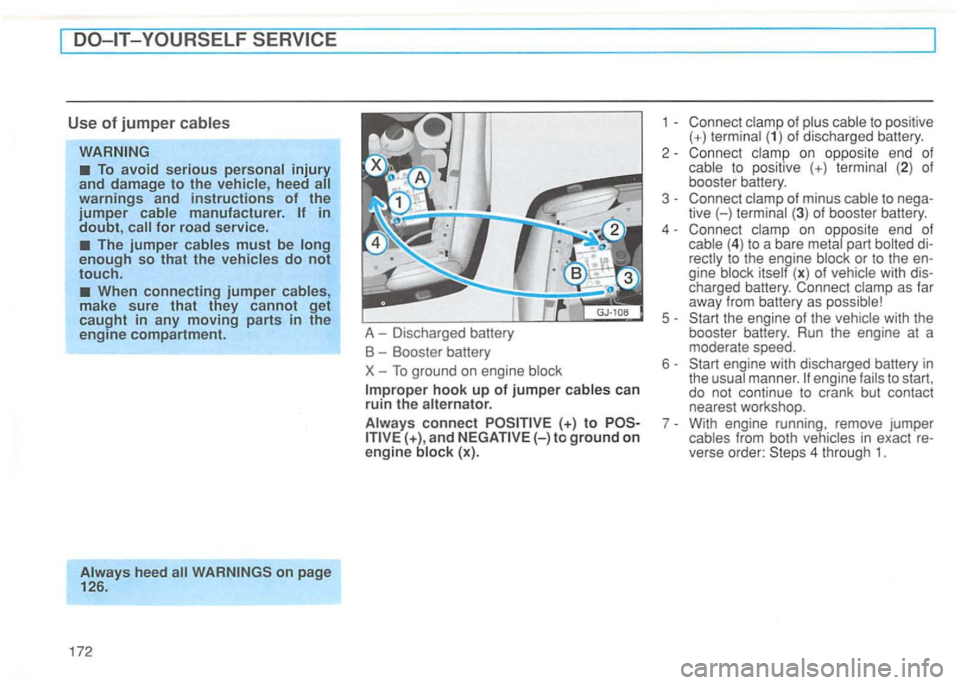
ho ok up of jumpe r can
ruin th e
(+) to to ground o n
e ngine
to positive ( +) ( 1 ) of discharged battery.
2 - Connect
to positive (+) (2 ) of
booster battery.
3 - Connect
tive (-) (3 ) of booster battery.
4 -Connect on opposite end of (4 ) to a bare
(x ) of
5 -the engine of the
engine with discharged battery in
the to start ,
do not continue to crank but contact
nearest workshop.
7 - With engine running, remove jumper
Page 247 of 274
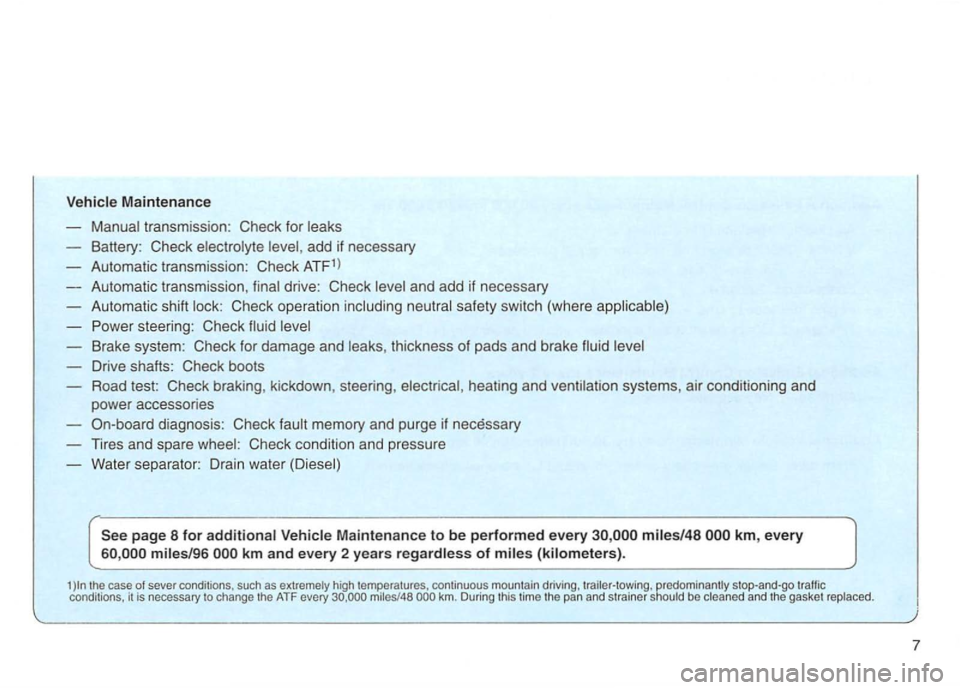
Vehicle Maintenance
Manual transmission : Check for
Battery : Check electrolyte add if necessary
Automatic transmission : Check
ATF1l
Automatic transmission ,
drive : Check
Check operation including neutral safety switch (where
Power steering: Check
Brake system : Check for damage and thickness of pads and brake
heating and ventilat ion syste ms, a ir conditioning and
power accessor i
es
On-board diagnosis : Check
Check condition and pressure
Water separator: Drain water (Diesel )
(
km, every ]
km and every 2 years regardless of (kilometers).
1 tra ffic conditions, it is necessary to change the ATF every be
7