1991 MITSUBISHI MONTERO stoplight
[x] Cancel search: stoplightPage 239 of 1333

Test No. 1 (Power & Ground Circuit)
1) Turn ignition on. When cruise control main switch is
turned to ON position, battery voltage should be present on terminal
No. 7 of cruise control unit connector.
2) If voltage is not present, check fuse No. 3 and replace as
necessary. If fuse is okay, check and repair harness as necessary.
Terminal No. 10 should be grounded at all times. If terminal No. 10 is
not grounded, repair harness.
Test No. 2 (Set Switch Circuits)
When set switch is turned to ON position, voltage should not
be present on terminal No. 5 of cruise control unit. When set switch
is turned to OFF position, battery voltage should be present on
terminal No. 5 of cruise control unit. If circuit does not test
correctly, replace switch as necessary or repair harness.
Test No. 3 (Resume Switch Circuit)
When resume switch is turned to ON position, voltage should
not be present on terminal No. 4 of cruise control unit. When resume
switch is turned to OFF position, battery voltage should be present on
terminal No. 4 of cruise control unit. If circuit does not test
correctly, replace switch as necessary or repair harness.
Test No. 4 (Vehicle Speed Sensor Circuit)
When vehicle moves slowly, voltage should alternate from zero
volts to 3-5 volts at terminal No. 15 of cruise control unit. If
circuit does not test correctly, replace sensor as necessary or repair
harness.
Test No. 5 (Actuator Circuit)
1) When cruise control main switch is in On position, voltage
should not be present on terminal No. 8 of cruise control unit.
2) When vehicle is accelerated using resume switch, voltage
should not be present on terminal No. 9 of cruise control unit. When
vehicle is coasting by using set switch, battery voltage should be
present on terminal No. 9.
3) When vehicle is accelerated using resume switch, battery
voltage should be present on terminal No. 20 of cruise control unit.
When vehicle is coasting by using set switch, voltage should not be
present on terminal No. 20 of cruise control unit. If circuit does not
test correctly, replace actuator as necessary or repair harness.
Test No. 6 (Stoplight Switch Circuit)
1) When brake pedal is pressed, battery voltage should be
present on terminal No. 3 of cruise control unit. If voltage is not
present, adjust or replace brake switch.
2) Battery voltage should be present at all times on terminal
No. 11 of cruise control unit. If voltage is not present, check fuse
no. 7. If fuse is okay, repair harness.
Test No. 7 (Inhibitor Switch Circuit)
1) When gear shift lever is moved to Neutral or Park
position, voltage should not be present on terminal No. 2 of cruise
control unit.
2) When gear shift lever is moved to any other position,
battery voltage should be present on terminal No. 2 of cruise control
unit. If circuit does not test correctly, replace switch as necessary
or repair harness.
Test No. 8 (Clutch Switch Circuit)
When clutch pedal is pressed, battery voltage should be
present at terminal No. 1 of cruise control unit. If circuit does not
Page 241 of 1333
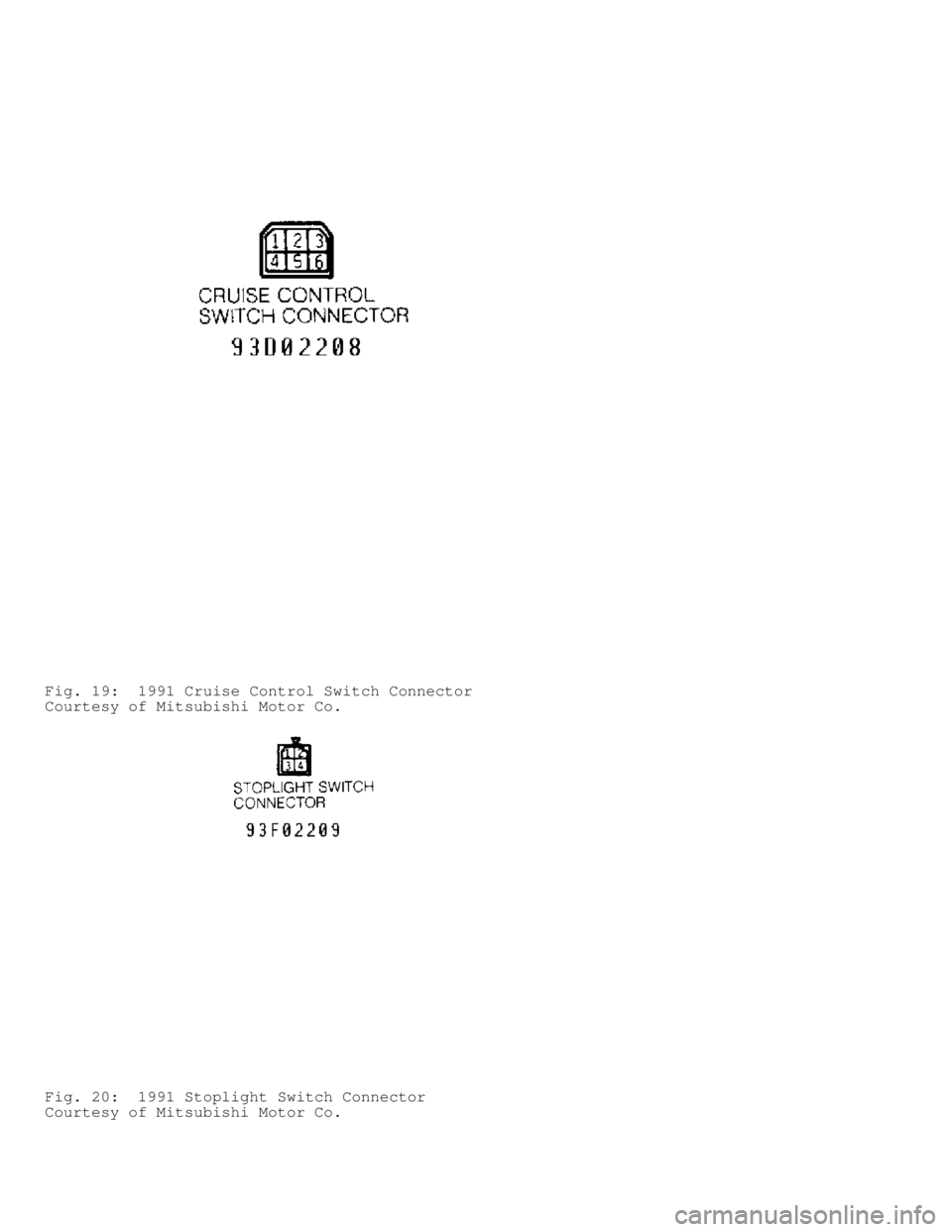
Fig. 19: 1991 Cruise Control Switch Connector
Courtesy of Mitsubishi Motor Co.
Fig. 20: 1991 Stoplight Switch Connector
Courtesy of Mitsubishi Motor Co.
Page 243 of 1333

Test No. 5 (Vehicle Speed Sensor Circuit)
When vehicle moves slowly, 0-2 or more volts should alternate
at terminal No. 19 of cruise control unit. If circuit does not test
correctly, replace sensor as necessary or repair harness.
Test No. 6 (Vacuum Pump Circuit)
1) When cruise system is in deceleration or release mode,
battery voltage should be present on terminals No. 26 and 13 of cruise
control unit. If circuit does not test correctly, replace vacuum pump
as necessary or repair harness.
2) When cruise system is in release mode, battery voltage
should be present on terminal No. 12 of cruise control unit. When
cruise system is in hold mode, voltage on terminals No. 12, 13 and 26
will go from battery voltage to zero volts depending on driving
conditions. If circuit does not test correctly, replace vacuum pump as
necessary or repair harness.
Test No. 7 (Stoplight Switch Circuit)
When brake pedal is pressed, battery voltage should be
present on terminal No. 15 of cruise control unit. If voltage is not
present, adjust or replace brake switch. If circuit does not test
correctly, replace switch as necessary or repair harness.
Test No. 8 (Clutch Switch Circuit)
When clutch pedal is pressed, battery voltage should be
present at terminal No. 1 of cruise control unit. If circuit does not
test correctly, replace switch as necessary or repair harness.
Test No. 9 (Inhibitor Switch Circuit)
When transmission is in Neutral position, battery voltage
should be present on terminal No. 1 of cruise control unit. If circuit
does not test correctly, replace switch as necessary or repair
harness.
Test No. 10 (Overdrive Switch Circuit)
When overdrive switch is pushed to ON position, battery
voltage should be present on terminal No. 11 of cruise control unit.
If circuit does not test correctly, replace switch as necessary or
repair harness.
Test No. 11 (Idle Switch & Throttle Position Sensor Circuit)
1) When accelerator pedal is pressed, 4.5-5.5 volts should be
present on terminal No. 4 (idle switch) of cruise control unit. When
accelerator pedal is released, voltage should not be present on
terminal No. 4 of cruise control unit.
2) When accelerator pedal is pressed to wide open throttle,
4.0-5.5 volts should be present on terminal No. 5 (throttle position
sensor) of cruise control unit. When accelerator pedal is released, .
5-.7 volts should be present on terminal No. 5 of cruise control unit.
If circuit does not test correctly, replace sensor as necessary or
repair harness.
Fig. 22: 1992 Cruise Control Unit Connector
Courtesy of Mitsubishi Motor Co.
Page 244 of 1333
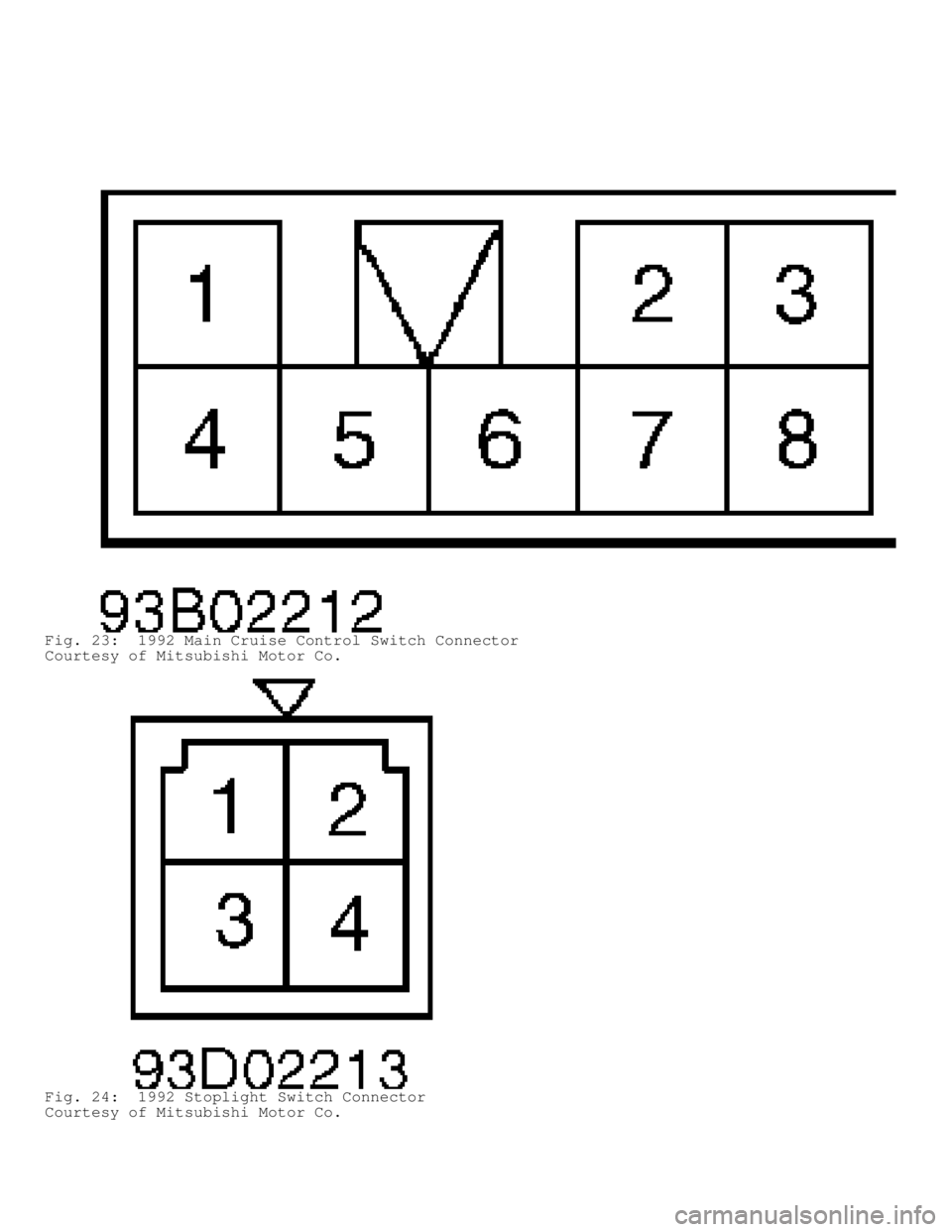
Fig. 23: 1992 Main Cruise Control Switch Connector
Courtesy of Mitsubishi Motor Co.
Fig. 24: 1992 Stoplight Switch Connector
Courtesy of Mitsubishi Motor Co.
Page 248 of 1333

Replace cruise control switch if it does not test correctly.
Main Switch (1992)
1) In each switch position, continuity should be present
between terminals No. 2 and 7 for switch illumination. See Figs. 22-
29. When switch is moved to Neutral position, continuity should be
present between terminals No. 1 and 4.
2) When switch is moved to ON position, continuity should be
present between terminals No. 1, 4 and 5. Connect battery voltage to
terminal No. 5 and ground terminal No. 4.
3) Battery voltage should then be present on terminal No. 1
when main switch is moved to On position. Replace switch if it does
not test correctly.
BRAKELIGHT/STOPLIGHT SWITCH TEST
Disconnect switch connector. When brake pedal is pressed,
continuity should be present between terminals No. 2 and 3. See
Figs. 22 -29. When brake pedal is released, continuity should be
present between terminals No. 1 and 4. Replace switch if it does not
test correctly.
IDLE SWITCH & THROTTLE POSITION SENSOR TESTS
Throttle Position Sensor (1992)
1) Disconnect sensor connector. Resistance between terminals
No. 1 and 4 should be 3500-6500 ohms. Use an analog ohmmeter to
measure resistance between terminals No. 1 and 3. See Figs. 22-29.
2) Slowly open throttle valve to wide open throttle.
Resistance should change smoothly as throttle is opened. Replace
throttle position sensor if it does not test correctly.
Idle Switch (1992)
1) Disconnect throttle position sensor connector. Continuity
should be present between terminals No. 1 and 2 with accelerator pedal
released. See Figs. 22-29. Continuity should not be present with
accelerator pedal pressed.
2) If continuity is not present with accelerator released,
loosen throttle position sensor mounting screw. Turn throttle position
sensor completely clockwise. Recheck continuity. Replace throttle
position sensor if idle switch does not test correctly.
INHIBITOR SWITCH TEST
Disconnect switch connector. Shift transaxle into Neutral and
Park positions. On 1991 models, continuity should be present between
Black/Yellow wire terminals No. 3 and 4. On 1992 models, continuity
should be present between terminals No. 7 and 12. See Figs. 22-29. On
all models, if continuity is not present, adjust inhibitor switch. If
switch is adjusted properly, replace switch.
VACUUM PUMP TEST
1992
1) Remove vacuum pump connector. Resistance should be 50-60
ohms between terminal No. 1 and terminals No. 2 and 3. See Figs. 22-
29. Ensure solenoid valve makes operating noise when battery voltage
is applied between terminal No. 1 and terminals No. 2 and 3.
2) If solenoid valve does not make noise, replace vacuum pump
assembly. Apply battery voltage to terminals No. 1 and 4, motor should
operate. Replace vacuum pump if motor does not operate.
Page 596 of 1333

1 - 20 Amp (Yellow)
Hazard Light, Dome Light, Clock
2 - 10 Amp (Red)
Taillights
3 - 10 Amp (Red)
Turn Signal Lights
4 - 10 Amp (Red)
Back-Up Lights, Gauges
5 - 15 Amp (Light Blue)
Defogger
6 - 20 Amp (Yellow)
Heater
7 - 15 Amp (Light Blue)
Stoplights
8 - 15 Amp (Light Blue)
Horn, Wiper, Washer
9 - 10 Amp (Red)
Rear Wiper, Rear Washer
10 - 15 Amp (Light Blue)
Cigarette Lighter, Radio
CAUTIONS & WARNINGS
RADIATOR FAN & CAP
DO NOT loosen or remove radiator cap when cooling system is
hot. The system is under high pressure, and hot steam or boiling
liquid could gush out if cap is loosened or removed while system is
hot.
BRAKE FLUID
Be careful when handling brake fluid as it is harmful to eyes
and may damage painted surfaces.
REPLACING BLOWN FUSE
Before replacing a blown fuse, remove ignition key, turn off
all lights and accessories to avoid damaging the electrical system. Be
sure to use fuse with the correct indicated amperage rating. The use
of an incorrect amperage rating fuse may result in a dangerous
electrical system overload.
Page 622 of 1333

Parking Brake Switch ...................... Analog Instrument Panels
Park Lights ........................................ Exterior Lights
Park/Neutral Position Switch .............................. Starters
Engine Performance
Anti-Theft System
Body Control Module
Perimeter Lighting Control Relay ................... Exterior Lights
Power Amplifier ..................................... Power Antennas
Power Antenna Module ................................ Power Antennas
Power Antenna Motor ................................. Power Antennas
Power Distribution Center ....................... Power Distribution
Generators & Regulators
Starters
Power Door Lock Motors ............................ Power Door Locks
Power Mirror Motors .................................. Power Mirrors
Memory Systems
Power Sliding Door Controller .............. Power Sliding Side Door
Power Seat Motors ...................................... Power Seats
Memory Systems
Power Steering Pressure Switch .................. Engine Performance
Power Top Motor .............................. Power Convertible Top
Power Top Relay(s) ........................... Power Convertible Top\
Powertrain Control Module ....................... Engine Performance
Analog Instrument Panels
Cruise Control Systems
Data Link Connectors
Generators & Regulators
Starters
Power Window Motors .................................. Power Windows
Power Window Relay(s) ................................ Power Windows\
Radiator Fan Motor(s) ........................ Electric Cooling Fans\
Radiator Fan Relay(s) ........................... Engine Performance\
Electric Cooling Fans
Rainsense Module .............................. Wiper/Washer Systems
Raise Relay .................................. Power Convertible Top
Remote Anti-Theft Personality (RAP) Module ....... Anti-Theft System\
Starters
Warning Systems
Seat Belt Pretensioners ................... Air Bag Restraint System
Seat Belt Retractor Solenoid .................... Passive Restraints
Seat Belt Switch .......................... Air Bag Restraint System
Passive Restraints
Shift Interlock Solenoid ................... Shift Interlock Systems
Shift Lock Actuator ........................ Shift Interlock Systems
Side Marker Lights ................................. Exterior Lights
SIR Coil Assembly (Clockspring) ........... Air Bag Restraint System\
Slip Ring (Clockspring) ................... Air Bag Restraint System\
Steering Column Switches
SRS Control Module ........................ Air Bag Restraint System
Starter Motor ............................................. Starters
Starter Interrupt Relay ................................... Starters
Starter Solenoid .......................................... Starters
Starter Relay ............................................. Starters
Steering Wheel Position Sensor .................... Anti-Lock Brakes
Stoplights ......................................... Exterior Lights
Stoplight Switch ................................ Engine Performance
Cruise Control Systems
Anti-Lock Brakes
Sun Roof ECU ........................................ Power Sun Roof
Sun Roof Motor ...................................... Power Sun Roof
Sun Roof Position Sensor ............................ Power Sun Roof
Taillights ......................................... Exterior Lights
Throttle Position (TP) Sensor ................... Engine Performance\
Page 674 of 1333

1 - 20 Amp (Yellow)
Hazard Light, Dome Light, Clock
2 - 10 Amp (Red)
Taillights
3 - 10 Amp (Red)
Turn Signal Lights
4 - 10 Amp (Red)
Back-Up Lights, Gauges
5 - 15 Amp (Light Blue)
Defogger
6 - 20 Amp (Yellow)
Heater
7 - 15 Amp (Light Blue)
Stoplights
8 - 15 Amp (Light Blue)
Horn, Wiper, Washer
9 - 10 Amp (Red)
Rear Wiper, Rear Washer
10 - 15 Amp (Light Blue)
Cigarette Lighter, Radio
FUSE PANEL IDENTIFICATION (1992-96)
Fig. 9: Fuse Panel Identification (1992-96)
Courtesy of Mitsubishi Motor Sales of America, Inc.
Fuse & Circuit Breaker Identification