1967 FIAT 500 Gear
[x] Cancel search: GearPage 43 of 128

FIG 3 : 4 Use of fixture Ap.5030/1 to check ignition
timing
Reassembly is the reverse procedure to dismantling but
the following points should be noted:
1 Lubricate the parts of the centrifugal advance mecha-
nism, the drive spindle and the part of the shaft which
accepts the cam w i t h Fiat VS oil.
2 Ensure that upon reassembly the slot in the rotor arm
housing matches the distributor driving dog. Lubricate
the felt pad in the rotor arm housing.
3 Fit the distributor back onto its support gently rotating
the rotor arm so that the drive dog engages w i t h the
drive shaft mating flange. Provided the crankshaft has
not been turned the rotor arm should finish up pointing
to No. 1 cylinder segment in the distributor cap. Tighten
the distributor retaining nut, refit the distributor cap and
leads to the spark plugs and the LT lead to distributor
body terminal.
4 Add a few drops of oil to the distributor shaft lubrication
fitting (see FIG 3:3).
3 : 6 Removing and dismantling distributor
(station wagon)
The distributor is located towards the top rear of t h e
engine and is bolted direct onto the crankcase rear cover as
shown in FIG 1 : 2 . It is driven direct by a gear in mesh w i t h
a corresponding gear on the camshaft. The basic design of
the distributor is the same as that for the sedan and sports
engine, except that the distributor cap has been redesigned,
there is a gear instead of the dog
drive and no distributor
support. To remove and dismantle the distributor proceed
as previously described taking great care about marking
the location of the distributor to rear cover and rotating
the engine until No. 1 cylinder is on compression. This will
ensure that reassembly is straightforward without loss of
ignition timing.
503:7 Timing the ignition
It is necessary to retime the ignition should the distribu-
tor shaft or camshaft have been removed. To retime the
ignition proceed as follows:
1 On the timing sprocket cover fit Fiat tool AP.5030/1 as
shown in FIG 3 : 4. Ensure No. 1 cylinder is on the
compression stroke with both valves closed. Rotate the
crankshaft until the mark on the centrifugal filter cover
lines up w i t h the 10° mark on the fixture. This setting
corresponds to a 10° static advance BTDC.
2 Check t h a t the points gap is correctly set between
.018 and .020 inch. Turn the distributor shaft until the
rotor points in the direction of No. 1 segment in the
cap and the points are just opening.
3 Without disturbing the distributor shaft, insert the lower
coupling on its toothed end, install the support and
tighten the locknut. Secure the distributor to the sup-
port using the mounting screw.
To check that the distributor is properly timed to the
engine and the centrifugal automatic advance is operating
correctly giving a
total advance of 18° to 28° respectively
proceed as follows:
1 Connect Fiat timing tester AP.5030 with a 220-volt-
single-phase power outlet fitted with a good earth
connection. It is important that the tester is earthed
before it is allowed to operate. Also ensure that the
tester earth terminal is connected to a bare metal part
of the vehicle.
2 Remove No. 1 spark plug lead, insert the strobe light
adapter and reconnect the spark plug lead. Using a
piece of white chalk mark the TDC position on the
centrifugal filter cover.
3 Start the engine and aim the strobe light beam towards
the chalk mark drawn on the centrifugal filter cover.
With the engine running slowly the mark on the centri-
fugal cover must correspond wi th the first white line
on the fixture (10°). Slowly increase the speed of the
engine so operating the automatic advance and the
chalk mark should move counterclockwise until at
maximum speed it reaches the second white mark on
the fixture.
It should be noted that the ignition timing for the model
500 sports engine the static advance is 10°, an automatic
advance of 12° giving a total advance at maximum engine
speed of 2 2 ° .
Should Fiat fixture AP.5030/1 not be available the
advance position may be set as follows:
1 Turn over the
engine until No. 1 piston is on the com-
pression stroke w i t h both valves closed.
2 Rotate the crankshaft clockwise until the reference
mark cast on the centrifugal filter cover is set .5118 to
.5512 inch ahead of the arrow cast on the timing
sprocket cover. This will give a static advance setting
of 10° BTDC.
3 Proceed as directed for ignition distributor timing and
mounting described earlier in this section.
3 : 8 Sparking plugs
The sparking plugs must be regularly inspected, cleaned
and the electrode gap adjusted to a gap of .019 to .023
inch.
The inspection of the deposits on the electrodes is par-
ticularly useful because the colour and type of deposit
Page 44 of 128

indicates the condition inside the combustion chamber
and may be used as a guide to engine tuning.
Before the spark plugs are removed b l o w away any
loose dirt from the plug recesses using a compressed air
jet or tyre pump. Store the plugs in the order of removal
ready for inspection.
Examine the gaskets and if they are about half their
thickness they may be used again otherwise they must be
replaced.
Inspect the electrode end of the plugs and note the
type and colour of the deposit. Normally it should be
powdery and range from b r o w n to a greyish tan in colour.
There will also be slight wear of the electrodes and the
general effect described is one which comes from mixed
periods of high-speed and low-speed driving. Cleaning
and resetting the gap is all that will be necessary.
If the deposits are white or yellowish they indicate long
periods of constant-speed driving or much low-speed
city driving. Again, the treatment is straightforward.
Dry, black, fluffy deposits are usually the result of
running with too rich a mixture. Incomplete combustion
of the petrol air charge may also be a cause and this might
be traced to a defect in the ignition system or excessive
idling.
Overheated sparking plugs have a white blistered look
about the centre electrode and the side electrode may be
badly eroded. This may be caused by poor cooling, wrong
ignition timing or sustained high speeds under heavy load.
To clean the sparking plugs effectively they should be
cleaned using an abrasive blasting machine and tested
under pressure once the electrodes have been reset. File
these until they are clean, bright and the faces parallel and
set the gap to .019 to .023 inch. Do not try to bend the
centre electrode.
Before replacing the plugs use a wire brush to clean the
threads taking care that the electrodes are not touched.
Thoroughly clean the spark plug in petrol, and dry using a
compressed air jet or a tyre pump. If difficulty is found in
screwing the plugs into the cylinder head by hand run a
tap d o w n the threads to clear away any carbon. If a tap is
not available use an old sparking plug with crosscuts d o w nthe threads. Finally tighten the plugs to a torque wrench
setting of 18 to 21 Ib ft.
Sparking plug leads:
The spark plug leads and the lead from the coil to the
distributor cap must be regularly checked for cracking of
the insulation and also correct seating in the distributor
cap and coil top. It is recommended that silicone grease is
smeared around the sockets before the leads are replaced
to ensure no moisture may enter causing difficult starting.
3 : 9 The distributor driving spindle (sedan and
sports engine)
If for any reason, the driving spindle has been removed
from its housing in the crankcase, it must be correctly
meshed w i t h the camshaft gear otherwise it
will be impos-
sible to set the ignition timing.
3:10 Fault diagnosis
(a) Engine w i l l not fire
1 Battery discharged
2 Distributor contact points dirty, pitted or maladjusted
3 Distributor cap dirty, cracked or tracking
4 Carbon brush inside distributor cap not touching rotor
5 Faulty cable or loose connection in low-tension circuit
6 Distributor rotor arm cracked
7 Faulty coil
8 Broken contact breaker spring
9 Contact points stuck open
(b) Engine misfires
1 Check 2, 3, 4, and 7 in (a)
2 Weak contact breaker spring
3 High-tension plug and coil leads cracked or perished
4 Sparking plug(s) loose
5 Sparking plug insulation cracked
6 Sparking plug gap incorrectly set
7 Ignition timing too far advanced
Page 53 of 128
*Dimension to be obtained by
adjusting the throwout lever.
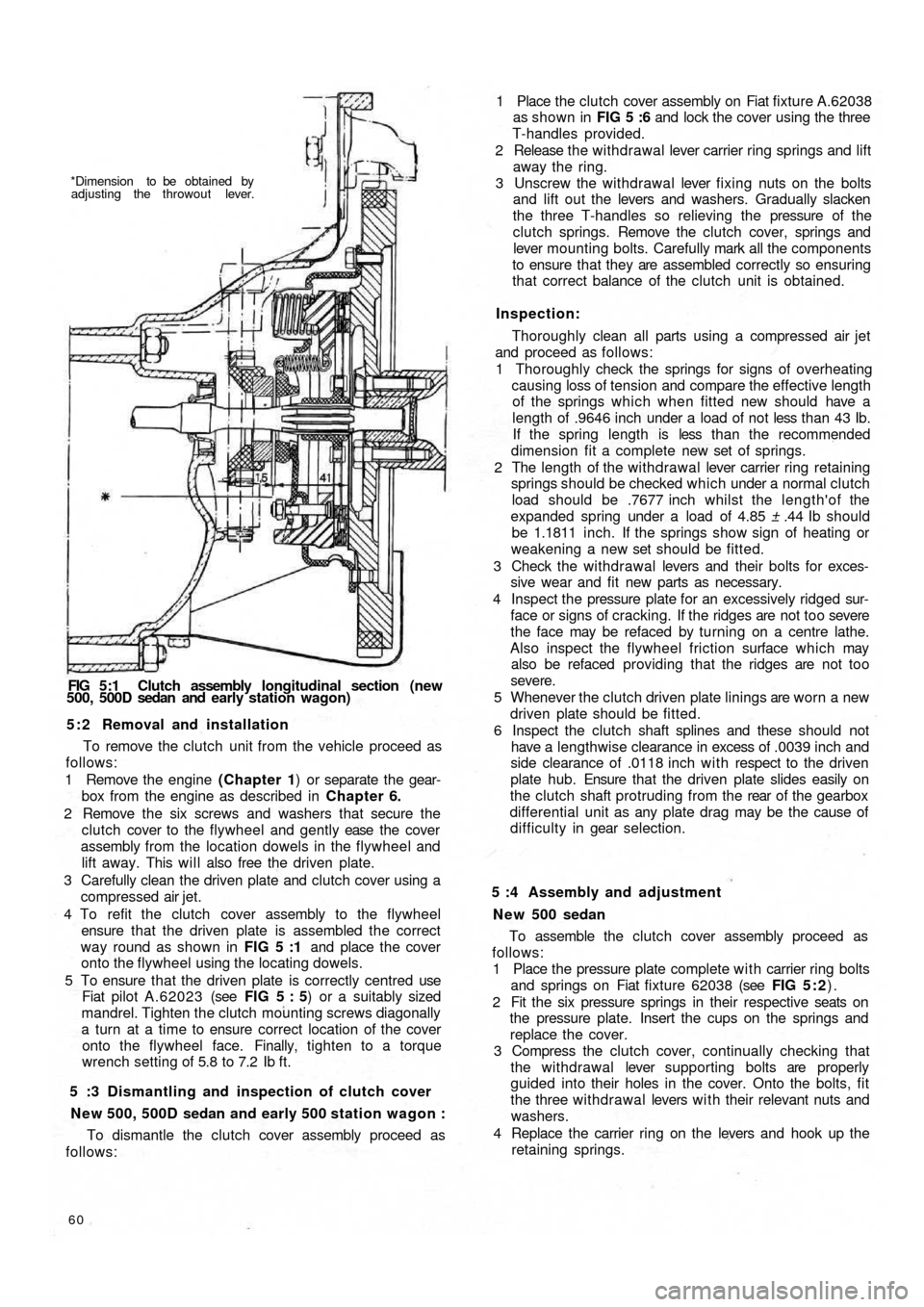
FIG 5:1 Clutch assembly longitudinal section (new
500, 500D sedan and early station wagon)
5 : 2 Removal and installation
To remove the clutch unit from the vehicle proceed as
follows:
1 Remove the engine (Chapter 1) or separate the gear-
box from the engine as described in Chapter 6.
2 Remove the six screws and washers that secure the
clutch cover to the flywheel and gently ease the cover
assembly from the location dowels in the flywheel and
lift away. This will also free the driven plate.
3 Carefully clean the driven plate and clutch cover using a
compressed air jet.
4 To refit the clutch cover assembly to the flywheel
ensure that the driven plate is assembled the correct
way round as shown in FIG 5 :1 and place the cover
onto the flywheel using the locating dowels.
5 To ensure that the driven plate is correctly centred use
Fiat pilot A.62023 (see FIG 5 : 5) or a suitably sized
mandrel. Tighten the clutch mounting screws diagonally
a turn at a time to ensure correct location of the cover
onto the flywheel face. Finally, tighten to a torque
wrench setting of 5.8 to 7.2 Ib ft.
5 :3 Dismantling and inspection of clutch cover
New 500, 500D sedan and early 500 station wagon :
To dismantle the clutch cover assembly proceed as
follows:
60
To assemble the clutch cover assembly proceed as
follows:
1 Place the pressure plate complete with carrier ring bolts
and springs on Fiat fixture 62038 (see FIG 5 : 2).
2 Fit the six pressure springs in their respective seats on
the pressure plate. Insert the cups on the springs and
replace the cover.
3 Compress the clutch cover, continually checking that
the withdrawal lever supporting bolts are properly
guided into their holes in the cover. Onto the bolts, fit
the three withdrawal levers w i t h their relevant nuts and
washers.
4 Replace the carrier ring on the levers and hook up the
retaining springs. 5 :4 Assembly and adjustment
N e w 500 sedan1 Place the clutch cover assembly on Fiat fixture A.62038
as shown in FIG 5 :6 and lock the cover using the three
T-handles provided.
2 Release the w i thdrawal lever carrier ring springs and lift
away the ring.
3 Unscrew the withdrawal lever fixing nuts on the bolts
and lift out the levers and washers. Gradually slacken
the three T-handles so relieving the pressure of the
clutch springs. Remove the clutch cover, springs and
lever mounting bolts. Carefully mark all the components
to ensure that they are assembled correctly so ensuring
that correct balance of the clutch unit is obtained.
Inspection:
Thoroughly clean all parts using a compressed air jet
and proceed as follows:
1 Thoroughly check the springs for signs of overheating
causing loss of tension and compare the effective length
of the springs which when fitted new should have a
length of .9646 inch under a load of not less than 43 Ib.
If the spring length is less t h a n t h e recommended
dimension fit a complete new set of springs.
2 The length of the withdrawal lever carrier ring retaining
springs should be checked which under a normal clutch
load should be .7677 inch whilst the length'of the
expanded spring under a load of 4.85 ± .44 Ib should
be 1.1811 inch. If the springs show sign of heating or
weakening a new set should be fitted.
3 Check the withdrawa l levers and their bolts for exces-
sive wear and fit new parts as necessary.
4 Inspect the pressure plate for an excessively ridged sur-
face or signs of cracking. If the ridges are not too severe
the face may be refaced by turning on a centre lathe.
Also inspect the flywheel friction surface which may
also be refaced providing that the ridges are not too
severe.
5 Whenever the clutch driven plate linings are worn a new
driven plate should be fitted.
6 Inspect the clutch shaft splines and these should not
have a lengthwise clearance in excess of .0039 inch and
side clearance of .0118 inch w i t h respect to the driven
plate hub. Ensure that the driven plate slides easily on
the clutch shaft protruding from the rear of the gearbox
differential unit as any plate drag may be the cause of
d i f f i c u l t y in gear selection.
Page 57 of 128

FIG 5:10 Clutch throw-out mechanism
Key to Fig 5:10 1 Clutch throw-out yoke
2 Yoke return spring 3 Rod nut and counternut
4 Adjustable rod 5 Clutch throw-out
onto this shaft the outer operating lever is attached by
means of a key.
A return spring connected to the outer operating lever
is anchored onto the gearbox casing. When the clutch is in
its normal position the spring keeps the central thrust
carbon ring away from the withdrawal levers carrier ring.
The carbon ring is pressed against the carrier ring by the
throw-out ring which is connected to the forked lever as
shown in FIG 5 : 8 .
The clutch pedal must have free travel of 1"3/8 to 1"9/16 inch.
Should any adjustment be necessary release the locknut
from the adjustable tie rod and adjust the position of the
tie rod until the correct adjustment is obtained. Tighten the
locknut.
500F. L and later station wagon:
The free travel of the clutch pedal should be 19/32 to
1"3/16 inch which corresponds to a clearance of .059 inch
between the throw-out sleeve and the ring (see FIG 5 : 7).
Should any correction be necessary release the adjust-
able rod locknut (see FIG 5:10), and reposition the
adjustable rod using the rod nut until the recommended
clutch pedal travel is obtained. Retighten the locknut.
5 : 8 Fault diagnosis
(a) Drag or spin
1 Oil or grease on driven plate lining
64
(g) Driven plate fracture
1 Check 2 and 3 in (a)
2 Drag and distortion due to hanging gearbox in plate hub (f) Tick or knock
1 Worn first motion shaft spigot or bearings
2 Badly worn splines in driven plate hub
3 Release plate out of line
4 Faulty Bendix drive on starter motor
5 Loose flywheel
(e) Rattle
1 Check 3 in (c)
2 Worn release mechanism
3 Excessive backlash in transmission
4 Wear in transmission bearings
5 Release bearing loose on fork (d) Judder
1 Check 1, 2 and 3 in (a)
2 Pressure plate not parallel with flywheel face
3 Contact area of driven plate linings not evenly distribu-
ted
4 Bent first-motion shaft
5 Buckled driven plate
6 Faulty power unit mountings
7 Worn suspension mountings
8 Weak rear springs
9 Loose drive shafts (c) Slip
1 Check 1, 2 and 3 in (a)
2 Check 2 in (b)
3 Weak pressure springs or diaphragm spring (b) Fierceness or snatch
1 Check 1, 2 and 3 in (a)
2 Worn clutch linings 2 Misalignment between engine and gearbox first motion
shaft
3 Driven plate hub binding on first motion shaft splines
4 Binding of first motion shaft spigot bearing
5 Distorted clutch plate
6 Warped or damaged pressure plate or clutch cover
7 Broken driven plate linings
8 Dirt or foreign matter in clutch
Page 58 of 128

CHAPTER 6
GEARBOX AND DIFFERENTIAL UNIT
6:1
6:2
6:3
6:4
6:5
6:6Description
Removal of gearbox/differential unit
Dismantling — gearbox
Reassembly — gearbox
Dismantling — differential and final drive
Reassembly— differential and final drive6:7
6:8
6:9
6:10
6:11
6:12Final drive gear set adjustment
Replacement of gearbox/differential unit
Swing axle shafts and slip joints
Gear shift control mechanism
Modifications
Fault diagnosis
6 :1 Description
The gearbox and differential unit are housed in an
aluminium alloy casing made up of t w o parts which split
at the differential centre line. The output drive is trans-
mitted by means of t w o half axle drive shafts coupled
through wheel shafts and slip joints to the rear wheels (see
FIG 6 : 1)
The gearbox provides four forward-speeds and a reverse,
the fourth-speed being considered as an overdrive. All
gears except first and reverse gears, which are straight
toothed sliding gears, are in constant mesh and have heli-
cal teeth. No synchromesh is provided, gear engagement
being completed by sliding shifter sleeves of the dog
clutch type. The first-speed gear slides on the outside of
the third and fourth shifter sleeve, whilst the reverse gear
train moves on a fixed shaft. The clutch shaft is integral
with the third, top and combined and first and second gear
pinions, whilst the second gear pinion is splined at the
front end. An internal splined
coupling sleeve joins the
clutch shaft and the input shaft and transmits the power
from the engine to the gearbox. The mainshaft and
differential drive pinion are combined together and besides
carrying the constant mesh gears and the sliding first gear
pinion, it also has attached the sliding sleeves and hubs.
F50065 The speedometer drive pinion is located at the front end.
The gearbox/differential casing is attached to the engine
by six studs which locate in the crankcase. The front of the
unit rests upon the rubber mounted support which is
secured to the body floor.
The complete unit comprises three detachable parts
made up as follows:
1 The support for the connection of the gearbox to the
engine which also acts as part of the differential front
end and clutch/flywheel housing at rear.
2 A central body which is divided into two compartments.
The front compartment contains first, third, fourth and
reverse gears w i t h the primary shaft, layshaft and reverse
shaft as well as the necessary gear selection striker rods
and forks. The rear of this compartment also forms a half
cover for the differential unit.
3 The gearbox casing cover, which contains the second-
speed gears together with the relative fork, gear
selection rod and speedometer drive gears.
The central part of the casing is provided with a top
inspection cover. The primary shaft is coupled to the clutch
shaft through an internally splined sleeve and t w o pins
which are retained by rings. The primary shaft together
with the first, third and fourth driving gears form a cluster.
Page 59 of 128

PRIMARY SHAFT-TO-CLUTCH
SHAFT MOUNTING PINCLUTCH SHAFT SEAL PRIMARY SHAFT WITH
1st, 3 r d A N D 4 t h SPEED
GEAR CLUSTER
2 n d SPEED
DRIVE GEARPRIMARY SHAFT
FRONT BALL BEARINGPRIMARY SHAFT
REAR BALL BEARING
PRIMARY
SHAFT-TO-CLUTCH
i SHAFT JOINING SLEEVEJOINING SLEEVELOCKRING
SPEED SELECTOR LEVER
CLUTCH SHAFT
LAYSHAFT WITH BEVEL PINION
SPEEDOMETER DRIVE GEAR
2 n d SPEED ENGAGEMENT
SLIDING SLEEVE
2 N D SPEED DRIVEN GEAR
LAYSHAFT FRONT BALL
BEARING
3 r d SPEED DRIVEN GEARHUB FOR
SLEEVE
3rd AND 4th/
SPEED ENGAGEMENT
SLIDING SLEEVE4 t h SPEED
DRIVEN GEARLAYSHAFT REAR ROLLER BEARING
LAYSHAFT-TO-PINION
ADJUSTMENT WASHER 1st SPEED AND)
REVERSE SLIDING GEAR
FIG 6:1Gearbox-differential unit longitudinal section
On the primary shaft extension outside the main central
body is mounted the second-speed driving gear. The
primary shaft is supported at both ends by ballbearings
whilst the clutch shaft rotates in a bronze spigot bush which
is press fitted into the end of the crankshaft. An oil seal is
fitted in the clutch shaft passage seat in the c o n n e c t i o n
support. The layshaft, together with the drive pinion of the
differential unit is supported at the front by a ballbearing
race. The layshaft carries the pinion adjustment shim, the
fourth-speed driven gear and its bushing, the hub and
relevant engagement sleeve for the t h i r d - and fourth-
speed w i t h first-speed and reverse-speed, the third-speed
gear and bushing and, outside the casing the second gear
and bushing, the hub with relevant second-speed engage-
ment sleeve and the speedometer drive gear.
The gears are operated by a gear selection lever mounted
on the tunnel situated between the two front seats. This
operates through a rod actuating the selector and shifting
mechanism which is housed in the gearbox casing cover.
Refer to FIG 6 :3 where it will be seen th a t the positioning
of the striker rods is ensured by a spring-loaded ball-
bearing. The risk of engaging two gears at the same time is
eliminated by three rollers which slide in suitable slots
machined in the rod (see FIG 6 : 4).
The differential unit and the final drive gear train are
housed in the t w o semi-covers which
have previously
been described, the final drive pinion being integral with
the layshaft. The differential casing may be split into t w o
halves. The bevel gear is fitted on one of the halves and is
66
secured by the same screws joining the two halves
together. The differential side gears are internally splined
into which are located the splined axle shaft ends which
are able to slide by means of a specially designed slip joint.
Two specially shaped rubber oil boots are inserted on the
swing axle shafts and fit over the side gear extensions to
ensure that there is no loss of lubricant or the ingress
of dirt.
The transmission and differential unit to suit the station
wagon differs from the sedan in that the transmission to
engine mounting plate and the bellhousing are modified to
suit the engine repositioned on its side.
6 : 2 Removal of gearbox/differential unit:
The complete unit may be removed whilst the engine
remains in situ and to remove this unit proceed as follows:
1 Disconnect the battery positive cable and jack up the
rear of t h e vehicle and place on firmly based stands.
2 Disconnect all control cables and wiring from the
starter motor and the clutch lever. Remove the starter
motor, the clutch lever reaction spring and the clutch
cable support on the gearbox.
3 Remove the three bolts securing each of the driving
shaft flanges to the flexible coupling at the wheel ends
and carefully take out the inner spring.
4 Disconnect the shifter rod from the gearshift lever at the
gearbox extension and also the
speedometer drive
cable. Remove also the flywheel undercover. Place a
suitable support under the engine.
Page 60 of 128
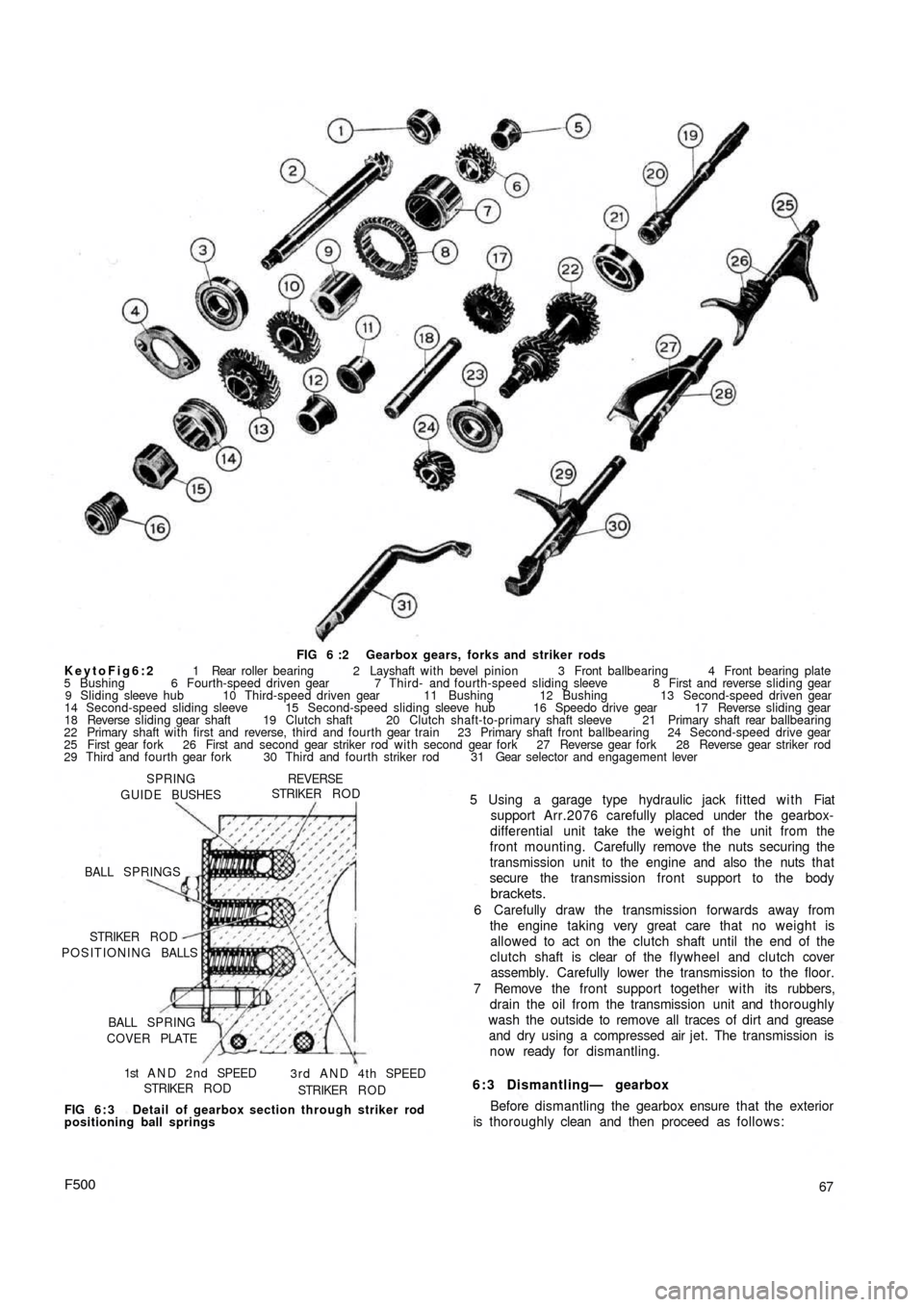
FIG 6 :2 Gearbox gears, forks and striker rods
KeytoFig6:2 1 Rear roller bearing 2 Layshaft with bevel pinion 3 Front ballbearing 4 Front bearing plate
5 Bushing 6 Fourth-speed driven gear 7 Third- and fourth-speed sliding sleeve 8 First and reverse sliding gear
9 Sliding sleeve hub 10 Third-speed driven gear 11 Bushing 12 Bushing 13 Second-speed driven gear
14 Second-speed sliding sleeve 15 Second-speed sliding sleeve hub 16 Speedo drive gear 17 Reverse sliding gear
18 Reverse sliding gear shaft 19 Clutch shaft 20 Clutch shaft-to-primary shaft sleeve 21 Primary shaft rear ballbearing
22 Primary shaft with first and reverse, third and fourth gear train 23 Primary shaft front ballbearing 24 Second-speed drive gear
25 First gear fork 26 First and second gear striker rod with second gear fork 27 Reverse gear fork 28 Reverse gear striker rod
29 Third and fourth gear fork 30 Third and fourth striker rod 31 Gear selector and engagement lever
SPRING
GUIDE BUSHES
REVERSESTRIKER R O D
BALL SPRINGS
POSITIONING BALLS STRIKER R O D
BALL SPRING
COVER PLATE
1st A N D 2 n d SPEED
STRIKER R O D3 r d A N D 4 t h SPEED
STRIKER R O D
FIG 6 : 3 Detail of gearbox section through striker rod
positioning ball springs
F50067 5 Using a garage type hydraulic jack fitted with Fiat
support Arr.2076 carefully placed under the gearbox-
differential unit take the weight of the unit from the
front mounting. Carefully remove the nuts securing the
transmission unit to the engine and also the nuts that
secure the transmission front support to the body
brackets.
6 Carefully draw the transmission forwards away from
the engine taking very great care that no weight is
allowed to act on the clutch shaft until the end of the
clutch shaft is clear of the flywheel and clutch cover
assembly. Carefully lower the transmission to the floor.
7 Remove the front support together with its rubbers,
drain the oil from the transmission unit and thoroughly
wash the outside to remove all traces of dirt and grease
and dry using a compressed air jet. The transmission is
now ready for dismantling.
6:3 Dismantling— gearbox
Before dismantling the gearbox ensure that the exterior
is thoroughly clean and then proceed as follows:
Page 61 of 128

1st A N D 2 n d SPEED
STRIKER R O D LOCK
ROLLER1st A N D 2 n d SPEED
STRIKER R O D 3 r d A N D 4 t h SPEED
STRIKER R O D 3 r d A N D 4 t h SPEED
STRIKER R O D LOCK -
ROLLER REVERSE STRIKER
ROD LOCK ROLLER
REVERSESTRIKER R O D
FIG 6 : 4 Detail of gearbox section through striker rod
lock rollers
2 n d SPEED DRIVENGEAR2 n d SPEED ENGAGEMENT SLIDING SLEEVE 2 n d SPEED FORK 1st A N D 2 n d
SPEED STRIKER R O D REVERSE GEAR3rd AND 4th
SPEED STRIKER R O DREVERSE STRIKER R O D2 n d SPEED DRIVE GEAR SPEED SELECTOR LEVER
FIG 6 : 5 Cross section of gearbox through striker rods
with the indication of the gear selector lever angular
displacement
68
AXLE SHAFT-TO-JOINT SLEEVE
OIL BOOT
RING GEAR
FIG 6:6 Differential unit complete with axle shafts
BEARING CONEADJUSTER LOCK RING BEARING HOUSING DIFFERENTIAL CASE
OIL BOOT RETAINER
AXLE SHAFT
1 Remove the speedometer drive support together with
its gears. Remove the front cover together with its
gasket and the gear selection rod (see FIG 6:2).
2 Remove the lock ring and carefully slide the splined
sleeve from the axle shafts. Remove the t w o roller
bearing housings together with the relevent rubber
boot fastening cover, the rubber boots and the adjuster
ring lock rings.
3 Detach the transmission mounting on engine support
and carefully remove the differential case assembly
complete w i t h the ring gear and axle shafts.
4 Open the fasteners and loosen all the shifter fork lock
bolts.
5 Engage t w o gears at the same time so locking the
input shaft and the mainshaft together. Remove the
cotter pins and the nuts on the front end of the input
shaft and the mainshaft.
6 Remove the retaining cover located on the lefthand
side of the gearbox and carefully take out the shifter
rod positioning balls and springs from their bores.
Remove the upper shifter fork shaft and shifter fork,
the middle shifter fork shaft together with its interlock
pin and also the third and fourth gear shifter fork.
Remove the plain washer and speedometer drive
driving gear from the layshaft.
7 Remove the second gear engagement sliding sleeve
together with the shifter fork, shifter fork shaft, sliding
sleeve hub, second-speed driven gear with relevent
bush and the first gear engagement
fork. Take very
great care not to drop the safety rollers whilst extract-
ing the striker rods.
8 Remove the second-speed driving gear from the input
shaft. Release the reverse shaft retaining screw and
remove the shaft together with the reverse gear cluster.
Remove the layshaft front bearing retaining plate.
9 Push the input shaft forwards until both ballbearing
races are pressed from their seating and the coupling
sleeve located between the input shaft and the clutch
shaft can be reached from above. Carefully remove the
retaining ring and a connection pin at the input shaft
side of the coupling sleeve and carefully withdraw the
clutch shaft and coupling sleeve.
10 Remove the input shaft front bearing race. Tilt the
primary shaft in the casing and remove it from the
gearbox housing. Remove the rear bearing. Carefully